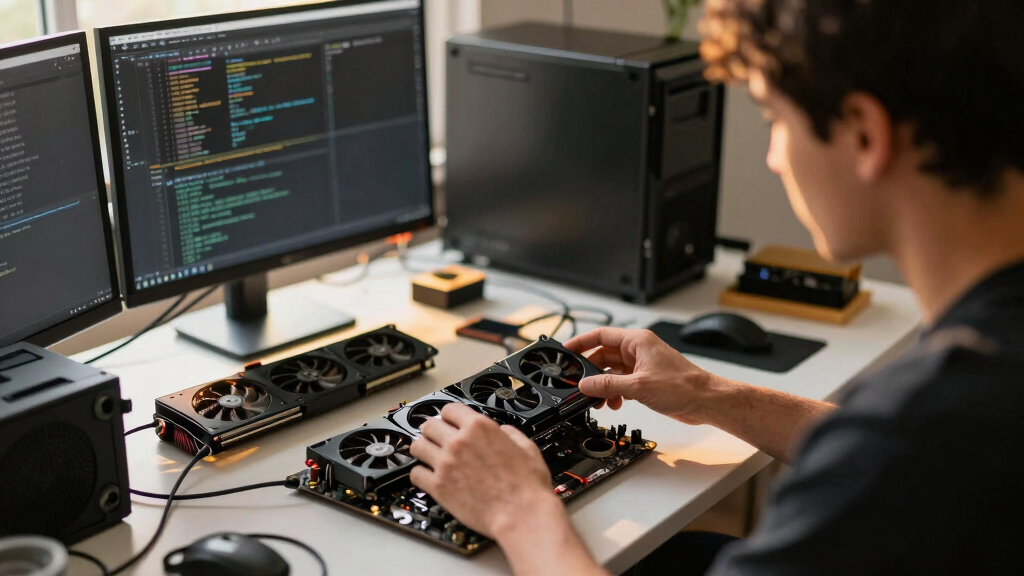

📊 Full opportunity report: Build vs Buy a Prebuilt AI Workstation on ThorstenMeyerAI.com — validation score, market gap, and execution plan.
Prime for Young Adults — start your free trial
Fast free delivery, streaming and member deals for eligible 18–24 year olds.
Try it freeAs an affiliate, we earn on qualifying purchases.
TL;DR
The longstanding rule that building an AI workstation is cheaper than buying is broken in 2026 due to component shortages and price spikes. Buyers now need to compare both options carefully, considering cost, time, and control.
In 2026, the cost advantage of building your own AI workstation has diminished significantly, as component shortages and price spikes have made prebuilt systems more competitive than ever before.
Traditionally, DIY AI workstations were cheaper because builders sourced individual components and assembled systems tailored to their needs. You can build vs buy a prebuilt AI workstation to compare your options. However, in 2026, shortages of key parts like GPUs, DDR5 RAM, and SSDs, along with increased prices, have pushed up the cost of DIY builds. Meanwhile, prebuilt vendors such as Lambda, Puget Systems, and BIZON have secured bulk purchasing and validation processes that allow them to offer systems at prices comparable or even lower than custom builds.
This shift means that the decision now hinges less on cost and more on factors like time, thermal management, warranty, and control. Prebuilts come pre-validated for thermals, include support, and often feature optimized cooling solutions, reducing the need for technical expertise. Conversely, DIY builders can still customize and tune their systems but face higher prices and increased complexity due to component scarcity.
Build vs buy
an AI workstation.
The real question behind this whole series: do you pull the five heat-and-noise levers yourself, or buy a prebuilt where the vendor pulled them for you? And in 2026, the old “building is cheaper” rule has broken. Match your situation in Part 3.
Why 2026 Changes the AI Workstation Decision
This development matters because it alters the fundamental cost calculus for professionals, hobbyists, and researchers choosing between building or buying AI workstations. The traditional advantage of DIY — lower cost — no longer applies universally, prompting a reassessment of what factors drive the decision. For many, the value of validated thermals, warranty, and time savings now outweigh the cost savings of a custom build, especially as component prices remain volatile.
As an affiliate, we earn on qualifying purchases.
Component Shortages and Price Spikes in 2026
Over the past year, the AI hardware market has experienced significant disruptions. The surge in AI model training and inference workloads has driven demand for high-end GPUs, DDR5 RAM, and SSDs, resulting in shortages and price hikes. While prebuilt vendors secured large inventories early, DIY builders are now facing the highest prices in years, with some components costing 30-50% more than in previous years. This shift has overturned the longstanding assumption that DIY always saves money. For guidance on choosing the right approach, see our article on Build vs Buy a Prebuilt AI Workstation.
"In 2026, component shortages and price spikes mean that prebuilt systems are often just as affordable, if not more so, than assembling your own."
— Thorsten Meyer, AI hardware expert
As an affiliate, we earn on qualifying purchases.
Remaining Uncertainties About Long-Term Trends
It is still unclear whether component prices will stabilize or continue to rise, and how supply chain disruptions might evolve. Additionally, the long-term availability of prebuilt systems with high-end GPUs remains uncertain as demand persists.
As an affiliate, we earn on qualifying purchases.
Future Pricing and Choice Dynamics in 2026
As the year progresses, both DIY and prebuilt options will continue to evolve. Buyers should monitor component prices, supply chain updates, and vendor offerings. The decision will increasingly depend on individual priorities such as time, control, and risk tolerance, rather than cost alone. Consider building vs buying an AI workstation based on your specific needs.
As an affiliate, we earn on qualifying purchases.
Key Questions
Is building my own AI workstation still cheaper in 2026?
Not necessarily. Due to component shortages and price increases, prebuilt systems are often competitively priced or even cheaper than DIY options today.
What are the main advantages of buying a prebuilt AI workstation?
Prebuilts offer validated thermals, warranties, ready-to-run setups with preinstalled AI stacks, and reduced setup time, which can save valuable hours and reduce technical risk.
Can I customize a prebuilt AI workstation?
Many vendors allow some customization, especially regarding GPU configurations and memory options, but the extent varies by manufacturer.
Should hobbyists or students still build their own systems?
Yes, if they enjoy the process, want full control, and have the time and expertise to manage thermal tuning and upgrades. Otherwise, prebuilt options may be more practical.
Will component prices drop again soon?
It is uncertain. Market conditions and supply chain factors will influence prices, but current trends suggest continued volatility in 2026.
Source: ThorstenMeyerAI.com
Fall Picks
fall essentials
As an affiliate, we earn on qualifying purchases.