
📊 Full opportunity report: Vertigo relief app on IdeaNavigator AI — validation score, market gap, and execution plan.

Get the little things that make your day delivered free — and shop member deals
- Fast, free delivery on millions of items
- Access to Prime Big Deal Days deals on October 6–7
- Prime Video, Amazon Music and more included
TL;DR
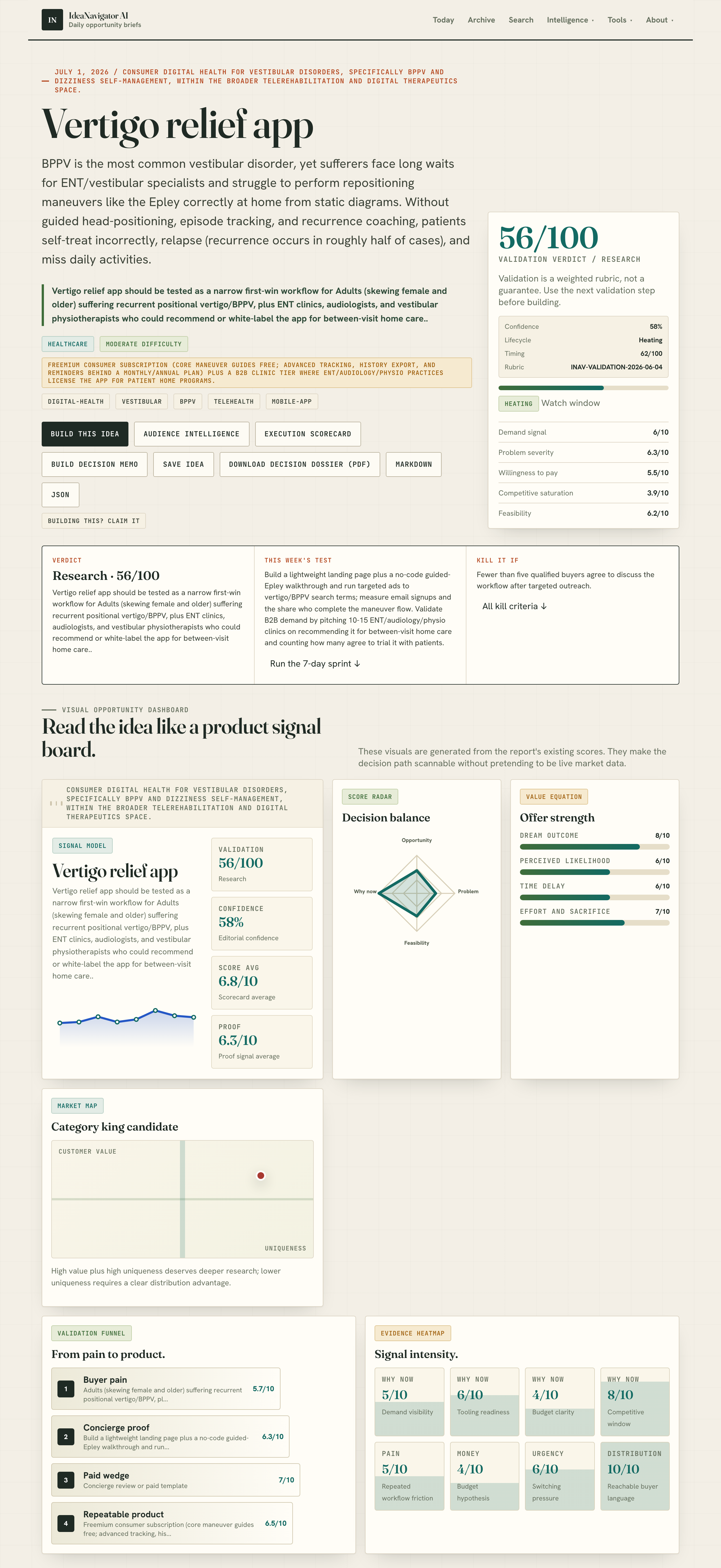
A proposed vertigo relief app is in development to assist adults with benign paroxysmal positional vertigo (BPPV). It offers guided maneuvers, symptom tracking, and could be recommended by ENT clinics. Validation is ongoing through user testing and clinician outreach.
A new vertigo relief app is being developed to assist adults suffering from recurrent BPPV and other positional vertigo disorders. The app aims to guide users through repositioning maneuvers like the Epley, provide symptom tracking, and support home-based management, with potential integration into clinical practice. This development responds to the growing demand for digital therapeutics in vestibular care, especially as telehealth adoption accelerates.
The app is designed for iOS and Android platforms and will include features such as guided repositioning exercises with animated and audio cues, real-time gyroscope feedback to ensure correct head positioning, and symptom logging for tracking episodes over time. It will also incorporate a short safety survey to screen for BPPV candidacy and red-flag symptoms, prompting users to seek medical attention when necessary.
Developers plan to offer a freemium model, with basic maneuver guidance available for free and advanced features like detailed history export and reminders behind a subscription. Additionally, ENT clinics, audiologists, and vestibular physiotherapists could license the app to support patient home care, integrating it into existing treatment workflows.
Initial validation involves testing user engagement through targeted ads and measuring signups and maneuver completion rates, similar to how guest apps with day-of seating lookup and schedule are validated in event planning. B2B demand will be assessed by pitching clinics and tracking trial adoption among healthcare providers.
Potential Impact on Self-Management of Vertigo
This app could significantly improve the self-treatment of BPPV, which affects a large portion of adults, especially women and older individuals. By providing guided, accurate repositioning exercises and symptom tracking, it may reduce improper self-treatment, decrease relapse rates, and enable more timely intervention. For clinics, it offers a scalable way to support patients between visits, potentially easing wait times and improving outcomes.
As digital therapeutics gain acceptance, this tool exemplifies how smartphone sensors and telehealth integration can transform vestibular care, aligning with market trends that project growth in digital health solutions for dizziness and balance disorders.
vertigo repositioning maneuver app
As an affiliate, we earn on qualifying purchases.
As an affiliate, we earn on qualifying purchases.
Growing Demand for Digital Vertigo Solutions
Benign paroxysmal positional vertigo (BPPV) is the most common vestibular disorder, yet many patients face long waits for specialist care and struggle to perform repositioning maneuvers correctly at home. Traditional self-treatment methods rely on static diagrams and instructions, often leading to incorrect execution and high recurrence rates, which occur in roughly 50% of cases.
The COVID-19 pandemic accelerated the adoption of telehealth and home-based rehabilitation, boosting interest in digital therapeutics. The market for digital vestibular rehab platforms was estimated near USD 498 million in 2024, with a projected compound annual growth rate of approximately 13.5% through 2033, reflecting increasing acceptance among providers and payers.
Current efforts aim to develop tools that combine motion sensors, guided exercises, and symptom monitoring to improve self-management and clinical support for vertigo sufferers.
“This app could empower patients to manage their vertigo more effectively at home, reducing the need for frequent clinic visits.”
— an anonymous researcher
As an affiliate, we earn on qualifying purchases.
Uncertainties Around App Validation and Adoption
It is not yet clear how effective the app will be in real-world settings, as validation is still underway through user testing and clinician feedback. The extent of clinician adoption and integration into existing care pathways remains uncertain, and regulatory or reimbursement hurdles could influence deployment.
Further results from pilot studies and clinical trials are needed to confirm its safety, accuracy, and impact on relapse rates and patient satisfaction.
As an affiliate, we earn on qualifying purchases.
Next Steps in Development and Clinical Validation
Developers plan to launch a pilot program involving targeted ads, landing pages, and no-code prototypes to gauge user interest and maneuver completion rates. Simultaneously, they will conduct outreach to ENT and vestibular clinics to assess interest in licensing the app for patient home use. Results from these efforts will inform further refinement, clinical validation, and potential regulatory pathways before a broader rollout.
As an affiliate, we earn on qualifying purchases.
Key Questions
How does the app guide users through repositioning exercises?
The app provides animated step-by-step instructions, audio cues, and real-time gyroscope feedback to ensure correct head positioning during maneuvers like the Epley.
Is the app a substitute for medical treatment?
No, the app is designed to support self-management but includes disclaimers emphasizing it is not a substitute for professional medical advice. Users should consult a healthcare provider if red-flag symptoms occur.
Will healthcare providers recommend this app?
Clinicians are being engaged to evaluate the app’s utility and may recommend or white-label it for patient use as part of a home care program, depending on validation outcomes.
What features will be available in the paid version?
The paid subscription will include advanced symptom tracking, history export, reminders, and personalized coaching, while basic maneuver guidance remains free.
When will the app be available to the public?
A full commercial release depends on validation results and clinician adoption, with ongoing testing and pilot programs planned over the next several months.
Source: IdeaNavigator AI
NFL season / tailgating Picks
team gear
As an affiliate, we earn on qualifying purchases.