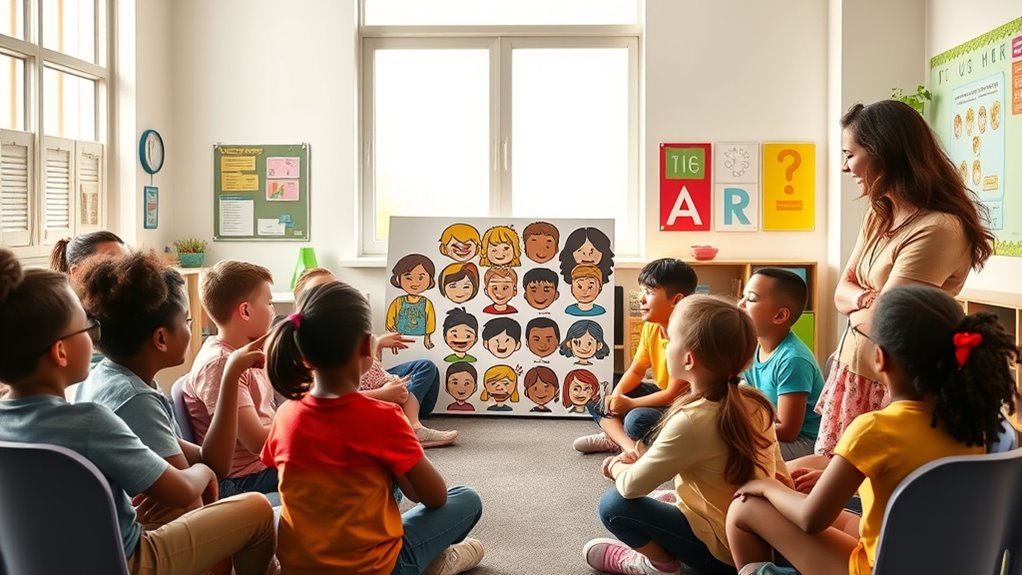

Teaching emotional literacy in schools helps you create a safe space where students can better understand and manage their feelings. It promotes resilience, reduces anxiety and depression, and strengthens positive relationships. While many schools face challenges like funding and staff shortages, supporting mental health education makes a real difference. If you keep exploring, you’ll discover more strategies that can turn classrooms into empowering environments for every student.

Get the little things that make your day delivered free with Prime
- Fast, free delivery on millions of items
- Prime Video, Amazon Music and more included
- Member-only deals all year
Key Takeaways
- Mental health education in schools teaches students to recognize and understand their emotions, fostering emotional literacy and self-awareness.
- Programs focus on developing coping skills, resilience, and positive relationship-building to support overall mental well-being.
- Incorporating emotional literacy reduces stigma, encourages help-seeking, and promotes a supportive school environment.
- Effective curricula often include activities like emotional recognition, mindfulness, and social-emotional learning exercises.
- Schools with strong emotional literacy initiatives see improvements in student behavior, attendance, and academic success.
Top picks for "mental health education"
As an affiliate, we earn on qualifying purchases.
The Current Landscape of School-Based Mental Health Services

School-based mental health services have become a vital component of student support systems, with nearly all public schools offering at least one form of assistance. About 18% of students used these services during the 2024-2025 school year. Most schools provide various options, including telehealth, group therapy, and family interventions. Nearly half of public schools offered diagnostic mental health assessments in 2021-22, but fewer provided treatment services. The demand for mental health support has increased, with over half of schools reporting higher student needs recently. Despite widespread availability, only 56% feel effective at serving all students, and some schools lack services entirely. This landscape highlights both progress and ongoing challenges in meeting students’ mental health needs within educational settings. Additionally, ongoing research emphasizes the importance of mental health awareness and promoting resilience among students to foster healthier school environments.
Overcoming Barriers to Effective Mental Health Support

Despite the recognized importance of mental health support in schools, numerous barriers hinder its effective delivery. Funding shortages remain a major obstacle, limiting resources for programs and staffing. The lack of licensed mental health professionals means many schools struggle to meet student needs, especially with large caseloads and workforce shortages. Insufficient staff support compounds the problem, making it harder to implement all-encompassing services. Additionally, many schools lack clear policies or evaluation criteria, resulting in inconsistent support. Stigma around mental health can discourage students from seeking help, while limited training leaves teachers unprepared to identify or address issues. Failing to recognize signs of distress, such as identifying bad lemon juice, can prevent timely intervention. Overcoming these barriers requires increased funding, hiring qualified professionals, providing staff training, and fostering a school culture that prioritizes mental health.
The Impact of Mental Health Education on Student Well-Being

Implementing mental health education in schools has a tangible impact on student well-being, shaping how young people understand and manage their emotions. When you introduce programs that teach emotional literacy, you help students develop skills to recognize feelings, cope effectively, and seek support. These efforts lead to decreased anxiety, depression, and suicidal ideation, creating a safer, more supportive school environment. Schools with strong mental health initiatives see improvements in student behavior, attendance, and academic performance. You empower students to build resilience and foster positive relationships, which benefits their social and emotional development. Overall, mental health education transforms school culture, making it easier for students to thrive academically and emotionally. Promoting emotional literacy and mental health awareness in schools is essential for fostering a supportive learning environment. Your investment in these programs directly supports healthier, more engaged learners.
Policy Initiatives and Implementation Challenges
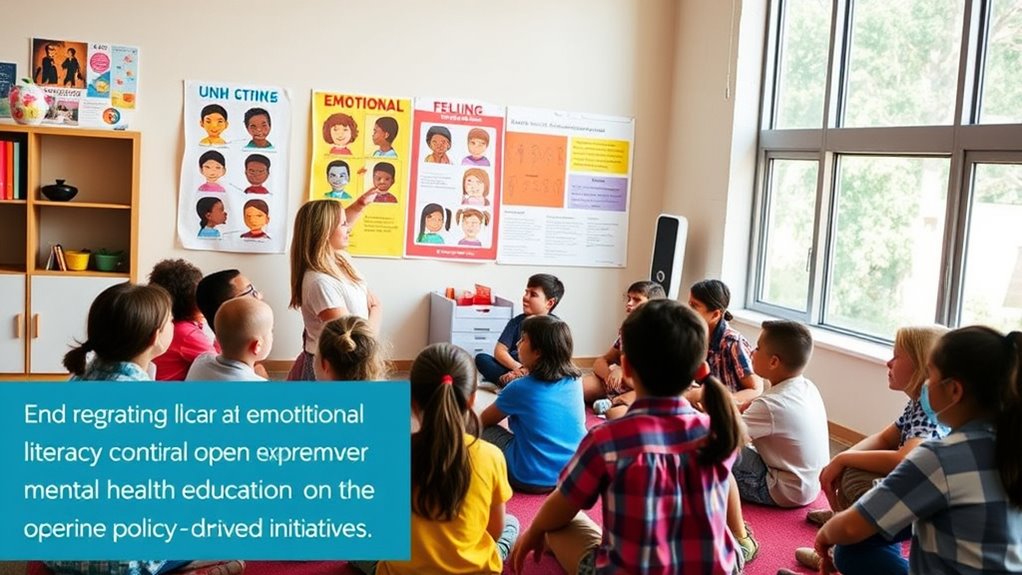
Policy initiatives aimed at integrating mental health education into schools have gained widespread support, with 96% of public schools reporting the provision of mental health services for students. However, implementing these policies remains challenging. Many schools face funding shortages, limiting resources for mental health programs and staffing. A lack of licensed professionals and insufficient staff training hinder effective service delivery. Additionally, inconsistent adherence to policies and gaps in evaluation create variability across districts. Mental health education is often not prioritized in teacher training or curricula, further complicating implementation. You may find that while policies exist on paper, translating them into consistent, quality programs requires overcoming systemic barriers. Addressing these challenges is essential to guarantee all students access meaningful mental health support within their schools.
Recognizing and Addressing Mental Health Trends in Youth

Recognizing and addressing mental health trends in youth is essential for developing effective interventions and support systems. You need to stay aware of rising issues like depression, anxiety, and suicidal thoughts, which have increased among students, especially after the pandemic. Regular screening and surveys help identify at-risk students early, allowing you to provide timely support. Pay attention to warning signs such as withdrawal, poor academic performance, or behavioral changes. Schools should adapt programs to meet current needs, emphasizing prevention and resilience-building. Understanding these trends enables you to tailor mental health resources, reduce stigma, and foster an environment where students feel safe seeking help. By proactively addressing emerging patterns, you can improve overall student well-being and prevent more severe mental health crises. Learning about Arcade Machine technologies and concepts can also be used creatively to develop engaging mental health awareness programs that resonate with students.
Building Emotional Literacy Through School-Based Strategies

Building emotional literacy in schools is essential for fostering students’ social and mental well-being. You can do this by implementing classroom activities that promote self-awareness, empathy, and emotional regulation. For example, use daily check-ins where students share how they feel and discuss strategies to manage their emotions. Incorporate social-emotional learning (SEL) programs that teach conflict resolution and effective communication. Restorative practices help students understand the impact of their actions and repair relationships, creating a supportive school climate. Partner with families and community organizations to extend emotional literacy beyond the classroom. Additionally, train staff to model healthy emotional behaviors and provide ongoing professional development. These strategies empower students to understand and manage their emotions, building resilience and fostering a positive school environment. As the demand for mental health education in schools increases, integrating these approaches can significantly improve student well-being.
Frequently Asked Questions
How Can Parents Support Mental Health Education at Home?
You can support mental health education at home by openly discussing emotions, encouraging your child to express feelings, and modeling healthy coping strategies. Create a safe environment where they feel comfortable sharing worries. Stay involved in their social life, monitor changes in behavior, and promote positive relationships. Additionally, read books on mental health, set routines, and seek professional help if needed, showing that mental well-being matters just as much as physical health.
What Types of Training Do Teachers Need for Mental Health Instruction?
Think of teachers as gardeners nurturing emotional growth—you’ll need the right tools. They should receive training in mental health literacy, trauma-informed practices, and identifying warning signs of distress. Additionally, workshops on social-emotional learning and crisis response prepare them to support students effectively. This knowledge helps teachers create a safe space, just like a sturdy shelter in a storm, allowing students to flourish emotionally and academically.
Are There Effective Ways to Measure Mental Health Program Success?
Yes, you can measure mental health program success through surveys evaluating students’ knowledge, attitudes, and help-seeking behaviors. Track changes in mental health symptoms like anxiety or depression using standardized tools. Monitor behavioral data such as disciplinary incidents or attendance. Collect feedback from students, staff, and families to evaluate program impact. Regular assessments help you identify areas for improvement and demonstrate the effectiveness of your mental health initiatives.
How Do Schools Address Mental Health Stigma Among Students?
You can combat mental health stigma among students by creating a culture that’s as open and accepting as a sunny day. Encourage honest conversations, share relatable stories, and celebrate mental health awareness events. Train staff to spot and challenge stereotypes, and involve students in peer support programs. When students see kindness and understanding everywhere, stigma shrinks until it’s hardly visible—like a shadow that disappears in the bright light of acceptance.
What Role Does Technology Play in Enhancing Emotional Literacy Education?
Technology plays a crucial role in enhancing emotional literacy education by providing accessible, engaging tools like telehealth, online resources, and interactive apps. You can use these platforms to teach students about emotions, coping strategies, and help-seeking behaviors. They also offer safe spaces for students to express themselves and connect with mental health professionals, overcoming barriers like stigma and staff shortages. Embracing technology helps you create a more inclusive, responsive approach to emotional literacy.
Conclusion
By integrating mental health education into schools, you play a crucial role in shaping emotionally resilient students. Did you know that 1 in 5 youth experience a mental health disorder, yet many go unnoticed? Teaching emotional literacy helps students recognize their feelings and seek support early. As you support these initiatives, you’re not just improving individual well-being—you’re fostering a healthier, more understanding school environment for everyone.
Halloween Picks
halloween
As an affiliate, we earn on qualifying purchases.