
To lead distributed teams effectively, focus on building trust and autonomy by setting clear goals, using transparent communication, and avoiding micromanagement. Foster strong connections through regular, purposeful communication and leverage the right tools for collaboration. Support your team’s well-being by establishing boundaries, recognizing stress, and encouraging social interactions. Cultivate a positive culture with shared values and genuine care. Want practical tips to master these skills? Keep exploring these essential strategies.
Key Takeaways
- Set clear goals and expectations to foster ownership and accountability without micromanagement.
- Use transparent communication channels and asynchronous methods to ensure alignment across time zones.
- Focus on results, recognize achievements, and provide constructive feedback to build trust and motivation.
- Promote work-life boundaries, monitor well-being, and offer support to prevent burnout in remote teams.
- Leverage appropriate collaboration tools and create opportunities for social interaction to strengthen team engagement.
Developing Trust and Autonomy in Remote Teams
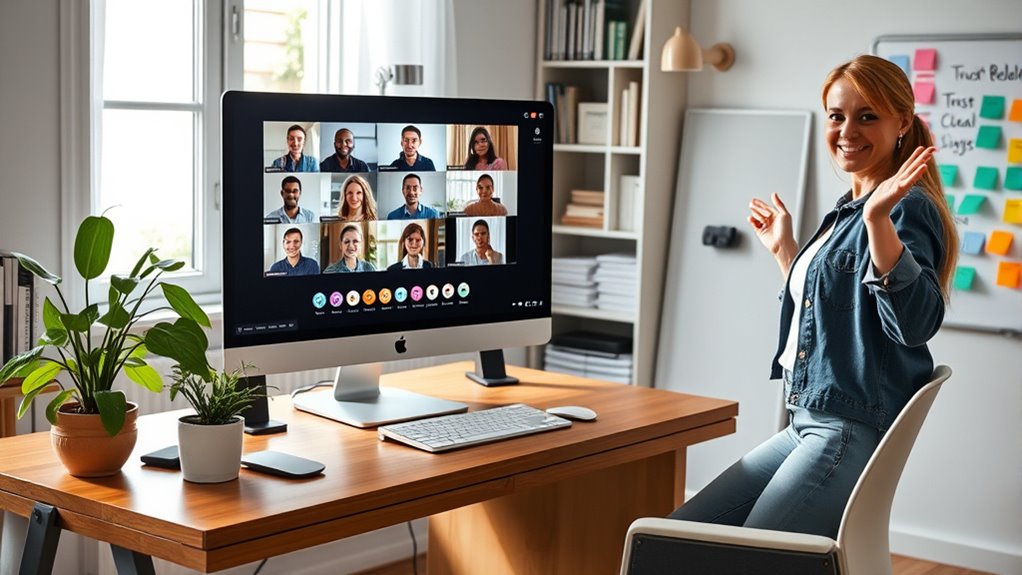
How can you build trust and foster autonomy in remote teams? Start by setting clear goals and expectations. When everyone knows what success looks like, they can take ownership of their work without constant oversight. Use documented processes and transparent communication channels to keep everyone aligned and accountable. Focus on results rather than monitoring time, which encourages employees to manage their own schedules and priorities. Show confidence in your team’s abilities by avoiding micromanagement, and instead, provide support and guidance when needed. Recognize achievements and give constructive feedback regularly. Cultivating a culture of trust and independence helps team members feel empowered, motivated, and committed to shared objectives, ultimately boosting productivity and engagement across your remote workforce.
Effective Communication Strategies for Distributed Workforces

Building trust and autonomy in remote teams depends heavily on effective communication. To do this, focus on clarity, consistency, and responsiveness. First, establish structured channels like written updates and shared digital tools to guarantee everyone stays informed and aligned. Second, adopt asynchronous communication methods that respect different time zones, reducing delays and misunderstandings. Third, set clear expectations for responsiveness and follow-up, which builds reliability and trust. These strategies help your team feel connected, accountable, and empowered. When team members know how and when to communicate, they’re more likely to collaborate effectively and feel valued. Remember, transparent, purposeful communication is the backbone of a high-performing distributed workforce. Incorporating regular communication practices can further enhance team cohesion and understanding.
Supporting Employee Well-Being and Preventing Burnout
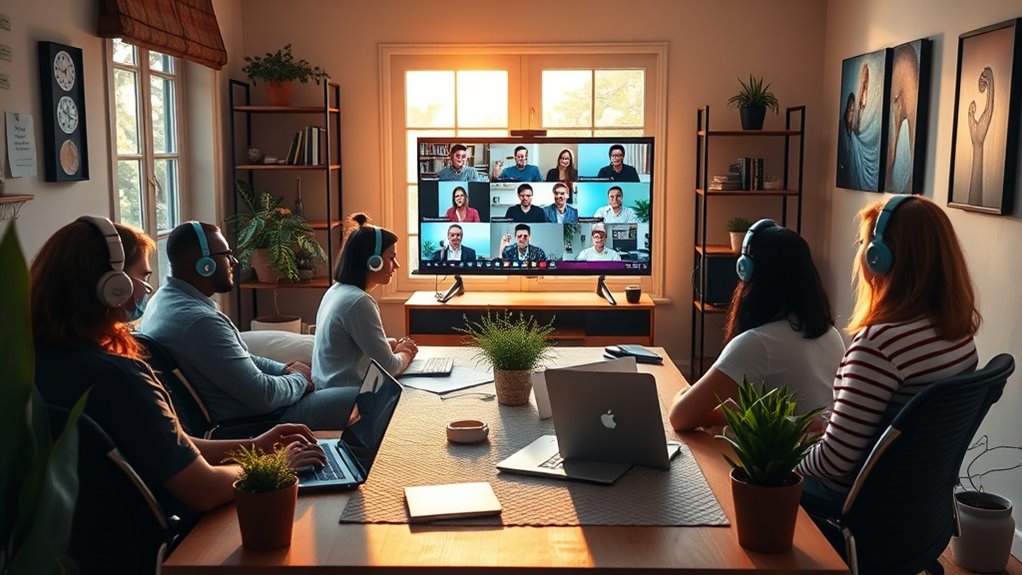
Supporting employee well-being in remote work environments is essential, as the flexibility can both enhance mental health and pose risks of burnout if not managed properly. You should establish clear work hours and encourage employees to disconnect after hours, helping them maintain boundaries. Regularly check in on their emotional health and create channels for open communication about challenges. Promote digital social interactions and team-building activities to foster a sense of belonging and reduce feelings of isolation. Recognize signs of stress early and provide resources or support when needed. Emphasizing work-life balance and showing genuine care boosts morale and prevents exhaustion. Incorporating sustainable practices such as encouraging mindful consumption of work resources and promoting eco-friendly habits can contribute to overall well-being. As a leader, your proactive approach in supporting well-being helps sustain motivation, engagement, and overall productivity across your distributed team.
Leveraging Technology and Collaboration Tools

Leveraging technology and collaboration tools is essential for remote leadership to facilitate seamless communication, coordinate tasks, and maintain productivity across distributed teams. You need to select and implement the right tools to support your team’s workflow and assure everyone stays connected. Consider these three key aspects:
Effective remote leadership relies on choosing the right tools to keep teams connected and productive.
- Unified Communication Platforms – They centralize messaging, video calls, and file sharing, reducing fragmentation and confusion.
- Project Management Tools – These enable clear task assignment, progress tracking, and accountability, keeping projects on schedule.
- Knowledge Sharing Systems – Digital repositories and wikis help preserve institutional knowledge and promote self-service learning.
Cultivating Culture and Building Engagement Remotely

How can remote leaders foster a strong organizational culture and boost employee engagement across dispersed teams? You do this by intentionally reinforcing shared values through consistent communication and transparent actions. Prioritize empathy, actively listen, and respond promptly to build trust. Create opportunities for social interaction, such as virtual coffee chats or team-building activities, to strengthen connections. Recognize achievements regularly to reinforce a sense of purpose and appreciation. Ensure your team understands how their work aligns with the company’s mission, fostering a sense of belonging. Maintain a clear, predictable communication rhythm to avoid feelings of disconnection. By demonstrating genuine care, providing clarity, and encouraging collaboration, you cultivate a vibrant culture that motivates and engages your remote team members. Additionally, understanding the importance of contrast ratio in projectors can help you select the right tools for virtual presentations, enhancing clarity and engagement during remote meetings.
Frequently Asked Questions
How Can Leaders Measure Remote Team Performance Effectively?
You can measure remote team performance effectively by setting clear, outcome-based goals and using OKRs to track progress. Regular, transparent communication helps you stay updated on individual and team achievements. Focus on results rather than hours worked, and provide continuous feedback to motivate and guide your team. Monitoring employee well-being and engagement also offers insight into overall performance, ensuring your team stays productive and connected.
What Are the Best Practices for Onboarding Remote Employees?
You should start by providing clear, detailed onboarding materials and set expectations early. Use video calls to introduce team members and culture, ensuring new hires feel connected. Assign a mentor or buddy for guidance, and schedule regular check-ins during their first weeks. Encourage questions, offer resources, and establish transparent communication channels to build trust and boost confidence, setting the foundation for long-term engagement and success in your remote team.
How Do Managers Handle Conflict in Distributed Teams?
When handling conflict in distributed teams, you should address issues promptly through clear, direct communication. Use video calls to read non-verbal cues and foster understanding. Keep discussions respectful and focused on solutions, not personal blame. Document agreements and follow up to guarantee resolution. Being empathetic and culturally sensitive helps you build trust and resolve conflicts effectively, preventing small issues from escalating and maintaining team cohesion.
What Strategies Ensure Inclusivity Across Diverse Remote Teams?
To guarantee inclusivity across diverse remote teams, you should foster open communication, encourage diverse perspectives, and create accessible channels for everyone. Use culturally sensitive language, respect different time zones, and tailor your approach to individual needs. Regularly check in with team members, promote collaborative decision-making, and celebrate cultural differences. By actively listening and adapting your leadership style, you build trust, boost engagement, and create an environment where all team members feel valued and included.
How Can Leaders Develop Their Remote Management Skills Continuously?
You can develop your remote management skills continuously by seeking regular feedback from your team, attending remote leadership training, and staying updated on best practices. Practice active listening, adapt your communication style for different cultural norms, and leverage digital tools to stay connected. Reflect on your leadership approach, learn from challenges, and embrace flexibility. Prioritize building trust and fostering engagement, which are essential for effective remote leadership.
Conclusion
In remote leadership, building trust, clear communication, and fostering engagement are your guiding stars, much like a seasoned captain steering through uncharted waters. Embrace technology and prioritize well-being to keep your team thriving. Remember, even in this digital age, human connection remains timeless. By cultivating culture and autonomy, you’ll navigate these waters successfully, ensuring your distributed team remains united and resilient—proof that good leadership stands the test of time, like a well-worn map guiding explorers home.