Decentralized offices are reshaping the workplace by offering flexible, remote, and community-focused environments that boost autonomy, collaboration, and sustainability. You can choose workspaces closer to home, reduce commute times, and create personalized, inspiring setups. Advanced technologies like cloud platforms and virtual communication tools support seamless collaboration across locations. This approach also lowers costs and promotes eco-friendly energy solutions. Exploring these innovative models can help you understand how to design future-ready work environments that empower employees and foster growth.
Key Takeaways
- Transition to flexible, remote, and hybrid work models reduces reliance on centralized office spaces.
- Emphasis on local, community-oriented work environments enhances collaboration and employee satisfaction.
- Integration of cloud, video conferencing, and secure infrastructure supports seamless remote communication.
- Decentralized offices lower operational costs and enable strategic location choices for talent acquisition.
- Innovative governance and financial technologies promote transparency and collective decision-making in distributed teams.
The Shift Toward Flexible and Remote Workspaces
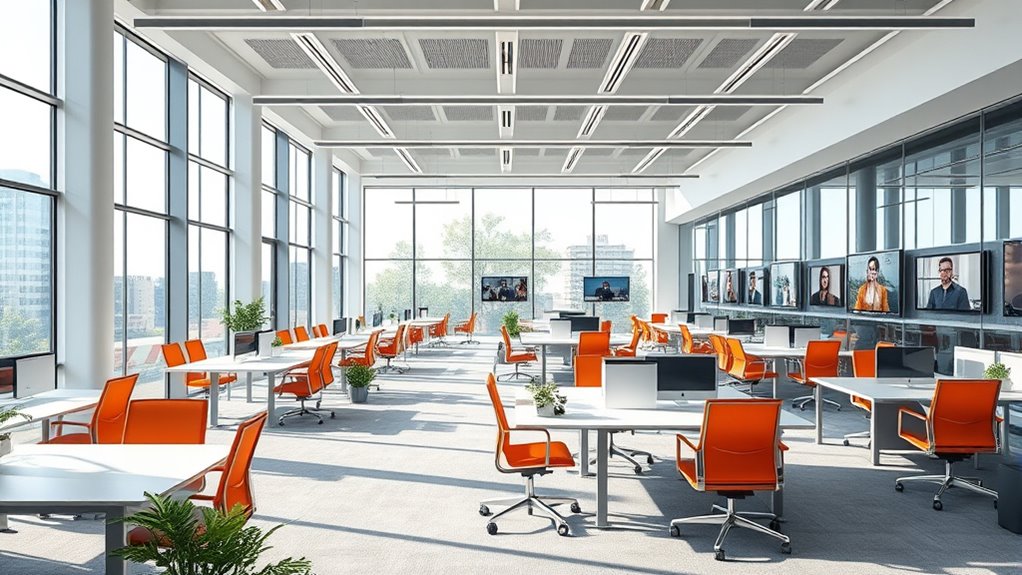
The shift toward flexible and remote workspaces is transforming how businesses operate and how employees engage with their jobs. You now have the freedom to choose where and how you work, breaking free from traditional office constraints. You can also incorporate elements of home decoration inspiration to create a more comfortable and motivating environment at your remote workspace. This change allows you to balance work and personal life more effectively, reducing commute times and increasing productivity. Companies are redesigning their strategies to support remote teams, investing in digital tools that facilitate seamless communication. You can relocate to more affordable or desirable areas without affecting your career growth. As a result, workplaces are becoming more adaptable, emphasizing results over hours logged onsite. This evolution empowers you to take greater control of your work environment and schedule, fostering a more personalized and flexible approach to your professional life.
Impact of Decentralization on Employee Culture and Collaboration
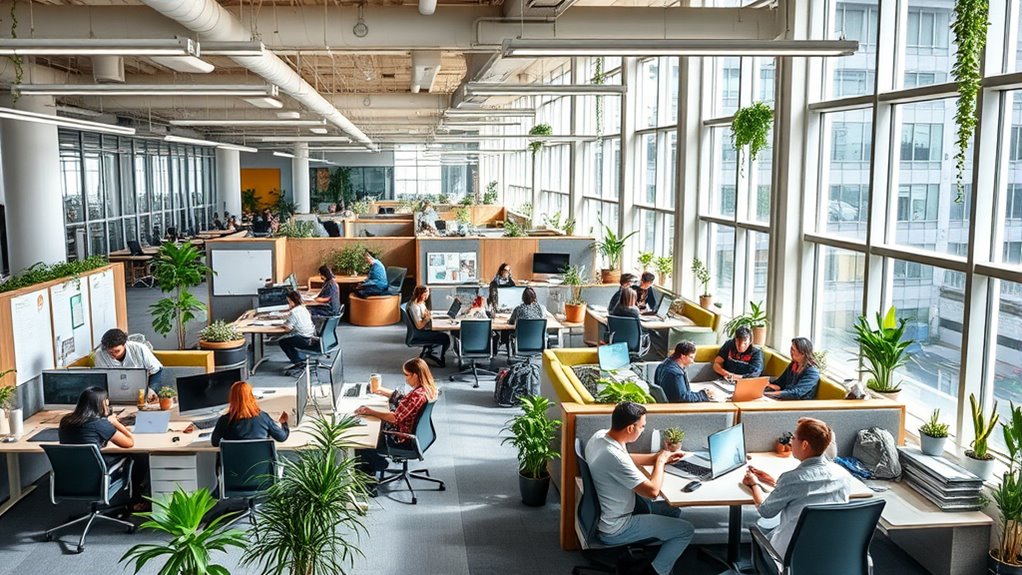
Decentralization reshapes employee culture and collaboration by dispersing teams across various locations, which can both challenge and enhance how work gets done. You might find maintaining a strong team spirit more difficult when colleagues are scattered, making it harder to build trust and shared values. On the other hand, this dispersion fosters independence, allowing you to work in environments best suited to your strengths. Collaboration tools play a pivotal role in bridging gaps, enabling real-time communication and seamless project management. Decentralization encourages a culture of flexibility and autonomy, empowering you to manage your workload more effectively. Ultimately, it pushes you to adapt your communication strategies, emphasizing transparency and inclusivity to sustain a cohesive, innovative workplace culture.
Emerging Technologies Supporting Decentralized Work Environments
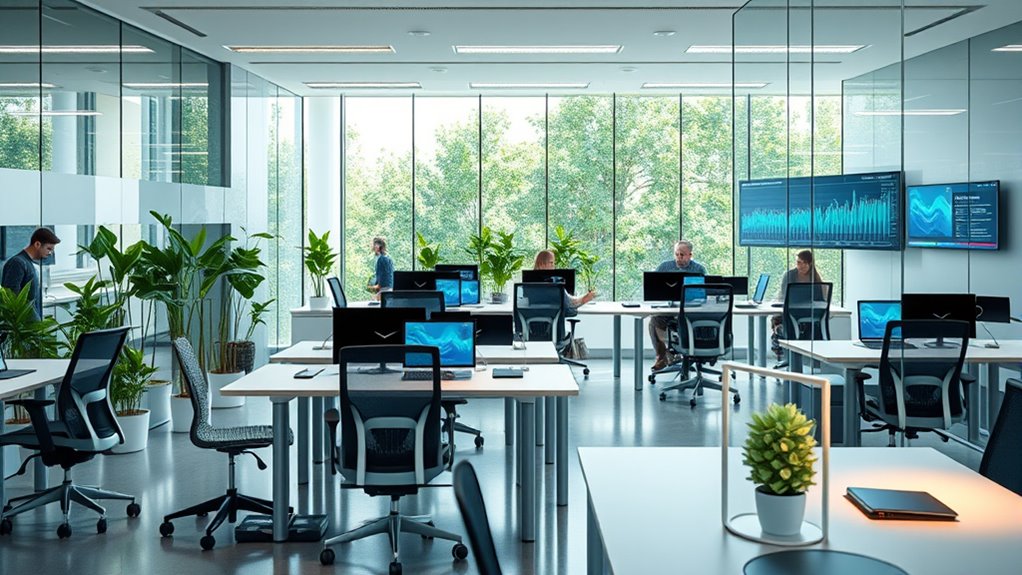
Emerging technologies are transforming how decentralized work environments operate by enabling seamless communication, collaboration, and management across dispersed teams. Cloud-based platforms like Microsoft 365 and Google Workspace provide real-time document sharing and editing, keeping everyone on the same page. Video conferencing tools such as Zoom and Teams facilitate face-to-face interaction, fostering personal connections despite physical distance. Collaboration apps like Slack and Notion streamline workflows and support instant messaging, reducing communication delays. Project management software like Asana and Trello help track tasks and deadlines transparently. Additionally, secure VPNs and cybersecurity solutions protect sensitive data across remote connections. The integration of projector technology into remote work setups can also enhance presentations and collaborative sessions during virtual meetings. These technologies empower you to work efficiently, stay connected, and manage distributed teams effectively, making decentralized offices more productive and integrated than ever before.
Cost-Efficiency and Location Choices in a Decentralized Model

Decentralized offices let you cut operational costs by choosing regional locations with lower expenses. You can strategically position your teams in areas that offer better quality-of-life and talent pools. This approach helps attract skilled workers while optimizing your overall budget. Incorporating wall organization solutions can also improve office space efficiency and create a more organized work environment.
Lower Operational Expenses
Changing location strategies and operational structures allows organizations to considerably lower their expenses. By decentralizing, you can choose more affordable areas, reducing rent, utilities, and maintenance costs. You also gain flexibility to scale operations up or down without the burden of a traditional office setup. This approach minimizes overhead and optimizes resource allocation. Here is a quick comparison:
| Traditional Office | Decentralized Office |
|---|---|
| High rent costs | Lower rent in multiple locations |
| Centralized utilities | Distributed utility expenses |
| Large space needs | Smaller, adaptable spaces |
| Long-term leases | Short-term, flexible leases |
| Maintenance costs | Reduced maintenance requirements |
This model helps you save money, adapt quickly, and improve financial stability. Additionally, forsale 100 options can facilitate the transition to a decentralized setup by offering flexible purchasing choices.
Strategic Regional Placement
Strategic regional placement plays a crucial role in maximizing the cost-efficiency of decentralized offices. By choosing locations with favorable economic conditions, you reduce overheads and enhance operational flexibility. You should consider factors like local wages, real estate costs, and infrastructure quality to optimize your footprint. Selecting areas with strong talent pools without the premium prices of major metro hubs can boost productivity and reduce expenses. Additionally, proximity to clients or suppliers can streamline logistics and improve service delivery. Implementing vertical storage solutions and multi-functional furniture can further optimize space in regional offices, making the most of available real estate.
Enhanced Talent Attraction
Choosing the right locations for your decentralized offices can considerably boost your ability to attract top talent while controlling costs. By selecting areas with a strong talent pool and affordable living costs, you make your company more appealing to a broader range of candidates. Decentralized setups allow you to tap into regional markets that offer high-quality talent without the premium wages of major metro areas. You can also leverage location choices to meet employees’ preferences for work-life balance, better amenities, or proximity to family. Cost-effective regions like Dayton or Colorado Springs help reduce overhead, enabling you to invest more in employee benefits or growth initiatives. Additionally, understanding Craft and Textiles can inspire innovative office environments that foster creativity and engagement among employees. Ultimately, strategic location decisions give you a competitive edge in attracting skilled professionals enthusiastic for flexible, community-oriented workplaces.
The Rise of Community-Driven and Hybrid Office Solutions

As organizations embrace decentralization, community-driven and hybrid office solutions are gaining momentum because they foster collaboration, flexibility, and local engagement. These models allow you to tailor workspaces to meet diverse needs while maintaining strong connections within your teams. They encourage employees to work closer to home, reducing commute times and boosting satisfaction. Hybrid setups combine remote and in-office work, giving your team more autonomy. Community-driven offices promote local partnerships and shared resources, strengthening your presence in different areas. This approach also supports small businesses and local economies. Additionally, understanding retail hours can help organizations coordinate visits to local partners and optimize community engagement strategies.
Decentralized Finance and Its Role in Modern Office Operations

Decentralized finance (DeFi) is transforming how modern offices manage financial transactions and operations by offering greater transparency, security, and efficiency. With blockchain technology, you can process payments and manage assets without relying on traditional banks, reducing costs and delays. DeFi platforms enable real-time tracking of transactions, giving you clear visibility into financial activities. Smart contracts automate agreements, minimizing manual intervention and errors. This decentralization also enhances security, reducing fraud risks through cryptographic safeguards. As you adopt DeFi, you gain more control over your finances and improve operational agility. It supports remote and distributed teams by facilitating seamless cross-border transactions. Additionally, implementing easy document management solutions can further streamline financial workflows and reduce administrative burdens. Overall, integrating DeFi into your office operations streamlines financial workflows while increasing trust and resilience in your financial ecosystem.
Governance and Innovation Through Decentralized Autonomous Organizations

You can see how DAO governance structures empower communities to make decisions collectively, fostering transparency and shared ownership. However, challenges like low voter turnout and decision-making bottlenecks can hinder progress. Looking ahead, exploring innovative solutions and adaptive frameworks will be key to unveiling DAO’s full potential in decentralized offices. Additionally, implementing robust safety measures can help mitigate risks associated with AI integration in these new workplace models.
DAO Governance Structures
Have you ever wondered how governance works within decentralized autonomous organizations (DAOs)? In DAOs, decision-making is spread across members, often through blockchain-based voting systems. This structure promotes transparency and collective input but can face challenges like low voter engagement. You’ll find that governance is typically organized around proposals, voting, and token-weighted influence. Key features include:
- Transparent voting records visible on the blockchain
- Token-based influence, where voting power aligns with stake
- Automated enforcement of decisions via smart contracts
- Community proposals driving strategic changes
- Challenges with voter turnout and minority rights
- Creativity in designing innovative governance models can help address some of these challenges and improve participation.
These elements make DAO governance more democratic, yet require ongoing refinement to balance influence, participation, and security in decentralized environments.
Community-Driven Decision Making
Community-driven decision making in DAOs opens a new level of collective innovation by empowering members to shape the organization’s direction. You participate directly in governance, voting on proposals that influence projects and policies. This collaborative approach fosters diverse ideas and shared ownership. To understand its impact, consider this comparison:
| Aspect | Traditional Organizations | DAOs |
|---|---|---|
| Decision Process | Centralized authority | Member voting and proposals |
| Transparency | Limited, internal reports | Open, blockchain-based |
| Flexibility | Slow, hierarchical | Fast, adaptable |
| Engagement | Top-down communication | Community participation |
Through this structure, DAOs create a culture of transparency, inclusivity, and innovation, transforming workplace decision-making into a collective effort.
Challenges and Future Outlook
Despite the promising potential of Decentralized Autonomous Organizations (DAOs) to revolutionize governance and innovation, they face significant challenges that could hinder widespread adoption. Voter apathy and low participation threaten DAO legitimacy and decision-making effectiveness. Regulatory uncertainty creates hurdles for legal recognition and compliance, slowing growth. Technical complexities and security vulnerabilities can undermine trust and stability. Scaling governance processes while maintaining transparency remains difficult as DAOs expand. Additionally, balancing decentralization with effective oversight is a persistent concern.
- Low voter engagement risks dominance by minority interests
- Regulatory frameworks are still evolving and uncertain
- Security breaches could erode user confidence
- Managing growth without compromising transparency
- Striking the right balance between decentralization and oversight
Sustainable Energy and Infrastructure for Distributed Workspaces

As distributed workspaces become more prevalent, integrating sustainable energy and resilient infrastructure is essential to support their long-term viability. You need reliable power sources that reduce carbon footprints and ensure uninterrupted operations. Solar panels, microgrids, and energy storage systems can help you generate clean energy locally, decreasing dependence on traditional grids. Investing in smart infrastructure allows for better energy management, optimizing usage and cutting costs. Resilient infrastructure also means durable internet connectivity and adaptable facilities that withstand environmental challenges. By prioritizing sustainability, you’ll improve your ESG scores and appeal to eco-conscious clients and employees. This approach not only enhances your organization’s resilience but also aligns with global efforts to combat climate change. Ultimately, sustainable energy and infrastructure form the backbone of successful, decentralized work environments.
Frequently Asked Questions
How Do Decentralized Offices Impact Employee Performance and Accountability?
Decentralized offices boost your performance by giving you more flexibility and control over your work environment. You’re likely more motivated and productive when you can choose where and how to work. Accountability shifts to you, as you’re responsible for managing your tasks without constant supervision. Clear goals and communication tools help you stay on track, ensuring you meet deadlines and maintain high standards, even outside traditional office settings.
What Legal Considerations Exist for Managing Decentralized Workspaces Across Jurisdictions?
Picture maneuvering a maze of legal rules across different states and countries. You need to guarantee compliance with varying employment laws, tax regulations, and data privacy standards. Managing decentralized workspaces requires understanding jurisdiction-specific requirements and implementing policies that address local labor laws, health and safety standards, and contractual obligations. Staying informed and adaptable helps you avoid legal pitfalls and maintain smooth operations across diverse regions.
How Do Decentralized Offices Influence Company Culture and Employee Loyalty?
Decentralized offices can boost your company culture by fostering flexibility, autonomy, and local community engagement. You’ll see increased employee loyalty as workers appreciate work-life balance and the freedom to choose their work environment. By supporting collaboration across diverse locations and leveraging technology, you create a sense of belonging. This approach helps your team stay motivated, connected, and committed, ultimately strengthening your company’s culture and retention.
What Cybersecurity Risks Are Associated With Decentralized Workplace Technologies?
You face cybersecurity risks like data breaches, hacking, and unauthorized access when using decentralized workplace technologies. Weak security protocols or outdated systems can leave vulnerabilities open. Phishing attacks and malware pose additional threats. To protect your organization, you should implement strong encryption, multi-factor authentication, and regular security updates. Educate your team on cybersecurity best practices, and monitor your network continuously to detect and respond to potential threats promptly.
How Can Organizations Effectively Measure Success in Decentralized Office Models?
You can measure success in decentralized office models by tracking key performance indicators like employee productivity, engagement, and work-life balance. Use surveys to gather feedback on collaboration and communication tools, and monitor operational costs and flexibility benefits. Regularly evaluate project completion rates and client satisfaction. By analyzing these metrics, you’ll see whether decentralization improves efficiency, fosters innovation, and aligns with your organization’s goals.
Conclusion
As you navigate the evolving landscape of decentralized offices, think of it as steering a ship through uncharted waters. Flexibility and innovation are your compass, guiding you toward sustainable and cost-effective horizons. Embrace emerging technologies and community-driven solutions to build a resilient, collaborative environment. With each wave of change, you’re shaping a future where the workplace isn’t just a place—it’s a dynamic, decentralized ecosystem that adapts and thrives.