
🔍 Read the full analysis: Make Meeting Notes Easier To Follow With These 13 AI Transcription Tools on ThorstenMeyerAI.com

Get the little things that make your day delivered free with Prime
- Fast, free delivery on millions of items
- Prime Video, Amazon Music and more included
- Member-only deals all year
TL;DR
A ThorstenMeyerAI.com roundup compares 13 tools for capturing meetings and turning recordings into text, spanning desk hardware, portable recorders, wearables, a pen and transcription software. The article highlights differences in workflow and form factor but does not establish comparative transcription accuracy, subscription terms or integrations.
ThorstenMeyerAI.com has published a 13-tool roundup of products for recording meetings and turning audio into notes, comparing desk-based hardware, portable recorders, wearables, a pen-shaped device and transcription software. The guide recommends the HiDock H1E as its top pick for a desk setup and Philips SpeechExec for buyers seeking a conventional transcription workflow, while saying shoppers should verify accuracy, integrations and subscription details independently.
The roundup treats the products as options for different routines, rather than interchangeable meeting transcription tools. The HiDock H1E combines meeting note-taking with a desk dock; Philips SpeechExec is the software-focused choice described in the guide; and the Fieldy 3 is presented as a wearable option for capturing conversations away from a desk. Other formats in the selection include pocket recorders, a wristband recorder, an Apple Watch-band recorder and a pen-shaped recorder.
The source says its ranking considers how directly each product supports a meeting workflow, including recording access, transcription and summary features, movement from audio to notes, and the practicality of each form factor, as do other AI meeting transcription recorders. It also weighs app dependence, storage, translation claims and whether a product is software-first or requires hardware. The guide cautions that storage capacity alone does not establish whether a device will suit a user’s transfer and transcription habits.
Some recorder listings include translation features, but the source advises checking supported languages and whether translation is live or happens after recording. It does not provide comparative test results for transcription accuracy. Nor does the supplied material establish subscription terms, integrations or full language support for all 13 products.
The 13 picks
- 1
 Gem AI Voice Recorder for Apple Watch BandsView on Amazon →
- 2
 AI Voice Recorder with Automatic Transcription and Real-Time TranslationView on Amazon →
- 3
 Philips SpeechExec Transcribe Software, 2-Year Subscription, Version 11.5View on Amazon →
- 4
 Tupuniu AI Voice Recorder with 64GB Storage and TranscriptionView on Amazon →
- 5
 DOWAY AI Voice Recorder and Note Taker, 64GB, Silver GrayView on Amazon →
- 6
 Fieldy 3 AI Wearable Transcriber, BlackView on Amazon →
- 7
 Wearable AI Voice Recorder Wristband with Transcription, Summaries, and Mind…View on Amazon →
- 8
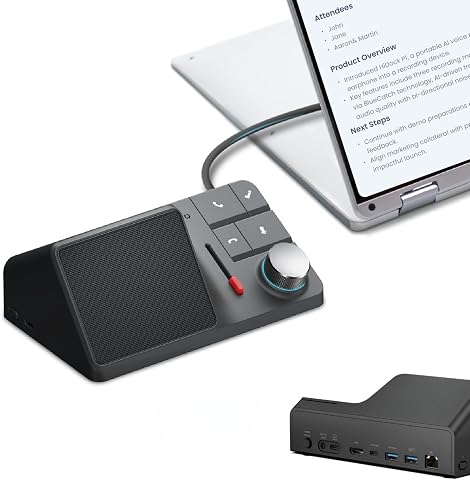 HiDock H1E AI Meeting Note-Taker and 8-in-1 Docking StationView on Amazon →
- 9
 Neyes AI Voice Recorder Pen with Transcription and Real-Time TranslationView on Amazon →
- 10
 viaim NoteKit AI Meeting Voice RecorderView on Amazon →
- 11
 NOTEVOX AI Voice Recorder with 128GB Storage and Transcription AppView on Amazon →
- 12
 RECPOINT AI Voice Recorder with Transcription and SummarizationView on Amazon →
- 13
 AI Voice Recorder with Magnetic Back, Transcription, Summaries, and TranslationView on Amazon →
Choosing a Tool for the Meeting Routine
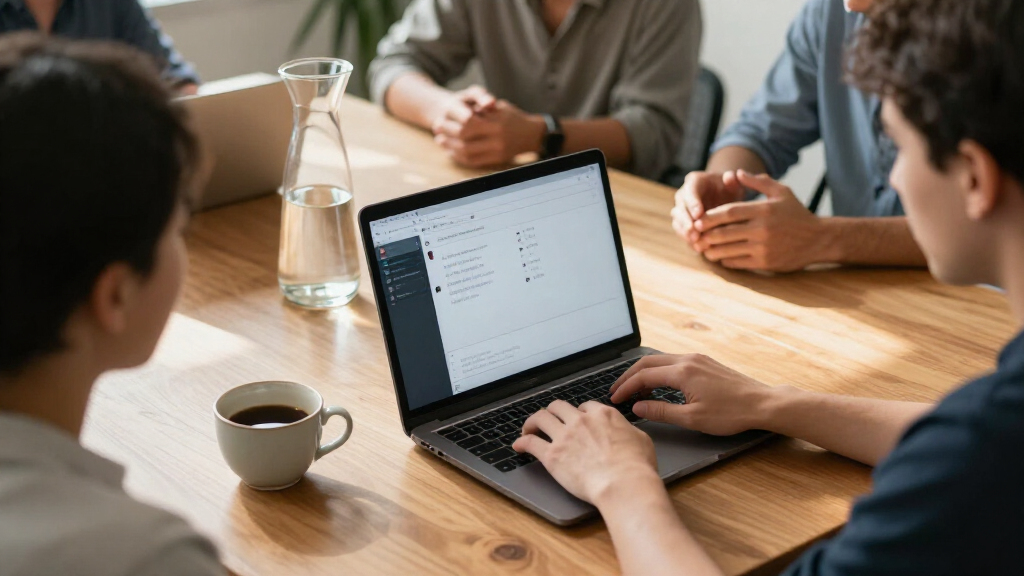
The comparison foregrounds a practical decision: where meetings happen and how people work with recordings may matter more than a long list of advertised features. A device kept at a desk may suit regular calls from one workstation, while a portable or wearable recorder may better fit conversations across rooms or outside an office. Software-first tools can avoid dedicated recording hardware but may require more setup, according to the source.
That choice affects more than convenience. People who need searchable transcripts, summaries or shareable notes should check how audio moves into those outputs and how the results can be retrieved. The guide also warns that summaries do not replace checking names, decisions and action items against the original audio. That matters when meeting notes are used to record responsibilities or inform later decisions.
The roundup is a starting point, not evidence that one product will transcribe every team’s meetings reliably. Recording conditions, overlapping speech, accents and specialist vocabulary can affect results. Buyers with accuracy requirements should test a representative recording and confirm that playback is available to check uncertain passages.
Products Worth Considering

Withings ScanWatch Light Hybrid Smartwatch, Black

Garmin Forerunner 245 Music GPS Running Smartwatch, Black

Fitbit Versa 4 Health and Fitness Smartwatch with GPS, Heart Rate and Sleep Tracking, Alexa, Water Resistant, Black
As an affiliate, we earn on qualifying purchases.
How the 13 Picks Were Compared
The source describes the list as a comparison of tools for capturing conversations and making usable text, rather than a general survey of voice recorders. It says the HiDock H1E ranks first because its meeting-note purpose is combined with a desk setup, followed by Philips SpeechExec for people prioritizing transcription software. Other products are arranged around the distinct uses suggested by their stated features and formats.
The supplied source does not include the full names or specifications of every item in the 13-product list. It identifies several formats and products, including the Fieldy 3, a wristband recorder, an Apple Watch-band recorder and NOTEVOX, which is listed with 128GB of storage. It also mentions several 64GB recorders without naming all of them in the provided text. The storage figures are product-listing details, not measures of transcript quality.
The guide’s selection advice is to review the whole path from capture to a usable record: how recording starts and stops, where processing occurs, whether an app or account is required, and how transcripts are exported or organized. It says product listings alone do not establish accuracy, supported integrations or subscription terms.
“The main tradeoffs are whether you want a dedicated recorder or software, how much you value summaries and translation, and whether the device fits your routine.”
— ThorstenMeyerAI.com roundup
Accuracy, Plans and Language Support
The supplied comparison does not report controlled tests showing how accurately the 13 products transcribe the same recordings, nor does it establish which performs best with noisy rooms, overlapping speakers, accents or technical language. It also does not confirm the subscription costs, integrations, supported language pairs or processing arrangements for each product. Those details may vary by product or plan and should be checked with vendors.
Translation is another open point: a listing may refer to live translation, translation after recording or translation of an existing transcript. The source does not provide a complete feature-by-feature account for every pick. It also does not include all 13 product names in the supplied material, so a full item-by-item assessment cannot be reconstructed from this source alone.
What Buyers Should Verify
The article does not announce a product launch or a forthcoming test; it is a buyer’s comparison. Its practical next step is for readers to match a device or software workflow to their meeting routine, then verify details directly with the provider. A short test using realistic meeting audio can show how well a tool handles the room, speakers and vocabulary a buyer actually encounters.
Before relying on a transcript, buyers should check how to replay audio alongside text, whether speaker identification is available, how notes can be exported, and whether processing requires an app, account or ongoing plan. Teams handling multilingual meetings should confirm specific language pairs and whether translation is live or post-recording. The source offers no confirmed schedule for further testing or updates to its ranking.
Key Questions
Which tools does the roundup recommend?
The source ranks HiDock H1E first for a desk-based meeting-note setup and points to Philips SpeechExec for buyers seeking a traditional transcription workflow. It presents Fieldy 3 as a wearable option for conversations away from a desk. These recommendations reflect the guide’s stated use cases, not comparative accuracy testing.
Does the article prove which tool transcribes most accurately?
No. The supplied material does not provide side-by-side accuracy results. It recommends testing a representative recording, since room noise, microphone placement, overlapping speech, accents and technical terms can affect transcripts.
Are translation features the same across the products?
The source does not establish that. Translation may happen live, after a recording or from an existing transcript. Buyers should confirm the supported language pairs and the timing of translation for the specific product.
What should buyers check before choosing a tool?
Check how recording starts and stops, where audio is processed, whether an app or account is needed, and how notes can be exported and organized. Also verify subscription terms, integrations and playback options; the source says product listings do not confirm those details.
Source: ThorstenMeyerAI.com