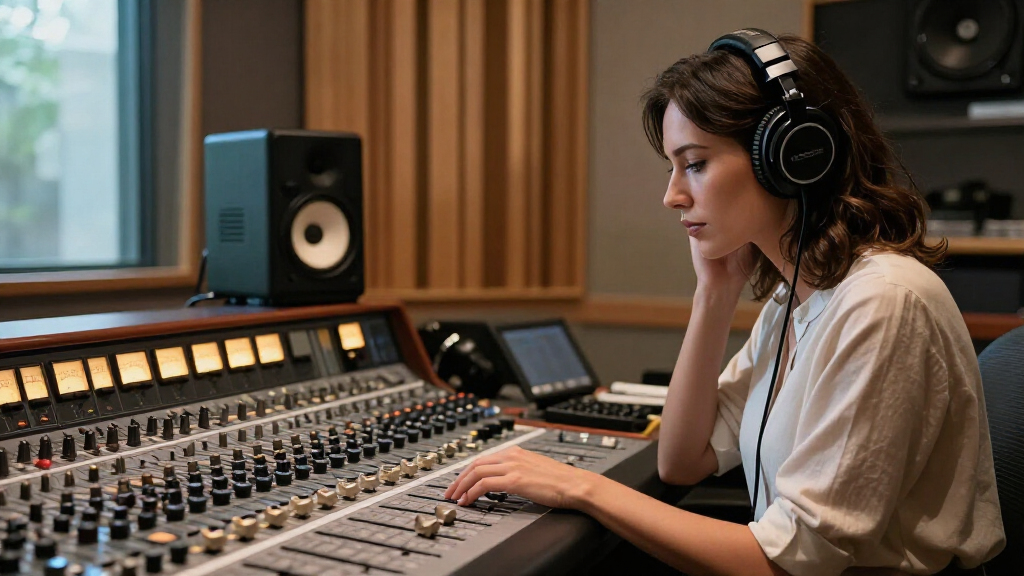

🔍 Read the full analysis: 10 Best Studio Monitor Headphones For Sound Engineers Mixing And Tracking In 2027 on ThorstenMeyerAI.com

Get the little things that make your day delivered free with Prime
- Fast, free delivery on millions of items
- Prime Video, Amazon Music and more included
- Member-only deals all year
TL;DR
ThorstenMeyerAI.com’s guide compares 10 studio monitor headphones for mixing and tracking, naming the Audio-Technica ATH-M50x its best overall pick and the Sony MDR7506 a tracking choice. The roundup emphasizes that isolation, tonal character, comfort and cable design involve tradeoffs; it does not provide test measurements or a dated product update.
As detailed in the original studio monitor headphone guide, ThorstenMeyerAI.com has published a 10-model guide to studio monitor headphones for mixing and tracking, naming the Audio-Technica ATH-M50x its best overall choice and the Sony MDR7506 a strong option for tracking in noisy settings. The guide focuses on practical tradeoffs—including isolation, sound character, comfort and durability—rather than presenting new product launches or comparative laboratory measurements.
The guide says its selections were informed by user feedback threads and professional audio reviews, with ranking priorities of mixing accuracy, tracking isolation and value. It favors headphones described as relatively neutral, while cautioning that no model delivers a perfectly flat response for every listener. The source does not identify the specific reviews, set out a scoring method or provide measured frequency-response data.
Among the named choices, the guide describes the ATH-M50x as clear and familiar to engineers, and the MDR7506 as a durable tracking tool with pronounced high-frequency detail. It also names the ATH-M20x, Sennheiser HD 280 Pro, TASCAM TH-02 and OneOdio Pro-10. The supplied material does not identify all 10 models, or give a complete ordered ranking, so the roundup cannot be independently reconstructed from the information provided.
The guide’s central distinction is between closed-back and open-back designs. Closed-back headphones limit sound leakage and outside noise, which can help prevent headphone bleed into microphones during recording. Open-back models allow more sound through and may provide a wider presentation in a quiet room, but are less suitable when isolation is needed. The source warns that closed-back designs can sound boxy or build up bass, making familiarity and careful listening important.
The 10 picks
- 1
 Audio-Technica ATH-M50x Professional Studio Monitor HeadphonesView on Amazon →
- 2
 Sony MDR7506 Professional Large Diaphragm HeadphonesView on Amazon →
- 3
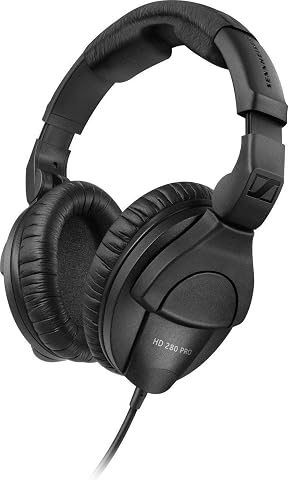 Sennheiser HD 280 Pro Headphones, BlackView on Amazon →
- 4
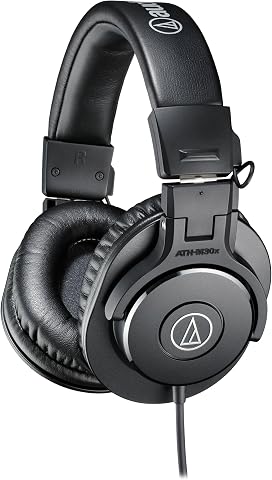 Audio-Technica ATH-M30x Professional Studio Monitor HeadphonesView on Amazon →
- 5
 Audio-Technica ATH-M20x Professional Studio Monitor HeadphonesView on Amazon →
- 6
 Audio-Technica ATH-M20x Professional Studio Monitor Headphones, WhiteView on Amazon →
- 7
 FIFINE H8 Wired Studio Monitor HeadphonesView on Amazon →
- 8
 OneOdio Pro-10 Wired Over-Ear Headphones with 50mm Drivers and Dual Jack – BlackView on Amazon →
- 9
 JOYO JMH-02 Over-Ear Studio Monitor HeadphonesView on Amazon →
- 10
 TASCAM TH-02 Professional Studio Monitor Headphones, Wired, Over EarView on Amazon →
Isolation and Accuracy Shape the Choice
For engineers and home-recording users, headphone selection affects both the recording process and the reliability of listening decisions. Isolation matters during microphone recording: sound escaping from headphones can be captured along with a vocal or instrument. A closed-back pair can reduce that risk, though it cannot replace appropriate recording technique.
For mixing, the guide’s warning about tonal coloration is relevant because a headphone that emphasizes bass or treble may influence balance decisions. Its recommendations are best treated as starting points, not a universal verdict. Fit, listening level, the room and an engineer’s familiarity with a model all affect its usefulness. Budget models may be adequate for basic tracking, according to the source, but it says they may offer less precision for judging transient detail.
Practical features also have studio consequences. Replaceable cables and ear pads can extend a pair’s useful life, while clamp force and heat can affect comfort during long sessions. These factors may matter as much as headline sound descriptions for people wearing headphones through extended recording or editing work.
Products Worth Considering

Withings BPM Connect Smart Blood Pressure Monitor

Withings BPM Vision Blood Pressure Monitor with Wi-Fi and Bluetooth

Oura Ring 5 Smart Ring, Gold, Size 8
As an affiliate, we earn on qualifying purchases.
How the Guide Weighs Headphone Tradeoffs
The source presents the list as a buying guide, not a report on a newly released product or a change in professional audio standards. It says it considered frequency-response neutrality, construction, isolation and value, and ranked accuracy ahead of tracking isolation and price. However, it does not provide publication timing, prices, test conditions or a model-by-model explanation of scores.
It also cautions against treating “flat” response as a literal guarantee. Headphone sound varies with driver placement and individual ear anatomy, the guide says, and a model’s characteristic sound may be more useful to understand than an idealized specification. For example, it describes the MDR7506’s high-frequency emphasis as potentially useful for spotting sibilance or artifacts, while noting that such a signature is not neutral in the strictest sense.
Comfort and connection design round out the guide’s criteria. The HD 280 Pro is described as isolating well but having firm clamping force, while the ATH-M50x is noted for a detachable cable. The supplied source mentions fixed cables on entry-level units generally, but does not specify the cable configuration for every model in its promised 10-pick list.
“The Audio-Technica ATH-M50x stands out as the best overall pick.”
— ThorstenMeyerAI.com guide
Missing Picks and Test Details
The supplied source material does not show the full list of 10 headphones, despite the guide’s title and stated aim. It names only six models and does not include a complete ranking, direct comparisons across all entries, or specific prices. The remaining four picks and their supporting details are not available in the material provided.
The guide says it reviewed user feedback and professional reviews, but does not identify those sources or disclose controlled listening tests, measurement equipment, sample sizes or a date of review. Claims such as “industry-standard” and “exceptional clarity” should therefore be read as the publisher’s descriptions, not independently verified findings. Current availability, pricing and product revisions are also unconfirmed.
Check Full Rankings Before Buying
Readers considering a purchase should consult the complete guide for the four models and detailed ranking absent from the supplied text, then check current retailer listings for price, availability and included accessories. A useful comparison should also confirm cable type, replacement-pad availability, impedance and fit, since the source does not provide those specifications for every selection.
For a shortlist, buyers can compare closed-back models in the same recording conditions they expect to use and try them for comfort over a realistic session length. Mixing decisions should be checked against familiar reference material and other playback systems. No follow-up tests or publication updates are announced in the source, so there is no confirmed next milestone.
Key Questions
Which headphones does the guide recommend most?
The guide names the Audio-Technica ATH-M50x as its best overall pick and the Sony MDR7506 as a tracking choice. Those are the publisher’s judgments; the supplied source does not include comparative measurements.
Are closed-back or open-back headphones better for recording?
The guide favors closed-back headphones for tracking because they limit sound leakage into microphones and reduce outside noise. Open-back designs may suit mixing in a quiet room, but their sound can leak and they offer less isolation.
Does the source provide all 10 headphone picks?
No. The provided material names six models: the ATH-M50x, MDR7506, ATH-M20x, HD 280 Pro, TASCAM TH-02 and OneOdio Pro-10. Four picks and the complete ranking are missing from the supplied text.
Does the guide prove that one model is most accurate?
No. It describes its selection approach but supplies no controlled test results or measured response data. It also says headphone sound is not perfectly flat for every listener, so the rankings should be treated as editorial recommendations, not proof of universal accuracy.
Source: ThorstenMeyerAI.com