

Resilience training programs provide practical tools and techniques to boost your emotional strength and adaptability. You’ll learn skills like emotional regulation, mindfulness, problem-solving, and positive thinking that help you handle stress and setbacks effectively. These programs focus on building self-awareness, enhancing emotional intelligence, and developing proactive strategies. By practicing these methods, you can improve your confidence and resilience in challenging situations. Keep exploring to discover how these tools can transform your ability to thrive under pressure.
Key Takeaways
- Core resilience principles emphasize emotional regulation, self-awareness, and a growth mindset through practice and proactive strategies.
- Cognitive and emotional awareness techniques, like mindfulness and journaling, help build confidence and improve emotional intelligence.
- Mindfulness, relaxation, and present-moment awareness tools reduce stress and enhance overall well-being.
- Interactive exercises such as scenario planning and role-playing develop problem-solving and adaptability skills.
- Cultivating a positive mindset through gratitude, visualization, and reframing fosters resilience and future-oriented thinking.
Core Principles of Resilience Training

What are the fundamental ideas that underpin resilience training? Resilience training is built on the belief that you can develop skills to better handle stress, adapt to change, and recover from setbacks. It emphasizes the importance of emotional regulation, self-awareness, and a growth mindset, encouraging you to view challenges as opportunities for learning. The core principle is that resilience isn’t innate but can be cultivated through practice and deliberate effort. It promotes proactive strategies like problem-solving and mindfulness, helping you build confidence and emotional strength. By fostering a supportive environment, resilience training aims to enhance your ability to stay engaged, reduce burnout, and maintain well-being under pressure. These principles serve as the foundation for lasting personal and organizational growth.
Cognitive-Behavioral Strategies for Building Resilience
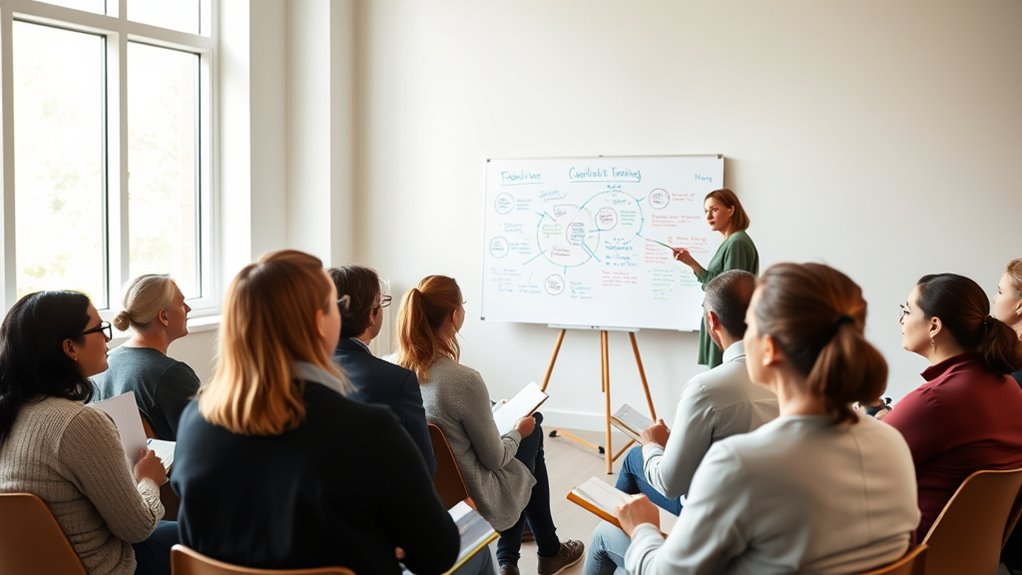
Cognitive-behavioral strategies (CBS) form a cornerstone of resilience training by helping you recognize and modify negative thought patterns that can undermine your emotional well-being. These techniques enable you to challenge unhelpful beliefs and adopt a more positive, growth-oriented mindset. To do this effectively, consider these approaches:
Cognitive-behavioral strategies help identify and transform negative thoughts to foster resilience and emotional growth.
- Thought Record Exercises: Track negative thoughts, analyze their validity, and replace them with balanced alternatives.
- Reframing Techniques: Shift your perspective on setbacks by viewing them as opportunities for growth or learning.
- Behavioral Experiments: Test out new behaviors to challenge fears and build confidence in handling stressors.
Mindfulness and Present-Moment Awareness Techniques

You can enhance your resilience by practicing mindfulness meditation, which helps you stay focused on the present moment and reduce stress. Breathing techniques, like deep diaphragmatic breaths, promote calmness during challenging situations. Incorporating these simple tools into your routine can strengthen emotional regulation and improve overall well-being. Engaging in regular mindfulness practices can also support mental clarity and health, contributing to a more balanced and resilient mindset.
Mindfulness Meditation Practices
Mindfulness meditation practices focus on cultivating present-moment awareness to reduce stress and enhance emotional regulation. By regularly practicing, you can develop greater clarity, calmness, and resilience in challenging situations. Here are three key techniques to incorporate:
- Body Scan Meditation: Focus on each part of your body, observing sensations without judgment, helping ground you in the present.
- Focused Attention: Choose an anchor like your breath or a sound, and gently bring your attention back whenever your mind wanders.
- Open Monitoring: Observe your thoughts, feelings, and bodily sensations non-judgmentally, fostering acceptance and emotional regulation.
Through consistent practice, you’ll strengthen your ability to stay present and respond thoughtfully rather than react impulsively.
Breathing Techniques for Calm
Breathing techniques for calm harness the power of intentional breathwork to anchor your awareness in the present moment and reduce stress. By focusing on slow, deep breaths, you activate your parasympathetic nervous system, which promotes relaxation. Techniques like diaphragmatic breathing encourage you to breathe deeply into your belly, calming your mind and body. Practicing mindful breathing helps you recognize stress signals early and shift your focus away from worries. When you take a moment to pause and breathe intentionally, you create space for clearer thinking and emotional regulation. Incorporating these simple practices into your daily routine or during challenging moments can build resilience and help you maintain a sense of calm amid pressure. Consistent practice makes mindfulness more natural and effective over time. Vetted
Developing Problem-Solving and Decision-Making Skills

Developing strong problem-solving and decision-making skills is essential for building resilience in the workplace, as it enables you to handle adversity effectively and make informed choices under pressure. To strengthen these skills, focus on these key strategies:
- Break down complex problems into manageable parts to identify root causes and avoid feeling overwhelmed.
- Use pros and cons lists to evaluate options objectively, minimizing emotional bias.
- Practice scenario planning to anticipate potential obstacles and develop contingency plans.
- Understanding the different tools available, such as projector contrast ratio, can also enhance your ability to analyze and adapt to various situations effectively.
Interactive Exercises and Role-Playing Scenarios

Interactive exercises and role-playing scenarios are powerful tools that bring resilience training to life by simulating real-world stressors and challenges. They allow you to practice coping strategies in a safe environment, building confidence to handle similar situations outside the training. By stepping into different roles, you gain new perspectives, enhance empathy, and improve communication skills. These activities encourage active engagement, making lessons more memorable and applicable. You learn to recognize emotional responses, manage stress, and adapt behaviors under pressure. Role-plays can recreate conflicts, setbacks, or high-stakes decisions, helping you develop resilience and problem-solving skills. Consistent practice through these methods boosts your ability to remain calm, focused, and effective when facing actual organizational or personal challenges. Incorporating interactive exercises that utilize real-life scenarios can further solidify these skills and prepare you for unpredictable situations.
Building Self-Awareness and Identifying Personal Strengths

To build resilience, you need to recognize your personal strengths and understand how they support you through challenges. Enhancing your emotional awareness helps you respond thoughtfully rather than react impulsively. Cultivating self-confidence empowers you to trust your abilities and face adversity with a positive mindset. Practicing Free Floating techniques can further support your resilience by promoting mental clarity and emotional stability.
Recognizing Personal Strengths
Recognizing your personal strengths is a vital step in building self-awareness, which forms the foundation of resilience. When you identify what you excel at, you gain confidence and clarity about your abilities. This awareness helps you leverage your strengths during challenging times. To do this effectively, consider these approaches:
- Reflect on past successes where you felt most capable and fulfilled.
- Seek feedback from trusted colleagues or friends to uncover qualities you might overlook.
- Keep a journal to track moments when you felt energized or accomplished.
- Incorporate evidence-based strategies from positive psychology and neuroscience to deepen your understanding of your personal growth.
Enhancing Emotional Awareness
Enhancing emotional awareness is a key component of building self-awareness that directly impacts your resilience. When you understand your feelings, you can respond more thoughtfully rather than react impulsively. This awareness helps you recognize emotional patterns, making it easier to manage stress and stay grounded during challenges. By paying attention to your emotions, you identify your personal strengths—such as patience, optimism, or empathy—that bolster your resilience. Practicing mindfulness, journaling, or reflection exercises can sharpen your emotional perception. The more aware you are of your emotional landscape, the better you’ll handle setbacks and maintain motivation. Understanding emotional regulation techniques can further enhance your ability to stay composed in difficult situations. Building this skill creates a foundation for healthier relationships and improved stress management, ultimately strengthening your capacity to bounce back from adversity.
Cultivating Self-Confidence
Have you ever wondered how some people seem to handle challenges with unwavering confidence? It’s often because they’ve cultivated self-awareness and recognized their strengths. To build your confidence, focus on these key practices:
- Identify your strengths by reflecting on past successes and feedback, helping you recognize what you excel at.
- Practice self-awareness through journaling or mindfulness, so you understand your emotional responses and thought patterns.
- Set achievable goals that challenge you but are within reach, allowing you to experience progress and reinforce your belief in your abilities.
- Recognizing the importance of personal branding in sports can also boost confidence by emphasizing your unique qualities and talents.
Enhancing Emotional Intelligence for Better Workplace Dynamics

Improving emotional intelligence (EI) is essential for fostering healthier workplace relationships and creating a collaborative environment. When you develop EI, you become better at recognizing and managing your emotions, which helps you respond thoughtfully rather than impulsively. This awareness allows you to empathize with colleagues, strengthening trust and teamwork. Enhanced EI also improves communication, as you learn to listen actively and interpret others’ feelings accurately. As a result, conflicts reduce, and cooperation increases. You’ll find it easier to navigate interpersonal challenges and support a positive work culture. Building EI promotes self-regulation, resilience, and a sense of connection within your team. Understanding the importance of emotional intelligence can further enhance your ability to manage workplace dynamics effectively. Ultimately, investing in your emotional intelligence leads to more effective leadership, greater job satisfaction, and a more harmonious, productive workplace.
Techniques for Managing Stress and Anxiety

Managing stress and anxiety effectively requires adopting practical techniques that can be applied quickly and consistently during challenging moments. You need simple, proven methods to stay grounded and regain control. Here are three effective techniques:
Quick, proven techniques like deep breathing, muscle relaxation, and mindfulness help manage stress and stay grounded.
- Deep Breathing: Practice slow, diaphragmatic breathing to calm your nervous system and reduce immediate stress responses.
- Progressive Muscle Relaxation: Tense and relax muscle groups to release physical tension and promote relaxation.
- Mindfulness Meditation: Focus your attention on the present moment, observing thoughts without judgment to decrease anxiety and increase awareness. Incorporating relaxation techniques into your routine can significantly improve overall well-being.
Cultivating a Positive Mindset and Future Outlook

Cultivating a positive mindset and a hopeful future outlook is essential for building resilience in the face of adversity. When you focus on strengths and possibilities, you create a mental foundation that supports persistence through challenges. Practice reframing negative thoughts into growth opportunities, and emphasize gratitude for what you have. Visualize successful outcomes to foster motivation and confidence. Engaging in mindfulness helps you stay present and reduces rumination on setbacks. Setting realistic goals and acknowledging progress reinforce your belief in a better future. By fostering optimism, you rewire your thinking to see setbacks as temporary and manageable. This mindset shift fuels resilience, enabling you to adapt, recover, and thrive despite difficulties. Developing this outlook transforms challenges into opportunities for growth and sustained motivation.
Frequently Asked Questions
How Long Does It Typically Take to See Resilience Training Results?
You typically see resilience training results within a few weeks to a few months, depending on your engagement and consistency. As you practice techniques like mindfulness, cognitive strategies, and problem-solving, you’ll notice improvements in stress management, emotional regulation, and adaptability. Keep in mind, resilience is a gradual process; sustained effort and ongoing reinforcement are key to experiencing long-term benefits and building a resilient mindset.
Can Resilience Training Be Customized for Different Industries or Roles?
Yes, resilience training can be customized for different industries or roles. You should tailor content to address specific challenges, stressors, and work environments employees face. For example, healthcare workers benefit from stress management techniques relevant to high-pressure situations, while corporate teams focus on adaptability and communication. Customization makes the training more relevant and effective, encouraging engagement and ensuring that employees develop resilience skills directly applicable to their unique roles.
What Are the Best Ways to Sustain Resilience Practices Long-Term?
To sustain resilience practices long-term, you should integrate them into daily routines and organizational culture. Keep practicing techniques like mindfulness, problem-solving, and emotional regulation regularly. Encourage ongoing learning through workshops, coaching, or peer support. Lead by example and promote open conversations about mental health. By embedding resilience into your work environment and making it part of your habits, you’ll maintain growth and adaptability over time.
How Do Organizational Culture and Leadership Influence Program Success?
Your organizational culture and leadership play vital roles in the success of resilience programs. When leaders model resilient behaviors and openly support mental health initiatives, it encourages employee participation and trust. A culture that values transparency, growth, and well-being fosters engagement and reduces stigma. By actively promoting resilience as a core value, you create an environment where employees feel empowered to develop skills and sustain resilience practices long-term.
Are There Any Risks or Downsides Associated With Resilience Training?
You should be aware that resilience training can have risks if not properly implemented. It might cause some employees to feel pressured or stigmatized, especially if they see it as a sign of weakness. Overemphasizing individual resilience can also shift responsibility away from organizational issues, leading to burnout. Additionally, poorly tailored programs might not address diverse needs, resulting in frustration or disengagement. Always guarantee training is supportive, inclusive, and integrated into broader development efforts.
Conclusion
By applying these resilience tools and techniques, you build a stronger, more adaptable mindset. Think of resilience as a muscle—you strengthen it through practice, just like research shows consistent training improves physical stamina. As you develop skills like mindfulness, problem-solving, and emotional intelligence, you’ll better navigate challenges and bounce back faster. Embrace these strategies daily, and you’ll create a resilient foundation that supports growth, success, and well-being in every aspect of your life.