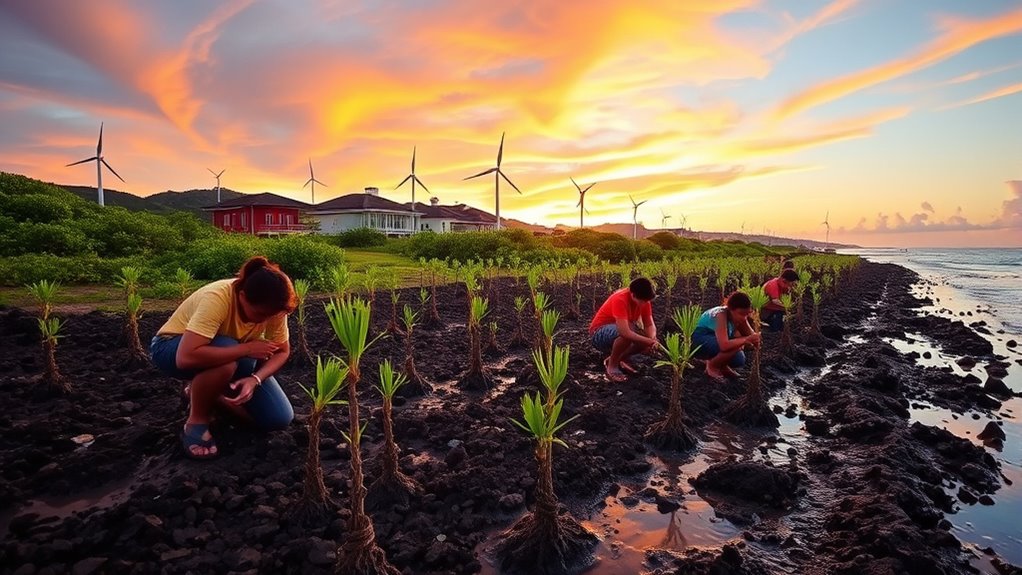

Climate resilience helps you prepare for and thrive amid environmental challenges like extreme storms, heatwaves, and flooding. It involves creating flexible strategies, investing in nature-based solutions, and strengthening communities and infrastructure before disasters strike. By understanding the risks and embracing holistic, equitable approaches, you can reduce damages and build a sustainable future. If you want to learn how to develop effective resilience strategies, there’s much more you should explore.
Key Takeaways
- Climate resilience involves proactive strategies to absorb shocks, recover quickly, and thrive amid environmental disruptions.
- Integrating natural ecosystems like wetlands and mangroves enhances protection and reduces reliance on costly infrastructure.
- Effective adaptation requires comprehensive policies, community engagement, and investments in resilient infrastructure and early warning systems.
- Addressing funding gaps and fostering innovation are essential for scalable climate resilience solutions.
- Protecting biodiversity and promoting nature-based solutions strengthen ecosystem services and community resilience against climate risks.

L-Shaped Flood Barrier Kit – Easy Snap-Together Installation, Durable Plastic for Home & Garage Flood Protection, Waterproof & Resilient Flood Defense System,Red,29pcs
Constructed from durable ABS Plastic, this Flood Barrier is lightweight and highly effective, designed to provide reliable protection…
As an affiliate, we earn on qualifying purchases.
As an affiliate, we earn on qualifying purchases.
Understanding Climate Resilience and Its Broader Scope

What exactly is climate resilience, and how does it go beyond simple adaptation? Climate resilience is your system’s ability to absorb shocks, recover quickly, and even thrive amid climate disruptions. Unlike adaptation, which focuses on specific adjustments like building flood barriers or changing farming practices, resilience encompasses a broader capacity—covering policies, infrastructure, education, and community preparedness. It’s about creating a flexible, proactive approach that anticipates risks and minimizes damage before disasters strike. Resilience isn’t just reactive; it’s an ongoing process of strengthening your entire environment, economy, and society to withstand future climate shocks. NASA’s real-time data, for example, helps communities assess vulnerabilities, but true resilience requires integrating these insights into all-encompassing strategies that promote long-term stability and recovery. Developing high-quality infrastructure that is designed with climate risks in mind is essential for building this resilience effectively.

Coastal Resilience and Climate Change: Blue Carbon, Wetlands, Estuarine Buffers, Flood Protection, Sea Level Rise, Nature-Based Solutions, Ecosystem Services
As an affiliate, we earn on qualifying purchases.
As an affiliate, we earn on qualifying purchases.
Global Economic Impacts and Financial Risks of Climate Disasters

The economic toll of climate disasters is rising rapidly, posing significant risks to businesses, governments, and communities worldwide. Insured losses are projected at $145 billion in 2025, a 6% increase from 2024, highlighting growing financial exposure. Without adaptation, businesses could see up to 7% of their earnings vanish annually by 2035. The total cost of climate-related disasters has surged from $70–80 billion annually in the late 20th century to over $200 billion today, exceeding $2.3 trillion when considering cascading effects. Insurance markets are evolving with new products like catastrophe bonds, but resilience investments lag, with less than $8 billion raised for climate resilience funds mid-2025. These mounting costs underscore the urgent need for proactive financial strategies to manage climate risks effectively. Dog names—such as those inspired by Irish heritage and culture—can serve as a reminder of the importance of resilience and adaptation in facing environmental challenges.

The Economics of Climate Resilience in Power Infrastructure
As an affiliate, we earn on qualifying purchases.
As an affiliate, we earn on qualifying purchases.
Key Threats and Vulnerable Sectors in a Changing Climate

As climate change accelerates, certain hazards pose immediate threats to industries and communities, with extreme heat, wildfires, droughts, and flooding becoming increasingly frequent and intense. Agriculture suffers from reduced yields, water scarcity, and soil degradation, directly impacting food security. The built environment faces damage from rising sea levels, storm surges, and erosion, especially in coastal cities. The energy sector struggles with grid disruptions during heatwaves and storms. Public health is at risk from heat-related illnesses, vector-borne diseases, and air quality issues. Financial services face rising claims and insurability challenges. Vulnerable populations, particularly those in poverty or lacking infrastructure, bear the brunt of these impacts. Addressing these threats requires targeted resilience measures across sectors to protect communities and sustain economic stability. Implementing climate adaptation strategies, such as resilient infrastructure and sustainable resource management, is essential for mitigating these risks effectively.

Midland – WR120B – NOAA Emergency Weather Alert Radio – Localized Programming, Trilingual Display, 60+ Emergency Alerts, Alarm, Selectable Alert Tone
NOAA Weather Scan & Alert – This emergency weather alert radio features S.A.M.E localized programming and alert you…
As an affiliate, we earn on qualifying purchases.
As an affiliate, we earn on qualifying purchases.
Addressing Gaps in Investment and Innovation for Resilience
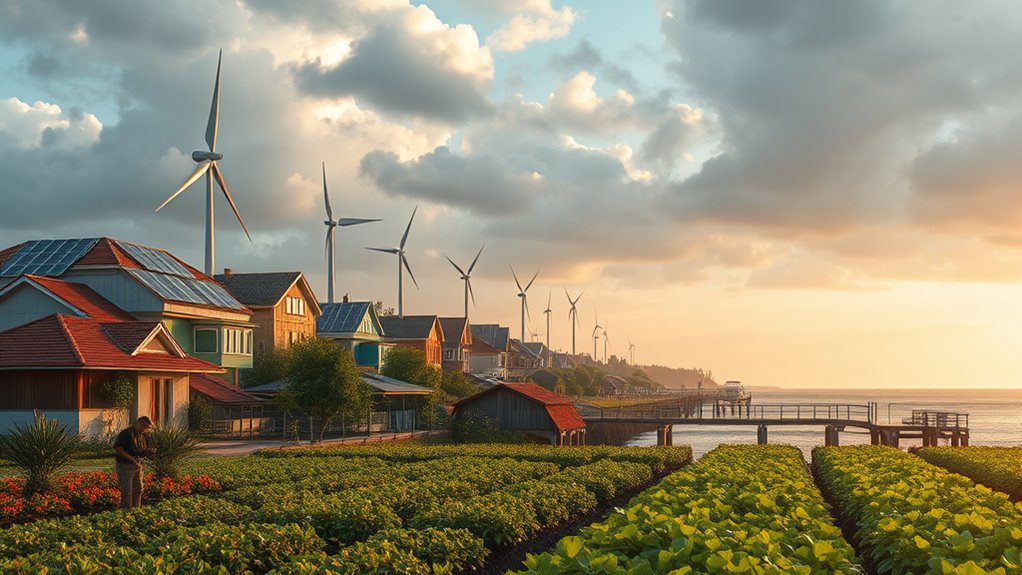
You need to recognize that current funding levels for climate resilience fall far short of what’s required, hampering progress and leaving communities vulnerable. Without targeted investments and innovative solutions, we risk falling behind in adapting to escalating climate threats. Closing these gaps is essential to build stronger, more resilient systems that can withstand future shocks. Increasing awareness of nutritional advantages of green juice can inspire sustainable practices that support community health and environmental resilience.
Funding Shortfalls Hampering Progress
Despite increasing awareness of climate risks, investments in resilience remain critically underfunded, hindering progress toward robust adaptation and mitigation efforts. You may notice that global funding for resilience projects lags far behind the scale of needed action. Currently, less than $8 billion has been raised for dedicated climate resilience funds, a fraction of what’s required—estimated at $11 billion annually just for healthcare resilience alone. This funding gap limits the development of essential tools like early warning systems, resilient infrastructure, and community preparedness programs. Without sufficient financial support, communities remain vulnerable to climate shocks, and businesses struggle to adapt effectively. Addressing these gaps demands urgent, targeted investments that prioritize risk-informed solutions, ensuring resilience efforts can keep pace with the growing frequency and severity of climate disasters. Indicators of resilience, such as signs of spoilage in perishable goods, underscore the importance of investing in early detection and preparedness measures.
Innovation Gaps in Solutions
While the urgency of climate resilience grows, innovation in solutions remains insufficient to meet the scale of the challenge. Many promising technologies and strategies are underfunded or overlooked, creating gaps that hinder progress. For example, early warning systems and urban resilience measures require urgent scaling, yet lack adequate investment. To illustrate this, consider the following:
| Innovation Area | Funding Status |
|---|---|
| Risk-informed infrastructure | Underfunded, critical needs unmet |
| Nature-based solutions | Limited investment, slow adoption |
| Community-centered tech | Emerging, but scarce resources |
Bridging these gaps demands smarter investments and policy support. Without accelerating innovation, our ability to adapt and bounce back from climate shocks remains compromised. Closing these gaps is essential for building truly resilient systems worldwide. Additionally, increasing awareness of climate adaptation strategies can help mobilize resources and foster innovation in these critical areas.
Harnessing Nature-Based Solutions for Sustainable Adaptation

You can strengthen resilience by leveraging natural ecosystems that recover from disturbances and provide essential services. These ecosystems support communities through flood control, air purification, and soil stabilization, reducing reliance on costly infrastructure. By integrating natural solutions with policy efforts, you create a holistic approach that enhances sustainability and adapts to climate challenges effectively. Incorporating goal setting and strategic planning can further optimize the effectiveness of these natural-based interventions.
Natural Ecosystems Enhance Resilience
Have you considered how natural ecosystems can serve as powerful allies in building climate resilience? These systems naturally absorb shocks and recover quickly, offering essential protection. Here’s how they enhance resilience:
- They reduce flood risks by stabilizing coastlines and wetlands, acting as natural buffers.
- They improve water quality and availability through filtration and groundwater recharge.
- They support biodiversity, which strengthens ecosystem stability and adaptability.
- Protecting and restoring biodiversity hotspots can maximize these benefits by maintaining critical habitats and ecological functions.
Ecosystem Services Support Communities
Ecosystem services play an essential role in supporting communities by providing natural solutions that enhance resilience to climate threats. You benefit from healthy wetlands that buffer storm surges, forests that prevent landslides, and mangroves that reduce coastal erosion. These natural features absorb floodwaters, stabilize soils, and protect infrastructure, saving you money and lives. By maintaining and restoring ecosystems, you create a sustainable shield against extreme weather. Integration with payment systems can facilitate funding and management of conservation projects. Below is a quick look at key ecosystem services supporting communities:
| Ecosystem Service | Community Benefit |
|---|---|
| Wetlands | Flood control |
| Forests | Landslide prevention |
| Mangroves | Coastal protection |
Investing in nature isn’t just eco-friendly—it’s a smart, cost-effective way to build resilience and safeguard your community’s future.
Integrating Nature and Policy
Integrating nature-based solutions into policy frameworks offers a powerful pathway to sustainable climate adaptation. You can harness natural systems to reduce risks and enhance resilience by focusing on three key actions:
- Embed natural infrastructure, like wetlands and green parks, into urban planning to manage flooding and heat.
- Develop policies that prioritize ecosystem restoration, safeguarding biodiversity while reducing disaster impacts.
- Promote cross-sector collaboration, ensuring communities, governments, and businesses work together to implement holistic, natural-based strategies.
Building Holistic and Equitable Resilience Strategies

Building holistic and equitable resilience strategies requires an all-encompassing approach that addresses social, economic, and environmental factors simultaneously. You need to prioritize understanding local vulnerabilities and exposures, so solutions are tailored and effective. Incorporate policies that promote social inclusion, ensuring marginalized communities aren’t left behind. Invest in resilient infrastructure, early warning systems, and natural solutions that work together to reduce risks. Focus on equitable resource distribution, so vulnerable populations gain access to essential services and support. Engage communities actively, fostering local ownership of resilience efforts. By integrating these elements, you create systems capable of absorbing shocks, recovering quickly, and thriving amid climate challenges. This approach not only enhances overall resilience but also promotes fairness, ensuring everyone benefits from sustainable, climate-smart development. For example, understanding local vulnerabilities helps tailor specific interventions like green infrastructure or community-based programs that bolster climate resilience.
Frequently Asked Questions
How Can Local Communities Effectively Implement Climate Resilience Strategies?
You can effectively implement climate resilience strategies by evaluating your community’s vulnerabilities and exposures first. Engage local stakeholders in planning and decision-making to ensure tailored solutions. Invest in natural solutions like wetlands or urban green spaces, and upgrade infrastructure to withstand disasters. Develop early warning systems and educate residents about risks. Prioritize holistic approaches that combine policy, technology, and community participation, making resilience an ongoing, shared effort.
What Role Do Private Sector Investments Play in Enhancing Climate Resilience?
Private sector investments are vital in boosting climate resilience because they fund innovative solutions, infrastructure projects, and early warning systems. You can encourage businesses to prioritize risk-informed investments that reduce vulnerability and strengthen communities. By supporting resilience-focused products and services, the private sector helps lower disaster costs and creates economic stability. Your role includes advocating for increased funding, integrating resilience into corporate strategies, and fostering partnerships that build adaptive capacity across sectors.
How Can Early Warning Systems Be Expanded and Improved Globally?
You can expand and improve early warning systems globally by investing in advanced technology like real-time data collection, satellite monitoring, and AI analytics. Strengthen infrastructure to guarantee alerts reach vulnerable populations quickly, especially in high-risk areas. Collaborate across governments, communities, and private sectors to share data and best practices. Prioritize funding for underdeveloped regions, and incorporate local knowledge to make warnings more effective, timely, and accessible.
What Are the Most Cost-Effective Nature-Based Solutions for Resilience?
You should focus on restoring wetlands, mangroves, and forests, as they’re cost-effective and naturally mitigate hazards like flooding, erosion, and storm surges. These ecosystems absorb excess water, stabilize coastlines, and improve biodiversity, reducing the need for costly infrastructure. Investing in natural solutions also offers long-term resilience, creating a sustainable buffer against climate impacts while supporting local communities and ecosystems. They’re powerful, cost-efficient tools for building resilience worldwide.
How Can Policymakers Ensure Equitable Distribution of Resilience Resources?
You can guarantee equitable distribution of resilience resources by engaging diverse communities in planning, prioritizing vulnerable populations, and implementing inclusive policies. Allocate funds transparently and support local initiatives tailored to specific needs. Collaborate with stakeholders across sectors to identify gaps and avoid biases. By fostering participatory decision-making and tracking outcomes, you make certain resources reach those most at risk, promoting fairness and building stronger, more resilient communities for all.
Conclusion
As you explore climate resilience, you realize it’s more than just adapting — it’s about connecting the dots in a world where nature and human efforts intertwine unexpectedly. When you invest in innovative solutions and embrace nature-based strategies, you’re not just preparing for storms ahead; you’re shaping a sustainable future where resilience becomes a shared journey. Sometimes, it’s in these moments of coincidence that your actions truly make the biggest difference.