

To reduce mental health stigma, you need to support evidence-based strategies like sharing personal stories, promoting social contact, and culturally tailored messaging. Encourage policies that protect rights, expand access to care, and integrate mental health into primary healthcare. Responsible media coverage also plays a crucial role in shaping perceptions. Sustaining progress requires ongoing efforts, community involvement, and structural reforms. Keep going to explore practical ways to change minds and influence policies effectively.
Key Takeaways
- Implement culturally tailored, multi-component education and contact programs to improve understanding and empathy toward mental health.
- Enforce policy reforms that protect rights, integrate mental health into primary care, and promote workplace mental wellness.
- Use responsible media storytelling to challenge stereotypes, highlight recovery, and foster acceptance of mental health conditions.
- Engage trusted community leaders and peer advocates to deliver relatable messages and reduce societal stigma.
- Regularly evaluate mental health initiatives to ensure sustained impact and adapt strategies for long-term cultural change.
Understanding the Scope and Impact of Mental Health Stigma

Understanding the scope and impact of mental health stigma reveals how deeply it affects individuals and society. You might not realize how widespread it is—nearly 90% of people with mental illnesses in developed countries face stigma. This discrimination discourages help-seeking, delays treatment, and worsens outcomes. It’s linked to shorter lives, with those suffering severe conditions living 10-20 years less, partly due to limited access to care. Mental health disorders are a leading cause of disability worldwide, costing societies billions annually. Over a billion people globally live with mental health issues, highlighting the urgent need to address stigma. When stigma persists, it perpetuates stereotypes, isolates individuals, and hinders progress toward accessible, compassionate mental health services for all. Recognizing mental health costs can help motivate policy changes and community support initiatives.
Evidence-Based Approaches to Combating Stigma Among Youth

Research shows that targeted, evidence-based strategies can effectively reduce mental health stigma among youth. You can implement programs like peer-led education, which improve understanding and empathy. Social contact initiatives, where youth interact with individuals with lived experience, are especially impactful. Schools and community settings are ideal for multi-component approaches that combine knowledge, attitudes, and behaviors. Tailoring messages to cultural contexts enhances credibility and resonance. Digital platforms offer scalable options, reaching youth where they are most active. The table below summarizes ideas for evidence-based stigma reduction:
| Strategy | Population Focus | Delivery Method |
|---|---|---|
| Peer Education | School-age youth | In-person, online |
| Social Contact | College students | Workshops, videos |
| Culturally Tailored Campaigns | Diverse communities | Media, social media |
| Digital Interventions | Tech-savvy youth | Apps, websites |
| Lived Experience Stories | General youth | Media, events |
Additionally, understanding the importance of evidence-based approaches is crucial for designing effective interventions that can lead to lasting change.
Effective Strategies for Changing Attitudes and Behaviors

To effectively change attitudes and behaviors related to mental health stigma, targeted strategies must go beyond simply increasing awareness. You need approaches that influence how people think and act. Here are three effective strategies:
- Facilitate direct social contact with individuals who have lived experience of mental illness. This personal connection reduces misconceptions and fosters empathy.
- Implement multi-component programs that combine education, attitude change, and behavior modification, especially in schools and workplaces.
- Tailor campaigns to cultural and linguistic contexts to ensure messages resonate and are credible within specific communities.
- Incorporate comprehensive solutions that leverage a combination of educational outreach and community engagement to sustain long-term change.
The Power of Personal Stories and Cultural Tailoring in Campaigns

Sharing authentic personal stories can humanize mental health struggles and break down stereotypes. To be most effective, campaigns should incorporate cultural relevance strategies that resonate with diverse communities. Trusted community messengers play a vital role in delivering these stories and fostering genuine connections. Incorporating local retail hours information can also help increase accessibility and participation in mental health initiatives.
Authentic Personal Narratives
Have you ever noticed how personal stories can break down barriers and foster understanding? When you share authentic experiences, you connect deeply with others, making mental health issues feel more relatable. Real stories humanize mental illness, dispelling stereotypes and reducing fear. To maximize impact, consider these key elements:
- Truthfulness: Authentic narratives resonate more than rehearsed or exaggerated stories.
- Cultural Relevance: Tailoring stories to specific backgrounds ensures they’re meaningful and credible.
- Emotional Connection: Sharing struggles and triumphs fosters empathy and encourages others to seek help.
- Incorporating personal well-being tips into storytelling can empower individuals to take proactive steps toward mental health.
Cultural Relevance Strategies
Cultural relevance substantially amplifies the impact of mental health campaigns by ensuring that messages resonate deeply with diverse communities. When you tailor messages to reflect cultural values, beliefs, and languages, you make the content more relatable and credible. Personal stories from community members can humanize mental health issues, breaking down stereotypes and fostering empathy. Cultural tailoring also involves adapting visuals, language, and delivery methods to suit specific groups, increasing engagement and trust. Consider this table to see different strategies: | Strategy | Example | |——————————|—————————————————| | Personal storytelling | Sharing local mental health success stories | | Language adaptation | Using native languages and idioms | | Cultural symbols | Incorporating community-specific icons | | Community involvement | Engaging local leaders in campaigns | | Contextual framing | Addressing culturally relevant barriers | Additionally, understanding cultural values can help identify potential barriers and facilitators to mental health support, making the campaigns more effective.
Trusted Community Messengers
Trusted community messengers play a crucial role in reducing mental health stigma by delivering authentic, relatable stories that resonate deeply with diverse audiences. When you hear personal experiences from someone within your community, it breaks down stereotypes and fosters understanding. You can leverage these messengers to create powerful campaigns that feel genuine and culturally relevant. Incorporating personal stories from individuals with lived experience can further enhance the impact of your message. Consider these strategies: 1. Share personal stories from individuals with lived experience to humanize mental health issues. 2. Tailor messages to cultural backgrounds, languages, and local values for greater impact. 3. Involve respected community leaders and peers to enhance credibility and trust.
Policy Initiatives and Structural Changes Supporting Mental Health

Policy initiatives and structural changes play a crucial role in creating an environment where mental health support is accessible and stigma is reduced. You can advocate for laws that protect the rights of people with mental health conditions, ensuring they face fewer barriers to treatment and employment. Integrating mental health services into primary care settings helps normalize mental health care and reduces discrimination. Supporting workplace policies that promote mental wellness and anti-stigma training encourages a healthier environment. Public health campaigns driven by government agencies can raise awareness and challenge stereotypes. Regular evaluation of mental health programs ensures they stay effective and responsive. Incorporating home decor solutions like wall organization systems and visual cues can subtly promote a supportive environment for mental health. By championing these policies and structural reforms, you help shift societal attitudes and create sustainable change that benefits everyone.
Media’s Role in Shaping Public Perceptions of Mental Illness
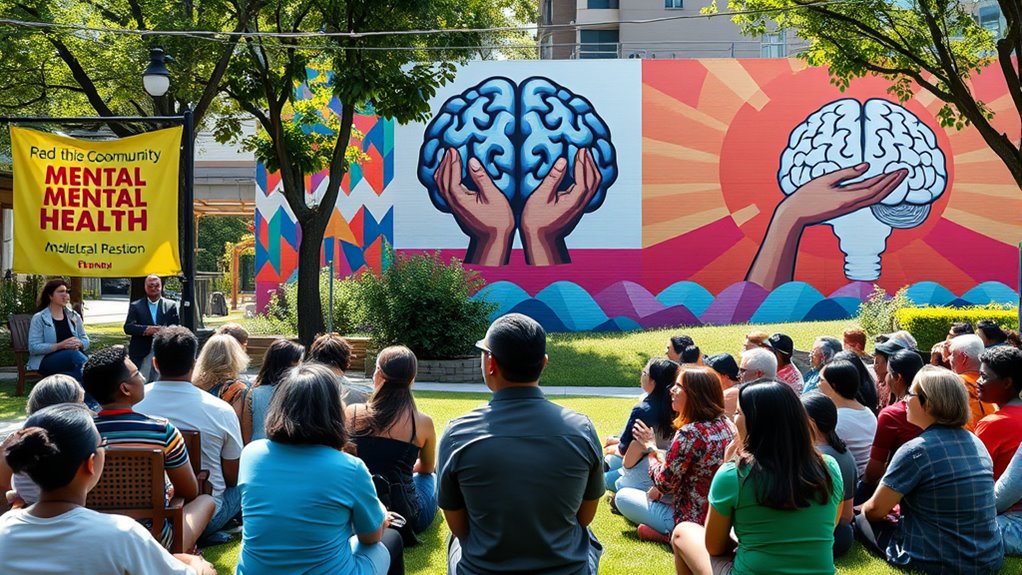
You influence how mental illness is seen through the stories you share and the images you portray in the media. Responsible storytelling can challenge stereotypes and foster understanding, while sensationalized coverage reinforces stigma. By prioritizing accurate, respectful representations, you can help reshape public perceptions and promote acceptance. Incorporating AI-driven content clusters can further enhance the accuracy and reach of mental health messaging, ensuring that information is both authoritative and accessible to diverse audiences.
Media Representation Impact
How media portrays mental illness has a powerful influence on public perceptions, often shaping attitudes more than any other factor. Your role as a consumer means recognizing that stereotypes and sensationalized stories can reinforce stigma. Here are three ways media impacts perceptions:
- Stereotyping: Media often associates mental illness with violence or unpredictability, fueling fear and misunderstanding.
- Misrepresentation: Portrayals of mental health struggles as dramatic or hopeless can distort reality and discourage help-seeking.
- Normalizing stigma: Repeated negative images reinforce societal bias, making it harder for individuals to be accepted or seek support.
- Additionally, media framing can influence how audiences interpret mental health stories, either perpetuating myths or fostering compassion.
Responsible Storytelling Practices
Responsible storytelling in the media plays a crucial role in shaping public perceptions of mental illness. You can make a difference by choosing accurate, compassionate narratives that avoid stereotypes and sensationalism. When you report on mental health, focus on stories of recovery, resilience, and hope, rather than crime or violence. Use respectful language that emphasizes personhood, not diagnosis. Highlight lived experiences from individuals who willingly share their journeys, helping normalize mental health struggles. Incorporate expert insights and evidence-based information to educate audiences. By avoiding sensational headlines and stigmatizing imagery, you foster understanding and reduce fear. Your responsible storytelling can challenge misconceptions, promote empathy, and contribute to a cultural shift toward acceptance and support for mental health.
Challenges in Sustaining Long-Term Progress

While many anti-stigma programs show immediate benefits, maintaining those gains over the long term remains a significant challenge. You often face difficulties in keeping participants engaged and preventing the resurgence of stereotypes over time. To sustain progress, consider these key issues:
- Attrition and waning motivation: Online programs and short-term initiatives tend to lose participants, reducing long-term impact.
- Limited follow-up data: Without ongoing evaluation, it’s hard to measure whether attitudes truly change and stick.
- Deep-rooted societal norms: Changing ingrained beliefs and systemic biases requires persistent effort beyond initial interventions.
Addressing these obstacles demands continuous engagement, regular assessment, and integrating stigma reduction into broader cultural and policy frameworks. Without sustained effort, initial gains risk fading, hindering lasting change.
Future Directions for Stigma Reduction and Mental Health Advocacy

Advancing stigma reduction and mental health advocacy requires a coordinated effort that embraces innovation, policy change, and community engagement. To create lasting impact, you’ll need to leverage technology, shape supportive laws, and foster authentic dialogues. Future strategies should focus on sustained engagement, especially among vulnerable populations, and integrate mental health into everyday settings like schools and workplaces. Digital platforms will play a essential role, making programs accessible and adaptable. Policies must evolve to protect rights and reduce barriers to care. Public figures sharing personal stories and culturally tailored campaigns will continue to normalize mental health conversations. Here’s a glimpse of future efforts:
| Innovation | Policy | Community |
|---|---|---|
| Digital tools | Rights protection | Personal stories |
| Virtual programs | Access improvement | Cultural relevance |
| Data analytics | Anti-discrimination laws | Peer support |
| AI-driven education | Workplace policies | Grassroots advocacy |
| Telehealth expansion | Funding & regulation | Public awareness |
Frequently Asked Questions
How Can Individuals Personally Contribute to Reducing Mental Health Stigma?
You can personally help reduce mental health stigma by openly discussing your own experiences or listening without judgment when others share theirs. Educate yourself about mental health to challenge stereotypes, and use respectful language. Support friends, family, or colleagues facing mental health challenges, and encourage them to seek help. Sharing stories publicly or on social media can normalize mental health conversations and foster acceptance, making it easier for others to seek support.
What Role Do Schools Play in Long-Term Stigma Reduction Efforts?
You play a vital role in long-term stigma reduction through schools, where nearly 90% of mental health stigma occurs. By promoting mental health education, fostering open conversations, and implementing anti-stigma programs, you help shape attitudes early. Schools that integrate mental health awareness create supportive environments, encouraging help-seeking and reducing prejudice. Your involvement can lead to lasting change, making mental health a normalized and accepted part of students’ lives.
Are There Specific Mental Health Conditions That Face More Stigma Than Others?
You’ll notice that conditions like schizophrenia, bipolar disorder, and personality disorders often face more stigma than others. People tend to associate these illnesses with dangerousness or unpredictability, leading to fear and discrimination. In contrast, anxiety and depression are becoming more understood and accepted, but stigma still persists. Recognizing these biases helps you advocate for more compassionate attitudes and supports targeted education to reduce stigma around the most misunderstood conditions.
How Can Workplaces Effectively Implement Anti-Stigma Initiatives?
You can effectively implement anti-stigma initiatives at work by fostering open conversations and providing mental health education. Encourage leadership to model acceptance and create policies that support mental wellness. Incorporate programs like workshops, peer support, and resilience training to reduce prejudices. Use real stories and promote confidentiality to build trust. Regularly evaluate efforts to guarantee they’re impactful, and involve employees in designing initiatives for a more inclusive, stigma-free environment.
What Are the Most Promising Innovations in Digital Mental Health Stigma Campaigns?
You can leverage virtual reality (VR) and interactive social media campaigns to create immersive experiences that foster empathy. These innovations allow you to simulate lived experiences of mental health challenges, breaking stereotypes visually and emotionally. By sharing personal stories via videos or live chats, you make mental health relatable and reduce stigma. Digital tools also enable targeted outreach, engaging youth and diverse communities effectively, promoting understanding and encouraging help-seeking behaviors.
Conclusion
By challenging misconceptions and sharing personal stories, you can shift perceptions just as easily as changing policies. While progress may seem slow, each small step builds momentum—like planting seeds that bloom over time. Remember, combating stigma isn’t just about awareness; it’s about fostering empathy and understanding. Together, your efforts can transform attitudes and create a future where mental health is embraced, not feared—turning the struggle into strength.