

To plan effective community engagement for social impact, start by setting clear, measurable goals aligned with community needs and guarantee transparent communication throughout. Leverage technology like social media and online platforms to make participation inclusive and accessible. Build authentic partnerships based on trust and transparency, continuously measure your progress using data-driven metrics, and stay adaptable to evolving community priorities. Sustaining engagement over time requires genuine relationships and ongoing evaluation—exploring these strategies in depth can help you create lasting change.
Key Takeaways
- Define clear, measurable community engagement goals aligned with social impact objectives.
- Leverage technology to facilitate inclusive, transparent, and secure communication and data collection.
- Build authentic, long-term partnerships based on trust, transparency, and shared purpose.
- Regularly measure, report, and adapt strategies based on community feedback and impact indicators.
- Sustain engagement through consistent effort, relationship-building, and community involvement in decision-making.
Defining Clear Community Engagement Goals
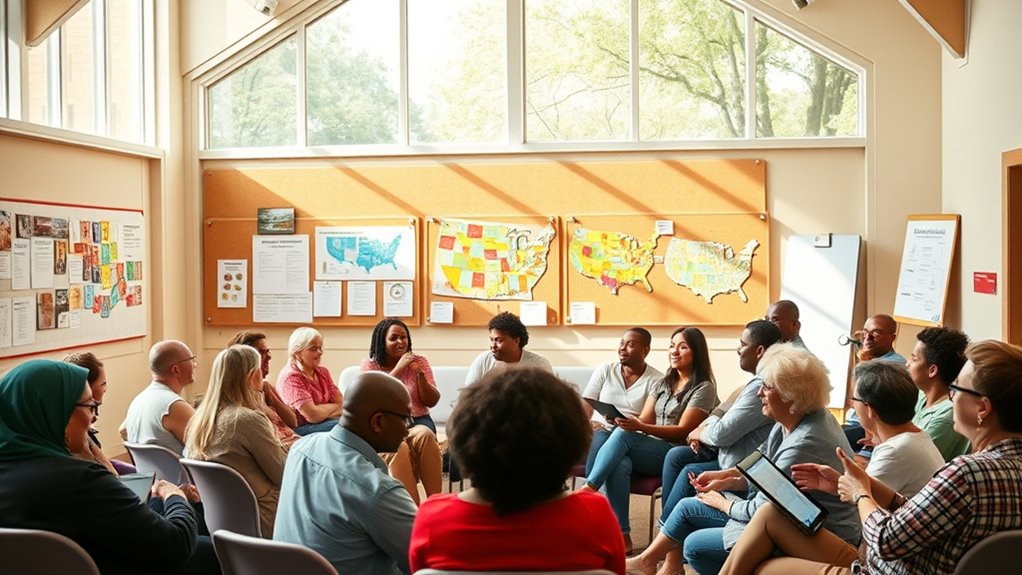
To effectively define clear community engagement goals, you need to understand what you want to achieve and how success will look. Start by identifying specific outcomes, such as building trust, increasing participation, or fostering collaboration. Clarify who your target community is and what their needs or priorities are. Set measurable objectives—like reaching a certain engagement rate or improving community health indicators—that help track progress. Be realistic about what can be accomplished within your resources and timeline. Communicate these goals transparently to all stakeholders involved, ensuring everyone understands the purpose. Regularly review and refine your goals based on feedback and results to stay aligned with community needs and enhance your impact. Clear goals guide your efforts and foster meaningful engagement.
Leveraging Technology for Inclusive Participation

Harnessing technology transforms how communities participate, making engagement more accessible and equitable. You can reach diverse voices by using digital tools like mobile apps, social media, and online platforms that break down physical barriers. These tools enable real-time feedback, broadening participation beyond traditional meetings. Imagine a table illustrating different methods:
| Method | Impact | Example |
|---|---|---|
| Online Surveys | Quick insights, wide reach | Community feedback forms |
| Social Media | Broad audience engagement | Campaign hashtags |
| Virtual Town Halls | Inclusive dialogue, real-time | Live video discussions |
Additionally, integrating educational data mining techniques can help organizers analyze participation patterns to better tailor future engagement strategies.
Building Authentic Partnerships and Collaborations

To build authentic partnerships, you need to establish clear mutual goals that align with everyone’s interests. Open, transparent communication helps foster trust and keeps all parties engaged. Over time, consistently demonstrating reliability and shared purpose will strengthen long-term collaborations. Additionally, understanding and respecting each partner’s signs of spoilage ensures that all parties maintain high standards of integrity and quality in the partnership.
Establish Mutual Goals
Establishing mutual goals is essential for building authentic partnerships and collaborations that thrive over time. When you clearly define what each party hopes to achieve, you create a shared vision that guides your efforts. This alignment helps prevent misunderstandings and ensures everyone is working toward common outcomes. To make this process effective, consider:
- Clearly articulating your community’s needs and priorities.
- Listening actively to partners’ goals and expectations.
- Setting measurable, achievable objectives everyone agrees upon.
- Regularly revisiting and adjusting goals as projects evolve.
- Incorporating clear communication strategies to maintain transparency and foster trust.
Foster Transparent Communication
How can you build authentic partnerships that truly stand the test of time? It starts with transparent communication. Be open about your goals, challenges, and expectations from the outset. Share information regularly and honestly, even when the news isn’t positive. This openness fosters trust and encourages partners to do the same. Listen actively to their concerns and feedback, demonstrating that you value their input. Avoid hiding details or making promises you can’t keep, as this erodes credibility. Use clear language and accessible channels to keep everyone informed. When transparency becomes a core value, collaborations deepen, and mutual understanding strengthens. Incorporating attention to detail ensures that all aspects of communication are precise and thorough. Ultimately, authentic partnerships thrive when you prioritize honesty, consistency, and open dialogue—building a foundation that supports long-lasting social impact.
Build Long-term Trust
Building long-term trust hinges on consistency and genuine engagement with your partners. You need to demonstrate reliability and authentic care to foster strong relationships. Focus on clear communication, shared goals, and mutual respect. This shows your commitment beyond short-term gains. To deepen trust, consider these practices:
- Maintain regular, transparent updates on progress and challenges
- Involve partners in decision-making processes
- Celebrate joint successes publicly
- Address concerns openly and promptly
- Incorporate grocery savings strategies to show practical support and shared interests in financial stewardship.
Measuring Social Impact With Data-Driven Metrics

To gauge your community’s social impact effectively, you need clear, data-driven metrics like quantitative impact indicators and behavioral change measures. These tools help you track progress beyond surface-level engagement and demonstrate real outcomes. By prioritizing data transparency practices, you can build trust and ensure accountability in your impact efforts. Recognizing the importance of understanding narcissistic traits can also aid in developing more effective community interventions and support systems.
Quantitative Impact Indicators
Quantitative impact indicators are essential tools that enable you to measure social impact objectively through data-driven metrics. They give you concrete evidence of your community’s progress and help identify areas for improvement. By tracking specific numbers, you can assess the effectiveness of your initiatives and demonstrate accountability to stakeholders. For example, you might monitor:
- Active members, showing ongoing participation and community significance
- Event attendance rates, indicating engagement peaks and overall interest
- Engagement per post, revealing how deeply your community interacts beyond likes
- Peer-to-peer interactions, reflecting authentic connections and trust-building
Using these indicators, you gain clarity on what works and what needs adjustment. They make your social impact measurable, transparent, and scalable, ultimately strengthening your community’s growth and sustainability. Familiarity with testing methodologies can also help you evaluate the effectiveness of your data collection and analysis processes.
Behavioral Change Metrics
While tracking engagement metrics like active members and event attendance provides valuable insights into community participation, understanding the true social impact requires measuring behavioral change. You need to look beyond surface-level data and focus on how people’s actions evolve over time due to your initiatives. For example, tracking shifts in health habits, voting patterns, or volunteer activity reveals whether your efforts lead to sustained positive behaviors. Surveys and follow-up assessments can capture attitude shifts and commitment levels. Behavioral change metrics also include tracking referrals, advocacy, or adoption of new community programs. These indicators show if your community members are internalizing messages and translating them into meaningful actions, which ultimately reflects the long-term success of your engagement strategies. Incorporating fraud detection techniques can also help ensure the integrity of your data collection and reporting processes.
Data Transparency Practices
Data transparency practices are essential for accurately measuring social impact and building stakeholder trust. When you share data openly, you demonstrate accountability and foster credibility. To do this effectively, focus on clear, accessible reporting that highlights your metrics’ context and methodology. Consider these key practices:
- Regularly publish detailed impact reports with detailed data sources.
- Use standardized metrics to enable comparability across initiatives.
- Incorporate visual data dashboards for real-time updates.
- Guarantee stakeholder input influences data collection and interpretation.
- Highlight your commitment to popular juice brands that prioritize health-conscious consumers, demonstrating transparency in product information and sourcing practices.
Ensuring Transparency and Accountability

Transparency and accountability are essential for building trust and ensuring that community engagement efforts deliver meaningful results. When you openly share your goals, processes, and outcomes, community members see that you value honesty and integrity. Clear communication about decision-making and progress keeps everyone informed and involved. You must establish systems to track and report on your initiatives, making data accessible and understandable. Holding yourself accountable involves setting measurable targets and regularly evaluating your progress, then adjusting strategies as needed. When you demonstrate transparency and responsibility, you foster stronger relationships, reduce skepticism, and encourage ongoing participation. Additionally, understanding the importance of performance metrics can help you assess the effectiveness of your initiatives more objectively. When you demonstrate transparency and responsibility, you foster stronger relationships, reduce skepticism, and encourage ongoing participation. Ultimately, this approach creates a foundation of trust that sustains long-term community engagement and amplifies social impact.
Adapting Strategies to Evolving Community Needs

As community needs evolve, it’s essential to regularly reassess and adjust your engagement strategies to stay relevant and effective. You need to stay flexible, listening actively and responding to changing priorities. Keep these approaches in mind:
- Conduct regular community feedback sessions to identify new concerns.
- Use data analytics to track shifting engagement patterns and interests.
- Collaborate with local leaders to understand emerging issues.
- Adapt your communication channels to meet new preferences, like social media or offline events.
Sustaining Engagement for Long-Term Impact

Building on your efforts to adapt engagement strategies to changing community needs, maintaining long-term involvement requires consistent effort and strategic planning. You need to foster genuine relationships by regularly communicating and demonstrating transparency. Set clear goals and track key community engagement metrics, like member retention, participation longevity, and peer interactions, to measure progress. Encourage shared ownership by involving community members in decision-making, which builds trust and relevance. Leverage storytelling and authentic narratives to deepen emotional connections and motivate ongoing participation. Use technology to facilitate seamless online and offline engagement, ensuring accessibility and inclusivity. Ultimately, stay adaptable by continuously reviewing feedback and shifting strategies to meet evolving community priorities. Sustaining engagement ultimately depends on your commitment to meaningful, transparent, and responsive involvement.
Frequently Asked Questions
How Can Communities Effectively Manage Digital Misinformation During Engagement Initiatives?
To effectively manage digital misinformation, you should prioritize transparent communication and fact-based messaging. Engage your community through trusted sources and encourage critical thinking. Use real-time monitoring tools to identify false information early and address it promptly. Foster open dialogue, promote media literacy, and collaborate with credible partners to build trust. By actively responding to misinformation, you help maintain engagement’s integrity and strengthen community resilience.
What Are Innovative Methods to Motivate Diverse Community Participation?
You can motivate diverse community participation by leveraging authentic storytelling that resonates with different groups’ experiences and values. Use multilingual outreach, tailored events, and digital platforms that meet people where they are—both online and offline. Empower community leaders as ambassadors to foster trust, and create inclusive activities that address specific needs. Offering tangible benefits and transparent communication encourages sustained involvement, making everyone feel valued and motivated to contribute.
How Do Cultural Differences Influence Engagement Strategies and Outcomes?
Cultural differences shape how you design engagement strategies and influence outcomes. You need to understand local values, communication styles, and social norms to foster trust and participation. Tailor your messaging, use culturally relevant channels, and involve community leaders to guarantee inclusivity. By respecting diverse perspectives, you’ll create more meaningful interactions, reduce misunderstandings, and build stronger, lasting relationships that reflect the community’s unique identity and needs.
What Role Does Community Feedback Play in Shaping Social Impact Policies?
Community feedback is like a compass guiding your social impact policies, ensuring they align with real needs. You gather insights directly from those affected, making your initiatives more relevant and effective. By listening actively, you can adjust strategies, build trust, and foster genuine collaboration. Incorporating feedback creates policies that resonate, increase accountability, and drive sustainable change, ultimately strengthening community bonds and amplifying social impact.
How Can Organizations Sustain Engagement Beyond Initial Projects?
You can sustain engagement beyond initial projects by maintaining transparent communication and demonstrating ongoing impact. Keep communities involved through regular updates, feedback opportunities, and collaborative decision-making. Leverage technology to facilitate seamless online and offline participation. Building trust requires consistent follow-up and showing how their input influences future actions. Invest in long-term relationships, celebrate shared successes, and adapt initiatives to evolving community needs, ensuring sustained interest and commitment over time.
Conclusion
As you weave these strategies into your community initiatives, picture a vibrant tapestry coming alive—each thread representing a voice, a partnership, a shared goal. With clear goals, inclusive tech, and honest transparency, you create a lasting fabric of trust and impact. Keep adapting to the shifting colors of community needs, ensuring your efforts stand strong and beautiful for years to come. Your dedication transforms communities into thriving, interconnected landscapes of social change.