📊 Full opportunity report: Supplier Overcharge Auditing For Multi-Location Restaurants on IdeaNavigator AI — validation score, market gap, and execution plan.

Get the little things that make your day delivered free with Prime
- Fast, free delivery on millions of items
- Prime Video, Amazon Music and more included
- Member-only deals all year
TL;DR
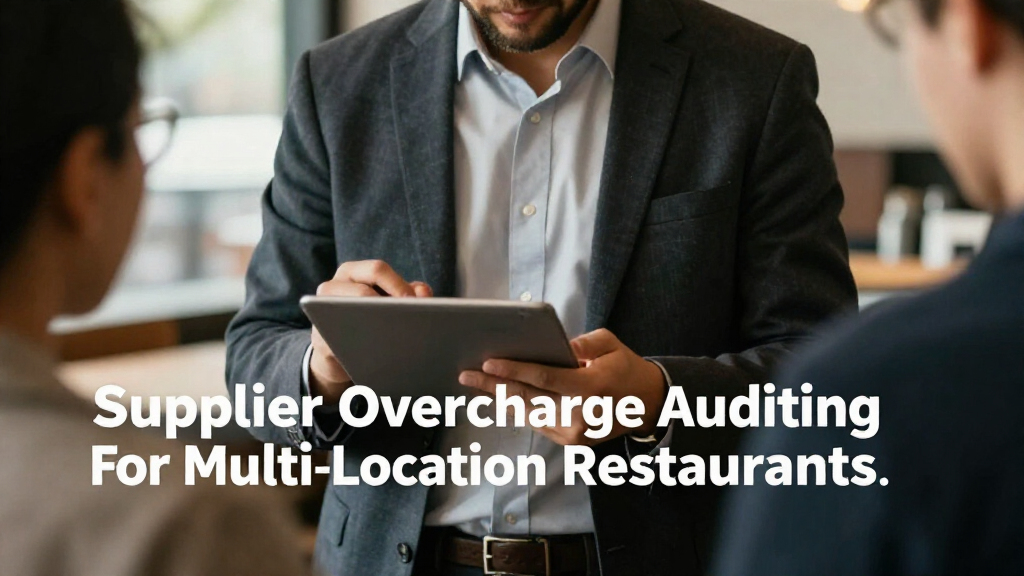
IdeaNavigator AI outlines a proposed supplier invoice-auditing workflow for independent restaurant groups with multiple locations. The recommendation is to test it against 90 days of paid invoices and supplier pricing records at three groups before deciding whether recovered credits justify a subscription.
IdeaNavigator AI has proposed testing an invoice-auditing workflow for independent restaurant groups with multiple locations, using a 90-day review of paid invoices to determine whether it can identify enough supplier billing discrepancies to merit a subscription. The concept targets purchasing directors and controllers who manage food and beverage suppliers across several restaurants, but the proposal does not report a completed pilot, product launch or verified savings.
The proposed tool would compare supplier invoices with a restaurant group’s contracts or quote sheets, order guides and delivery records. It would take in invoices through electronic data interchange where available, or through PDF and photo-based optical character recognition. The system would then compare each item’s ordered, received and billed quantities, alongside its agreed and invoiced price.
The workflow is intended to flag several kinds of mismatch: a contracted price that was not applied, a full charge for a short-shipped case, a substitute item billed at a higher price, or a line price that has risen between orders. It would also prepare a credit request for each supplier and track whether the credit appears on a later invoice. The proposal describes these as product functions to build, not capabilities already demonstrated.
For validation, IdeaNavigator AI recommends examining 90 days of paid invoices alongside contracts or quote sheets at three restaurant groups. The test would total charges above agreed prices, short-shipped cases billed in full and price increases. The stated decision rule is whether documented credits per location clearly exceed the planned subscription fee. No pilot results, participating restaurant groups, fee amount or recovered-credit totals are provided.
Testing Supplier Credits Against Fees
Restaurant groups operate across multiple locations, so a pricing or quantity discrepancy may recur across orders or sites. If invoices are paid without being checked against what was agreed and delivered, a group may miss an opportunity to request a correction. The proposed review would compare invoices with purchasing and delivery records and track whether requested credits appear on later invoices. The proposal does not establish how often errors occur or how much money a typical group could recover.
The proposed commercial test is whether documented credits per location exceed the subscription cost. A per-location monthly fee would make the result relevant to groups of different sizes, while an optional contingency fee on recovered credits is proposed for buyers who prefer payment tied to results. The proposal does not specify pricing or explain how credits would be independently verified.
The proposal cites food purchasing costs as part of its rationale. USDA’s Economic Research Service forecast published September 25, 2026 projected 2026 retail beef and veal prices to rise 9.4% and wholesale beef prices to rise 8.5%. It forecast food-away-from-home prices, a measure associated with restaurant menu prices, to rise 3.5%. Those figures are forecasts, not actual inflation rates or evidence that invoice auditing would offset higher costs. They provide context for the proposal’s recommendation to check whether agreed supplier pricing is being applied.
Products Worth Considering

Fitbit Versa 2 Health and Fitness Smartwatch with Heart Rate, Alexa, Music, Sleep and Swim Tracking

Levoit Vital Pet Pro Smart Air Purifier for Pets, White

Therabody SleepMask Blackout Eye Mask with Vibration
As an affiliate, we earn on qualifying purchases.
How the Proposed Audit Works
The proposed buyer is specific: a purchasing director or controller at an independent multi-unit restaurant group that buys from broadline and specialty food and beverage suppliers. The workflow focuses on matching purchasing records rather than replacing supplier relationships or changing menu prices. Its central task is to compare what a restaurant ordered and received with what a supplier billed and what the group had agreed to pay.
That comparison depends on records that may be held in different formats. The outline proposes importing electronic invoices where suppliers support them and using OCR for PDFs or photographs otherwise. It also calls for loading contracts or quote sheets and the group’s order guide. Delivery information is needed to identify short-ships and substitutions. The proposal does not describe integrations, how discrepancies would be reviewed by staff, or what evidence would be retained for a supplier dispute.
The suggested path is a test before a broader product commitment: review historical invoices at three groups, calculate potential credits per location, then compare the results with a planned subscription fee. The outline does not say that the three-group analysis has begun or that any restaurant has adopted the tool. It is a product opportunity and validation plan, rather than a report of measured commercial performance.
Pilot Results and Pricing Remain Open
No pilot findings are reported. It is not yet known how many discrepancies a review would identify, whether suppliers would grant the requested credits, or how much credit value a restaurant group could recover per location. The recommended three-group test is a proposed next step, not evidence that the workflow has produced savings.
The product’s planned price, operating costs and contingency-fee terms are also unspecified. The outline does not explain how the system would handle incomplete delivery records, unclear substitutions, changing contract terms or disagreements with suppliers. It also provides no measured accuracy for invoice extraction or discrepancy detection. Until those details are tested, the proposal’s financial case remains unverified.
Three-Group Invoice Review
The proposed next step is a 90-day lookback at three restaurant groups, using paid invoices and supplier contracts or quote sheets. The analysis would count charges above agreed prices, full charges for short-shipped cases and price creep, then calculate documented credit amounts per location.
Those results would be compared with a planned subscription fee to decide whether to proceed. The proposal does not give a timetable for starting the review, name participating groups or set a launch date. A further decision would depend on evidence that discrepancies can be documented, credits can be tracked through later invoices and the recovered value justifies the service cost.
Source: IdeaNavigator AI
Key Questions
Has the supplier auditing tool launched?
The proposal describes a product to build and test. It does not report a launch or a functioning product.
Who is the proposed tool for?
It is aimed at purchasing directors or controllers at independent restaurant groups with multiple locations and broadline or specialty food and beverage suppliers.
What charges would the audit flag?
The planned checks include prices above contract or quote rates, short-shipped cases billed in full, higher-priced substitutions and price increases between orders.
How would the idea be tested?
IdeaNavigator AI recommends reviewing 90 days of paid invoices and pricing records at three restaurant groups, then comparing documented credits per location with the planned subscription fee.
Are savings already confirmed?
No. The proposal gives no pilot results or verified recovery totals, so the amount of potential savings remains unknown.
Source: IdeaNavigator AI