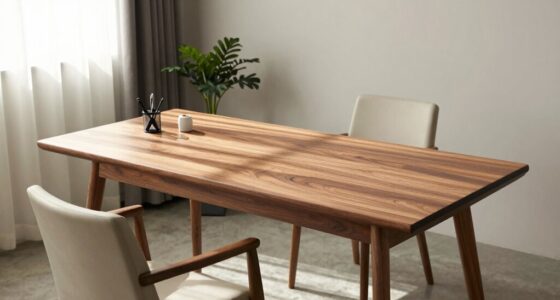
Minimalism in art embraces simplicity by focusing on essential forms, clean lines, and basic geometric shapes. It strips away ornamentation, highlighting raw materials and open space to create clarity and direct engagement. These works challenge traditional ideas by emphasizing pure form and material honesty, often using industrial techniques. If you explore further, you’ll discover how this minimalist approach influences everything from design to architecture and everyday life.
Key Takeaways
- Minimalism in art emphasizes simplicity, focusing on essential forms, limited color palettes, and clean lines to create a sense of clarity.
- It rejects ornamentation and personal symbolism, highlighting material, form, and spatial relationships for direct viewer engagement.
- Artists use industrial materials and precise techniques to emphasize material honesty and surface quality, fostering a sense of objectivity.
- Minimalist art transforms space by emphasizing light, shadow, and scale, encouraging contemplation and awareness of environment.
- Its principles influence design, architecture, and technology, promoting functional, uncluttered, and harmonious environments.

Large Framed Black and White Neutral Abstract Wall Art for Living Room, 3 Piece Boho Canvas Prints Paintings Artwork for Walls, Minimalist Geometric Pictures for Hallway Office Wall Decor 24×36 In
[Framed Wall art]: A set of 3 large contemporary minimalist brown black and white abstract wall art each…
As an affiliate, we earn on qualifying purchases.
As an affiliate, we earn on qualifying purchases.
The Origins and Evolution of Minimalist Art

Minimalist art originated in the late 1950s and early 1960s in America as a reaction against the emotional intensity of Abstract Expressionism. You’ll find that artists sought to strip art down to its essential elements, emphasizing simplicity and objectivity. Influenced by Russian Constructivism and Marcel Duchamp’s readymades, they embraced industrial materials like steel and concrete, avoiding personal expression and ornamentation. This movement aimed to challenge traditional notions of art, focusing instead on form, space, and material presence. As it evolved through the 1960s and 1970s, minimalist artists like Donald Judd and Sol LeWitt refined these ideas, creating works that prioritized clarity, precision, and a direct engagement with viewers. Their work marked a deliberate shift toward reducing art to its purest, most fundamental components. In addition, the movement often incorporated principles of public engagement and perception, encouraging viewers to experience art in a more immediate and unmediated way.

LCYY.TG Steampunk Table Lamp, Vintage Industrial Metal Robot Table lamp, Water Pipe Table Lamp, Robot Style Desktop Light for Bedside Desk Bar Cafe Desktop Room Decoration
【Steampunk Desk Lamp】★☆It is not only a steampunk lamp , it is more seem a handicrafts work. This…
As an affiliate, we earn on qualifying purchases.
As an affiliate, we earn on qualifying purchases.
Core Principles and Aesthetic Features of Minimalism

At its core, minimalist art is guided by principles that emphasize simplicity, clarity, and the reduction of forms to their most fundamental state. You’ll notice clean lines, basic geometric shapes, and a limited color palette, often neutral tones like black, white, or gray. The work avoids ornamentation, focusing instead on the material and form itself. Minimalist artists use industrial or everyday materials, keeping surfaces smooth and machine-finished, emphasizing objectivity over personal expression. The art challenges you to engage with space, scale, and light, encouraging a direct, physical experience. It’s about stripping away excess to reveal the essence of form and material, creating a sense of order, harmony, and purity that invites reflection and perception. Incorporating a sense of open space is fundamental in minimalist design, allowing the viewer to focus on the essential elements without distraction.

DreamsEden Small Geometric Sculpture, Metal Cube Decorative Ornaments Modern Home Decor Accent
The small metal square is inserted into the large one to form a creative cube geometric sculpture, welded…
As an affiliate, we earn on qualifying purchases.
As an affiliate, we earn on qualifying purchases.
Material Choices and Techniques in Minimalist Works

You notice that minimalist artists often choose industrial materials like steel, concrete, or aluminum to emphasize simplicity and objectivity. These surfaces are typically smooth and machine-finished, avoiding visible brushstrokes or handcrafted textures. By focusing on the material’s inherent qualities, they create works that highlight form and finish without embellishment. Additionally, the use of automated fabrication techniques aligns with their preference for precision and uniformity.
Industrial Material Usage
How do artists achieve the sleek, precise look characteristic of minimalist art? They turn to industrial materials like steel, aluminum, concrete, and glass, which provide clean lines and durable surfaces. These materials are often prefabricated, allowing artists to focus on form rather than craftsmanship. By avoiding hand-finished textures, they emphasize smooth, machine-finished surfaces that reflect the material’s inherent qualities. Using such industrial components also helps create a sense of neutrality and objectivity, stripping away personal touch or decorative detail. The choice of materials supports the movement’s core principles of simplicity and reduction, making the work feel precise, objective, and unembellished. This approach transforms everyday industrial elements into sculptural forms that engage viewers through their raw, honest materiality. Additionally, the use of industrial fabrication techniques enables the creation of consistent, geometric shapes that reinforce the minimalist aesthetic.
Surface and Finish
Minimalist artists carefully select materials that emphasize surface quality and finish, often favoring industrial and prefabricated elements like steel, aluminum, concrete, and glass. They prioritize smooth, machine-finished surfaces that highlight the material’s inherent qualities without visible brushstrokes or ornamentation. The focus is on clarity and purity, allowing the material’s natural texture and appearance to stand out. Techniques include polishing, welding, or grinding to achieve seamlessness and precision. The following table illustrates common materials and their surface treatments:
| Material | Surface Finish |
|---|---|
| Steel | Polished, matte, or brushed |
| Aluminum | Anodized or painted |
| Concrete | Smooth, textured, or exposed aggregate |
| Glass | Clear, frosted, or tinted |
| Wood | Sanded, stained, or left natural |
This approach guarantees that the surface remains an integral part of the artwork’s aesthetic, emphasizing the importance of material selection in minimalist design.

Acanva Luxury Modern Tight Curved Back Velvet Sofa, Minimalist Style Comfy Couch for Living Room Apartment, 3 Seater, Cream
Modern Style Sofa – This living room sofa will provide a fresh and inviting look to your space…
As an affiliate, we earn on qualifying purchases.
As an affiliate, we earn on qualifying purchases.
The Philosophical Foundations of Minimalist Expression

You see, minimalist art is rooted in the idea that objects should stand on their own, reflecting an objective reality free from personal stories. It emphasizes pure form and material, stripping away anything that distracts from the artwork’s essence. By rejecting personal narrative, it invites you to experience the work’s inherent presence and spatial relationship directly.
Art’s Objective Reality
What does it mean for art to possess an objective reality? It means that the artwork exists independently of your personal feelings or interpretations. In minimalism, the focus shifts from emotional expression to the intrinsic qualities of the piece—its form, material, and spatial presence. You see the work not as a reflection of the artist’s inner life but as an autonomous entity, with its own properties and existence. The materials and shapes are presented plainly, without symbolism or metaphor, inviting you to experience the piece on its own terms. This objectivity emphasizes that art isn’t just about conveying meaning; it’s about revealing what is fundamentally real. The artwork becomes a tangible, self-sufficient reality you can analyze and perceive directly. Additionally, the use of color accuracy in minimalist art underscores the importance of objective perception, allowing viewers to focus on the pure qualities of the work without distraction.
Emphasis on Form
At the core of minimalist art’s philosophical foundation lies a focus on form as the primary means of expression. You’re encouraged to see shapes, lines, and volumes as autonomous entities, not symbols or storytelling devices. This emphasis pushes you to appreciate the artwork’s physical presence and structural purity. To deepen your understanding, consider:
- How basic geometric shapes create rhythm and balance without complexity
- The way clean lines and precise edges define spatial relationships
- The use of limited color palettes to emphasize form over emotion
- The rejection of ornamentation, highlighting material and structure
- Understanding how resources and tools can support the creation and appreciation of minimalist art by providing essential information and guidance
Rejecting Personal Narrative
Why do minimalist artists reject personal narrative in their work? They believe that art should focus on pure form and material, not personal stories or emotional expression. By removing narrative elements, they aim to strip art down to its essential, objective qualities. This approach shifts attention away from the artist’s biography and feelings, emphasizing instead the artwork’s physical presence and spatial relationships. Minimalism encourages viewers to experience the piece directly, without interpretive distractions. It challenges the idea that art must convey meaning through symbolism or storytelling. Instead, the work becomes an independent object, inviting viewers to engage with its shape, color, and material. Rejecting personal narrative allows minimalist art to achieve universality, emphasizing shared perception over individual experience. Additionally, the focus on material properties highlights the importance of the physical substance in minimalist works, reinforcing their emphasis on pure form.
How Minimalism Challenges Traditional Artistic Boundaries

Minimalism challenges traditional artistic boundaries by stripping away the personal, emotional, and narrative elements that have long defined art. Instead, it focuses on pure form, material, and space, emphasizing objectivity over expression. This shifts the role of the viewer from passive observer to active participant, engaging with the artwork’s physical presence. You’ll notice how minimalist works:
- Blur distinctions between painting and sculpture, creating new categories.
- Use industrial materials that highlight the object’s physicality rather than symbolic meaning.
- Eliminate ornamentation, forcing you to confront the essence of form and space.
- Prioritize geometric shapes and limited color palettes, challenging traditional aesthetic preferences.
- Additionally, the appreciation of bicycle tires in minimalist sculpture demonstrates how everyday objects can be elevated to art, emphasizing materiality and form over function.
The Impact of Minimalist Art on Space and Viewer Engagement
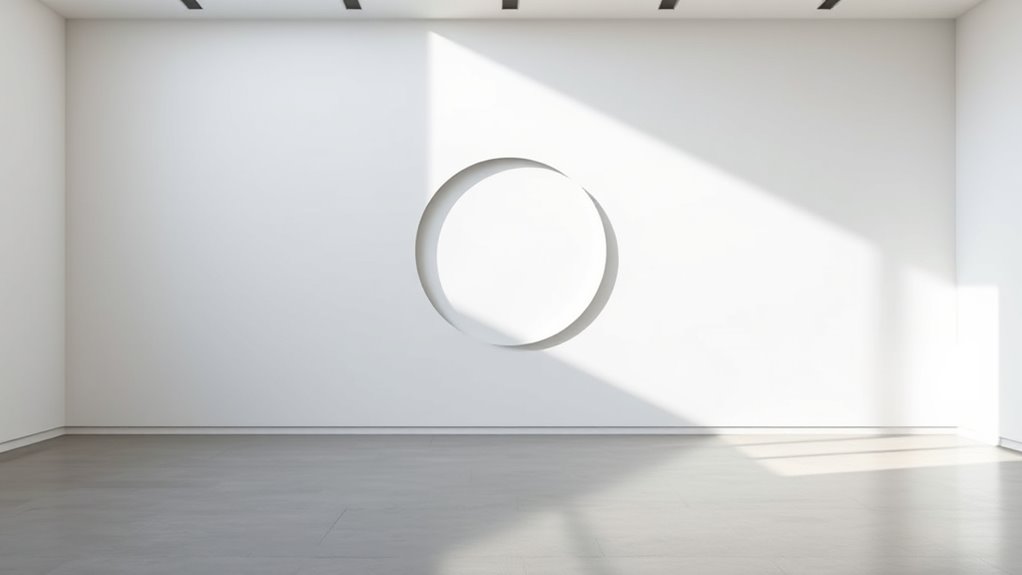
Minimalist art transforms how you experience space by emphasizing its physical qualities and inviting you to engage directly with your surroundings. Its simplicity encourages you to notice light, shadow, and scale, making the environment itself part of the artwork. You become more aware of your posture and movement as you navigate around geometric forms and clean lines. The restrained color palette creates a sense of harmony, guiding your focus and fostering a contemplative mood. Minimalist pieces often challenge your passive observation, prompting you to explore the relationship between the object and the space it occupies. This interaction heightens your awareness of spatial boundaries and material presence, allowing you to experience a sense of clarity and calm. Additionally, understanding retail hours today can help visitors plan their experience when engaging with minimalist artworks in various settings. Ultimately, minimalist art invites you to see space—and yourself—in a new, more intentional way.
Notable Artists and Key Works in the Minimalist Movement
Several influential artists shaped the development of Minimalism with their distinctive approaches and iconic works. You’ll recognize figures like Frank Stella, whose geometric paintings emphasize form over emotion. Ellsworth Kelly’s bold color shapes and large-scale sculptures challenge perception. Donald Judd’s precise, industrial-looking structures focus on material and space. Sol LeWitt’s conceptual wall drawings highlight the importance of ideas and repetition.
Key Minimalist artists like Stella, Kelly, Judd, and LeWitt emphasized form, color, and ideas over emotion and craft.
- Frank Stella’s “Black Paintings” showcase simple, geometric forms.
- Ellsworth Kelly’s “Color Field” paintings emphasize pure color and shape.
- Donald Judd’s “Stacks” exemplify repetition and clean lines in sculpture.
- Sol LeWitt’s “Wall Drawings” demonstrate the primacy of concept over craft.
These works and artists define the core of Minimalism’s aesthetic and philosophical ethos.
Minimalism’s Influence Beyond the Art World
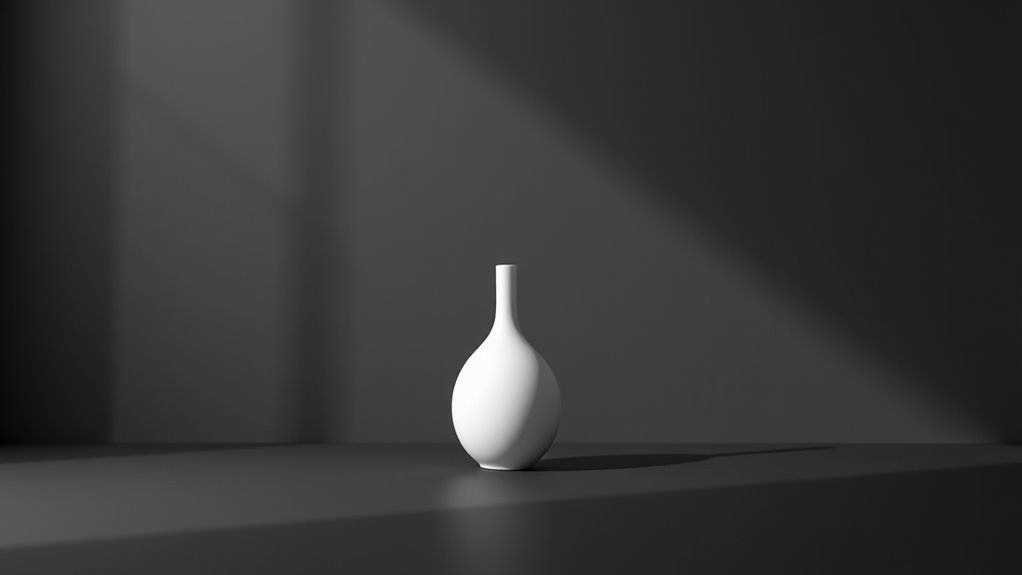
The principles of minimalism have profoundly shaped many fields beyond traditional art, influencing design, architecture, and even technology. You’ll notice clean lines, simple forms, and neutral palettes in modern products and spaces. Minimalist architecture emphasizes open, uncluttered environments, while product design focuses on functionality over ornamentation. Technology, like sleek smartphones and user interfaces, adopts minimalism to enhance usability and aesthetic appeal. Here’s a quick look:
| Field | Minimalist Approach | Example |
|---|---|---|
| Architecture | Open spaces, simple geometric forms | minimalist homes, offices |
| Product Design | Focus on essential features | Apple devices, furniture |
| Technology | Clean interfaces, reduced clutter | smartphone UIs, apps |
This influence creates environments that are harmonious, efficient, and accessible, encouraging clarity and purpose in everyday life.
Frequently Asked Questions
How Does Minimalism Influence Modern Interior and Graphic Design?
Minimalism influences your modern interior and graphic design by emphasizing clean lines, simple forms, and limited color palettes. You focus on essential elements, avoiding clutter and ornamentation, which creates a sense of calm and order. You use industrial materials and precise shapes to highlight functionality and aesthetic clarity. This approach helps you craft spaces and visuals that feel timeless, harmonious, and easy to navigate, encouraging viewers to engage with the core design principles.
Can Minimalism Be Considered Emotionally Expressive Despite Its Simplicity?
Yes, minimalism can be emotionally expressive even with its simplicity. You feel the calm, order, and clarity it creates, which can evoke feelings of serenity, stability, or introspection. By stripping away excess, minimalism highlights the power of space, form, and material to communicate emotion subtly. You might find that its quiet elegance encourages reflection, connection, or a sense of purity that resonates deeply, making it emotionally impactful despite its pared-down aesthetic.
What Role Does Light Play in Experiencing Minimalist Artworks?
Light acts like a silent partner in experiencing minimalist artworks. It reveals the clean lines and geometric forms, highlighting their precise edges and smooth surfaces. As you move around, light shifts, transforming the space and emphasizing the artwork’s materiality and spatial presence. It creates subtle shadows and reflections, inviting you to engage physically and visually. In minimalist art, light isn’t just illumination; it’s an essential element shaping perception and emotional response.
Are There Cultural Variations Within Minimalist Art Practices Worldwide?
You’ll find that minimalist art practices vary across cultures, reflecting local materials, philosophies, and traditions. In Japan, simplicity aligns with Zen principles emphasizing harmony and tranquility, while in the US, it often focuses on industrial materials and geometric forms. You might notice subtle differences in color choices, forms, and spatial relationships, showing how minimalism adapts to cultural contexts while maintaining its core focus on essentiality and clarity.
How Does Minimalism Relate to Sustainability and Eco-Friendly Materials?
Minimalism in art acts like a gust of fresh air for sustainability, focusing on essential forms and materials that often align with eco-friendly choices. You can choose natural or recycled materials, reducing waste and energy use. By stripping down to what’s necessary, you minimize excess, making your work both beautiful and responsible. Embracing minimalism helps you create with purpose, respecting the environment while delivering powerful visual statements.
Conclusion
As you embrace minimalism, imagine stripping away the clutter to reveal a clear, open sky where every line and shape whispers its truth. It’s like peeling back layers to find the purest essence of expression, inviting you to see beauty in simplicity. In this quiet space, your mind breathes freely, and the art transforms into a mirror reflecting your own clarity. Ultimately, minimalism invites you to find richness in less, revealing a world of calm and purpose.