

Eco-mindfulness blends mindfulness practices with a deep awareness of nature and your ecological responsibilities. By engaging your senses, living in natural rhythms, and practicing gratitude, you can foster emotional resilience and nurture meaningful connections with the environment. This approach encourages sustainable actions, helps manage eco-anxiety, and inspires responsible choices. If you want to discover how to incorporate eco-mindfulness into daily life for a healthier planet and yourself, there’s more to explore.
Key Takeaways
- Eco-mindfulness integrates mindful awareness with nature engagement to foster emotional resilience and deepen environmental relationships.
- Scientific research supports eco-mindfulness as a method to reduce stress and promote sustainable behaviors.
- Practices like mindful observation and sensory engagement enhance connection to natural rhythms and ecological awareness.
- Cultivating eco-responsibility through mindful choices supports sustainability and ecological balance.
- Eco-mindfulness nurtures hope and resilience, inspiring sustainable actions and community-led environmental initiatives.

Eco-Anxiety Relief: A Collection of Guided Meditations and Mindfulness Exercises: How To Manage Your Eco-Anxiety By Embracing Earth's Whisper and Calming the Climate-Weary Soul
As an affiliate, we earn on qualifying purchases.
As an affiliate, we earn on qualifying purchases.
Foundations of Eco-Mindfulness and Its Scientific Basis

The foundations of eco-mindfulness rest on integrating mindfulness practices with a deep connection to nature, supported by scientific research that demonstrates their combined benefits. Studies show that mindfulness-based ecotherapy, which pairs meditation with nature exposure, reduces stress markers like heart rate and blood pressure. Nature exposure alone lowers stress, but when combined with mindfulness, it enhances emotional resilience and cognitive coping skills. This holistic approach improves mental health and physical well-being by fostering a sense of interconnectedness. Research confirms that engaging with natural environments through mindful awareness creates a cycle of emotional balance and physical health benefits. These scientific findings establish eco-mindfulness as a powerful method for cultivating resilience while deepening your relationship with the natural world. Additionally, understanding the scientific basis of these practices helps to reinforce their effectiveness and encourages broader adoption of eco-mindfulness techniques.

PlanToys® Triangle Clutching Toy Wooden Sensory Grasping Tool in Pastel Colours | Montessori Fine Motor & Coordination Activity for Tactile Exploration | Eco-Friendly Educational Toy
STIMULATING DESIGN FOR SENSORY DISCOVERY – The PlanToys Triangle Clutching Toy in pastel colors engages infants through movement,…
As an affiliate, we earn on qualifying purchases.
As an affiliate, we earn on qualifying purchases.
Core Practices That Cultivate Connection With Nature

Engaging with nature through specific practices deepens your connection and enhances the benefits of eco-mindfulness. Simple activities like mindful walking in natural settings allow you to tune into your surroundings, noticing textures, sounds, and scents. Breathing exercises in forests or parks help you synchronize with natural rhythms, fostering a sense of harmony. Practicing gratitude for natural elements—such as sunlight or water—strengthens your appreciation and reciprocal respect. Listening attentively to bird calls or rustling leaves sharpens your sensory awareness and nurtures awe. These practices cultivate a sense of unity with the environment, encouraging a mindful presence that recognizes the interconnectedness of all living things. Incorporating mindful observation techniques can further deepen your awareness of the natural world. Consistent engagement transforms your relationship with nature into a meaningful, sustaining connection.

Spring Forest : Butterfly Guided Healing Meditation (Guided Meditation with Chunyi Lin)
As an affiliate, we earn on qualifying purchases.
As an affiliate, we earn on qualifying purchases.
Sensory Awareness and Living in Natural Rhythms

Building on your connection with nature through mindful practices, tuning into your senses heightens that bond and deepens your experience. As you engage your senses—touch, smell, sight, sound, and taste—you become more aware of the subtle rhythms around you. Notice how leaves sway with the wind, how sunlight filters through trees, or the texture of bark beneath your fingertips. This heightened awareness allows you to observe natural patterns, cycles, and interconnectedness more clearly. By quieting your analytical mind, you foster a sense of wonder and presence, aligning yourself with the natural flow of life. Developing mindfulness, a core aspect of meditation and mental well-being, further enhances your ability to stay present and connected. Living in tune with these rhythms helps you feel more grounded, resilient, and deeply connected to the environment, enriching your eco-mindfulness practice.

Notes to Mindfulness Daily Journal for Women With Prompts, Illustrated Gratitude & Positivity Journal, Undated Guided Journal, Hardbound Wellness Journal – Intelligent Change x Chelsea Kauai (Sage
As an affiliate, we earn on qualifying purchases.
As an affiliate, we earn on qualifying purchases.
Ethical and Ecological Dimensions of Mindful Living

You recognize that your actions are interconnected with the health of the planet, and this awareness encourages you to act responsibly. By respecting natural interdependence, you see yourself as part of a larger ecological web that requires care and balance. Cultivating eco-responsibility means making mindful choices that support sustainability and honor the Earth’s intrinsic value. Engaging with dog quotes for reflection and humor can inspire a compassionate attitude toward all living beings, reinforcing the importance of kindness and mindfulness in everyday life.
Respecting Natural Interdependence
Recognizing the deep interdependence between humans and the natural world is fundamental to ethical and ecological mindfulness. When you honor this connection, you see yourself as part of a larger web of life. To respect this interdependence, you can:
- Observe how your actions impact ecosystems and local communities.
- Choose sustainable options, like supporting local food and renewable energy.
- Practice gratitude for natural resources and acknowledge their finite nature.
- Engage in mindful consumption, reducing waste and unnecessary use.
- Incorporate eco-friendly practices such as selecting materials that promote environmentally responsible choices eco-friendly materials.
Cultivating Eco-Responsibility
Cultivating eco-responsibility involves actively aligning your daily choices with ecological ethics rooted in mindfulness. You become more aware of how your actions impact the planet, from reducing waste to conserving energy. Mindfulness helps you notice the origins of your food, clothing, and other resources, fostering a sense of respect and accountability. By practicing intentional consumption, you support sustainable practices and minimize harm to ecosystems. Eco-responsibility also means advocating for environmental justice and supporting policies that protect natural resources. As you deepen your connection with nature, you naturally develop a sense of duty to protect it. This mindful approach encourages you to make consistent, ethical decisions that promote ecological balance and ensure a healthier planet for future generations. Incorporating high-quality projectors into your home can enhance your environmental awareness by allowing you to enjoy energy-efficient entertainment while reducing the need for multiple devices.
Promoting Sustainable Behaviors Through Mindfulness
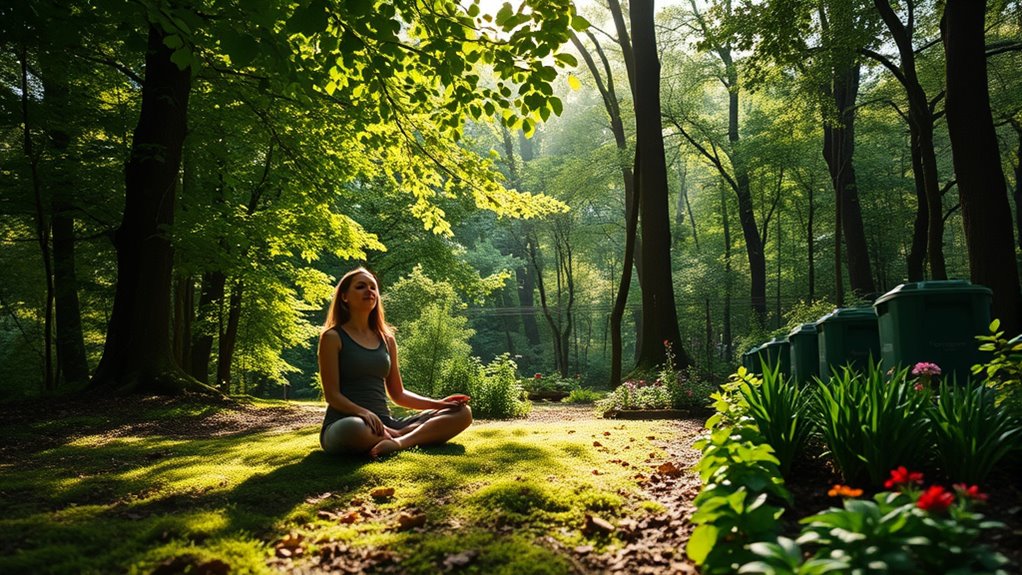
Mindfulness has emerged as a powerful tool for encouraging sustainable behaviors by fostering greater awareness of our environmental impact. When you practice mindfulness, you become more conscious of daily choices that affect the planet. You might notice the energy used in your home or the waste generated from your habits. This awareness naturally guides you toward greener actions, such as:
Practicing mindfulness increases awareness of our environmental impact, inspiring greener daily choices.
- Choosing active transportation like walking or cycling instead of driving
- Preparing and eating plant-based meals more often
- Reducing energy consumption by turning off unused devices
- Supporting local, sustainable products and services
- Utilizing apps or journals to track your habits and measure progress toward more sustainable living
Addressing Eco-Anxiety With Mindfulness Strategies
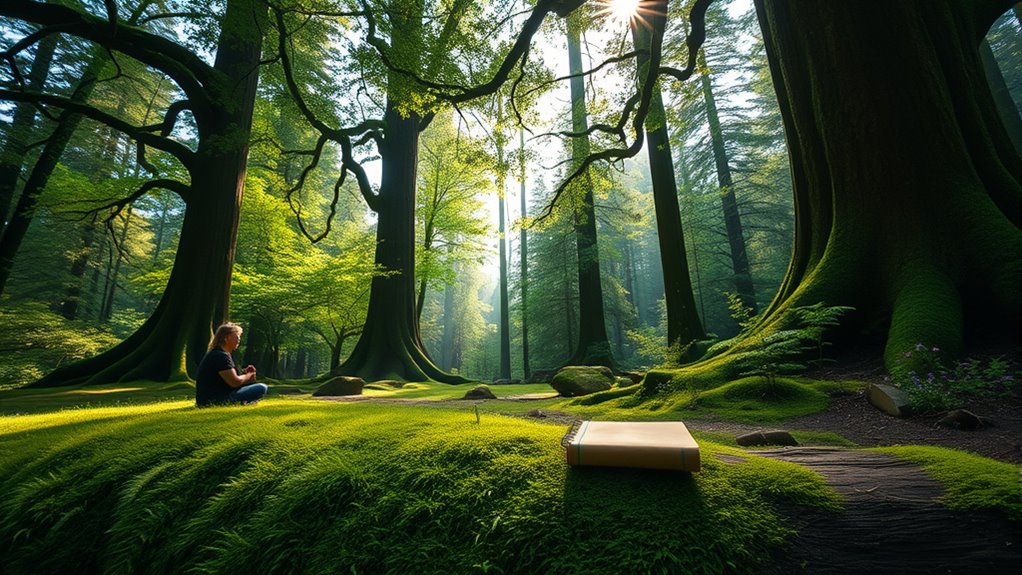
Eco-anxiety, the persistent fear and worry about environmental decline, can overwhelm your emotional resilience and lead to feelings of helplessness. To counter this, mindfulness strategies help you ground yourself and regain clarity. Focus on your breath to anchor your awareness, noticing each inhale and exhale to calm racing thoughts. Practice acceptance, acknowledging your feelings without judgment, which reduces overwhelm. Engage in sensory mindfulness by immersing yourself in natural surroundings, fostering a sense of connection and hope. Cultivate compassion for yourself and others, transforming anxiety into proactive care. Regularly integrating these practices enhances your resilience, empowering you to face eco-challenges with steadiness rather than fear. Mindfulness transforms eco-anxiety into a catalyst for mindful, meaningful action. Incorporating evidence‑based practical tools can further support your journey toward emotional balance and environmental engagement.
Integrating Eco-Mindfulness Into Daily Life for Resilience

To build resilience, start by cultivating daily awareness of your surroundings and how they influence your mood and actions. Practicing ecological gratitude helps you recognize the interconnectedness between yourself and the environment, fostering a deeper sense of responsibility. By intentionally incorporating these practices, you strengthen your ability to stay grounded and connected amid life’s challenges. Establishing healthy boundaries can further support this process by protecting your emotional well-being and maintaining balance.
Cultivate Daily Awareness
How can you weave eco-mindfulness into your everyday routine to build resilience and deepen your connection with nature? Start by intentionally anchoring yourself in your surroundings throughout the day. Practice mindful pauses during activities, like enjoying a sip of water or feeling the sun on your face. Incorporate simple habits such as:
- Observing natural details during walks or commutes
- Noticing seasonal changes and weather patterns
- Listening intently to bird songs or ambient sounds
- Savoring meals mindfully, considering where your food comes from
- Exploring best anime movies to inspire creativity and relaxation
These small moments cultivate sustained awareness. By consciously engaging your senses and remaining present, you foster a stronger bond with nature. Over time, this daily practice enhances resilience, reduces stress, and nurtures ecological consciousness—integral to eco-mindfulness.
Practice Ecological Gratitude
Practicing ecological gratitude invites you to intentionally recognize and appreciate the natural world around you, fostering a deeper connection and respect for ecosystems. By regularly expressing thanks for nature’s gifts—whether it’s the air you breathe, the water you drink, or the food you enjoy—you strengthen your bond with the environment. This mindful acknowledgment shifts your perspective from taking resources for granted to valuing their importance. Incorporate gratitude into your daily routine by pausing during walks to notice what you’re grateful for, or journaling about nature’s abundance. Cultivating this appreciation helps you develop resilience, inspiring more sustainable choices and fostering a sense of responsibility. Over time, ecological gratitude deepens your connection to the Earth, enriching your mindfulness practice and promoting environmental harmony.
The Future of Eco-Mindfulness in Promoting Planetary Well-being
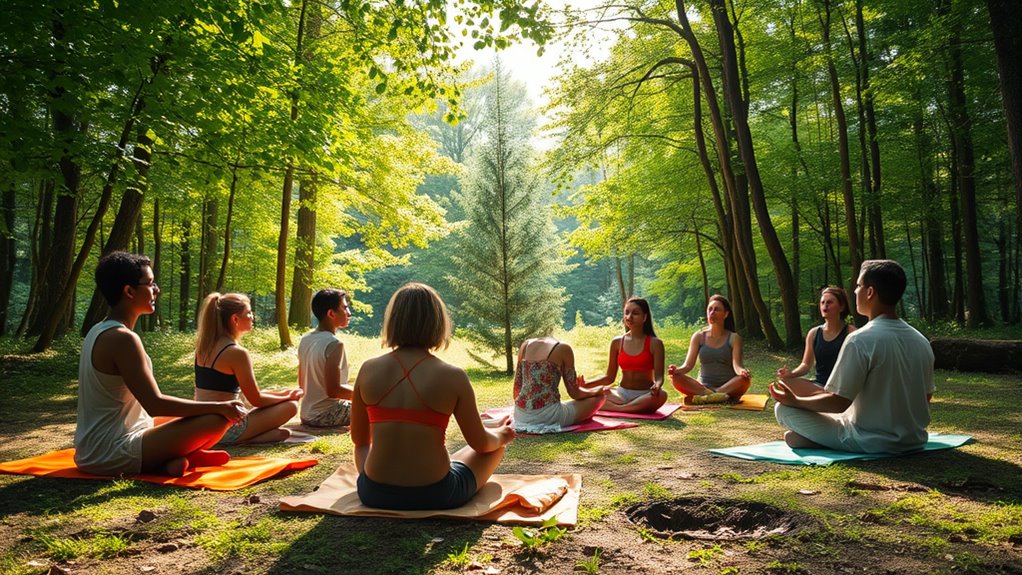
What role will eco-mindfulness play in shaping a sustainable and resilient future for our planet? It’s poised to deepen your connection to nature, inspiring mindful actions that support ecological health. As eco-mindfulness gains traction, you’ll see it foster community-led initiatives, promote eco-education, and influence policy changes rooted in ecological awareness. This practice can also enhance personal resilience, helping you cope with eco-anxiety and foster hope.
You might experience:
- Greater participation in conservation activities
- Increased adoption of sustainable habits
- Stronger advocacy for environmental policies
- A shift toward living more harmoniously with nature
Frequently Asked Questions
How Does Eco-Mindfulness Differ From Traditional Mindfulness Practices?
Eco-mindfulness differs from traditional mindfulness by actively incorporating nature and ecological awareness into your practice. Instead of focusing solely on internal states, you engage with your surroundings through sensory awareness, gratitude for natural elements, and respect for ecosystems. You practice mindfulness in outdoor settings, connecting deeply with natural rhythms, interdependence, and ecological sustainability, which encourages responsible behavior and a stronger bond with the environment alongside personal well-being.
Can Eco-Mindfulness Be Adapted for Urban Environments and Limited Access to Nature?
Picture urban streets as a vibrant forest, waiting to be explored. You can adapt eco-mindfulness by seeking out small green spaces, parks, or even balcony gardens to connect with nature’s pulse. Use sensory awareness practices, like mindful breathing while listening to city sounds, or observing seasonal changes in potted plants. This approach transforms concrete jungles into personal ecosystems, allowing you to nurture your connection with nature despite limited access.
What Are the Potential Challenges of Integrating Indigenous Teachings Into Eco-Mindfulness?
You might face challenges like respecting the cultural origins of indigenous teachings and avoiding cultural appropriation. Ensuring authentic representation requires collaboration with Indigenous communities, which can be complex and sensitive. Additionally, adapting these teachings to diverse contexts without diluting their meaning demands careful thought. You’ll need to balance honoring traditions while making practices accessible, all while maintaining cultural integrity and avoiding misinterpretation or commodification.
How Long Does It Typically Take to See Psychological Benefits From Eco-Mindfulness Practice?
You’ll notice psychological benefits from eco-mindfulness almost overnight—like a switch flipping, and suddenly you’re lighter, calmer, and more connected to everything around you. For some, it’s within a week of consistent practice; others might take a month. The key is regularity. With daily mindfulness and nature engagement, you’ll start feeling the positive mental shifts, like reduced stress and a deep sense of peace, sooner than you’d expect.
Are There Specific Eco-Mindfulness Techniques Tailored for Children and Youth?
You can introduce eco-mindfulness techniques like nature walks with sensory activities, storytelling about the environment, and guided meditations focusing on natural elements to children and youth. Encourage them to observe, listen, and express gratitude for nature. Use games that promote ecological awareness and hands-on activities like planting or collecting natural objects. These engaging practices foster connection, mindfulness, and environmental responsibility in a way that resonates with young minds.
Conclusion
As you embrace eco-mindfulness, remember Thoreau’s call to live deliberately and in harmony with nature. By cultivating awareness and ethical living, you become a steward of the Earth’s future. Each mindful choice echoes like ripples in a pond, shaping a sustainable world. Stay committed, for just as rivers carve valleys over time, your conscious actions can forge a resilient, thriving planet for generations to come.