
TL;DR

Get the little things that make your day delivered free with Prime
- Fast, free delivery on millions of items
- Prime Video, Amazon Music and more included
- Member-only deals all year
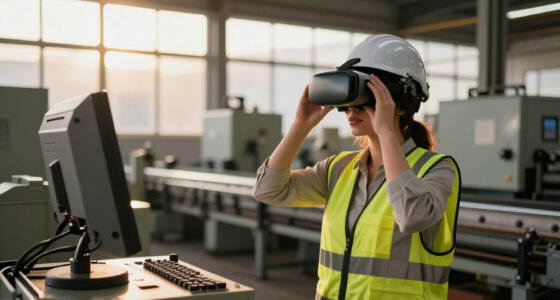
Siemens announced a major push into industrial AI, partnering with NVIDIA to create an ‘Industrial AI Operating System’ and launching a fully AI-driven factory in Germany. This aims to embed AI across manufacturing processes, leveraging proprietary data and domain expertise.
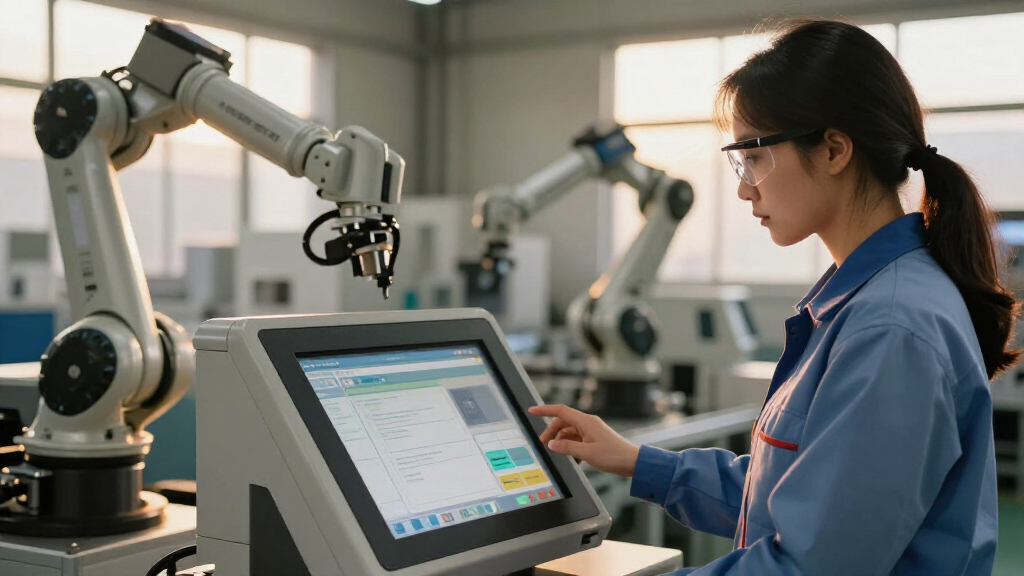
Siemens has announced a strategic partnership with NVIDIA to develop an ‘Industrial AI Operating System’ designed to embed AI across the entire manufacturing lifecycle, including design, engineering, and operations. The company also revealed plans to launch a fully AI-driven, adaptive factory in Erlangen, Germany, in 2026. This move positions Siemens at the forefront of physical AI, emphasizing the potential of AI to transform industrial processes and manufacturing efficiency.
During CES 2026, Siemens outlined its strategy to leverage proprietary industrial data and domain expertise to build advanced AI models tailored for physical manufacturing environments. The centerpiece is the ‘Industrial Foundation Model’ (IFM), announced at Hannover Messe 2025, which processes 3D models, engineering drawings, sensor telemetry, and automation logic to optimize engineering and automation tasks.
The collaboration with NVIDIA aims to create an ‘Industrial AI Operating System’ that integrates GPU-accelerated simulation, generative digital twins, and real-time optimization tools. Siemens is completing GPU acceleration across its simulation software and supporting NVIDIA’s CUDA-X libraries to enable faster, more accurate simulations. The first fully AI-driven factory is scheduled to open in Erlangen, serving as a blueprint for global replication, with early digital twin tools like Digital Twin Composer and industrial copilots already in development.
Siemens emphasizes that its proprietary data and extensive customer relationships give it a competitive advantage in physical AI, with clients including PepsiCo, Audi, and other industrial firms already using Siemens automation tools. However, critics note that much of the AI infrastructure relies on NVIDIA’s hardware and software, raising questions about dependency and sovereignty.
Why Siemens’ Industrial AI Strategy Matters
This initiative reflects a strategic effort by Siemens to incorporate AI into manufacturing processes, aiming to improve efficiency and automation. By integrating AI into factory design, automation, and supply chains, Siemens seeks to enhance operational capabilities. The partnership with NVIDIA provides access to advanced simulation and digital twin technologies. The success of this approach could influence future developments in industrial automation and digital transformation, though its impact remains to be fully evaluated.
As an affiliate, we earn on qualifying purchases.
Background of Siemens’ Industrial AI Ambitions
Siemens has a long-standing presence in industrial automation and digitalization, with a history spanning over 175 years. Its recent focus on AI reflects broader industry trends toward smarter factories and predictive maintenance. The company announced its ‘Industrial Foundation Model’ at Hannover Messe 2025, signaling its intent to develop AI models tailored for physical manufacturing environments, distinct from general-purpose language models. The partnership with NVIDIA, announced at CES 2026, builds on Siemens’ existing automation portfolio and aims to embed AI across all stages of manufacturing, from product design to supply chain management.
While other tech firms and startups are exploring industrial AI, Siemens’ extensive domain expertise and proprietary data provide it with specific advantages. The company’s approach emphasizes the importance of physical-world data and specialized models, differentiating it from more software-centric or data-agnostic efforts.
“Industrial AI is no longer a feature; it’s a force that will reshape the next century.”
— Roland Busch, Siemens CEO
As an affiliate, we earn on qualifying purchases.
Unverified Aspects of Siemens’ Industrial AI Push
While Siemens has announced plans for its industrial AI initiatives, specific details regarding the performance of the new AI models, deployment timelines for the full ‘Industrial AI Operating System,’ and operational results of the Erlangen factory have not been publicly confirmed. The pace at which these technologies will be adopted across Siemens’ global customer base remains uncertain, as does the competitive landscape with other firms developing similar solutions. Additionally, the reliance on NVIDIA’s hardware and software infrastructure raises questions about long-term independence and strategic control.
As an affiliate, we earn on qualifying purchases.
Next Steps for Siemens’ Industrial AI Deployment
Siemens intends to complete the launch of its fully AI-driven factory in Erlangen in 2026, which will serve as a demonstration site for its industrial AI platform. The company will also expand its Digital Twin Composer and industrial copilots, with early customer pilots already underway. Monitoring the performance, adoption, and feedback from these initiatives will be important in assessing their effectiveness. Further details on hardware specifications, performance metrics, and broader deployment plans are anticipated later in 2026.
As an affiliate, we earn on qualifying purchases.
Key Questions
What is Siemens’ ‘Industrial Foundation Model’?
The ‘Industrial Foundation Model’ is Siemens’ AI model designed to process and understand 3D models, engineering drawings, and industrial data to optimize manufacturing and automation processes.
How does Siemens’ partnership with NVIDIA enhance its AI capabilities?
The partnership provides GPU-accelerated simulation, generative digital twins, and physics-based AI libraries, enabling faster, more accurate modeling and real-time optimization of manufacturing systems.
When will the fully AI-driven factory in Erlangen open?
Siemens plans to open the factory in 2026, which will serve as a blueprint for global deployment of AI-powered manufacturing facilities.
What are the main risks or challenges Siemens faces in this initiative?
Key challenges include dependency on NVIDIA’s infrastructure, unconfirmed performance results, long sales cycles in industrial markets, and potential competition from other firms developing similar AI solutions.
Why is physical AI considered more valuable than chat AI in manufacturing?
Physical AI directly impacts manufacturing efficiency, quality, and cost by optimizing real-world processes, unlike chat AI, which primarily handles language-based tasks.
Source: ThorstenMeyerAI.com
Fall Picks
fall essentials
As an affiliate, we earn on qualifying purchases.