📊 Full opportunity report: Factory VR Solutions: Improving Machine Operation And Safety Protocols on IdeaNavigator AI — validation score, market gap, and execution plan.

Get the little things that make your day delivered free with Prime
- Fast, free delivery on millions of items
- Prime Video, Amazon Music and more included
- Member-only deals all year
TL;DR
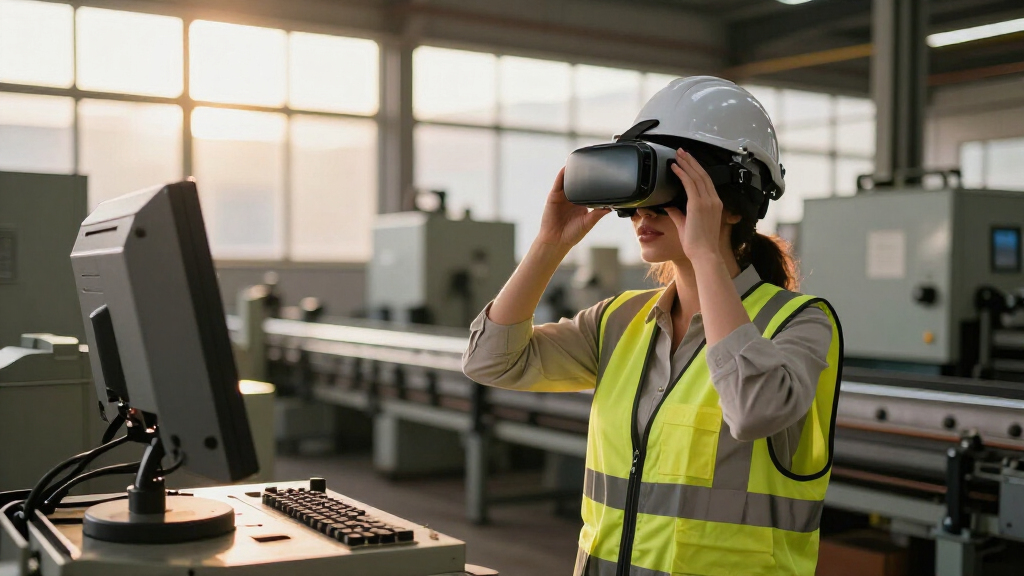
Factory VR training modules are being piloted by mid-to-large manufacturers to improve safety and reduce onboarding time. The initiative aims to address skills gaps and safety risks using standalone VR headsets and cloud dashboards. Early results will determine broader adoption.
Manufacturers are beginning to implement virtual reality (VR) training modules to improve safety and onboarding efficiency, with initial pilots focusing on high-risk procedures like lockout/tagout and forklift safety. These efforts aim to address ongoing labor shortages and skills gaps, particularly as traditional training methods prove slow, inconsistent, and risky. The initiative is driven by the availability of affordable, standalone VR headsets and cloud-based tracking tools, making immersive training more accessible for mid-to-large manufacturing plants.
Manufacturers face a critical need to accelerate onboarding and improve safety protocols due to a persistent labor shortage—estimated at roughly 409,000 unfilled manufacturing positions in August 2025—and the forecasted requirement of 3.8 million new workers by 2033. Traditional classroom and on-the-floor training methods are often slow, costly, and inconsistent across facilities, leading to under-prepared workers and increased safety incidents.
In response, companies are testing a focused VR module library that targets high-value, high-risk procedures such as lockout/tagout (LOTO) and forklift safety. These modules are delivered via standalone Meta Quest headsets, which have become more affordable due to the proliferation of cloud-native XR streaming and lower-cost hardware options like Pico and Meta Quest devices. The pilot includes a cloud dashboard that tracks completion rates, hazard recognition accuracy, and quiz scores, enabling managers to assess individual and group performance in real time.
The initial pilot involves shipping 5-10 headsets to a single plant, along with the core VR scenario and a dashboard for monitoring progress. Success metrics include reduced time-to-competency, improved hazard recognition, and higher post-training quiz scores compared to traditional classroom methods. The goal is to validate whether VR can deliver measurable improvements in safety and training efficiency within a 60-90 day pilot period.
Implications for Manufacturing Safety and Workforce Development
This initiative could significantly impact how manufacturing companies approach safety training and onboarding. By providing immersive, standardized, and scalable training solutions, VR modules have the potential to reduce safety incidents, lower training costs, and speed up new worker ramp-up times. As the manufacturing sector faces ongoing labor shortages, such innovations could become essential tools for maintaining productivity and safety standards across multiple plants.
Furthermore, successful pilots may lead to broader adoption of immersive training, influencing industry standards and encouraging further development of specialized content libraries. The integration of cloud dashboards also enables data-driven decision-making, allowing companies to identify gaps in training and tailor programs more effectively.
standalone VR headset for industrial training
As an affiliate, we earn on qualifying purchases.
As an affiliate, we earn on qualifying purchases.
Background on VR Adoption in Industrial Training
Virtual reality has been gradually adopted in manufacturing for safety and operational training over the past decade, but widespread deployment has been limited by high costs and logistical challenges. Recent advances—particularly affordable standalone headsets and cloud streaming—have lowered barriers to entry, prompting a new wave of pilot programs and early adoption efforts.
The focus on high-risk procedures like lockout/tagout and machinery safety reflects industry recognition that traditional training methods often fall short in ensuring consistent safety practices across diverse facilities. The current push for VR solutions aligns with broader trends toward digital transformation and data-driven safety management in manufacturing.
“VR training modules focused on high-risk procedures can accelerate onboarding and improve hazard recognition, potentially reducing safety incidents.”
— an anonymous researcher
VR safety training modules for manufacturing
As an affiliate, we earn on qualifying purchases.
As an affiliate, we earn on qualifying purchases.
Uncertainties Around Effectiveness and Scalability
It is not yet clear how effectively VR modules will perform across different manufacturing environments or how quickly companies will scale these programs beyond initial pilots. The success metrics—such as reductions in safety incidents and training time—are still being evaluated, and long-term impacts remain uncertain. Additionally, questions remain about the cost-effectiveness and integration with existing safety protocols and training systems.
As an affiliate, we earn on qualifying purchases.
Next Steps for Broader Adoption and Validation
Manufacturers conducting pilot programs will collect data over the next 60-90 days to assess improvements in onboarding speed, hazard recognition, and safety performance. If results are positive, plans include expanding the VR modules to additional procedures and plants, as well as developing customized content for specific operational needs. Industry stakeholders will watch these pilots closely to determine whether VR becomes a standard component of manufacturing safety and training strategies.
As an affiliate, we earn on qualifying purchases.
Key Questions
How does VR training compare to traditional methods?
Early pilots aim to measure whether VR can deliver faster onboarding, better hazard recognition, and improved safety outcomes compared to classroom or on-the-floor training. Results are still being evaluated.
What are the costs involved in implementing VR training?
Initial costs include standalone headsets and cloud dashboard subscriptions, with ongoing expenses for content updates and custom scenario development. The approach aims to be cost-effective, especially when scaled across multiple facilities.
Which procedures are most suitable for VR training?
High-risk, high-value procedures like lockout/tagout and forklift safety are primary targets for initial modules, as they benefit most from immersive, standardized training.
Will VR replace traditional training entirely?
It is unlikely to replace all traditional methods but is expected to complement and enhance existing safety and onboarding programs, especially for complex or hazardous procedures.
When can we expect wider adoption of VR in manufacturing?
If pilot results are positive, broader deployment could begin within the next 12-24 months, as companies seek scalable, effective safety training solutions amid ongoing labor shortages.
Source: IdeaNavigator AI
Fall Picks
fall essentials
As an affiliate, we earn on qualifying purchases.