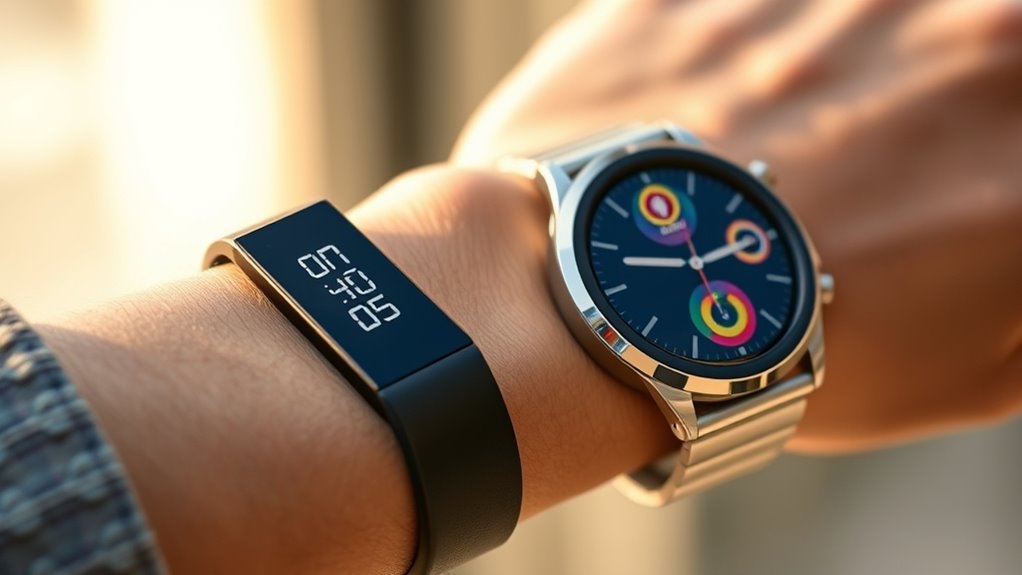

Wearable technology now enables you to track your health in real time using advanced sensors and AI. Devices like smartwatches, rings, and glasses monitor essential signs such as heart rate, blood pressure, and oxygen levels continuously. They offer personalized insights, early alerts, and seamless data sharing with healthcare providers. As innovation advances, these tools become smarter and more reliable, helping you stay proactive about your health. Keep exploring to discover how this cutting-edge technology can transform your wellness journey.
Key Takeaways
- Wearables use advanced sensors to monitor vital signs like heart rate, blood pressure, oxygen levels, and blood glucose continuously.
- AI integration enables real-time data analysis, personalized health insights, and early detection of abnormal patterns.
- Devices connect seamlessly with cloud and 5G technologies for instant data transfer and remote health monitoring.
- Wearables empower users with proactive health management, reducing hospital visits and supporting chronic disease care.
- Privacy and trust are critical, with secure data handling and transparent practices ensuring user confidence in health tracking.

WHOOP 5.0/MG Activity Tracker – 12 Month Membership – FSA/HSA Eligible Health and Fitness Wearable – 24/7 Activity and Sleep Tracker, Personalized Coaching, Menstrual Cycle Insights
EVERYTHING YOU NEED IS INCLUDED: Your WHOOP purchase includes a 12-month WHOOP Peak membership, a WHOOP 5.0 device,…
As an affiliate, we earn on qualifying purchases.
As an affiliate, we earn on qualifying purchases.
The Growing Market for Wearable Medical Devices

The market for wearable medical devices is experiencing rapid growth, driven by increasing health awareness and the need for continuous monitoring. You’re likely to see more devices helping you track essential signs, manage chronic conditions, and stay connected to healthcare providers. The global market, valued at over $42 billion in 2024, is projected to grow considerably through 2030, with a CAGR over 25%. In the U.S., the smart wearable market alone could reach over $132 billion by 2034. This expansion is fueled by advancements in sensor technology, AI integration, and the diversification of device types—from smartwatches to rings and glasses. As more people prioritize health, demand for reliable, user-friendly wearables continues to rise across different regions and demographics. Personalized care plans are increasingly integrated with wearable technology to better support individual health needs.

FITVII Health & Fitness Tracker (Answer/Make Calls), Smart Watch with 24/7 Heart Rate and Blood Pressure, Sleep Tracking, Blood Oxygen Monitor, 120+ Sport Modes Activity Tracker for Women Men
Health Monitoring Features: Track your heart rate and blood pressure 24/7, empowering you to stay proactive about your…
As an affiliate, we earn on qualifying purchases.
As an affiliate, we earn on qualifying purchases.
Popular Device Types and Emerging Trends

As wearable technology continues to evolve, a variety of device types are gaining popularity beyond traditional smartwatches. You’re now seeing earwear, clothing wearables, rings, and smart glasses expanding their market share. These devices offer specialized functions such as continuous health monitoring, activity tracking, and even stress detection. Trends indicate increased adoption of non-invasive sensors and AI integration, making devices smarter and more personalized. Here’s a quick overview:
| Device Type | Key Features |
|---|---|
| Earwear | Heart rate, noise exposure, sleep analysis |
| Rings | Activity, sleep, hydration, stress levels |
| Clothing Wearables | Biometric tracking, posture correction |
| Smart Glasses | Visual health data, augmented reality features |
You’ll find these innovations enhancing your health insights while blending seamlessly into daily life. Wearable sensors are advancing rapidly, enabling more accurate and comprehensive health data collection.

2PCS Neck Cooling Tube with Cold Insulated Bag,Reusable Ice Neck Ring Wearable Body Cooling Products for Summer Heat (Black*2)
Summer Must-Have: Whether you work outdoors or play sports, our neck cooling tubes are a summer must-have, providing…
As an affiliate, we earn on qualifying purchases.
As an affiliate, we earn on qualifying purchases.
Technological Innovations Enhancing Wearables

Technological innovations are driving significant advancements in wearable devices, making them more accurate, user-friendly, and integrated than ever before. You benefit from sensors that now measure blood pressure, glucose, oxygen levels, and stress non-invasively, thanks to compact, sophisticated designs. AI and generative AI integration enhance data analysis, offering personalized health insights, virtual assistants, and predictive alerts. These smart features improve usability, enabling you to interpret data easily and stay engaged. Wearables now feature seamless connectivity with cloud systems, 5G, and edge computing, ensuring real-time data transfer and remote monitoring. Innovations in sensor technology and software boost reliability and comfort, encouraging longer-term use. As a result, wearables become more than fitness trackers—they transform into essential tools for proactive health management and are increasingly tailored to specific age groups, making health monitoring more accessible and precise for everyone.

2026 Latest Smart Audio Glasses with Bluetooth, Open-Ear Speakers, Music & Hands-Free Calls, AI Voice Assistant,Translation for 164+ Languages Lightweight Wearable Tech Glasses for Men & Women
Smart Glasses with Bluetooth Audio.These smart glasses combine built-in camera and Bluetooth audio in one lightweight wearable device….
As an affiliate, we earn on qualifying purchases.
As an affiliate, we earn on qualifying purchases.
How Wearables Are Transforming Healthcare Delivery

Ever wondered how wearable devices are reshaping healthcare delivery? They enable real-time monitoring, making healthcare more proactive and personalized. You can track crucial signs like heart rate, blood pressure, and blood glucose from anywhere, reducing hospital visits and enabling early intervention. Wearables also empower patients to take control of their health, encouraging lifestyle changes. They facilitate remote consultations, allowing doctors to monitor patients continuously without in-person visits. This shift improves chronic disease management and reduces healthcare costs. Empowering families through accessible health data helps caregivers make informed decisions and provide better support.
Overcoming Challenges: Usability, Privacy, and Trust

Overcoming challenges related to usability, privacy, and trust is essential for wider adoption of wearable medical devices. You need devices that are easy to wear, operate, and understand, so you stay engaged without frustration. Privacy concerns remain a top priority; you want assurance that your health data is secure and only shared with trusted healthcare providers. Building trust involves transparent data handling practices and reliable device performance. Developers are improving user interfaces, making devices more intuitive, and educating users on data privacy. Ensuring these aspects are addressed helps you feel confident using wearables daily. Additionally, advancements in AI-driven solutions are enhancing the accuracy and personalization of health monitoring, encouraging greater user confidence. When usability, privacy, and trust are prioritized, more people will embrace wearable technology as a reliable tool for health management, leading to better health outcomes and broader acceptance.
Regional Adoption Patterns and Industry Insights

Have you noticed how wearable device adoption varies across regions? In North America, especially in the Western U.S., high tech acceptance and infrastructure boost adoption rates. Europe shows steady growth, driven by healthcare regulations and privacy concerns. Meanwhile, Asia-Pacific leads in manufacturing and rapid consumer adoption, particularly in countries like China and Japan. Here’s what influences these patterns:
- Infrastructure investments in 5G and cloud connectivity
- Cultural attitudes toward health and technology
- Regulatory frameworks and data privacy policies
- Local industry strength in tech manufacturing and innovation
Emerging technologies like IoT and AI are also enhancing the capabilities and integration of wearable devices across different markets.
These factors shape how quickly wearables integrate into daily life and healthcare systems worldwide. Industry insights highlight a global push toward diverse device form factors and increasing industry collaboration, fueling market growth and expanding health monitoring capabilities across regions.
The Future of Real-Time Health Monitoring

Sensor innovations are making wearables more accurate and comfortable, enabling real-time health data collection. AI integration allows devices to provide personalized insights and predictive health alerts. Together, these advances are transforming how you monitor and manage your health daily. As automation enhances business intelligence, it also paves the way for smarter health devices that can analyze data more effectively.
Sensor Innovation Advances
Advancements in sensor technology are transforming real-time health monitoring by providing more accurate and extensive data. You now get sensors that non-invasively measure blood pressure, glucose, oxygen levels, and stress, all in compact designs. These innovations improve data reliability and device usability, making wearables more effective. You’ll see more sensors integrated with AI, enabling personalized health scoring and predictive insights. This means your device can better interpret complex signals and give tailored recommendations. Additionally, flexible and stretchable sensors enhance comfort, encouraging consistent use. As sensor sensitivity advances, false readings decrease, building trust. The combination of miniaturization, accuracy, and intelligent integration pushes wearable devices beyond simple step counting, transforming them into essential tools for proactive health management. Sensor integration is also improving the interoperability between devices, leading to more comprehensive health data collection.
AI Integration Benefits
As artificial intelligence becomes increasingly integrated into wearable technology, it transforms how you monitor and manage your health in real time. AI enables devices to analyze data instantly, offering personalized insights and actionable recommendations. You can receive alerts for abnormal heart rhythms, blood pressure spikes, or glucose fluctuations before symptoms appear. AI-powered virtual assistants help interpret complex data, making health information accessible and understandable. Predictive analytics forecast potential health issues, allowing you to take preventive steps. Machine learning algorithms continuously improve accuracy, ensuring more reliable readings over time. Additionally, understanding privacy policies related to data collection is essential to make informed decisions about your health information. Overall, AI integration makes wearable devices smarter, more responsive, and tailored to your unique health needs, empowering you to make informed decisions and stay healthier longer.
Frequently Asked Questions
How Do Wearable Devices Ensure Data Security and Patient Privacy?
You can guarantee your data stays secure and your privacy protected by wearable devices through encryption, secure data transfer protocols, and regular software updates. Manufacturers implement strict access controls and anonymize data to prevent unauthorized use. Always review device privacy settings, enable two-factor authentication, and choose trusted brands with transparent security policies. Staying informed and cautious helps keep your health information safe while enjoying the benefits of real-time monitoring.
What Are the Main Barriers to Long-Term User Engagement?
Getting users to stick with wearable devices is like trying to hold water in your hands—difficult but not impossible. The main barriers include usability issues, as some find devices hard to navigate, and data literacy gaps that leave users confused or overwhelmed. Comfort also plays a role, along with privacy concerns. To keep users engaged long-term, you need intuitive interfaces, clear data insights, and reassurance that their info stays private.
How Accurate Are Non-Invasive Sensors Compared to Clinical Lab Tests?
Non-invasive sensors are improving but still can’t match the precision of clinical lab tests. You might find that readings for blood glucose, blood pressure, or cholesterol have a margin of error, especially during movement or different conditions. However, advances in sensor technology and AI are steadily increasing accuracy, making wearables more reliable for daily monitoring. Still, for critical diagnoses, lab tests remain the gold standard.
What Are the Regulatory Challenges for Wearable Medical Devices?
You might wonder what hurdles wearable medical devices face before they hit the market. Regulatory challenges include maneuvering complex approval processes like FDA clearance, ensuring data security, and demonstrating consistent accuracy. These devices must meet strict standards for safety and efficacy, which can delay launches. As technology evolves rapidly, regulators struggle to keep up, creating a suspenseful race to balance innovation with patient protection.
How Will AI Personalization Impact Future Healthcare Treatments?
AI personalization will transform your healthcare by delivering tailored treatments based on real-time data. You’ll benefit from personalized health insights, proactive recommendations, and early detection of potential issues. This technology will enable your providers to create more effective, customized care plans, improving outcomes and reducing hospital visits. As AI continues to evolve, your healthcare becomes more precise, predictive, and convenient, empowering you to take control of your health journey.
Conclusion
As you embrace wearable technology, you’re stepping into a future where real-time health data becomes as common as a morning newspaper. With innovations rapidly advancing and privacy concerns being addressed, you can trust these devices to transform healthcare just like the invention of the printing press revolutionized information sharing. Keep an eye on emerging trends, and you’ll stay ahead in this brave new world of personalized, proactive health management. The journey’s just beginning, and the best is yet to come.