
📊 Full opportunity report: Loan covenant calendar for bootstrapped companies on IdeaNavigator AI — validation score, market gap, and execution plan.

Get the little things that make your day delivered free with Prime
- Fast, free delivery on millions of items
- Prime Video, Amazon Music and more included
- Member-only deals all year
TL;DR
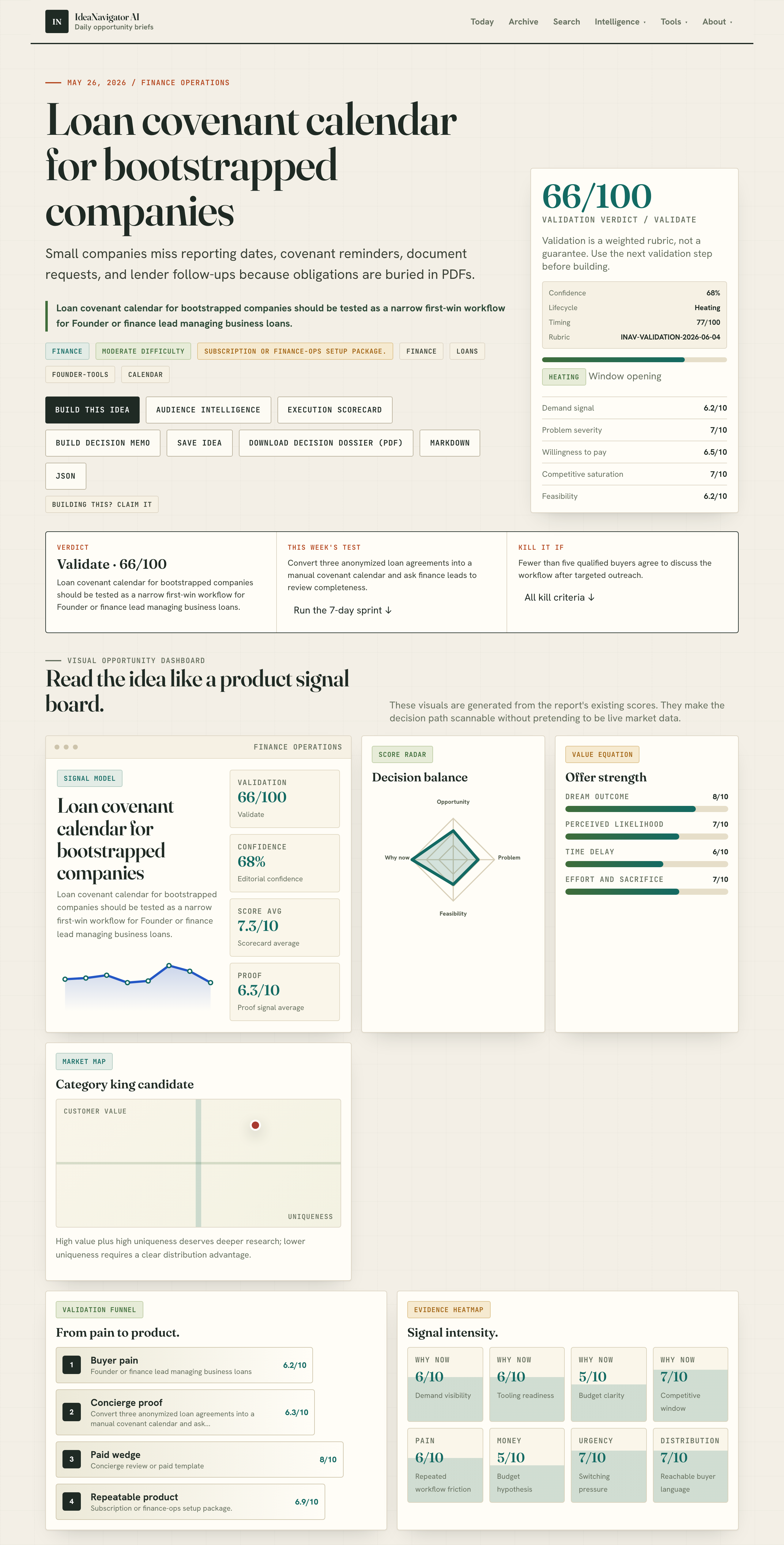
A proposed loan covenant calendar tool is being tested to assist bootstrapped companies in managing loan compliance. This development aims to reduce missed obligations and improve operational follow-through for small businesses seeking or managing loans.
A new loan covenant calendar prototype is being developed and tested specifically for bootstrapped companies to help manage their loan obligations more effectively, addressing a common challenge of missed reporting and follow-up due to obligations buried in PDFs.
The proposed tool aims to extract key information from loan agreements, including obligations, owners, due dates, evidence files, and lender communication history, into a centralized calendar system. This initiative is targeted at founders and finance leads managing business loans, particularly small companies facing increased scrutiny from lenders.
The concept emerged as a response to the difficulty small firms encounter in tracking and fulfilling loan covenants, which often leads to missed deadlines and potential compliance issues. The tool is designed as a minimal viable product (MVP) that can be validated by converting anonymized loan agreements into a manual covenant calendar and seeking feedback from finance professionals.
Market interest is primarily in the finance operations sector, with revenue models based on subscription fees or setup packages for finance teams. The testing phase involves assessing whether the calendar can reliably capture all obligations and facilitate follow-up, thereby reducing operational risks for small businesses.
Why a Covenant Calendar Matters for Small Businesses
Managing loan covenants is critical for small companies seeking to maintain good relationships with lenders and avoid penalties or defaults. As financing scrutiny increases, operational follow-through becomes more important, especially for bootstrapped firms with limited resources. Implementing a dedicated covenant calendar can streamline compliance, reduce missed obligations, and provide clearer oversight of loan terms, ultimately supporting business stability and growth.
Products Worth Considering

Oral-B iO Series 9 Limited Rechargeable Electric Toothbrush with 7 Cleaning Modes

Fitbit Sense Advanced Smartwatch – Sage Grey/Silver (One Size, S & L Bands Included)

Garmin Forerunner 70 GPS Running Smartwatch, 43 mm, Black
As an affiliate, we earn on qualifying purchases.
Small Companies Face Growing Loan Management Challenges
Many small, bootstrapped companies rely on loans for growth but lack sophisticated tools to manage covenant obligations. These obligations are often embedded in PDFs, making manual tracking cumbersome and error-prone. With lenders increasing their oversight and scrutiny, operational discipline around covenant compliance has become more vital.
Currently, there are few targeted solutions for small firms to automate or simplify covenant management, leading to missed deadlines and potential breaches. The development of a covenant calendar prototype is an attempt to fill this gap by providing a focused, easy-to-use workflow for managing loan commitments.
“This tool could significantly reduce the operational burden on small companies managing multiple loan covenants, especially as lenders tighten their scrutiny.”
— an anonymous researcher
Uncertainties About Adoption and Effectiveness
It is not yet clear how effectively the prototype will perform in real-world scenarios or whether small companies will adopt it at scale. The validation process is still in early stages, involving converting anonymized agreements into manual calendars and gathering feedback from finance leads. Broader market acceptance and integration with existing workflows remain to be seen.
Next Steps in Developing and Validating the Covenant Calendar
The next phase involves testing the prototype with actual loan agreements to evaluate its accuracy and usability. Feedback from finance professionals will inform refinements. If successful, the tool could be offered as a subscription service or setup package targeted at small and bootstrapped firms. Further development may include automation features and integration with accounting or loan management platforms.
Key Questions
How will the covenant calendar help small companies manage their loans?
The calendar will extract key obligations, due dates, and communication history from loan agreements, providing a centralized view to prevent missed deadlines and improve compliance.
Is this tool suitable for all types of small businesses?
Initially, it is designed for bootstrapped companies managing multiple loans, but its applicability may expand as features develop and user feedback is incorporated.
When will the covenant calendar be available for broader use?
The development is still in early testing; a commercial release is not yet scheduled but could occur within the next year if validation proves successful.
What are the main challenges in implementing this tool?
Key challenges include ensuring accurate extraction of obligations from diverse loan agreements and encouraging adoption among small companies with limited operational resources.
Source: IdeaNavigator AI