📊 Full opportunity report: The Shift Toward Phone-Photo Gauge Monitoring In Industrial Operations on IdeaNavigator AI — validation score, market gap, and execution plan.

Get the little things that make your day delivered free with Prime
- Fast, free delivery on millions of items
- Prime Video, Amazon Music and more included
- Member-only deals all year
TL;DR
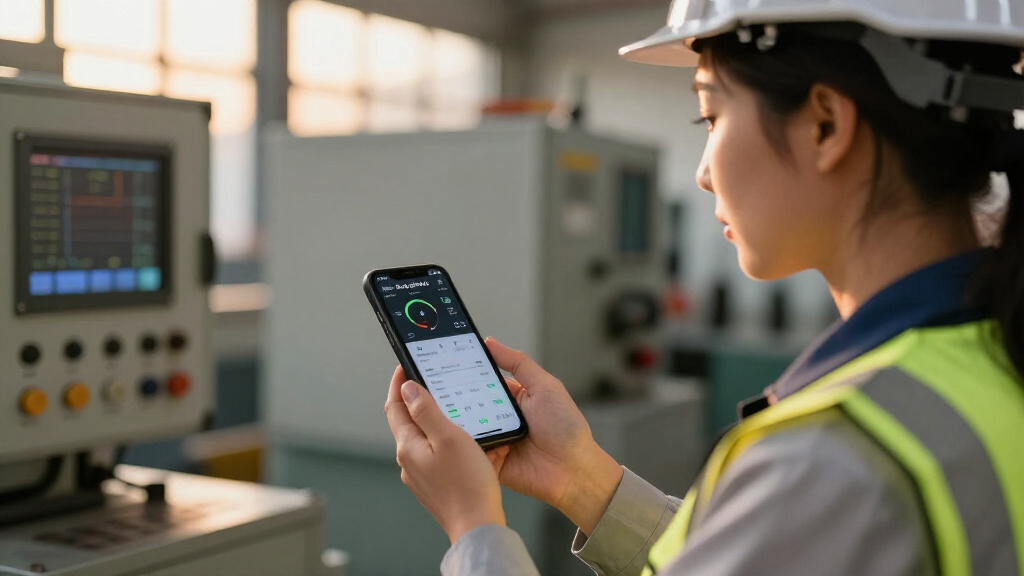
Facilities are trialing a phone-photo gauge reading system to replace traditional clipboard rounds. This approach aims to reduce errors, improve data tracking, and lower retrofit costs. Validation is ongoing across multiple sites.
Facilities are beginning to adopt a new workflow that uses smartphone photos to read analog gauges, replacing manual transcription and potentially reducing errors and costs, according to recent pilot programs.
The new approach involves technicians taking photographs of gauges during their routine rounds. An app then automatically reads the gauge value from the photo, compares it to expected ranges, logs the data with timestamps and location, and flags anomalies immediately. This process aims to build a detailed trend history for each gauge, addressing a long-standing challenge in legacy equipment maintenance.
Initial testing is underway at three facilities, where parallel photo-and-clipboard rounds are being compared over a month. Early results suggest a reduction in transcription errors and earlier detection of potential failures, although full validation data remains pending.
This workflow leverages recent advances in sight model technology, which reliably interpret analog dials, sight glasses, and counters from standard phone photos, eliminating the need for costly retrofits of legacy equipment with IoT sensors, which often face budget and compatibility constraints.
Potential Impact on Maintenance Data Accuracy
This shift could significantly improve the accuracy and timeliness of maintenance data, enabling facilities to detect issues earlier and reduce unplanned downtime. By automating gauge readings, companies can also cut labor costs associated with manual rounds and data entry, while minimizing human errors that often obscure developing failures.
Adopting this workflow may also democratize data collection in older plants, where retrofitting sensors is prohibitively expensive. The approach offers a scalable, low-cost alternative that can be deployed across a wide range of legacy equipment, potentially transforming routine maintenance practices in industrial operations.
As an affiliate, we earn on qualifying purchases.
Legacy Equipment and the Cost of IoT Retrofits
Many industrial facilities rely on analog gauges and sight glasses for process monitoring, but traditional methods of recording readings—manual transcription onto paper or digital logs—are prone to errors and often lack trend data. Retrofitting these gauges with IoT sensors can be expensive, especially for older equipment that was not designed for digital integration.
Recent technological advances, however, have enabled sight models to read analog dials accurately from phone photos, creating a new pathway for data collection without hardware upgrades. This development comes amid broader industry efforts to digitize maintenance workflows while managing costs and minimizing disruptions.
The pilot programs aim to validate whether this approach can reliably replace or supplement existing manual rounds, providing a low-cost, scalable solution for industrial facilities seeking to improve operational reliability.
“Sight models now reliably interpret analog gauges from phone photos, making every legacy gauge a potential data source without the need for sensors.”
— an anonymous researcher
As an affiliate, we earn on qualifying purchases.
Validation Results and Scalability Questions
While early pilot results are promising, comprehensive data on error reduction, anomaly detection accuracy, and long-term reliability are still forthcoming. It remains unclear how well the system performs across different types of gauges and environmental conditions, and whether it can be scaled effectively across diverse facilities.
Further testing is planned over the next month to gather more data, but industry-wide adoption will depend on validation outcomes and integration ease.
As an affiliate, we earn on qualifying purchases.
Next Steps in Pilot Validation and Industry Adoption
The current phase involves running parallel photo-and-clipboard rounds at three facilities, with results expected to inform broader deployment decisions. If the pilot demonstrates significant error reduction and early failure detection, companies may adopt the workflow more widely.
Additional development may include refining the app’s anomaly detection algorithms, integrating with existing maintenance management systems, and expanding testing to different gauge types and operational environments.
Industry observers will watch these pilots closely to assess whether this low-cost, high-impact approach can become a standard practice in legacy equipment management.
As an affiliate, we earn on qualifying purchases.
Key Questions
How accurate are phone photos for reading gauges?
Recent advances in sight model technology have demonstrated high reliability in interpreting analog gauges from standard phone photos, with ongoing validation to confirm accuracy across various conditions.
Will this replace all manual rounds?
Initial implementations aim to supplement manual rounds, especially in legacy systems where sensor retrofits are costly. Widespread replacement will depend on validation outcomes and operational needs.
What are the cost implications for facilities?
This workflow offers a low-cost alternative to sensor retrofits, involving minimal hardware and leveraging existing smartphones, which can reduce maintenance costs and improve data quality.
Are there any limitations or environmental concerns?
Performance may vary with lighting conditions, gauge visibility, and environmental factors. Further testing is needed to assess robustness across different operational settings.
When will this system be available for broader deployment?
Widespread adoption will depend on pilot validation results over the next month, with potential commercial rollout expected after successful testing and integration.
Source: IdeaNavigator AI
Fall Picks
fall essentials
As an affiliate, we earn on qualifying purchases.