📊 Full opportunity report: Can Men Measure Their Skincare Routine With A Glow-Up App? on IdeaNavigator AI — validation score, market gap, and execution plan.

Get the little things that make your day delivered free with Prime
- Fast, free delivery on millions of items
- Prime Video, Amazon Music and more included
- Member-only deals all year
TL;DR
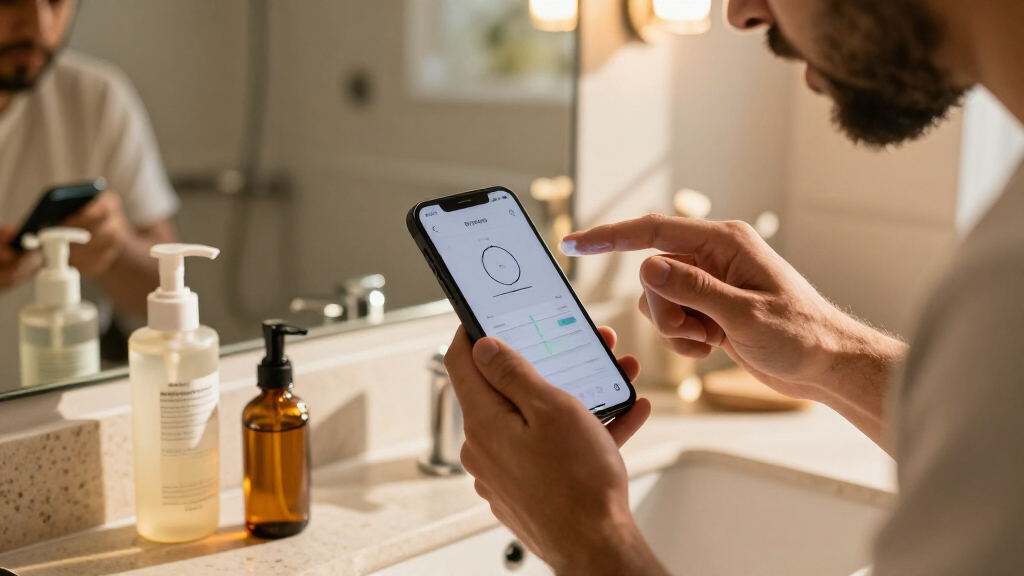
A product concept proposes a skincare tracking app for men built around weekly guided selfies, routine logs and progress cards. The idea has not been shown to be a launched or tested product, and its ability to measure skin changes or attract subscribers remains uncertain.
IdeaNavigator AI has proposed a skincare progress app for men that would use weekly guided selfies, routine tracking and scorecards to help users judge whether their skincare habits are working. The proposal is a product concept, not a report of an app launch or completed trial, and it offers no evidence yet that automated scores can reliably measure changes in skin.
The concept targets men who have recently started skincare and want a visible way to assess progress. Its suggested first version would prompt users to take weekly guided selfies, log products and habits, and view progress cards covering skin clarity, texture and dark circles. Streaks would reward consistent use, while the interface would present results in the language of training metrics rather than conventional beauty marketing.
The proposal also sketches a potential business model: a subscription, with affiliate product suggestions linked to areas the app identifies as needing attention. Those features are recommendations for a possible minimum viable product, not confirmed functions of an existing service. No price, product partners, image-scoring method, privacy policy or development schedule is supplied.
To test whether the positioning resonates, IdeaNavigator AI suggests presenting the same selfie-capture technology with two different identities: one branded around men’s training and another using neutral language. The proposed comparison would look at conversion and retention across user segments. No test findings, customer numbers or evidence of sustained demand are included, so whether the approach improves sign-ups or continued use remains an open question.
A Scorecard for Skincare Habits
The concept addresses a practical question for people beginning a routine: is anything changing? A regular record of photographs and product use could help users compare their own experience over time rather than relying on memory. A simple log may also make it easier to notice whether a routine has been followed consistently before drawing conclusions about results.
But a score can look more certain than the underlying measurement. Skin appearance in photos can vary with lighting, camera angle, expression and other conditions. Without details on how the proposed app would standardize images, validate its scoring, or distinguish ordinary variation from a meaningful change, its numbers should not be treated as a clinical assessment. The concept’s value would depend both on whether people find the tracking useful and whether the measurements are presented with appropriate limits.
The branding test matters for product design, too. If training-oriented language makes some potential users more comfortable trying a skincare tool, that could shape how a service reaches an audience. It would not, by itself, establish that men generally avoid existing beauty apps or that a gender-specific product is needed. Those broader claims require user research beyond the concept description.
men's skincare progress tracking app
As an affiliate, we earn on qualifying purchases.
As an affiliate, we earn on qualifying purchases.
From Grooming Trend to Product Test
IdeaNavigator AI frames the opportunity within men’s grooming technology and says interest in men’s skincare is growing, alongside looksmaxxing culture and its emphasis on measurable self-improvement. The material provides no market statistics, dates or independent research to quantify that trend, so it is best understood as the rationale for exploring the idea, not a verified market ranking.
The proposal narrows the initial audience to one group: men newly invested in skincare who want proof of progress. That focus is intended to make the first product test specific, rather than trying to serve every grooming need. The suggested experiment is to compare branding while holding the selfie-capture feature constant, then track whether people sign up and keep using the app. It is a validation plan, not evidence that the test has taken place.
As an affiliate, we earn on qualifying purchases.
Measurement and Demand Still Untested
The proposal does not identify a developer, launch date or working product, and it does not report interviews, conversion results or retention data. It is therefore unclear whether the intended users want a dedicated app, which features they would use repeatedly, or whether they would pay a subscription.
It also remains unclear how selfie scores would be generated and checked. The concept names clarity, texture and dark circles as possible categories but does not describe an evaluation method, its accuracy, or how the app would account for changes in photo conditions. The handling, storage and deletion of face images are not addressed. Nor does the proposal explain how affiliate recommendations would be kept relevant and transparent, or whether the app would distinguish cosmetic guidance from medical advice.
As an affiliate, we earn on qualifying purchases.
The Proposed Branding Comparison
The next step described is to test two versions of the app’s positioning: men’s-training branding and neutral branding, using the same capture technology. A meaningful report from that test would need to say who took part, how conversion and retention were defined, how long users were followed and whether differences held across audience segments. No timetable or planned study is given, so there is no confirmed next release or result to anticipate.
If development proceeds, further details would be needed about image-scoring validation, privacy protections, subscription terms and the basis for product recommendations. Until those are available, the proposal is best viewed as a hypothesis about a potential audience and workflow—not evidence that an app can objectively measure skincare success.
Source: IdeaNavigator AI
As an affiliate, we earn on qualifying purchases.
Key Questions
Is this a skincare app that men can download now?
No launch is reported. IdeaNavigator AI describes a proposed product and a way to test its appeal, not an app currently available to users.
What would the proposed app track?
The suggested first version would combine weekly guided selfies, routine logs and progress cards covering clarity, texture and dark circles. These are proposed features, not confirmed functions in a released product.
Can an app prove that a skincare routine is working?
The proposal does not establish that. Photos and scores could help users keep a record, but their reliability would depend on consistent image capture and a validated scoring method. Neither is described in the concept.
How might the product make money?
The suggested model combines a subscription with affiliate product recommendations. No price, partners or recommendation safeguards are specified.
What evidence would show whether the idea works?
The suggested first test compares training-focused and neutral branding, then measures conversion and retention. Results would need to be reported; none are provided in the concept.
Source: IdeaNavigator AI
Fall Picks
fall essentials
As an affiliate, we earn on qualifying purchases.