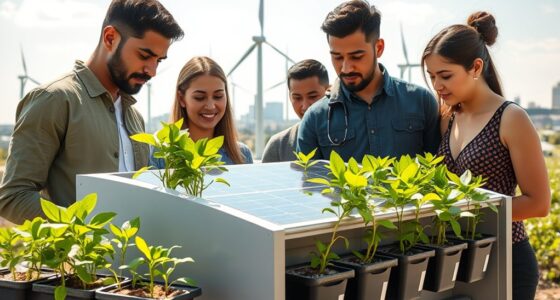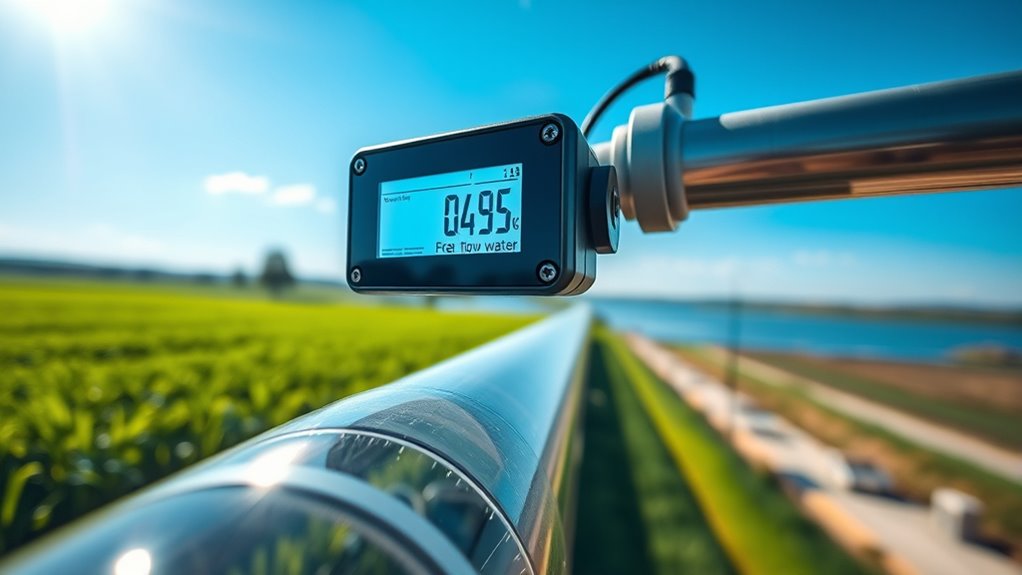

Digital monitoring and conservation technologies are transforming how you manage water resources. IoT sensors, AI analytics, and cloud platforms provide real-time data on water flow, quality, and usage. These tools enable proactive leak detection, optimize water use, and support sustainable practices across industries and municipalities. By adopting these innovations, you help secure a resilient water future. Stay with us to explore how these advancements can make a difference in your water management efforts.
Key Takeaways
- Digital monitoring technologies enable real-time water quality and usage data for proactive management and early leak detection.
- IoT sensors and AI analytics optimize water conservation, reducing waste and enhancing resource efficiency.
- Smart infrastructure investments support sustainable practices, regulatory compliance, and resilience against water scarcity.
- Data-driven insights facilitate precise irrigation, pollution control, and infrastructure maintenance, securing water future.
- Regional adoption of digital water solutions accelerates global efforts toward sustainable and resilient water management systems.
The Growing Importance of Water Monitoring Technologies
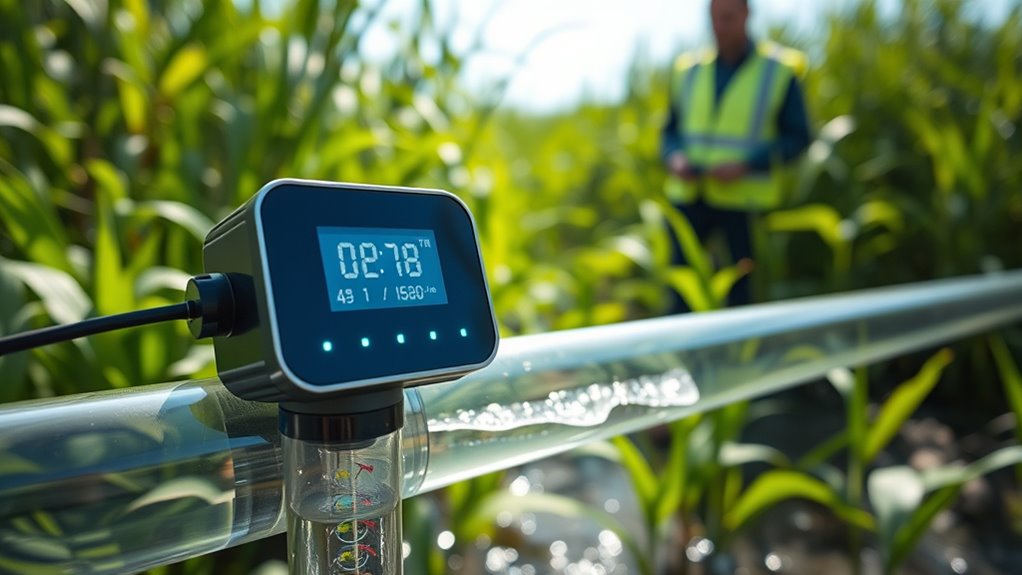
Water monitoring technologies are becoming increasingly essential as the demand for clean, safe, and sustainable water resources grows worldwide. You need reliable systems to detect leaks, monitor water quality, and optimize usage across industrial, municipal, and agricultural sectors. With the market projected to reach over $11 billion by 2034, investments in IoT-enabled meters, sensors, and data analytics are accelerating. These tools provide real-time insights, helping you identify contamination, reduce water loss, and ensure regulatory compliance. As water scarcity worsens and environmental concerns rise, the importance of digital monitoring grows even more. By adopting these technologies, you can improve operational efficiency, protect public health, and contribute to sustainable water management efforts on a global scale. Additionally, understanding the contrast ratio in monitoring devices can enhance the accuracy of data interpretation, ensuring more reliable decision-making.
Advancements Driving Innovation in Digital Water Systems
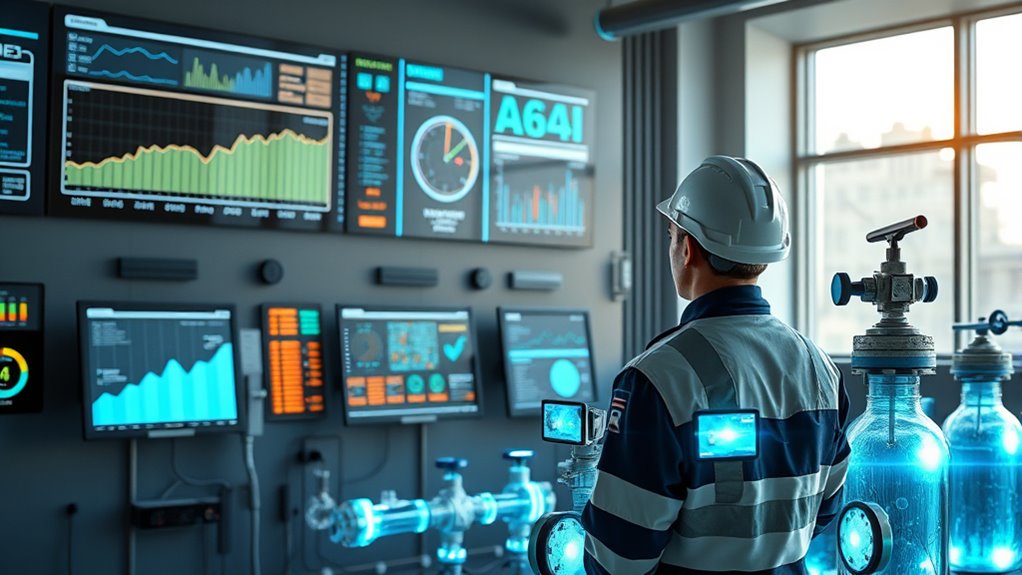
Recent technological breakthroughs are transforming how digital water systems operate, enabling smarter, more efficient management. IoT-enabled meters and sensors provide real-time data on water flow, quality, and usage, allowing you to detect leaks early and reduce waste. AI analytics process massive datasets to predict system failures and optimize maintenance schedules, saving time and costs. Cloud platforms facilitate seamless data sharing, making information accessible across teams and locations. Wireless, miniaturized sensors enhance monitoring accuracy and coverage, especially in hard-to-reach areas. Interconnectivity through IoT technologies enables you to manage infrastructure remotely and respond swiftly to issues. Additionally, adopting lifestyle strategies can improve overall water conservation efforts. These innovations drive a new era of precision, sustainability, and operational efficiency in water management, empowering you to make data-driven decisions that protect resources and improve service delivery.
Key Applications in Industry and Municipal Infrastructure

You can leverage leak detection technologies to quickly identify and address water losses, saving resources and reducing costs. Regulatory compliance strategies guarantee your infrastructure meets environmental standards and avoids penalties. Improving efficiency through automation and real-time monitoring helps optimize water use and boost operational performance. Additionally, implementing monitoring of fetal movements can enhance early detection of potential complications in pregnant women.
Leak Detection Technologies
How do utilities and industries quickly identify and address leaks before they cause significant damage or waste? They rely on advanced leak detection technologies that provide real-time insights. IoT-enabled sensors continuously monitor flow rates, pressure, and acoustic signals to pinpoint anomalies indicating leaks. AI analytics analyze this data, detecting patterns and predicting potential failures. Wireless sensors and smart meters transmit information instantly to central systems, enabling rapid response. Acoustic leak detection uses sound sensors to locate leaks precisely, even in complex networks. Pressure management systems help identify pressure drops that signal leaks. These technologies work together to minimize water loss, reduce repair costs, and improve operational efficiency, ensuring that leaks are addressed swiftly before escalating into major issues.
Regulatory Compliance Strategies
Regulatory compliance has become a critical driver for the adoption of digital water monitoring systems in both industrial and municipal sectors. You need reliable, real-time data to meet strict standards and avoid penalties. Digital systems simplify compliance by automating reporting, tracking key metrics, and ensuring transparency. They enable you to proactively address violations before they escalate. Implementing IoT-enabled sensors for continuous monitoring of water quality and flow helps maintain environmental standards and supports sustainable practices. Using cloud platforms for centralized data access and compliance documentation. Integrating AI analytics to identify regulatory trends and forecast potential violations.
These approaches help you stay ahead of evolving regulations, reduce risks, and demonstrate accountability. Digital solutions streamline compliance efforts, making adherence more efficient and less burdensome.
Efficiency Enhancements
Digital water monitoring systems substantially boost efficiency in industrial and municipal infrastructure by enabling precise control and real-time management of water resources. They help detect leaks early, optimize usage, and reduce waste. These systems automate processes, providing instant alerts for anomalies and enabling quick responses. As a result, water loss drops, operational costs decrease, and compliance improves. The following table shows key efficiency enhancements:
| Application | Benefit | Impact |
|---|---|---|
| Leak detection | Minimizes water loss | Saves costs, conserves water |
| Automated controls | Precise resource management | Reduces waste, boosts efficiency |
| Real-time analytics | Informed decision-making | Enhances response speed |
| Predictive maintenance | Prevents system failures | Lowers downtime, saves money |
Implementing these systems also supports preventive maintenance, which is vital for maintaining long-term infrastructure health.
Environmental Benefits and Sustainability Initiatives
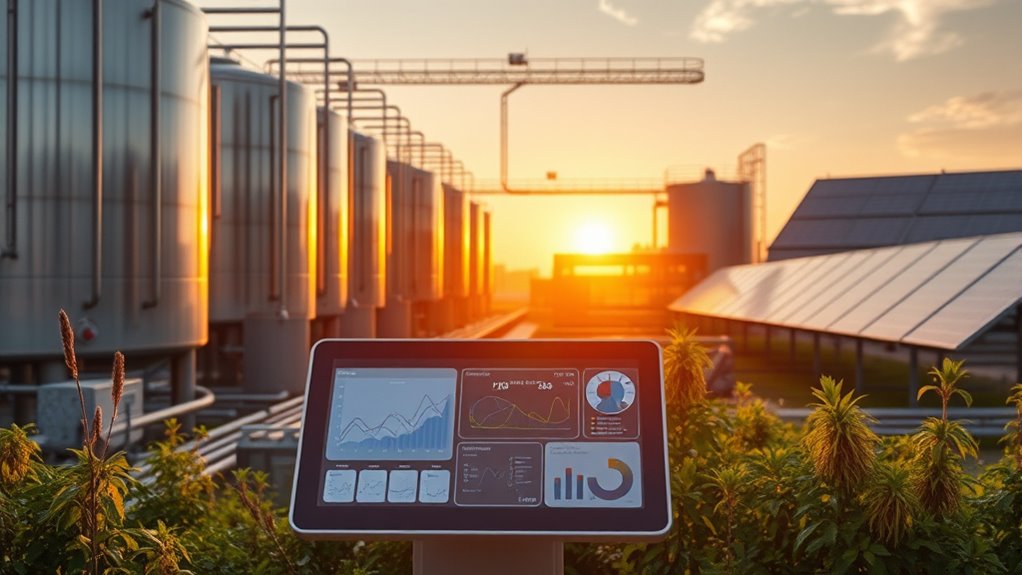
Are you aware of how digital water monitoring drives environmental sustainability? By providing real-time data, you can identify leaks early, reduce water waste, and improve ecosystem health. Digital systems also support sustainable agriculture through precise irrigation, minimizing runoff and conserving water. Governments promote these initiatives to combat climate change, water scarcity, and pollution. Your efforts with smart technology help protect natural resources and reduce energy consumption. Implementing indoor cultivation techniques can further enhance water efficiency and crop yields.
Regional Trends and Market Segmentation Insights
Regional trends in water monitoring and conservation reveal significant variations driven by economic development, technological adoption, and regulatory frameworks. In North America, high demand for advanced water quality systems, especially in the U.S., dominates the market, supported by substantial investments in smart infrastructure. Europe follows closely, emphasizing stringent environmental regulations and sustainable practices. Asia Pacific shows rapid growth, fueled by expanding industrial sectors and urbanization, with developing economies adopting sensors and IoT solutions to meet regulatory standards. The Middle East and Africa focus on water scarcity solutions, prioritizing smart metering and leak detection. Market segmentation reveals sensors as the largest product segment globally, driven by miniaturization and technological advances. The adoption of regulatory guidelines and standards plays a crucial role in shaping regional market dynamics. Overall, regions with strong regulatory environments and economic capacity lead adoption, shaping global water management trends.
How Sensors and IoT Are Transforming Water Management
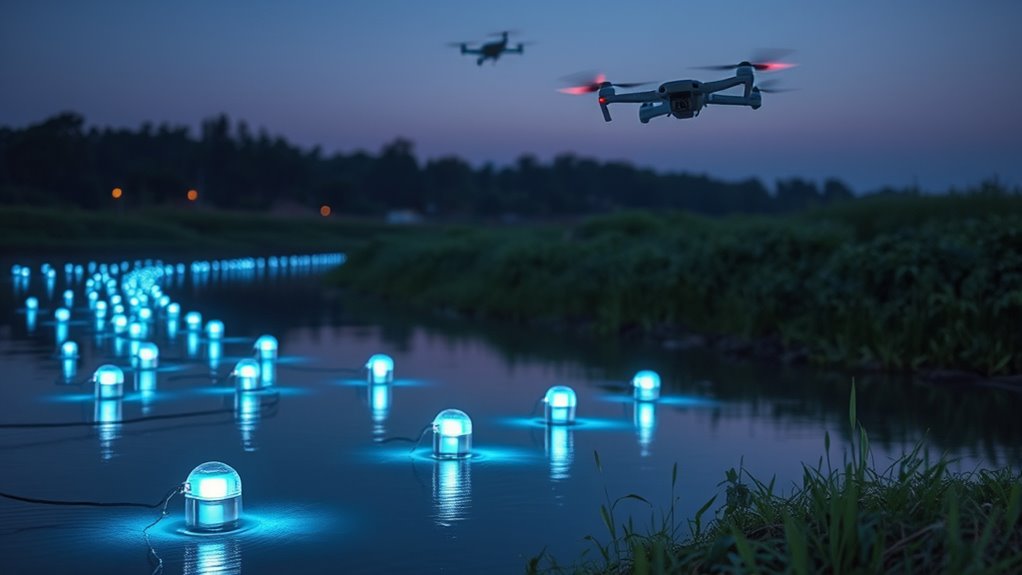
Sensors and IoT devices provide you with real-time data insights that enable quick detection of leaks and water quality issues. They also improve system interconnectivity, allowing different parts of water infrastructure to communicate seamlessly. This integration helps you make smarter decisions, optimize resource use, and respond faster to emerging challenges. Incorporating holistic health principles from yoga can further enhance the sustainability of water management practices by encouraging mindful resource utilization and fostering community well-being.
Real-Time Data Insights
The integration of sensors and IoT technologies is revolutionizing water management by enabling real-time data collection and analysis. You gain immediate insights into water quality, flow rates, and system performance, allowing quick responses to issues. This instant data helps optimize resource use, detect leaks early, and prevent contamination. Additionally, implementing proper storage practices can further maintain water quality and extend system lifespan.
Enhanced System Interconnectivity
Integrating IoT and sensors creates a seamlessly connected water management ecosystem, where data flows effortlessly across infrastructure components. This interconnectedness enables real-time communication between sensors, meters, and control systems, allowing you to monitor water quality, flow, and usage across multiple sites instantly. You can detect leaks, optimize distribution, and respond quickly to contamination events, reducing waste and improving efficiency. The interconnected system also facilitates predictive maintenance, as data from various devices helps anticipate failures before they occur. With IoT-driven interconnectivity, you gain a holistic view of your water network, making decision-making faster and more informed. This integration not only enhances operational reliability but also supports sustainability goals by minimizing water loss and energy consumption. Alimony laws can also influence how assets are divided and managed during and after the transition.
The Role of Digital Solutions in Enhancing Water Security
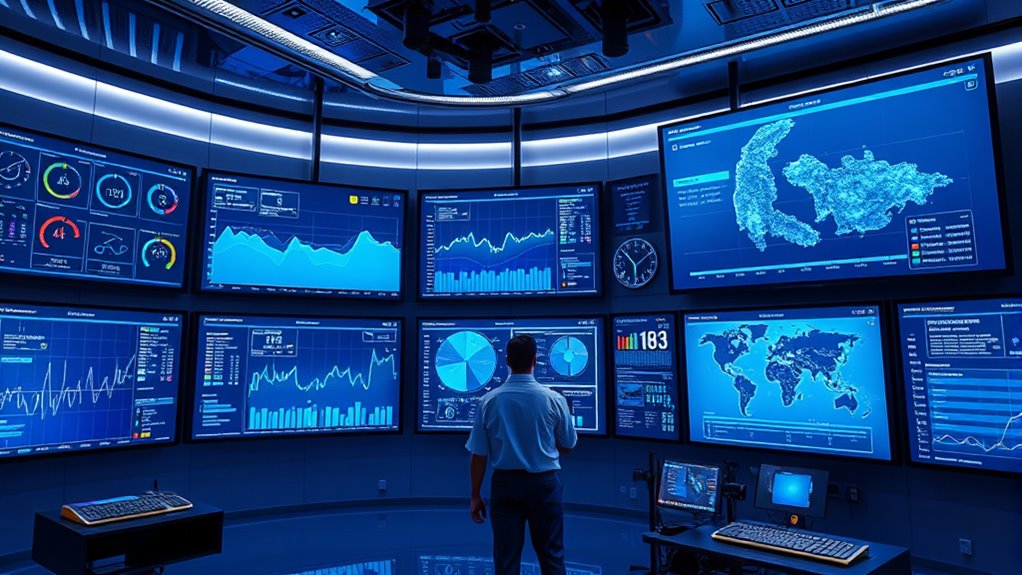
Digital solutions play a crucial role in bolstering water security by enabling real-time monitoring, predictive analytics, and rapid response to emerging threats. These tools help you detect leaks early, optimize water use, and prevent contamination. By integrating IoT sensors, AI analytics, and cloud platforms, you can improve decision-making and quickly address issues before they escalate.
- Detect leaks and water loss instantly
- Predict and prevent contamination events
- Optimize resource use for efficiency
These solutions empower you to manage water systems proactively, reduce waste, and ensure safe, reliable water supplies. As technology advances, your ability to safeguard water resources becomes more precise, efficient, and resilient against future challenges.
Future Outlook and Opportunities for Digital Water Conservation
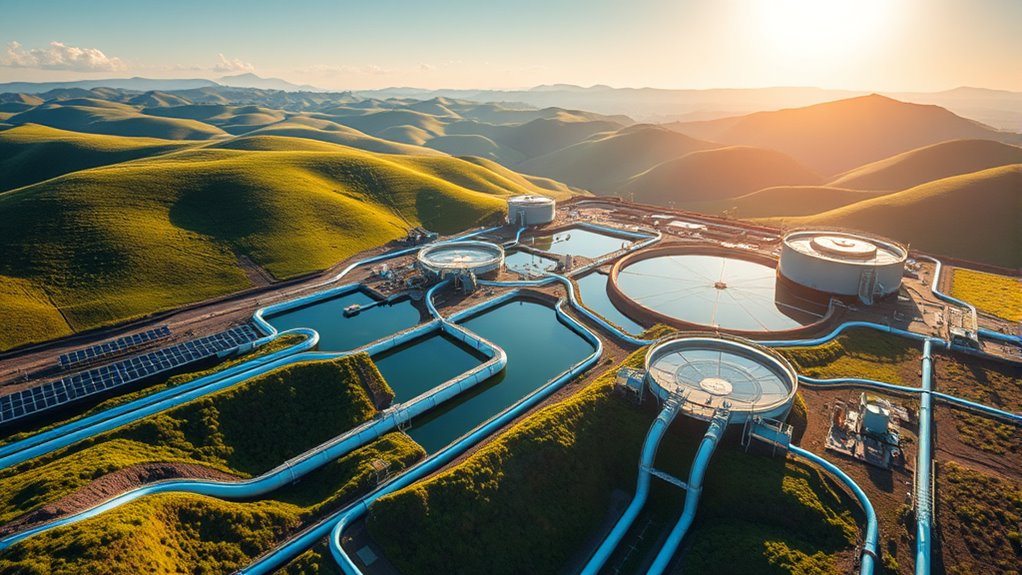
Advancements in technology are opening new opportunities for sustainable water management, making it possible to address water scarcity and quality challenges more effectively. You can expect increased adoption of IoT, AI, and cloud platforms to deliver real-time insights, enabling proactive responses to leaks, contamination, and inefficiencies. The market growth indicates significant investments, with smart water management projected to reach over $43.7 billion, driving innovation and infrastructure upgrades worldwide. Emerging solutions will focus on miniaturized sensors, predictive analytics, and automation, making water conservation more precise and scalable. As regulations tighten and environmental concerns grow, you’ll see more integrated systems across industrial, municipal, and agricultural sectors. These advancements will promote smarter, more resilient water ecosystems, ensuring sustainable use for future generations.
Frequently Asked Questions
How Cost-Effective Are Digital Water Monitoring Systems for Small Communities?
Digital water monitoring systems can be quite cost-effective for small communities. You’ll save money by quickly detecting leaks, reducing water waste, and preventing costly repairs. These systems provide real-time data, helping you make informed decisions and optimize resource use. Although initial investments may seem high, the long-term savings on water bills, maintenance, and regulatory compliance make digital monitoring a smart, affordable choice for small communities seeking sustainable water management.
What Are the Main Challenges in Implementing Iot-Based Water Solutions Globally?
You’ll face challenges like high initial costs, especially for small communities, as IoT devices require significant investment. Limited technical expertise can hinder deployment and maintenance, while connectivity issues in remote areas may disrupt real-time data flow. Privacy concerns also arise with data sharing. Overcoming these hurdles means securing funding, building technical capacity, and ensuring reliable infrastructure to maximize IoT benefits in water management worldwide.
How Do Privacy and Data Security Concerns Impact Water Data Sharing?
You need to recognize that privacy and data security concerns can throw a wrench in water data sharing efforts. When sensitive information is at stake, people worry about hacking, misuse, or loss of control. This can lead to reluctance or delays in adopting new technologies. To keep everyone on board, you must prioritize strong security measures, transparent policies, and trust-building practices, showing stakeholders their data is safe.
What Training Is Needed for Personnel to Operate Advanced Water Monitoring Tech?
You need thorough training to operate advanced water monitoring tech effectively. Start with understanding IoT systems, sensor calibration, and data management. Learn how to interpret real-time analytics and respond to alerts quickly. Focus on troubleshooting hardware and software issues, ensuring cybersecurity, and maintaining equipment. Regularly update your skills with vendor-led courses and industry certifications. This training guarantees you can maximize system efficiency, guarantee data accuracy, and maintain water safety standards.
How Do Regulatory Policies Influence Adoption of Digital Water Management Systems?
A stitch in time saves nine, and regulatory policies markedly drive the adoption of digital water management systems. You’ll find that strict regulations, like EPA standards or EU directives, push utilities and industries to implement advanced monitoring tech to stay compliant. These policies create a compelling incentive for investment, encouraging innovation, ensuring quality, and promoting sustainable practices. Without regulatory pressure, adoption might lag, risking penalties and environmental harm.
Conclusion
As you embrace digital water management, remember that technology alone isn’t enough—it’s about safeguarding our future. While sensors and IoT transform efficiency, they coexist with the timeless need for conservation and responsible use. By combining innovation with mindful habits, you can help guarantee water security for generations to come. In a world where progress and preservation go hand in hand, your actions today shape the sustainable water future we all depend on.