

Renewable energy is advancing rapidly through innovations in solar, wind, and emerging technology. Solar panels are becoming more efficient and affordable, with breakthroughs in photovoltaic materials driving global adoption. Wind energy projects are expanding offshore with larger, more powerful turbines. Emerging options like green hydrogen, geothermal, and advanced storage are diversifying sources and boosting grid stability. If you want to explore how these developments are shaping a cleaner future, there’s much more to discover.
Key Takeaways
- Solar energy now accounts for 83% of global electricity demand growth in early 2025, driven by cost reductions and efficiency improvements.
- Wind power expansion includes larger turbines and floating offshore projects, supported by digital optimization tools and innovative materials.
- Emerging technologies such as green hydrogen, advanced geothermal, and direct air capture are diversifying renewable sources and addressing climate goals.
- Energy storage advancements like solid-state batteries and AI-driven grid management enhance renewable integration and grid stability.
- Policy incentives, international collaborations, and supply chain innovations accelerate renewable deployment and reduce market uncertainties.
Top picks for "renewable energy innovation"
Open Amazon search results for this keyword.
As an affiliate, we earn on qualifying purchases.
Solar Power: Advances and Adoption Trends
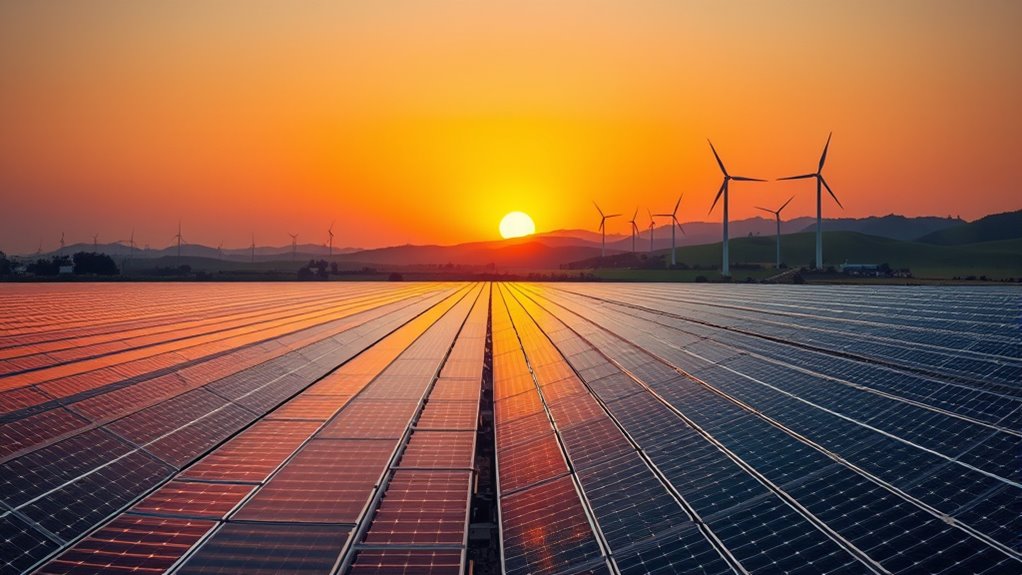
Have you noticed how solar power has surged in recent years? It’s become a major focus in 2025, with small-scale solar projects attracting significant investments. Advances in photovoltaic technology and manufacturing have lowered costs and boosted efficiency, making solar more accessible worldwide. In the first half of 2025, solar generated 83% of the global electricity demand increase, outpacing wind and other sources. This growth is fueled by innovations in panels and digital tools that optimize operations and maintenance, maximizing yields. Policy shifts and investor confidence vary by region, influencing deployment strategies. Overall, solar power’s rapid expansion reflects its increasing role as a reliable, affordable, and scalable renewable energy source, driving the progression toward a cleaner energy future. Technological innovations continue to enhance solar energy’s effectiveness and adoption worldwide.
Wind Energy: Onshore and Offshore Developments
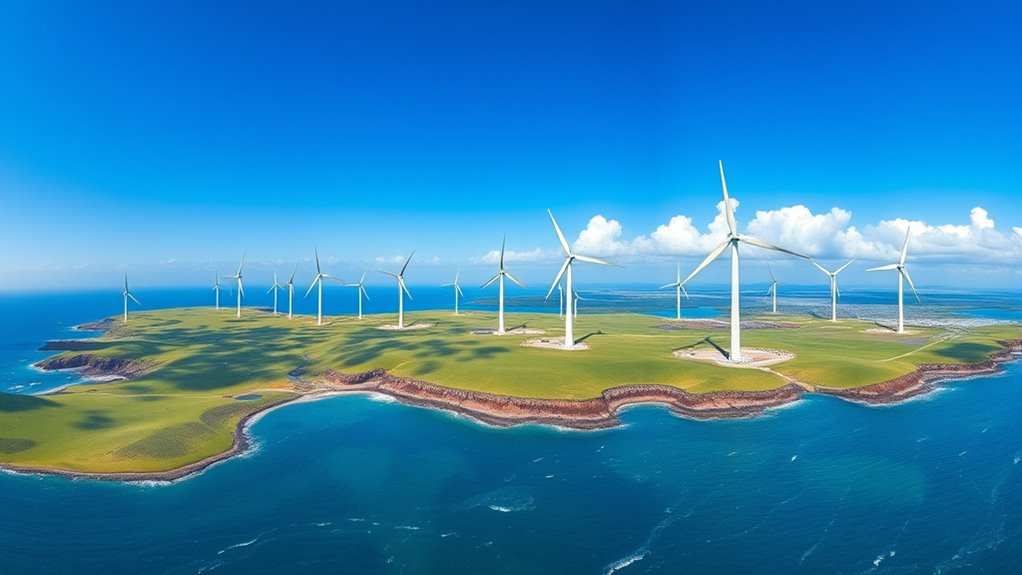
Are onshore and offshore wind projects making significant strides in 2025? Yes, they’re expanding rapidly, especially in Europe, despite declining U.S. offshore investments. You’ll see new turbine designs with advanced materials increasing capacity and lowering costs. Wind farms benefit from modular setups, enabling quick deployment across diverse regions. Digital tools and AI optimize operations, predictive maintenance, and grid integration, boosting efficiency. Supply chain constraints and geopolitical factors occasionally slow progress, but innovation continues to drive growth. Offshore projects are now larger, with floating turbines opening new deep-water opportunities. Onshore developments focus on repowering older sites, improving capacity factors. Additionally, battery technologies are increasingly integrated into wind infrastructure, enhancing storage capabilities and grid stability. Overall, wind energy’s role in the clean power mix strengthens, supported by policy incentives and technological advancements.
Emerging Technologies Transforming the Renewable Landscape

Emerging renewable technologies are reshaping the energy landscape by addressing the limitations of traditional solar and wind power. Breakthroughs like direct air capture, advanced geothermal, and green hydrogen are pushing the boundaries of clean energy. They help manage intermittency, cut emissions, and diversify sources. Digital tools and AI optimize operations and maintenance, boosting efficiency. Public-private partnerships accelerate deployment, closing the gap between innovation and use. Additionally, implementing advanced fraud detection techniques enhances financial security in renewable energy transactions and investments. Here’s a closer look at these technologies:
| Technology | Impact | Challenges |
|---|---|---|
| Direct Air Capture | Carbon removal, climate mitigation | High energy demand |
| Advanced Geothermal | Reliable base load power | Site-specific resources |
| Green Hydrogen | Decarbonizes hard sectors | Cost, infrastructure |
| Battery Innovations | Storage, grid stability | Material supply |
| Digital Optimization | Efficiency, predictive maintenance | Data security, costs |
Innovations in Energy Storage and Grid Integration
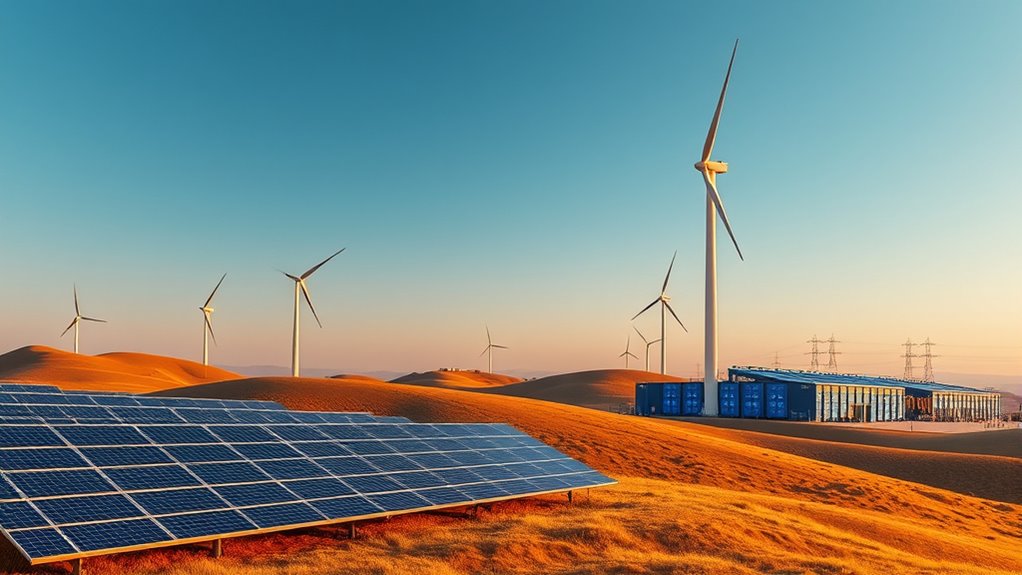
How can energy storage innovations revolutionize the integration of renewable power into the grid? By enabling you to store excess energy during peak production and release it when demand rises, storage solutions help balance supply and demand efficiently. Advances in battery technologies, like solid-state and flow batteries, provide higher capacity, faster response times, and longer lifespans, making grid management more reliable. Digital tools and AI optimize energy flow, predicting shortages or surpluses in real-time. Grid integration also benefits from modular energy storage systems that scale with project needs. These innovations reduce curtailment of renewable energy, improve grid stability, and facilitate the wider adoption of intermittent sources like solar and wind, pushing us closer to a resilient, renewable-powered future. Understanding energy storage is essential for appreciating the full potential of these technological advancements.
Policy Shifts and Investment Flows in Global Markets

Recent policy shifts and investment patterns are reshaping the global renewable energy landscape, influencing where and how projects are developed. You’ll notice that regions like Europe are attracting more capital due to supportive regulations and energy security goals. Conversely, some markets face regulatory uncertainties that slow investments, especially in utility-scale projects.
Key trends include:
- Capital shifting from the U.S. to Europe, driven by policy incentives and regulatory stability.
- Increased investments in small-scale solar and storage sectors, despite declines in large-scale assets.
- Governments prioritizing renewables through initiatives like China’s push for energy independence and Europe’s focus on energy efficiency.
- Attention to signs of spoilage in related sectors underscores the importance of maintaining quality standards in renewable equipment and materials.
These shifts guide your project planning, highlighting the importance of regional policies and market dynamics in shaping renewable energy growth.
The Role of Artificial Intelligence in Renewable Operations
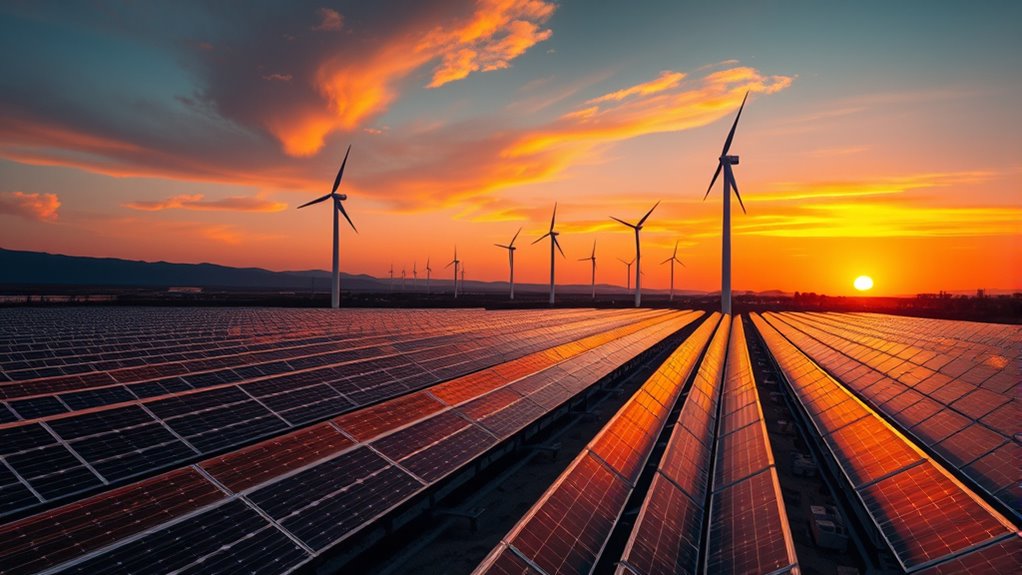
You can harness AI to perform predictive maintenance on renewable assets, reducing downtime and lowering operational costs. By optimizing grid integration, AI helps balance supply and demand, ensuring stable energy delivery. These tools are transforming how renewable projects operate, making them more efficient and reliable. Additionally, AI-driven space and organization strategies can streamline asset management, further enhancing overall performance.
AI-Driven Predictive Maintenance
Artificial Intelligence is transforming renewable energy operations by enabling predictive maintenance that minimizes downtime and reduces costs. You can now detect equipment issues early, preventing failures before they happen. AI analyzes real-time sensor data to identify patterns indicating potential problems, allowing timely interventions. This approach improves asset lifespan and operational efficiency. With AI-driven maintenance, you’ll benefit from: – Reduced unplanned outages, ensuring consistent energy production – Lower maintenance costs by targeting repairs precisely – Extended equipment lifespan through proactive care variety of materials available
Optimizing Grid Integration
Integrating renewable energy into existing power grids presents a significant challenge due to the variable nature of sources like solar and wind. You can harness artificial intelligence to tackle this issue by enhancing grid stability and balancing supply and demand. AI algorithms analyze real-time data, forecast renewable output, and optimize energy dispatch, reducing curtailment and ensuring reliable delivery. Smart grid management becomes more efficient as AI predicts fluctuations and adjusts operations proactively. Additionally, AI-driven energy storage management maximizes the use of batteries, smoothing out intermittency. By integrating AI into grid systems, you enable faster response times, improved resilience, and greater integration of renewables. Implementing predictive analytics further enhances the ability to anticipate grid needs and adapt accordingly, helping *shift* toward a cleaner, more sustainable energy future while maintaining grid reliability and efficiency.
New Frontiers: Green Hydrogen and Carbon Capture

Have green hydrogen and carbon capture truly become the new frontiers in renewable energy innovation? They’re pushing boundaries and transforming industries. Green hydrogen, produced using renewable energy, offers a zero-emission fuel for sectors like steel, shipping, and heavy industry. Carbon capture technologies remove CO₂ from emissions or the atmosphere, helping reduce global warming. Here’s what’s happening:
- Green hydrogen projects are scaling up, especially in Europe and Australia, with breakthroughs in electrolysis efficiency.
- Carbon capture facilities are expanding, aiming to store millions of tons of CO₂ annually, often paired with existing fossil fuel plants.
- Public-private partnerships are accelerating innovation, making these technologies more affordable and accessible.
- The use of Turtle Tree Seeds in sustainable agriculture is also contributing to reducing the carbon footprint of food production.
These advancements are opening new pathways for decarbonization, complementing solar and wind, and shaping a sustainable energy future.
Challenges and Opportunities in Supply Chain and Manufacturing

Supply chain disruptions and manufacturing bottlenecks pose significant challenges to the rapid deployment of renewable energy technologies. You might face delays in sourcing critical components like solar panels, wind turbines, and batteries, which can slow project timelines and increase costs. Geopolitical tensions and trade restrictions further complicate supply chains, making it harder to secure reliable, cost-effective materials. However, these challenges also present opportunities. You can invest in domestic manufacturing and diversify supply sources to reduce dependency. Advances in modular design and digital manufacturing enable faster scaling and customization. Embracing innovation in supply chain management, such as AI-driven logistics and transparent tracking, helps mitigate risks. Additionally, understanding potential pitfalls in adopting new technologies allows you to develop strategies that minimize operational disruptions. By addressing these issues proactively, you can accelerate renewable deployment, reduce costs, and strengthen the resilience of your energy infrastructure.
Future Outlook for Renewable Energy Innovation

You can expect technological breakthroughs to speed up, making renewable solutions more efficient and affordable. Policy support is likely to strengthen worldwide, encouraging investments and project deployment. As resources diversify, you’ll see a broader mix of renewable options, reducing reliance on any single technology or region.
Technological Breakthroughs Accelerate
Technological breakthroughs are propelling renewable energy toward a faster and more efficient future. You’ll see rapid advancements that make clean energy more accessible and cost-effective. Innovations like improved photovoltaic materials continue to boost solar panel efficiency, lowering costs and expanding adoption. Wind turbines now feature larger blades and smarter designs, increasing capacity and reducing LCOE. Emerging technologies, such as advanced geothermal and green hydrogen, are opening new avenues for clean power. Additionally, energy storage solutions, like high-capacity batteries, are tackling intermittency issues, ensuring reliable supply.
- Enhanced solar PV materials improve efficiency and reduce costs.
- Modular wind turbines enable quick deployment across diverse regions.
- Cutting-edge storage tech stabilizes grids and manages supply fluctuations.
These breakthroughs are accelerating the transition, making renewable energy more resilient and scalable for the future.
Policy Support Grows Stronger
As renewable energy technologies become more advanced and cost-effective, governments around the world are doubling down on policy support to accelerate deployment. You’ll see a surge in incentives, subsidies, and favorable regulations designed to boost clean energy projects. Countries are setting ambitious targets for renewable capacity, aiming for a rapid shift away from fossil fuels. International collaborations are growing, fostering shared standards and funding for innovation. Despite some policy volatility, many governments recognize renewables’ strategic importance for energy security and economic growth. They’re also investing in research, infrastructure, and workforce development to ensure sustained progress. These policy shifts create a stable environment, encouraging private sector investments and technological breakthroughs, ultimately driving faster adoption and broader integration of renewable energy solutions worldwide.
Diversification of Resources
The future of renewable energy relies on diversifying resources beyond solar and wind to guarantee a resilient and reliable power supply. By expanding into emerging technologies, you can buffer against variability and geopolitical risks. Consider integrating:
- Geothermal energy, which offers consistent, baseload power and is rapidly advancing with new heat extraction methods.
- Green hydrogen, providing a clean fuel option that complements intermittent renewables and fuels hard-to-electrify sectors.
- Advanced energy storage solutions, like solid-state batteries, to manage supply fluctuations and stabilize grids.
Diversification reduces dependence on a single source, accelerates technological innovation, and enhances energy security. As you invest in these options, you help create a more robust, flexible renewable energy landscape capable of meeting future global demands.
Frequently Asked Questions
How Do Regional Policies Influence Renewable Energy Deployment Worldwide?
Regional policies directly shape your renewable energy deployment by setting investment priorities, creating incentives, and establishing regulations. You’ll find regions like Europe and China pushing for faster adoption through supportive policies and infrastructure investments. Conversely, policy volatility or regulatory hurdles can slow progress in other areas. Your success depends on favorable policies that encourage innovation, reduce costs, and streamline project development, ultimately accelerating the global shift to clean energy.
What Are the Key Barriers to Integrating Emerging Renewable Tech at Scale?
You might think emerging renewable tech is ready to scale, but major barriers stand in your way. Supply chain constraints, high upfront costs, and uncertain policies slow deployment. Technological complexity and the need for extensive infrastructure also create hurdles. Without streamlined regulations and increased investment, these innovations risk remaining niche solutions. Overcoming these challenges requires strategic planning, collaboration, and sustained commitment to turn potential into widespread, impactful energy solutions.
How Does Climate Change Impact Renewable Energy Resource Availability?
Climate change directly affects renewable energy resource availability by causing unpredictable weather patterns, extreme events, and shifting climate zones. You might see reduced solar insolation during prolonged cloud cover or droughts that impact hydroelectric power. Wind availability can fluctuate with changing wind patterns, and rising temperatures can strain energy infrastructure. These impacts challenge your ability to reliably harness renewables, requiring adaptive strategies and resilient technology to guarantee consistent energy supply.
What Role Do Public-Private Partnerships Play in Accelerating Innovation?
Public-private partnerships play a pivotal role in accelerating renewable energy innovation by combining resources, expertise, and funding from both sectors. You benefit from streamlined research, faster deployment of new technologies, and shared risks that encourage investment. These collaborations foster breakthroughs in areas like advanced geothermal, green hydrogen, and energy storage, helping you overcome barriers and scale solutions more quickly, ultimately driving the shift to cleaner, more sustainable energy systems worldwide.
How Is Consumer Adoption Driving New Renewable Energy Market Segments?
Your increased consumer adoption is fueling new renewable energy market segments by creating demand for small-scale solar, home batteries, and community projects. As you invest in and choose clean energy options, you drive manufacturers to innovate and expand offerings. This shift encourages utilities and developers to focus on localized, flexible solutions, accelerating innovation and making renewables more accessible and affordable for everyone, ultimately transforming the energy landscape to meet your sustainability goals.
Conclusion
As you navigate the horizon of renewable energy, remember each innovation is a seed planted in the earth’s future. Solar and wind are the wings lifting us toward sustainability, while emerging technologies like green hydrogen are the keys opening new frontiers. Your choices and support act as the wind guiding this transformation—fueling hope, igniting change, and shaping a world where clean energy blooms endlessly. The journey forward is yours to steer.