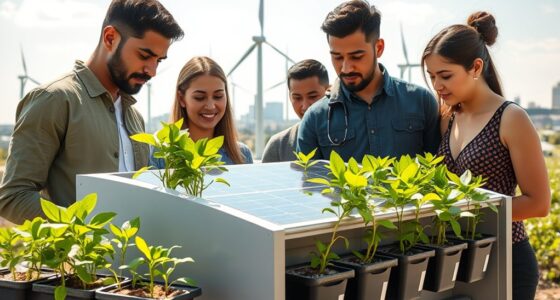
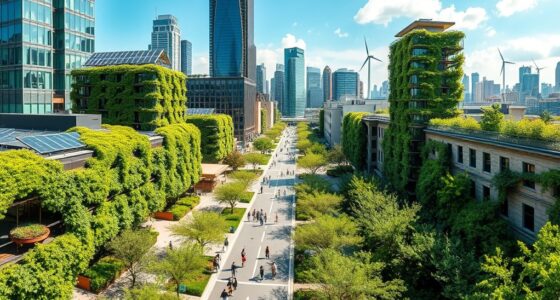
To teach sustainability at all ages, you should incorporate environmental education that builds awareness, skills, and motivation. Use engaging activities, real-world examples, and technology like virtual reality and online collaboration to make learning meaningful and accessible. Tailor your approach for children, teens, adults, and seniors with relatable messaging and participation opportunities. Addressing urgent environmental issues through education empowers everyone to take action—if you want to discover more strategies, continue exploring these effective approaches.
Key Takeaways
- Incorporate sustainability topics across all educational levels to develop critical thinking and systems analysis skills.
- Use age-appropriate activities like outdoor learning, storytelling, and community projects to engage different age groups.
- Leverage technology such as virtual reality, AI, and virtual labs for immersive and personalized environmental education.
- Promote leadership and practical experiences through eco-projects, youth councils, and service learning to foster agency.
- Tailor messaging and participation strategies to motivate continuous engagement among children, teens, adults, and seniors.

Abacus Brands Bill Nye's VR Science Kit – Virtual Reality Kids Science Kit, Book and Interactive STEM Learning Activity Set (Full Version – Includes Goggles) – for Ages 8 and Up
WINNER OF THE TOTY "STEAM TOY OF THE YEAR AWARD" – Join Bill Nye is his virtual reality…
As an affiliate, we earn on qualifying purchases.
As an affiliate, we earn on qualifying purchases.
The Global Movement for Sustainability Education
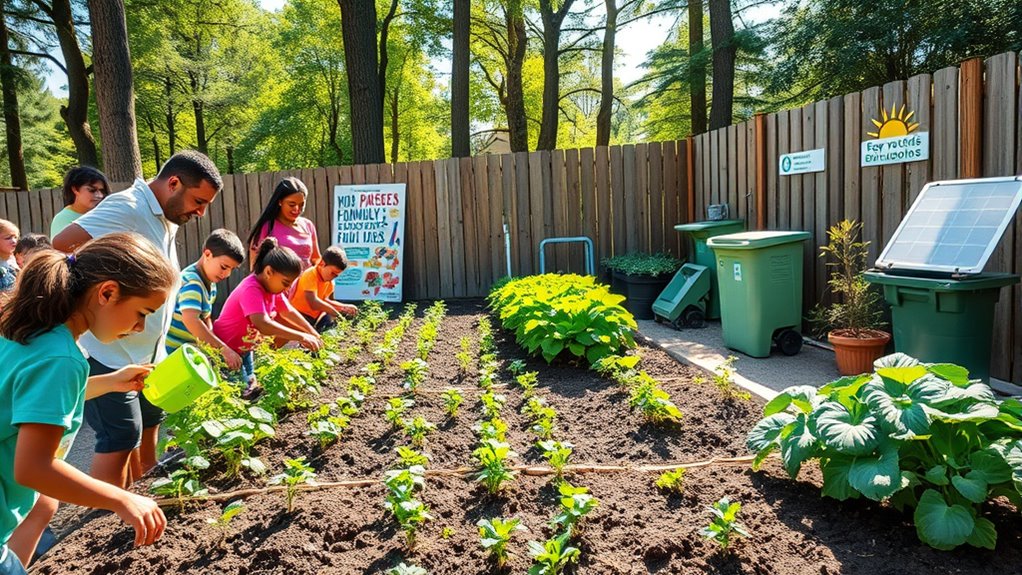
The global movement for sustainability education is gaining momentum as more countries recognize its significance in tackling environmental challenges. Initiatives like Eco-Schools operate in 67 countries, engaging over 19 million students in hands-on sustainability projects. Additionally, more than 80,000 schools across 87 nations have adopted UNESCO-recommended green practices, integrating eco-friendly habits into daily routines. However, nearly half of the national curricula in 100 countries don’t reference climate change, highlighting gaps in formal education. Countries like Denmark and Ireland lead the way by embedding sustainability into their educational frameworks. These efforts reflect a growing awareness that education plays a crucial role in fostering environmentally responsible behaviors and skills. The movement’s expansion signals a global shift towards prioritizing sustainability literacy for future generations.

Worgree DIY Wooden Magnets, 36 pcs Wooden Art Craft Supplies Painting Kit for Kids Party Favors for Boys Girls Ages 4-8 8-12 Birthday Easter Crafts Gifts Toys Basket Goodie Bag Stuffers
DIY WOODEN MAGNETS: Includes 36 wooden crafts, 12 colored pens, 36 magnet stickers. Wooden educational toy magnetic art…
As an affiliate, we earn on qualifying purchases.
As an affiliate, we earn on qualifying purchases.
Education’s Role in Tackling Climate Change and Environmental Challenges

You play a vital role in building environmental awareness and encouraging sustainable behaviors. Education empowers you to understand complex climate issues and take meaningful action. By fostering future leaders, you can help drive the solutions needed to address environmental challenges. Incorporating environmental education into curricula can significantly improve knowledge about sustainability and promote eco-friendly habits.
Building Environmental Awareness
Building environmental awareness is essential for empowering individuals and communities to understand and address pressing ecological challenges. When you increase awareness, you become more capable of recognizing how daily choices impact the planet. Education plays a critical role by providing clear, accurate information about climate change, biodiversity loss, and resource depletion. It helps you see the interconnectedness of human actions and natural systems. Through engaging activities, discussions, and real-world examples, you develop a sense of urgency and responsibility. Building awareness isn’t just about facts; it’s about inspiring curiosity and motivating action. As you deepen your understanding, you’re better equipped to advocate for sustainable policies, support eco-friendly practices, and influence others. Awareness is the foundation for meaningful environmental engagement and change. Additionally, fostering environmental education in diverse settings helps reach all ages, ensuring that future generations are equipped to tackle ongoing and emerging environmental issues.
Fostering Sustainable Behaviors
Enhancing environmental awareness naturally leads to encouraging sustainable behaviors that can make a real difference. By understanding how your actions impact the planet, you’re more likely to adopt habits like reducing waste, conserving energy, and supporting eco-friendly products. Education helps you recognize the interconnectedness of ecological and societal systems, motivating you to make informed choices. When you learn about climate change and environmental challenges, you develop a sense of responsibility and agency. This awareness fosters habits like recycling, using public transportation, and advocating for policies that protect the environment. Cultivating these behaviors requires continuous learning and community engagement. Your daily decisions, reinforced through education, can contribute to significant collective action toward a more sustainable future. Additionally, understanding concepts like home theatre projectors can inspire eco-conscious choices in energy-efficient technology and setup.
Empowering Future Leaders
Education plays a crucial role in shaping the next generation of leaders equipped to confront climate change and environmental challenges. You can foster this by:
- Integrating sustainability and climate topics into curricula across all levels, ensuring students understand complex issues.
- Encouraging critical thinking and systems analysis to develop problem-solving skills for real-world challenges.
- Promoting leadership opportunities, such as eco-projects and youth councils, to build confidence and agency.
- Providing access to innovative technologies and experiential learning that deepen understanding and inspire action.

Xqumoi Earth Day Sticky Notes with Pen Gift Set – 24 Set Save The Planet Self Sticky Writing Memo Pads Ballpoint Pens with Mesh Bag Party Favors School Classroom Rewards Office Supplies
Value Package: You will get 24 packs of Earth Day themed sticky notes in 8 different designs (3…
As an affiliate, we earn on qualifying purchases.
As an affiliate, we earn on qualifying purchases.
Leveraging Technology for Innovative Learning Experiences

You can transform environmental education by using virtual reality simulations that let learners experience ecosystems firsthand. AI-powered personalization tailors lessons to individual needs, making complex concepts more accessible. Additionally, global digital collaboration connects students worldwide, fostering shared solutions to environmental challenges. Incorporating Hyundai Tuning techniques into educational tools can also demonstrate engineering innovations that promote sustainability.
Virtual Reality Simulations
Virtual reality simulations are revolutionizing how learners engage with environmental topics by offering immersive, hands-on experiences that static lessons can’t match. You can explore ecosystems, witness climate change impacts, or participate in conservation efforts without leaving your classroom. These simulations make complex concepts tangible and memorable. Here’s what they offer:
- Realistic Environments: Experience ecosystems and climate phenomena firsthand.
- Interactive Learning: Make decisions that influence outcomes, deepening understanding.
- Global Perspectives: Travel virtually to diverse locations, understanding regional challenges.
- Safe Exploration: Practice conservation strategies or disaster responses without risk.
AI-Powered Personalization
AI-powered personalization is transforming sustainability education by tailoring learning experiences to your individual needs, interests, and skill levels. Instead of a one-size-fits-all approach, you receive customized content that matches your background and learning pace. Adaptive algorithms analyze your interactions, helping you focus on areas needing improvement and highlighting topics that resonate with you. This personalized approach keeps you engaged and motivated while deepening your understanding of complex environmental issues. It enables you to explore sustainability concepts relevant to your community or career path, fostering a sense of ownership. Additionally, AI tools provide real-time feedback and resources, empowering you to learn more effectively. By customizing education, AI helps you develop the skills necessary for meaningful environmental action and lifelong sustainability awareness.
Global Digital Collaboration
How can technology bridge geographic and disciplinary gaps to foster innovative environmental learning? You can connect learners worldwide and encourage cross-disciplinary insights through digital tools. Here are four ways:
- Virtual collaboration platforms enable students from different countries to work on sustainability projects together.
- Video conferences bring experts and classrooms into real-time dialogue, sharing diverse perspectives.
- Online ecosystems allow data sharing and joint research, fostering global scientific cooperation.
- Interactive simulations and virtual labs provide experiential learning regardless of location or resources.
- The integration of automation in educational tools can personalize learning experiences and adapt content to individual student needs.

Learning Resources Helping Hands Outdoor Sensory Tools – Sensory Bin Toys, Outside Toddler Activities, Fine Motor Toy, Water and Sand Scoop Toys for Toddlers, Toddler Beach Activity Accessories
Sensory Skills Outside: Set out on a sensory safari with outdoor play toys including a water sprayer, chalk…
As an affiliate, we earn on qualifying purchases.
As an affiliate, we earn on qualifying purchases.
Building Green Skills for the Workforce of Tomorrow
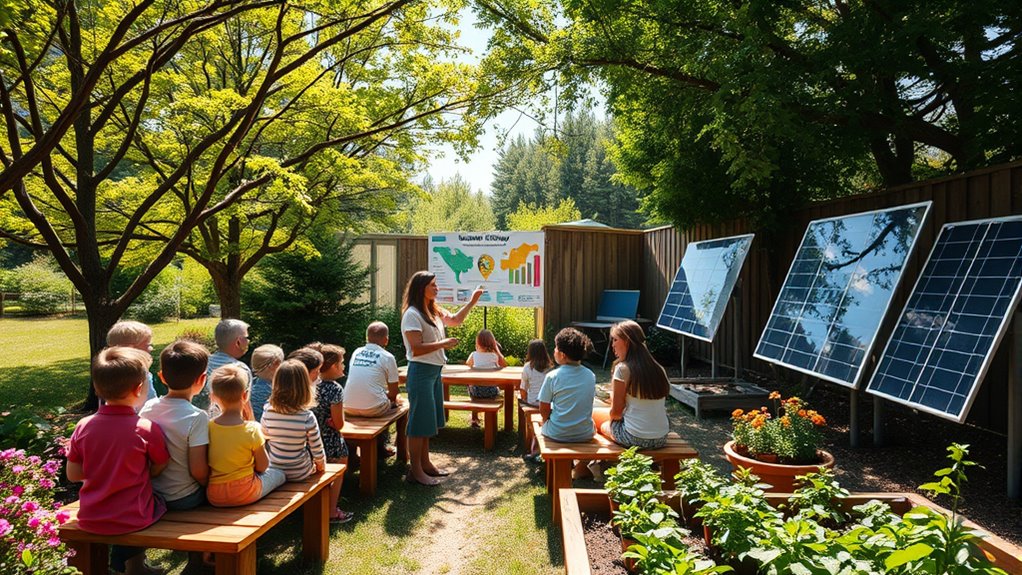
Are you prepared for the green workforce of the future? Building green skills is essential to meet evolving environmental demands. As industries shift toward sustainability, you’ll need to develop expertise in renewable energy, eco-design, and green technologies. Vocational training and reskilling programs are crucial for transitioning workers from polluting sectors into sustainable roles. Emphasizing practical skills, such as systems thinking and environmental management, guarantees you can adapt to new job requirements. Education must focus on fostering innovation, collaboration, and ethical decision-making to thrive in green careers. Staying informed about emerging trends and acquiring certifications can boost your employability in this rapidly growing sector. Ultimately, building these skills prepares you not only to succeed professionally but also to contribute meaningfully to a sustainable future. Additionally, understanding innovative solutions like electric bike conversions can support sustainable transportation initiatives.
Institutional Efforts and Challenges in Promoting Sustainability
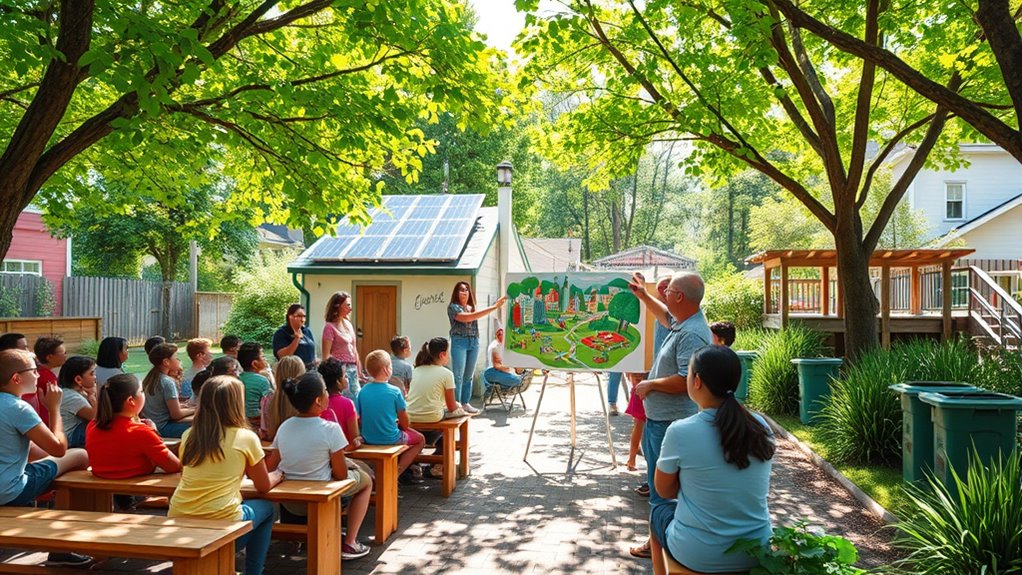
Institutional efforts play a vital role in advancing sustainability across educational systems, yet they often face significant challenges. You may notice that schools and universities struggle with inconsistent priorities, limited resources, and resistance to change. To overcome these hurdles, institutions need to:
Institutional efforts are crucial but often hindered by limited resources and resistance, requiring strong leadership and collaboration.
- Develop clear sustainability policies aligned with global standards.
- Invest in training staff to integrate eco-friendly practices.
- Foster collaboration among departments for cohesive action.
- Engage students and communities to build collective commitment.
- Incorporate sound recording techniques and equipment to document and promote sustainable initiatives visually and auditorily.
Despite progress, many institutions lack exhaustive strategies or face bureaucratic obstacles that slow implementation. Balancing academic goals with sustainability commitments requires strong leadership and continuous advocacy. Without coordinated effort and dedicated resources, institutional progress remains uneven, hindering widespread adoption of sustainable practices.
Urgency of Addressing Environmental Crises Through Knowledge

The urgency of addressing environmental crises demands immediate action driven by knowledge and awareness. You need to understand the gravity of current issues—like rising temperatures, extreme weather, and biodiversity loss—that threaten our planet’s stability. This knowledge empowers you to make informed decisions, advocate for change, and support sustainable practices. The data shows that global emissions continue to rise, and essential resources like water and forests are rapidly depleting. Without prompt intervention, millions face water shortages, food insecurity, and health risks. Education is your best tool for fostering understanding and inspiring action. By learning about these crises, you become part of the solution, helping to shift societal behaviors and policies toward sustainability. Incorporating natural elements into your environment can further promote awareness and connection to the planet. Every informed step counts in combating these urgent challenges.
Case Studies: Successful Integration of Sustainability in Schools
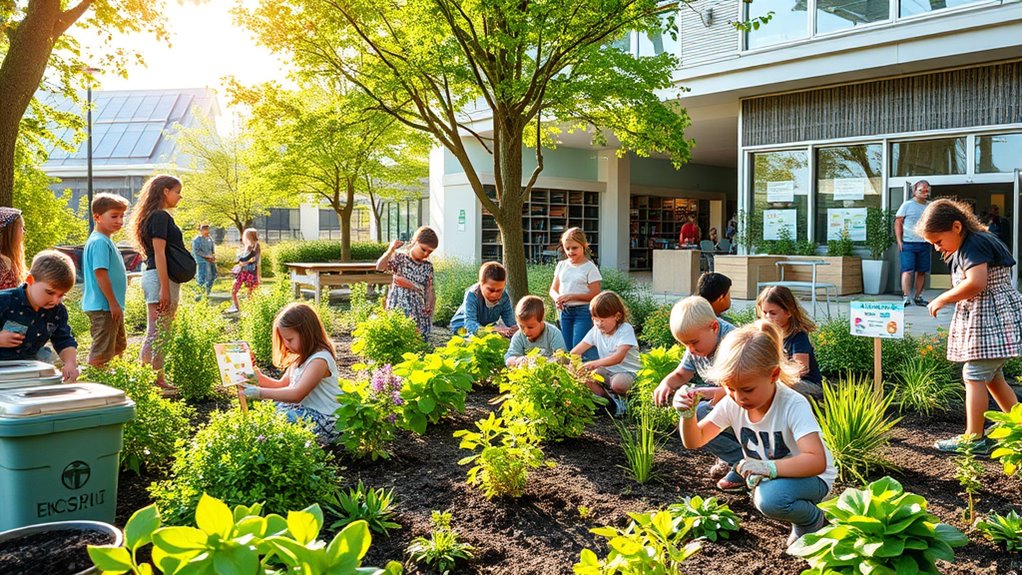
Successful integration of sustainability into school curricula demonstrates that targeted initiatives can effectively foster environmental awareness and action. In these case studies, you’ll see how schools have made measurable impacts through specific strategies.
Integrating sustainability into curricula effectively fosters environmental awareness and drives measurable change.
- The Eco-Schools program in over 67 countries engages students in hands-on projects, boosting eco-literacy.
- Schools adopting UNESCO’s green practices in 87 countries implement sustainable resource management and waste reduction.
- Schools in Denmark and Ireland embed climate education across disciplines, raising student engagement and knowledge.
- Community gardens and renewable energy projects in local schools promote experiential learning and environmental responsibility.
These examples show that with clear goals and dedicated effort, schools can become catalysts for change, inspiring students to become lifelong stewards of sustainability.
Strategies for Engaging All Age Groups in Environmental Stewardship
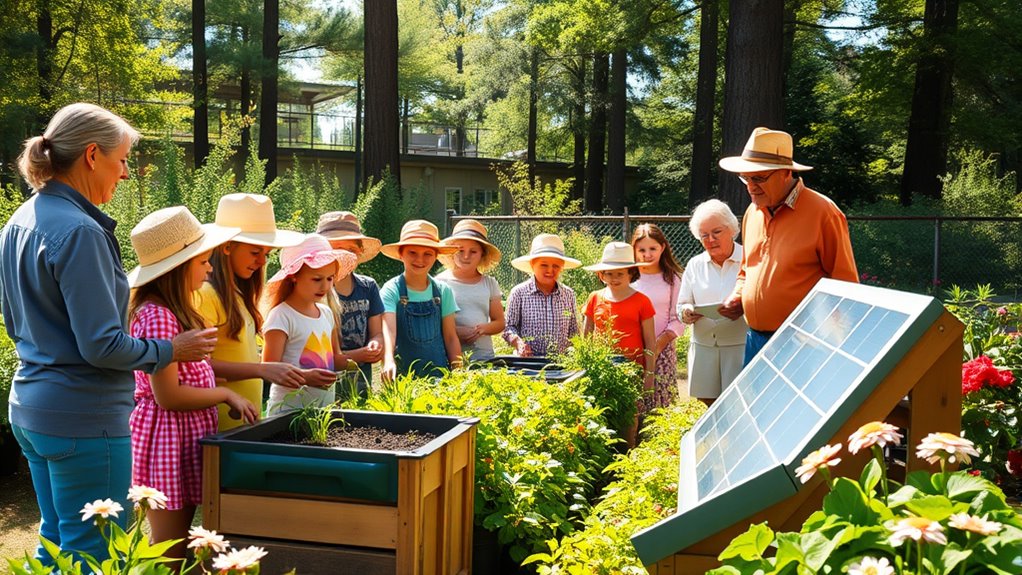
Engaging all age groups in environmental stewardship requires tailored strategies that resonate across different life stages. For children, incorporate hands-on activities like outdoor projects and storytelling to foster curiosity and connection with nature. For teenagers, use social media campaigns, peer-led initiatives, and service learning to build ownership and leadership. Adults respond well to practical workshops, community programs, and opportunities for civic engagement that highlight real-world impacts. Seniors benefit from accessible discussions, volunteering, and intergenerational projects that emphasize legacy and shared responsibility. Across all ages, emphasize clear messaging, relatable examples, and opportunities for active participation. By customizing approaches, you motivate continuous involvement and help embed sustainability into daily routines, ensuring a collective effort toward environmental stewardship. Incorporating AI-driven tools can further personalize engagement strategies and enhance overall effectiveness.
Frequently Asked Questions
How Can Parents Support Sustainability Education at Home?
You can support sustainability education at home by modeling eco-friendly habits like recycling, conserving water, and reducing energy use. Talk openly about environmental issues, encouraging curiosity and critical thinking. Involve your family in sustainable activities such as gardening or community clean-ups. Use educational resources and tech tools to learn together. Your active participation inspires your children to value and practice sustainability, helping them develop lifelong environmentally responsible behaviors.
What Are Effective Ways to Motivate Teachers to Teach Climate Change?
You can motivate teachers to teach climate change by providing ongoing professional development that highlights its importance and practical strategies. Offer resources, tools, and support to build their confidence and expertise. Recognize and reward their efforts, creating a positive environment that values sustainability education. Collaborate with peers and involve school leadership to foster a culture where teaching climate change is seen as essential and rewarding.
How Do Cultural Differences Influence Sustainability Education Strategies?
You should recognize that cultural differences greatly shape how sustainability is taught. For instance, 47% of national curriculum frameworks in 100 countries don’t mention climate change, highlighting varying priorities. You’ll find that local values, beliefs, and traditions influence engagement, so adapting strategies to respect these differences increases effectiveness. Incorporate culturally relevant examples and involve community leaders, helping students connect sustainability concepts meaningfully within their unique social contexts.
What Policies Best Promote Cross-Sector Collaboration on Environmental Learning?
You should advocate for policies that foster open communication, shared goals, and joint initiatives across sectors. Encourage governments to establish formal frameworks with clear roles, incentives, and funding for collaboration. Promote public-private partnerships, integrate sustainability into industry standards, and support interdisciplinary projects. By creating platforms for dialogue and aligning objectives, you help guarantee that different sectors work together effectively to advance environmental learning and address global challenges collectively.
How Can Communities Integrate Local Environmental Issues Into Education Programs?
You can weave local environmental issues into education programs like a tapestry, blending community stories with hands-on projects. Engage residents, organize local clean-ups, and invite experts to share their insights. Use local landmarks as outdoor classrooms, making issues like water conservation or biodiversity come alive. By connecting students’ daily lives to their environment, you turn learning into a powerful tool that sparks passion and collective action for the community’s future.
Conclusion
As you embrace environmental education, think of it as planting seeds in a vast, fertile garden. Each lesson grows into a sturdy tree of knowledge, shading future generations with sustainability. Your role sparks a wildfire of change, igniting passion across all ages. Together, you’re crafting a vibrant ecosystem where awareness blossoms into action, ensuring our planet’s health endures for generations to come. The future depends on the seeds you sow today.