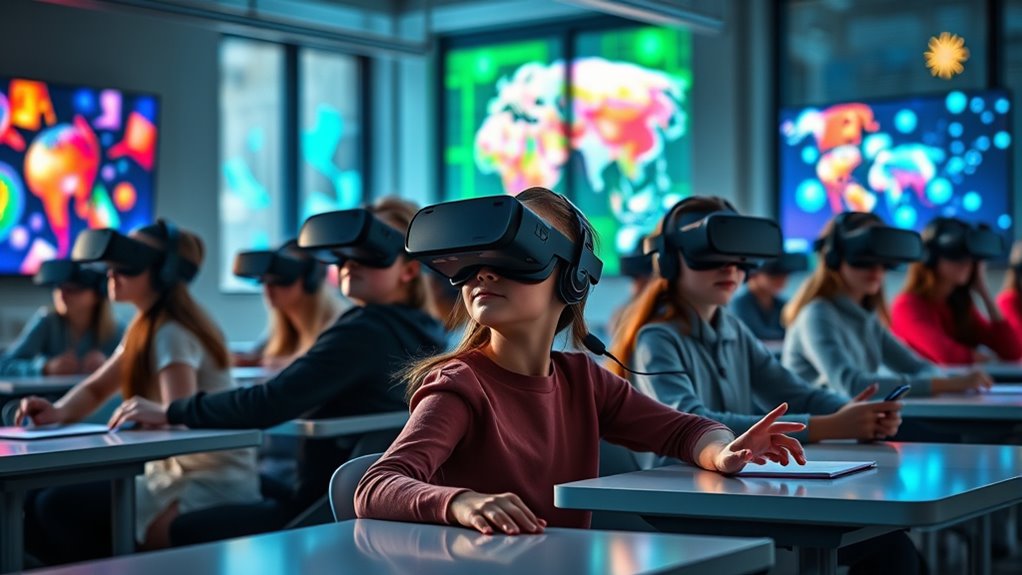

Virtual Reality is transforming classrooms into immersive learning spaces that actively engage students and improve their understanding. It helps you visualize complex ideas, explore historical sites, and practice skills in realistic simulations. While challenges like costs and infrastructure exist, advancements are making VR more accessible and affordable. Embracing these tools can boost engagement and outcomes—if you want to discover more about creating successful VR experiences, keep exploring the potential of immersive learning environments.
Key Takeaways
- VR creates immersive, interactive learning environments that enhance engagement, retention, and real-world skill application in classrooms.
- It enables visualization of complex concepts through 3D models, simulations, and virtual explorations.
- Implementing VR requires addressing hardware costs, infrastructure, and educator training for effective integration.
- VR boosts confidence and learning outcomes, reducing training time and improving memory retention.
- Future advancements will make VR more accessible, affordable, and tailored for widespread classroom use.

3D VR Headset, Virtual Reality Glasses Headset Helmets, Compatible with 5.0-7.0 inch with Controller, for Mobile Games & Movies(Black)
【Immersive 3D Movie Viewing】Gaming and watching movies in 3D works best when proper your eyes properly align with…
As an affiliate, we earn on qualifying purchases.
As an affiliate, we earn on qualifying purchases.
The Growing Role of VR in Education Markets

The role of virtual reality (VR) in education markets is rapidly expanding, driven by significant growth in both market size and technological adoption. Globally, the VR education market is projected to grow from $4.4 billion in 2023 to $28.7 billion by 2030, with a CAGR of 30.7%. Meanwhile, the VR training market is expected to reach nearly $300 billion by 2033, growing at 41.8%. Demand for AR and VR training increased 40.3% in 2022 and continues upward. Major tech providers like Google, Microsoft, and Meta hold substantial market shares. This rapid expansion reflects increasing investments, technological advancements, and a growing recognition of VR’s potential to transform learning experiences across educational sectors worldwide. High-quality VR content often relies on color accuracy to create immersive and believable environments that enhance engagement and learning outcomes.
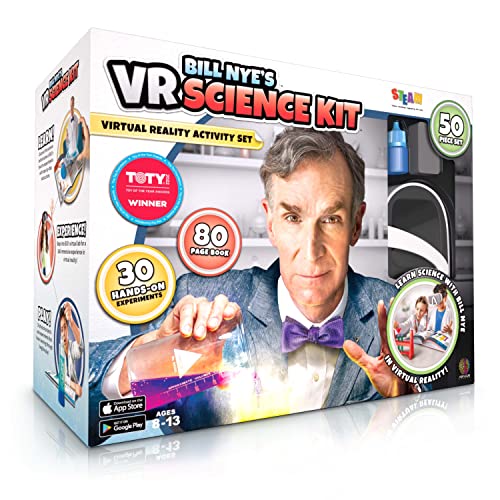
Abacus Brands Bill Nye's VR Science Kit – Virtual Reality Kids Science Kit, Book and Interactive STEM Learning Activity Set (Full Version – Includes Goggles) – for Ages 8 and Up
WINNER OF THE TOTY "STEAM TOY OF THE YEAR AWARD" – Join Bill Nye is his virtual reality…
As an affiliate, we earn on qualifying purchases.
As an affiliate, we earn on qualifying purchases.
How VR Enhances Learning Effectiveness and Outcomes

Virtual reality’s rapid growth in education isn’t just about market size; it’s transforming how effectively students learn. VR boosts learning outcomes by making lessons more engaging and memorable. You’ll find that retention rates soar to 80%, and learners gain up to 275% confidence in applying new skills. VR shortens training times up to 75%, making learning faster and more efficient. It improves memory, skills, and real-world readiness. Use this table to explore how VR impacts learning: sound healing science.
educational VR content software
As an affiliate, we earn on qualifying purchases.
As an affiliate, we earn on qualifying purchases.
Adoption Trends and Challenges in School Environments

Despite the promising potential of VR in education, schools face significant hurdles in adopting this technology widely. High costs of hardware and software remain a major obstacle, especially for underfunded districts. Technical infrastructure, like reliable internet and compatible devices, can be lacking, limiting implementation. Many educators feel unprepared, citing insufficient training and unfamiliarity with VR tools, which hampers integration. Access disparities also persist, with only a small percentage of schools equipped with VR headsets, creating inequities. Additionally, concerns about session fatigue and limited content customization pose challenges to sustained engagement. While the market is rapidly growing, these barriers slow adoption, requiring strategic investments, training, and infrastructure improvements to make VR a common part of classroom learning. Relationships – Personality Test
3D VR Headset, Virtual Reality Glasses Headset Helmets, Compatible with 5.0-7.0 inch with Controller, for Mobile Games & Movies(Black)
【Immersive 3D Movie Viewing】Gaming and watching movies in 3D works best when proper your eyes properly align with…
As an affiliate, we earn on qualifying purchases.
As an affiliate, we earn on qualifying purchases.
Creating Engaging and Immersive Classroom Experiences
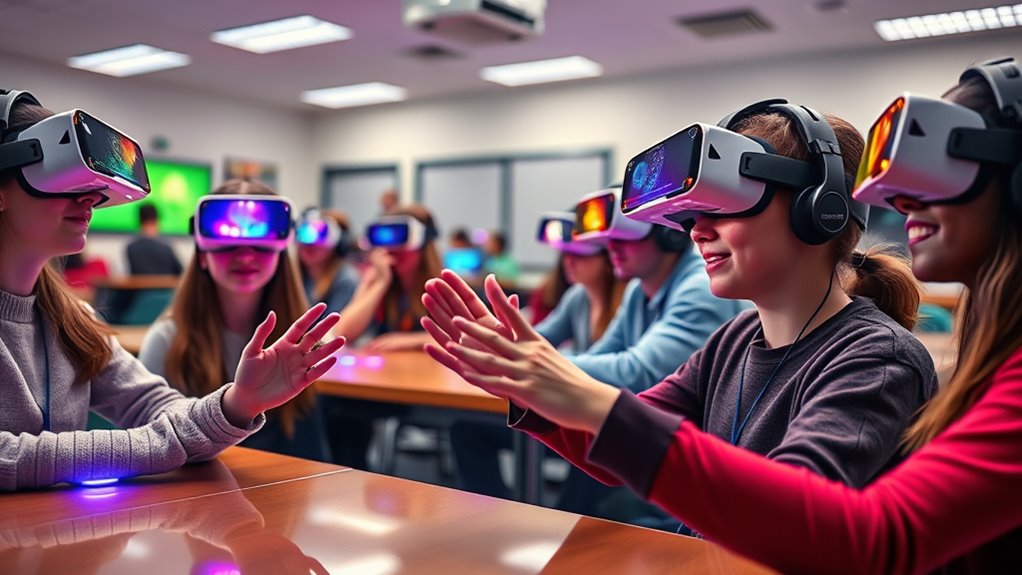
You can boost student engagement by creating immersive VR experiences that make lessons more interactive and memorable. Using VR, you can visualize complex concepts, helping students grasp difficult topics more easily. These techniques foster active participation and deepen understanding in ways traditional methods often can’t match.
Enhancing Student Engagement
How can educators capture students’ attention and foster deeper engagement in the classroom? VR creates immersive, enthralling experiences that make learning exciting. To maximize engagement, consider:
- Designing interactive content that responds to student actions
- Incorporating realistic simulations relevant to lessons
- Using personalized learning paths tailored to individual progress
- Promoting collaboration through virtual group activities
- Incorporating practical mindfulness techniques to help students stay focused and reduce anxiety during immersive lessons
These strategies leverage VR’s ability to immerse students in authentic scenarios, increasing focus and motivation. By making lessons more dynamic and relatable, you help students connect with the material on a deeper level. VR’s immersive environments stimulate curiosity and keep learners actively involved. This approach not only boosts enthusiasm but also enhances understanding, retention, and confidence. Ultimately, engaging students through VR transforms passive learning into an exciting, participatory experience.
Interactive Learning Techniques
Creating engaging and immersive classroom experiences with interactive learning techniques involves leveraging VR’s unique capabilities to actively involve students in their education. You can design simulations that mimic real-world scenarios, encouraging students to problem-solve, collaborate, and make decisions in a safe environment. Interactive content, such as virtual labs or role-playing exercises, fosters hands-on learning that boosts retention and understanding. You also have the opportunity to personalize experiences, allowing students to progress at their own pace and focus on areas needing improvement. VR’s immersive nature keeps students engaged longer, making lessons more memorable and meaningful. Additionally, incorporating engine tuning concepts can inspire students to explore the mechanics behind how things work, fostering curiosity and critical thinking. By integrating these techniques, you transform passive learning into active participation, helping students develop practical skills and confidence essential for future success.
Visualizing Complex Concepts
Visualizing complex concepts becomes much more effective when immersive VR experiences bring abstract ideas to life. With VR, you can transform difficult theories into tangible, interactive models that students can explore from all angles. This approach makes understanding concepts like molecular structures, historical events, or mathematical functions much clearer. You can:
- Create 3D visualizations that students manipulate to deepen comprehension
- Simulate real-world environments for experiential learning of physics or biology
- Enable students to observe phenomena at scales impossible in traditional settings
- Offer personalized paths where learners explore concepts at their own pace
- Incorporate subconscious power during sleep to reinforce learning and retention outside the classroom.
Practical Applications of VR Across Educational Fields

Virtual reality (VR) has become an increasingly versatile tool across various educational fields, transforming traditional teaching methods and enhancing practical skill development. You can now explore a wide range of applications, from healthcare simulations to STEM labs, cultural experiences, and vocational training. VR allows you to practice complex procedures safely, improve soft skills like communication, and engage with immersive content tailored to your learning pace. This technology supports real-world skill acquisition by providing realistic scenarios that boost confidence and retention. Here’s a quick overview:
| Field | Practical Application |
|---|---|
| Healthcare | Surgical practice, diagnostics training |
| STEM | Virtual labs, scientific visualizations |
| Cultural/Language | Historical site visits, language immersion |
| Vocational | Technical skill simulations, industry training |
Additionally, costumes and themed attire can be integrated into immersive learning experiences, making educational activities more engaging and memorable. This versatility makes VR a powerful tool for diverse educational needs.
Overcoming Barriers to VR Integration in Schools
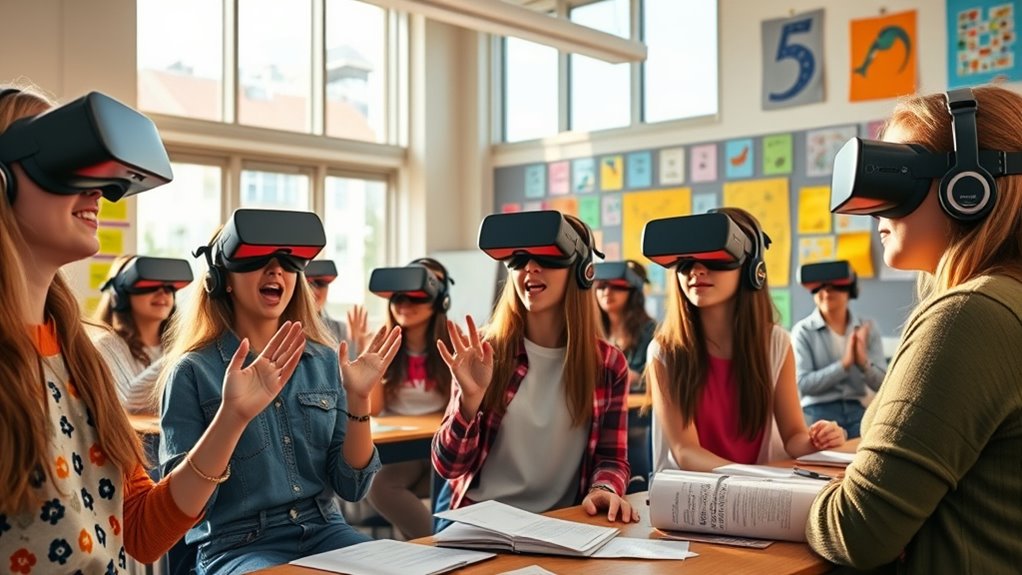
You may face challenges like limited hardware access and the need for proper training to effectively implement VR in your school. Addressing costs and finding ways to make equipment more affordable can help expand opportunities for all students. Developing strategies to train educators quickly and efficiently is essential for successful integration. Incorporating knowledge of ethical hacking principles can also help safeguard student data and maintain a secure virtual learning environment.
Hardware Accessibility Challenges
Despite the growing recognition of VR’s benefits in education, hardware accessibility remains a significant barrier to widespread adoption. Many schools struggle with limited budgets, making it hard to purchase enough headsets for all students. Technical issues, such as outdated infrastructure, can also hinder implementation. Additionally, not all devices are compatible with existing school systems, creating further obstacles. Finally, the lack of availability of affordable, durable VR hardware limits access, especially in underfunded schools. To address these challenges, you need to consider:
- Securing funding or grants to purchase equipment
- Upgrading infrastructure for seamless integration
- Choosing cost-effective, durable devices
- Collaborating with vendors for affordable solutions
Overcoming these barriers is essential to ensure all students can benefit from immersive VR experiences. Hardware accessibility remains a critical factor in expanding VR’s reach in educational settings.
Educator Training Needs
Implementing VR in classrooms isn’t just about acquiring the right hardware; it also requires that educators know how to effectively incorporate these tools into their teaching. You need targeted training to build confidence, understand VR’s pedagogical potential, and troubleshoot issues. Without proper preparation, even the best tech can fall flat. To help, here’s a quick overview of common needs:
| Training Focus | Key Benefits |
|---|---|
| Technical Skills | Smooth device setup and maintenance |
| Pedagogical Strategies | Effective lesson integration |
| Content Creation | Developing engaging VR lessons |
| Safety & Ethics | Ensuring student well-being |
| Troubleshooting | Quick resolution of technical issues |
Empowering teachers with this knowledge bridges the gap, making VR a seamless, impactful part of education. Proper integration of VR in education depends heavily on comprehensive training programs.
Cost Reduction Strategies
To effectively integrate VR into classrooms, schools must find ways to reduce costs and overcome financial barriers. You can achieve this by exploring several strategies:
- Leverage grants and funding from government programs, nonprofits, and educational foundations to offset hardware and software expenses.
- Utilize refurbished or affordable devices like second-hand headsets and low-cost tablets compatible with VR content.
- Share VR resources across schools or districts to maximize usage and reduce individual costs.
- Opt for cloud-based VR platforms that lower hardware requirements and offer scalable, subscription-based access.
The Future of Virtual Reality in Academic Settings
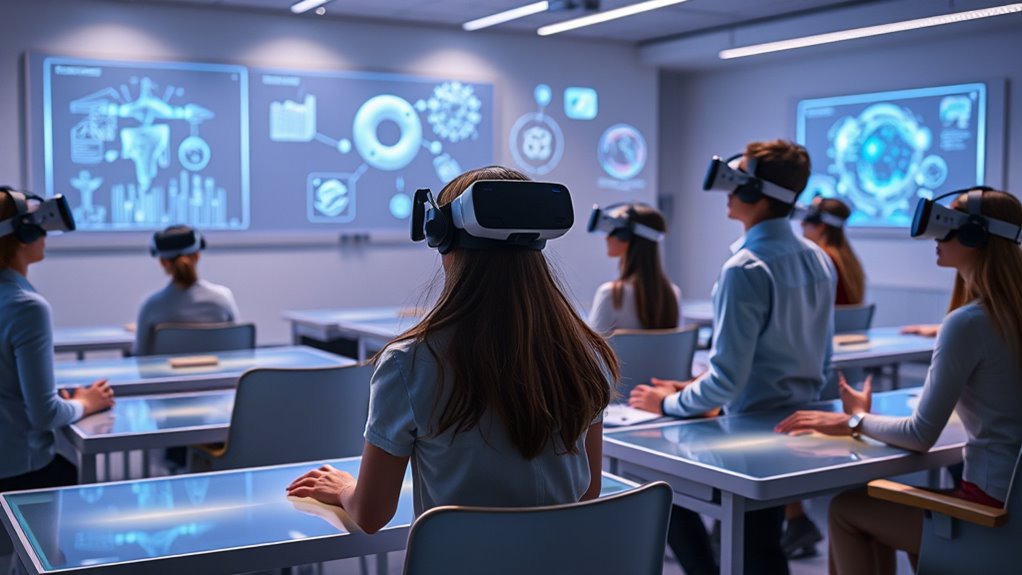
The future of virtual reality in academic settings looks increasingly promising as advancements in technology continue to lower costs and improve accessibility. You’ll see VR becoming more integrated into everyday learning, offering personalized and immersive experiences that adapt to individual needs. Cloud deployment and AI integration will enhance scalability, making VR tools more affordable and user-friendly. As hardware becomes lighter and more comfortable, students will engage in longer, richer sessions without fatigue. Expect wider adoption across K-12, higher education, and corporate training, driven by proven improvements in retention, confidence, and skill mastery. Ongoing innovations will also address current technical challenges, ensuring VR becomes a staple in modern education. Ultimately, VR will transform how you learn by creating dynamic, real-world simulations that foster deeper understanding and practical application.
Strategies for Successful VR Implementation in Education

Successfully integrating VR into education requires careful planning and strategic execution. First, assess your school’s technical infrastructure to ensure compatibility and reliable internet. Next, provide thorough training for educators to build confidence and effective use of VR tools. Establish clear learning objectives aligned with curriculum standards to maximize impact. Finally, prioritize student engagement and safety by setting time limits and monitoring sessions. To succeed, consider these strategies:
- Invest in user-friendly hardware and software
- Offer ongoing professional development for teachers
- Develop curriculum-aligned VR content
- Gather feedback from students and staff to refine implementation
Frequently Asked Questions
How Does VR Impact Students With Learning Disabilities?
You’ll find VR helps students with learning disabilities by offering personalized, multisensory experiences that cater to different needs. It improves engagement, boosts confidence, and enhances understanding through immersive simulations. VR also allows you to adjust difficulty levels and pacing, making learning more accessible. With its proven ability to increase retention and skills, VR creates a supportive environment where students with disabilities can thrive and reach their full potential.
What Are the Best Practices for Teacher Training in VR Integration?
To effectively integrate VR, you should provide thorough teacher training focused on technical skills, lesson planning, and classroom management with VR tools. Encourage hands-on practice, offer ongoing support, and share best practices through workshops or peer collaboration. Familiarize yourself with troubleshooting and safety protocols. By building confidence and competence, you’ll guarantee smooth VR adoption, maximize student engagement, and enhance learning outcomes in your classroom.
How Secure Is Student Data in VR Educational Platforms?
Imagine a vault protecting your most valuable treasures—that’s how secure student data is on VR educational platforms. While many platforms use encryption and strict access controls, vulnerabilities can still exist if not properly managed. You should stay informed about data policies, guarantee platforms comply with privacy laws like GDPR, and advocate for transparent practices. By doing so, you help safeguard student identities and foster trust in immersive learning environments.
What Are the Long-Term Effects of VR on Student Development?
You’ll likely see long-term benefits from VR on student development, including improved skills, higher retention, and boosted confidence. VR encourages experiential learning, helping you develop critical thinking, problem-solving, and social skills through immersive scenarios. Over time, students become more engaged and adaptable, better prepared for real-world challenges. However, sustained use requires managing fatigue and ensuring equitable access, so the positive effects are maximized and lasting.
How Can Schools Fund or Subsidize VR Technology Adoption?
You can tap into grants, government funding, and partnerships to cover VR costs. Schools often find success by applying for educational technology grants, collaborating with local businesses, or leveraging crowdfunding campaigns. Some districts negotiate bulk purchasing deals with providers to reduce expenses. Keep in mind, as VR becomes more mainstream and affordable, funding opportunities will grow, making it easier for you to bring immersive learning into your classroom without breaking the bank.
Conclusion
As you explore VR’s potential in education, remember that over 70% of teachers believe it can boost student engagement and understanding. By embracing immersive learning, you can transform classrooms into dynamic environments that foster curiosity and improve outcomes. While challenges exist, strategic implementation makes VR a powerful tool for the future of education. So, get ready to innovate and create unforgettable learning experiences that prepare students for tomorrow.