

Student activism empowers youth worldwide by giving you a platform to advocate for social justice, political change, and educational reform. Across continents, your participation highlights issues like climate change, democracy, and equality, often through digital tools and protests. Educational institutions can prepare by creating open channels and safety protocols. Your engagement shapes policies and challenges norms, proving your voice matters. To discover more about how you can harness this power, keep exploring the strategies and trends shaping youth civic impact.
Key Takeaways
- Educational institutions can empower youth by developing response plans, fostering open dialogue, and implementing safety protocols during protests.
- Digital platforms enable youth to organize, raise awareness, and engage directly with policymakers, enhancing civic participation.
- Understanding Generation Z’s activism preferences—like social media campaigns and community actions—can amplify youth-led civic engagement efforts.
- Addressing misconceptions and creating supportive environments encourages sustained youth involvement in social and political causes.
- Recognizing global student movements inspires institutions to implement inclusive policies that nurture civic responsibility among young people.
The Global Scope of Student Movements

Student movements now span nearly every continent, reflecting a worldwide surge in activism among youth and students. You see protests demanding political change, better education, and social justice, often facing harsh repression. In countries like Bangladesh, student protests against government quotas have led to injuries and deaths, showing the high stakes involved. In democracies, new laws targeting student dissent push activism underground or into confrontation. Despite challenges, students unite with faculty support to push for reforms. Across Africa, Europe, Asia, and the Americas, youth-led movements are shaping debates on corruption, climate change, and human rights. This global wave demonstrates that young people are not just spectators; they’re active agents demanding a better future, regardless of borders or political systems. Additionally, the rise of student activism highlights how digital platforms have amplified their voices, enabling worldwide coordination and awareness.
How Educational Institutions Can Prepare for Activism
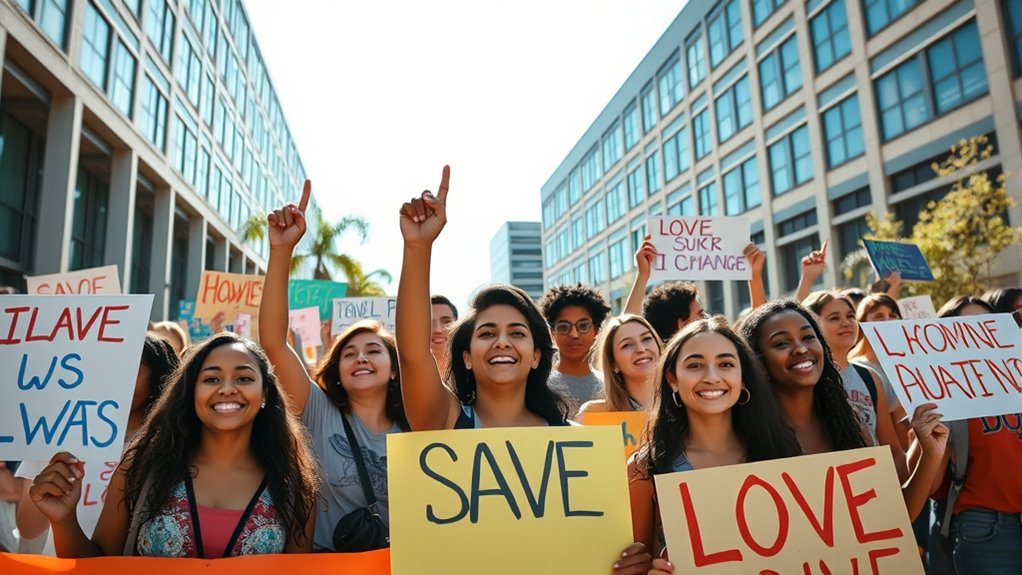
To effectively manage rising activism on campuses, educational institutions must develop clear, proactive response plans that address various protest formats—whether online, on-site, or in the community. Start by establishing protocols that outline how to handle demonstrations, ensuring safety for students, staff, and surrounding communities. Train campus security and faculty to recognize different forms of activism and respond appropriately, avoiding unnecessary escalation. Foster open channels for dialogue, encouraging students to express concerns constructively. Implement de-densification and safety measures during protests, especially in large gatherings. Regularly review and update policies to adapt to new activism trends. Additionally, understanding the importance of support systems can help institutions better prepare for and respond to student activism. By preparing in advance, you can promote constructive engagement, reduce conflict, and protect both institutional integrity and student rights.
Youth Engagement: Motivations and Trends

Youth engagement in activism has surged as young people increasingly see social and political issues as central to their identities. You’re motivated by causes like climate change, democracy, and LGBTQ+ rights, which drive your participation. Trends show about 20% of youth actively advocate for issues, while 18% attend demonstrations. Socioeconomic struggles can hinder involvement, but many still join social movements outside electoral politics. Here’s what shapes youth engagement:
- Passion for social issues like climate change and equality
- High participation in protests and rallies, especially among Gen Z
- Preference for volunteering and digital activism over monetary donations
- Continued high youth voter turnout during recent elections
- The increasing role of automation and digital tools in facilitating activism and engagement.
Your motivation fuels a dynamic, evolving landscape of youth civic participation, shaping future social change.
Unique Aspects of Generation Z’s Activist Approach
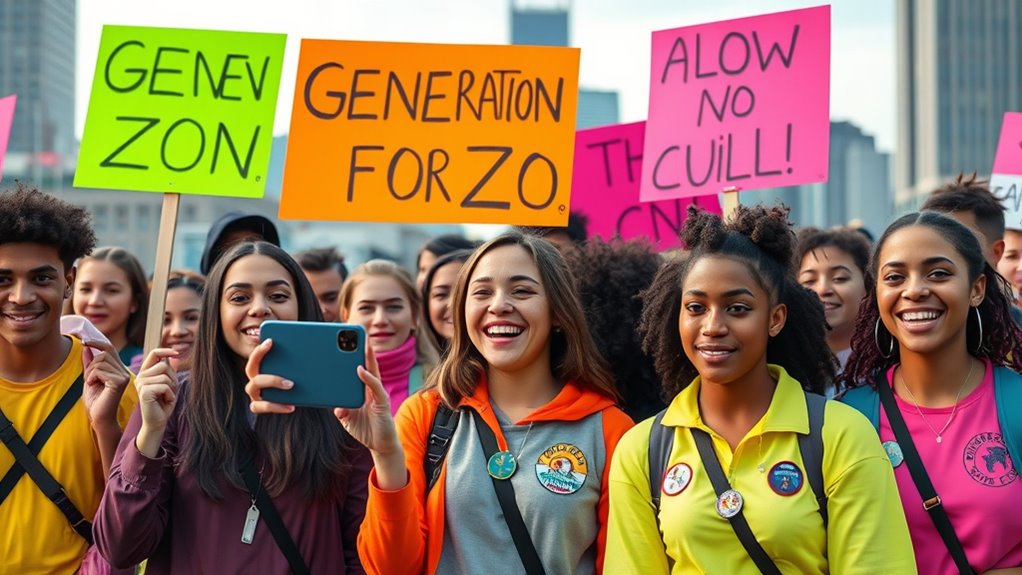
Generation Z has developed distinctive strategies for activism that set them apart from previous generations. They blend digital and real-world efforts seamlessly, showing a high level of engagement. Nearly 66% use social media to raise awareness, while 51% participate in rallies or protests. Volunteering, favored by 61%, often replaces monetary donations. You’re likely to see Gen Zers contacting politicians directly or organizing community actions. Their approach emphasizes authenticity and immediacy, making their activism more accessible and impactful. The table below highlights key aspects:
| Digital Engagement | Real-World Action |
|---|---|
| 66% raise awareness online | 51% attend protests |
| Use social media actively | Volunteer regularly |
| Fundraising through campaigns | Direct political contact |
| Share stories and info | Participate in rallies |
This dual strategy amplifies their voice, creating dynamic social change. They also leverage targeted messaging to ensure their advocacy resonates effectively.
Challenges and Perceptions on Campuses Worldwide
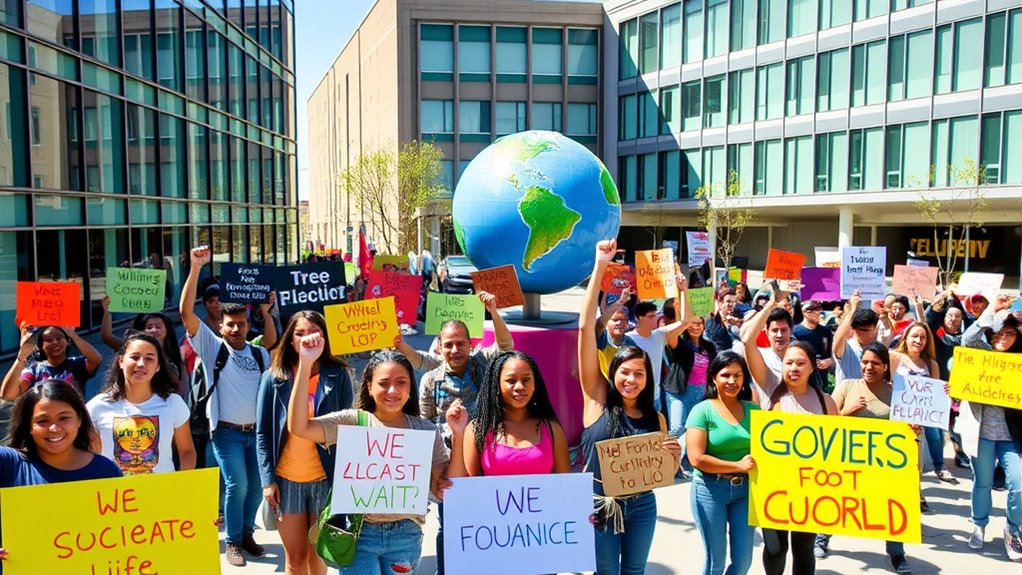
Across campuses worldwide, student activism often faces skepticism and stereotypes that depict protesters as disruptive or privileged, which can undermine their legitimacy. Public perceptions tend to focus on protests’ chaos rather than their causes, making it harder to gain support. Additionally, institutional responses vary: some universities lack clear policies, leading to misunderstandings and conflicts. You might also encounter resistance from administration or local communities that view activism as disruptive. Finally, societal biases can shape opinions, portraying students as privileged elites out of touch with real issues. One factor influencing these perceptions is the media framing of protests as sensational or disruptive.
The Broader Influence of Youth-Led Movements
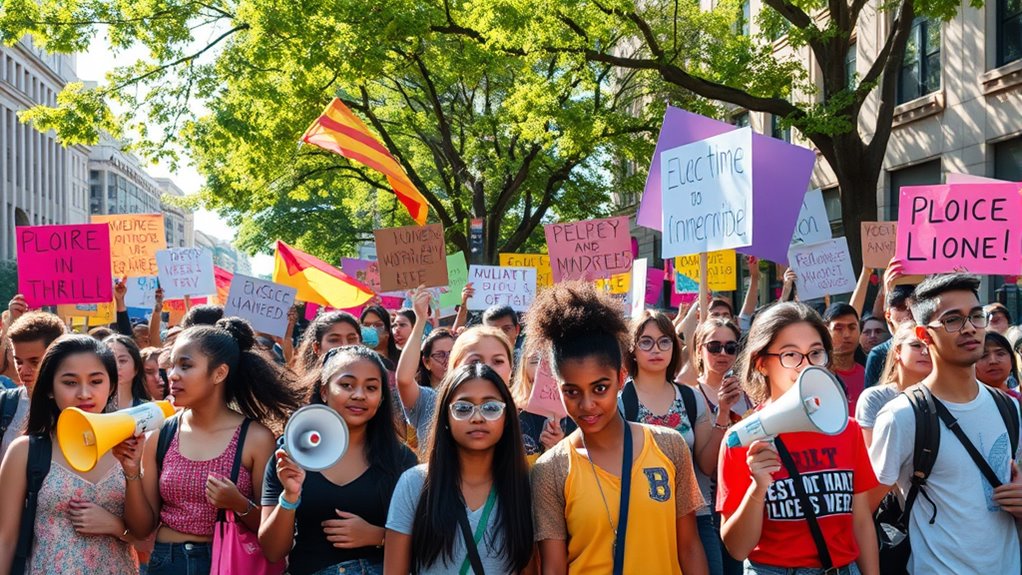
How have youth-led movements reshaped the landscape of social and political activism worldwide? You’ve seen how young activists spark change beyond campus, influencing policies and inspiring global action. Their efforts have challenged authoritarian regimes, pushed for climate justice, and redefined civic participation. These movements often blend online campaigns with street protests, amplifying voices that once went unheard. Their impact extends to shaping public opinion, pressuring governments, and transforming social norms.
| Youth Movements | Global Impact |
|---|---|
| Climate Strikes | Policy Changes |
| Digital Campaigns | Awareness Growth |
| Student Protests | Institutional Reform |
| Social Justice | Cultural Shifts |
| International Alliances | Cross-Border Solidarity |
Strategies for Sustaining Civic Impact Among Students
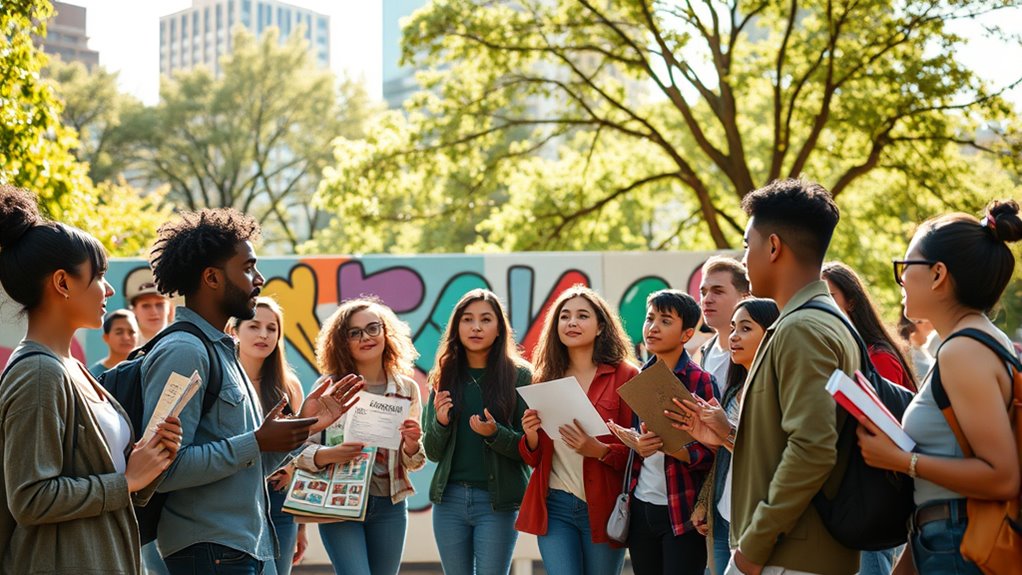
Building on the momentum of youth-led movements, sustaining civic impact among students requires deliberate strategies that go beyond single protests or online campaigns. You need to create ongoing engagement opportunities that foster lasting change. First, establish continuous dialogue between students and institutional leaders to address concerns and develop joint solutions. Second, integrate activism into curriculum and campus activities, making civic work part of everyday learning. Third, build coalitions across campuses and communities to amplify voices and share resources. Fourth, leverage digital platforms for sustained advocacy, ensuring campaigns remain visible and impactful over time. Additionally, understanding the importance of color accuracy in projectors can inspire students to incorporate multimedia presentations that enhance their advocacy efforts. These strategies help turn momentary protests into enduring movements, empowering students to maintain momentum and drive meaningful social and political change.
Frequently Asked Questions
How Do Student Protests Influence National Policy Changes Globally?
Your protests can substantially influence national policy changes worldwide by raising awareness, mobilizing public support, and pressuring policymakers. When you organize peaceful demonstrations or online campaigns, you highlight critical issues like corruption, educational reforms, or social justice. These actions often draw media attention, inspire broader movements, and compel governments to respond. Effective activism, especially when supported by institutions and sustained over time, can lead to tangible policy shifts and social reforms across different countries.
What Role Do Digital Platforms Play in Shaping Student Activism?
Digital platforms amplify student activism, making it more powerful and widespread. Imagine a student in Brazil livestreaming protests against government corruption, inspiring millions worldwide to join the movement online. You see, social media enables quick dissemination of ideas, mobilizes supporters, and sustains momentum beyond physical protests. This digital reach turns local issues into global conversations, empowering youth to challenge policies and demand change with unprecedented immediacy and scale.
How Can Universities Better Support Student-Led Social Justice Initiatives?
You can better support student-led social justice initiatives by creating clear protocols and dedicated resources for activism. Encourage faculty involvement and foster open dialogue to amplify student voices. Provide safe spaces for protests and guarantee campus policies don’t suppress activism. Offering funding, mentorship, and partnership opportunities helps sustain efforts. Recognize diverse forms of activism, including digital campaigns, and promote a campus culture that values and protects civic engagement initiatives.
What Are Effective Strategies to Sustain Long-Term Youth Civic Engagement?
To sustain long-term youth civic engagement, you should foster inclusive environments that empower young voices and provide ongoing opportunities for participation. Encourage digital and in-person activism, support youth-led initiatives with resources, and create mentorship programs linking students with community leaders. Recognize and address socioeconomic barriers, promote education on social issues, and celebrate successes to build momentum. By maintaining relevance and fostering genuine involvement, you’ll keep youth motivated and committed to lasting social change.
How Does Student Activism Impact International Relations and Diplomatic Efforts?
Imagine a student-led movement in one country protesting environmental policies, gaining international media attention. This activism can pressure governments, influence diplomatic negotiations, and shape foreign policy by highlighting global concerns. Your activism sparks awareness beyond borders, encouraging international cooperation. It also fosters diplomatic dialogues, as nations respond to youth-led calls for change, demonstrating that student activism can directly shape international relations and promote global policy shifts.
Conclusion
Just like a spark ignites a wildfire, your activism can ignite change worldwide. When you stand up for what matters—whether organizing a campus march or raising awareness—you become part of a global movement transforming communities. Remember, every voice adds fuel to the flame of civic engagement. So, embrace your power, stay motivated, and keep pushing forward—because your actions today can light the way for a brighter tomorrow.