
Hybrid learning models blend in-person and online education to offer flexible, engaging experiences tailored to your needs. They include real-time sessions, asynchronous activities, flipped classrooms, and personalized content. This approach benefits students and educators by increasing interaction, accessibility, and support. Innovations like AI, virtual reality, and data analytics are shaping its future. As global adoption grows, understanding these models can help you navigate and optimize this evolving educational landscape—there’s much more to explore ahead.
Key Takeaways
- Hybrid models combine in-person and online methods, offering flexibility with synchronous and asynchronous activities.
- They enable personalized learning experiences tailored to individual student needs.
- Technology like AI, VR, and data analytics enhances engagement and real-time feedback.
- Balancing the two requires addressing challenges like digital access and infrastructure disparities.
- Successful implementation depends on policy support, educator training, and equitable resource distribution.
Exploring Hybrid Learning Models and Their Variants

Exploring hybrid learning models reveals a variety of approaches designed to combine the best of in-person and online education. You’ll find models that blend synchronous sessions, where everyone participates at the same time, with asynchronous activities that learners complete at their own pace. For instance, some schools use flipped classrooms, assigning lectures online and using class time for discussions and projects. Others incorporate modular designs, offering students flexible access to lessons throughout the week. Personalized hybrid models adapt content to individual needs, using data to tailor instruction. Different regions and institutions develop their own variants, emphasizing local goals and resources. The integration of technology in education plays a crucial role in enabling these flexible approaches, allowing for seamless communication and resource sharing. This diversity allows you to choose or design hybrid approaches that best fit your educational context, maximizing engagement and learning outcomes.
Benefits and Opportunities for Students and Educators
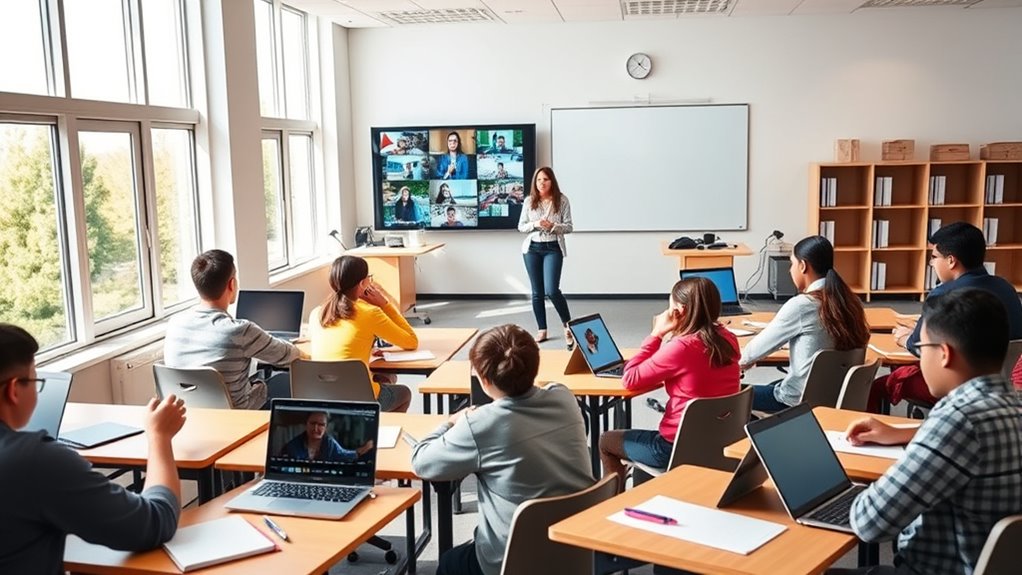
Hybrid learning offers significant benefits for both students and educators by increasing engagement, motivation, and personalized support. You get to experience more flexibility, enabling you to learn at your own pace and access resources anytime. For educators, it means more efficient use of classroom time and better insights into individual progress. Here are four key benefits:
Hybrid learning boosts engagement, flexibility, and personalized support for students and educators alike.
- You can customize learning experiences to fit your needs and learning styles.
- Educators can focus on providing targeted support rather than managing all students equally.
- Both students and teachers enjoy increased interaction through digital tools and real-time feedback.
- Accessibility improves, helping students with disabilities or language barriers participate fully.
- Predictive modeling can further enhance personalized learning by forecasting student performance and identifying those who may need additional support.
This model creates a dynamic, inclusive environment where everyone benefits from tailored instruction and flexible learning pathways.
Innovations Shaping the Future of Hybrid Education
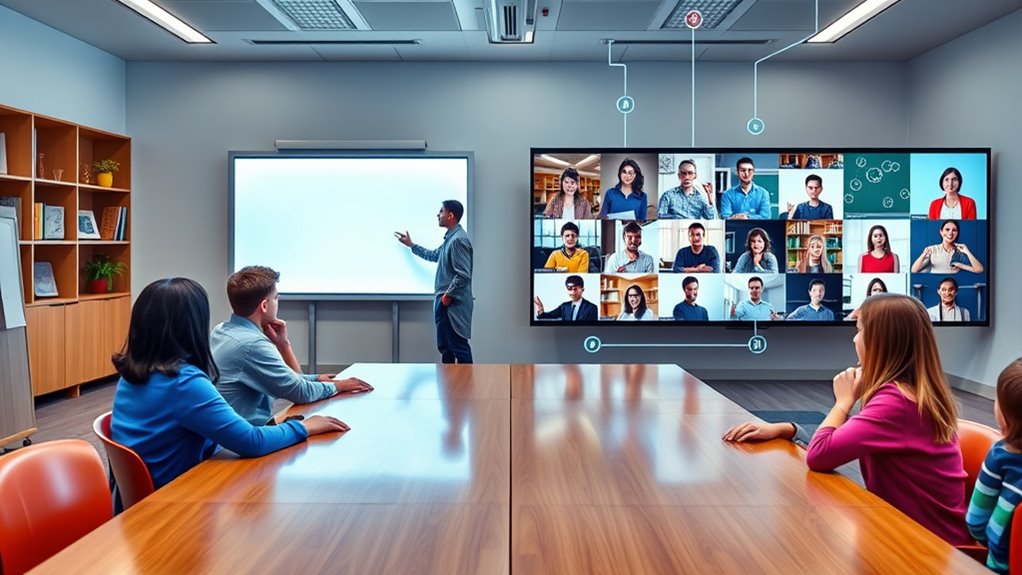
Innovations are rapidly transforming how hybrid education meets the needs of today’s learners. You’ll see AI-powered platforms that adapt content in real-time, personalizing lessons to fit each student’s pace and understanding. Automated grading and administrative tools free up educators’ time, enabling more meaningful interactions. Virtual and augmented reality create immersive experiences that bring complex topics to life, making learning more engaging. Data analytics provide insights into student progress, helping you tailor support effectively. Additionally, new hybrid models integrate live sessions with flexible asynchronous content, accommodating diverse schedules and learning styles. These innovations foster a more responsive, inclusive, and efficient educational environment, ensuring you stay ahead in delivering quality education that resonates with learners’ evolving expectations and technological capabilities. Robotics integration is also beginning to influence educational tools and environments, further enhancing hybrid learning experiences.
Market Trends and Adoption Across Global Regions
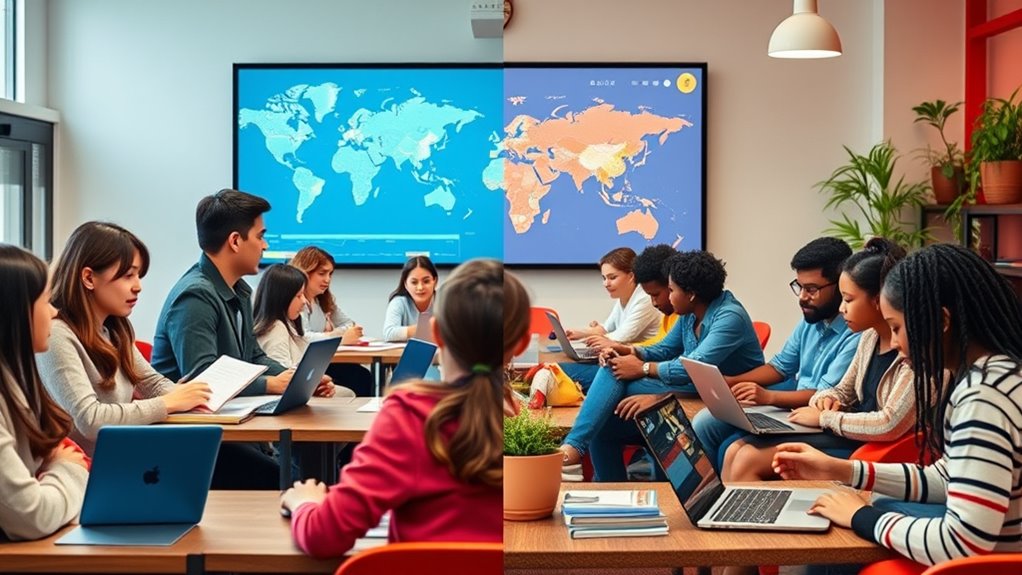
Across the globe, regions are rapidly adopting hybrid learning models to meet diverse educational needs and leverage technological advancements. You’ll find notable trends in:
- The UK and Europe developing customized hybrid models focusing on workforce skills and lifelong learning.
- China and India integrating hybrid approaches to expand access, especially in rural areas.
- The USA seeing widespread adoption in higher education, with over 50% of students taking online courses.
- Middle Eastern regions like Dubai and Saudi Arabia investing heavily to modernize education with innovative hybrid solutions.
These regions prioritize blending in-person and online learning, creating flexible, scalable systems aligned with local goals. As a result, hybrid education markets grow markedly, reflecting increased investment and adoption worldwide. Market growth continues to accelerate as institutions adapt to changing technological and societal demands.
Addressing Challenges and Ensuring Equitable Access
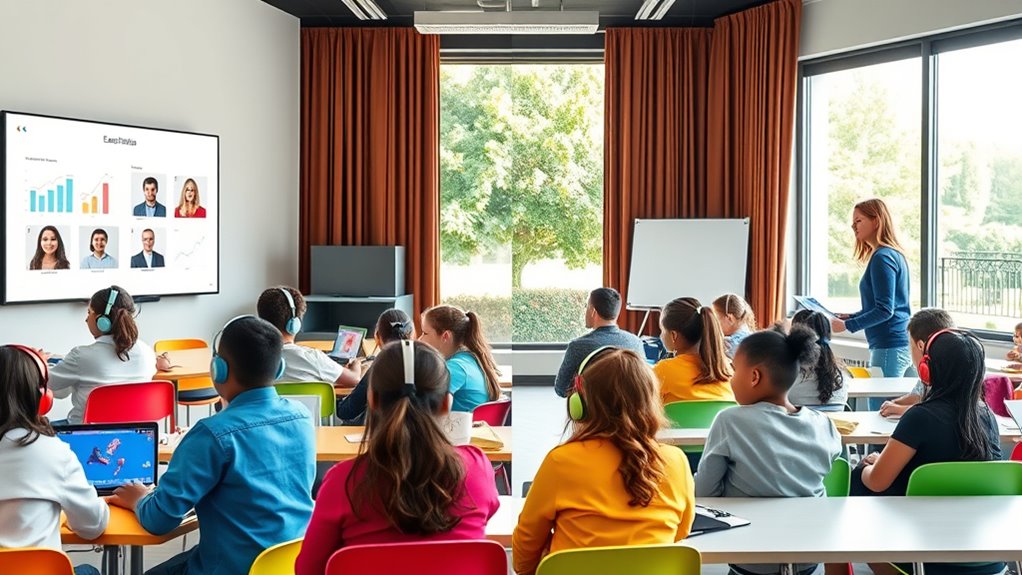
While hybrid learning offers many benefits, ensuring equitable access remains a significant challenge. You need to recognize that not all students have reliable internet or devices, which can widen the digital divide. To address this, schools and institutions must invest in infrastructure, provide devices, and create offline resources for those in need. You should also advocate for policies that support low-income families and underserved communities. Additionally, training educators to deliver inclusive hybrid instruction is essential, as effective engagement depends on understanding diverse student needs. Balancing synchronous and asynchronous activities helps prevent cognitive overload and keeps students motivated. Moreover, understanding the potential security vulnerabilities in digital platforms can help institutions better protect student data and maintain trust. Ultimately, your goal is to create a fair learning environment where every student can succeed, regardless of their socioeconomic background or technological access.
Frequently Asked Questions
How Do Hybrid Models Accommodate Students With Special Educational Needs?
You can support students with special needs by customizing hybrid models to fit their unique requirements. Use digital tools that offer personalized learning pathways, allowing self-paced progress and targeted support. Incorporate assistive technologies like speech-to-text or visual aids, and blend in-person support with online resources. This approach guarantees they stay engaged, motivated, and included, while educators can monitor progress and adapt instruction to maximize each student’s success.
What Strategies Ensure Student Engagement in Both Online and In-Person Settings?
You can boost student engagement by blending synchronous and asynchronous activities, ensuring variety in your teaching methods. Remember, 59% of students report higher motivation in hybrid settings, so leverage real-time discussions, interactive tools, and personalized feedback. Use digital platforms to foster collaboration and gauge understanding regularly. Incorporate multimedia content and breakout sessions to keep students actively involved, making learning dynamic and tailored to diverse needs.
How Can Institutions Effectively Train Teachers for Hybrid Teaching Methods?
You can effectively train teachers for hybrid methods by providing thorough professional development focused on tech tools, instructional strategies, and student engagement techniques. Encourage hands-on practice with digital platforms, foster peer collaboration, and offer ongoing support and feedback. Incorporate real-world examples and case studies, and emphasize the importance of balancing synchronous and asynchronous activities. Continuous training ensures teachers stay confident, adaptable, and equipped to meet diverse student needs.
What Policies Govern the Ethical Use of AI in Hybrid Learning Environments?
You need to set clear policies that promote ethical AI use in hybrid learning environments, guaranteeing fairness, transparency, and privacy. Think of it as keeping everything above board—you establish guidelines for data collection, algorithm bias, and accountability. Regular audits and stakeholder input ensure these policies stay current. By doing so, you foster trust, prevent misuse, and support equitable access, enabling AI to enhance education without crossing ethical lines.
How Is Digital Equity Addressed to Ensure All Students Access Hybrid Education?
You address digital equity by advocating for reliable internet access and providing affordable devices to all students. You guarantee schools implement inclusive policies, invest in infrastructure, and offer technical support to bridge gaps. By partnering with communities and organizations, you create opportunities for underserved learners. Continuous assessment helps identify barriers, allowing you to adapt strategies and promote equal access, so every student can fully participate in hybrid education.
Conclusion
Think of hybrid learning as a bridge connecting two worlds—your classroom and the digital domain. By crossing this bridge, you gain the freedom to explore knowledge from both sides, creating a journey tailored to your needs. Embrace the balance, navigate challenges, and seize the opportunities ahead. As you walk this path, remember that you’re shaping the future of education—an adventure where every step brings new horizons within your reach.