
To safeguard student information in EdTech, you need to understand the risks of cyberattacks and data breaches that target valuable school data. Implement strict policies, ensure compliance with laws like FERPA and GDPR, and vet vendors for certifications such as the Common Sense Privacy Seal. Prioritize data encryption, access controls, and transparent data practices. Building a culture of privacy awareness among staff and students is key. Continuously strengthening your strategies will help keep student data safe.
Key Takeaways
- Implement strict access controls, encryption, and regular security assessments to safeguard student data from breaches and unauthorized access.
- Ensure compliance with privacy regulations like FERPA and GDPR through transparent policies and staff training.
- Choose EdTech vendors with certifications such as the Common Sense Privacy Seal, indicating adherence to rigorous data protection standards.
- Limit data collection to only necessary information, and obtain parental consent for sensitive data to reduce privacy risks.
- Foster a culture of privacy awareness among staff and students through ongoing education and open communication about data practices.
The Growing Threat Landscape in Education Data Security
The education sector is experiencing an alarming rise in cyber threats, making data security more critical than ever. Schools and universities face an average of 4,388 weekly cyberattacks per organization in 2025, the highest among all sectors. These attacks target student records, staff data, and sensitive research, risking violations of laws like FERPA. With high-value data but limited cybersecurity investments, many institutions are “target rich, cyber poor.” The consequences are severe, including identity theft, financial loss, and damage to reputation. Ransomware incidents have surged, with over 130 reports globally, disrupting operations and compromising trust. If you don’t strengthen your defenses now, you expose your institution to ongoing threats that could undermine privacy, safety, and academic integrity. Additionally, many institutions lack awareness of specific cultural and regional sensitivities related to student information privacy, which can further complicate security efforts.
Common Data Collection Practices in Educational Technology
You’re probably familiar with how EdTech platforms gather student attendance, performance, and behavioral data, but they also collect research collaboration details and faculty analytics. These practices pose significant privacy risks, such as data misuse, unauthorized sharing, and re-identification of anonymized information. Understanding what data is collected and the potential concerns helps you evaluate the privacy implications of these technologies. Incorporating data security practices into platform design can help mitigate some of these risks.
Types of Data Collected
Have you ever wondered what types of data EdTech platforms collect from students and staff? They gather a wide range of information, including personal identifiers like names, birthdates, and Social Security numbers. Academic records such as test scores, attendance, and disciplinary reports are also collected to monitor student progress and behavior. Many platforms track engagement metrics, like login times, activity logs, and discussion participation, to assess instructional effectiveness. Staff data, including teaching analytics and research collaborations, are often captured to improve educational outcomes. Behavioral data, such as keystrokes or online interactions, may be collected to personalize learning or identify issues. While these practices aim to enhance education, they also raise privacy concerns, especially when data is shared with third parties or used beyond its original purpose. Additionally, understanding cookie management can help users control how their data is collected and used within EdTech platforms.
Privacy Risks and Concerns
Educational technology platforms often collect a wide range of data from students and staff, which can introduce significant privacy risks. These risks include data breaches, unauthorized sharing, and misuse of sensitive information. Cybercriminals target school networks because they hold valuable data like academic records, health information, and behavioral logs. Many platforms lack robust security measures, making them vulnerable to hacking and ransomware attacks. Additionally, vendor practices often involve collecting more data than necessary or sharing information with third parties without clear consent, raising concerns about transparency and control. AI tools and digital footprints further complicate privacy, as they can generate detailed profiles that may be exploited or misused. Without proper safeguards, these risks threaten student safety, trust, and compliance with privacy regulations. Understanding data security is essential for implementing effective protections and maintaining trust in educational technology.
Key Risks and Consequences of Data Breaches in Schools
Are schools prepared for the severe risks that come with data breaches? Likely not. When a breach occurs, sensitive student and staff information becomes exposed, leading to identity theft, financial fraud, and emotional distress. Breaches also threaten compliance with FERPA, risking legal penalties. Imagine the impact:
| Data Type | Potential Damage | Consequences |
|---|---|---|
| Student IDs | Identity theft | Legal action, loss trust |
| Academic Records | Reputation harm | Loss of credibility |
| Health Information | Privacy violations | Emotional harm |
| Staff Data | Security risks for staff | Disciplinary issues |
| Research Data | Intellectual property loss | Funding jeopardy |
Without robust safeguards, schools become easy targets, risking severe fallout that damages reputations and disrupts education. Additionally, understanding data privacy regulations is crucial for maintaining compliance and protecting all stakeholders involved.
Essential Policies and Frameworks for Protecting Student Data

Implementing extensive policies and frameworks is essential to effectively safeguard student data in today’s digital learning environments. You need clear, thorough policies that define how data is collected, stored, and shared. Establishing a data governance framework ensures consistent oversight and accountability across your organization. You should adopt privacy standards aligned with regulations like FERPA and GDPR, integrating them into your policies and training. Regular privacy impact assessments help identify vulnerabilities before breaches occur. Enforcing strict access controls and encryption safeguards data both in transit and at rest. Additionally, transparent third-party vendor agreements ensure they adhere to your privacy standards. Recognizing the importance of viral commercial stars and their increasing visibility highlights the need for robust data protection in marketing strategies, especially when personal data is involved. By embedding these policies and frameworks into your daily operations, you create a strong foundation for protecting student information and maintaining trust in your EdTech ecosystem.
Best Practices for Ensuring EdTech Privacy and Security

To effectively safeguard student data in EdTech, you must adopt best practices that prioritize privacy and security at every stage. First, guarantee all platforms comply with established standards like GDPR and restrict third-party data sharing. Second, implement robust encryption for data both in transit and at rest to prevent unauthorized access. Third, require parental consent before collecting any personal information, giving families control. Fourth, regularly review vendor security practices, focusing on transparency, data handling policies, and privacy certifications. Additionally, provide ongoing employee training on privacy protocols and enforce clear policies for data access and handling. By following these steps, you create a thorough defense against breaches and build trust with students and families alike.
The Role of Vendor Evaluation and Certification Standards

Vendor evaluation and certification standards play a pivotal role in ensuring EdTech products prioritize data privacy and security. These standards serve as benchmarks, helping you identify vendors committed to protecting student information through rigorous privacy practices. When you evaluate vendors, look for certifications like the Common Sense Privacy Seal or compliance with frameworks such as GDPR or FERPA. Certification indicates that a vendor adheres to strict data handling, encryption, and transparency protocols, reducing your district’s risk of breaches. Implementing these standards ensures you’re choosing solutions with built-in safeguards, fostering trust among students, parents, and staff. By prioritizing certified vendors, you create a more secure EdTech environment and demonstrate your commitment to safeguarding sensitive student data effectively. Additionally, considering the diverse designs available in educational technology tools can help tailor solutions to your district’s specific needs, ensuring both security and engagement.
Building a Culture of Privacy Awareness in Education Settings
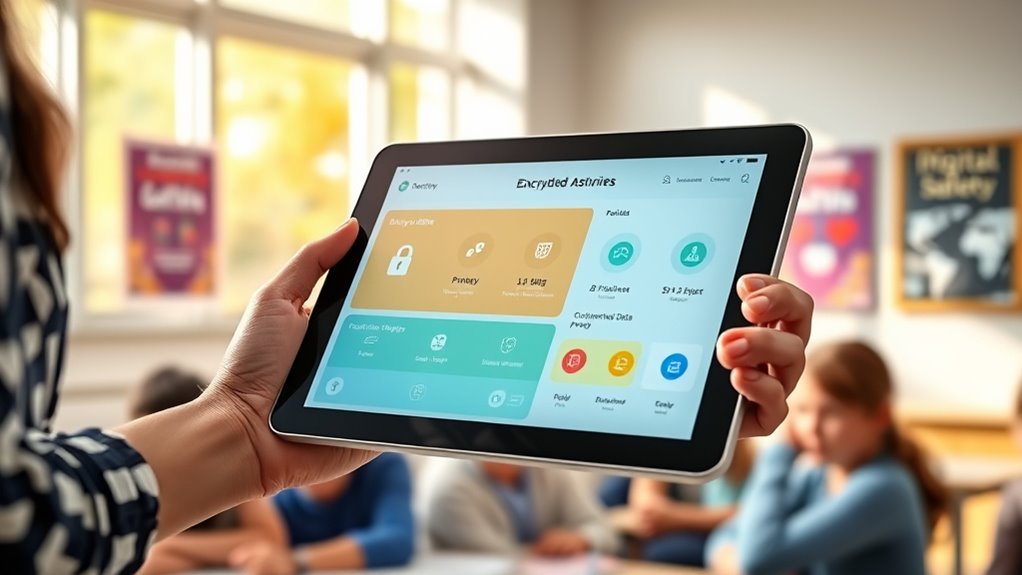
Building a culture of privacy awareness starts with recognizing that every member of the education community has a role in safeguarding student data. You need to foster ongoing education, clear policies, and accountability. To do this effectively, consider these steps:
- Regularly train staff and students on privacy best practices and emerging threats.
- Establish and enforce clear data handling policies aligned with regulations like FERPA.
- Promote transparency about data collection, use, and sharing with families and staff.
- Create a safe environment where concerns about privacy can be openly addressed.
- Incorporate insights from ForSale 100 to stay informed about the latest trends in data protection and privacy management.
Frequently Asked Questions
How Can Parents Verify an Edtech Tool’s Privacy Compliance Effectively?
You can verify an EdTech tool’s privacy compliance by checking if it has third-party certifications like the Common Sense Privacy Seal or GDPR adherence. Review their privacy policy for clear data handling practices, including parental consent procedures. Look for transparent information about data sharing and security measures. Additionally, ask your school or district if they’ve evaluated the tool’s privacy standards, ensuring it meets established safety and compliance benchmarks before use.
What Are the Latest Legal Updates Impacting Student Data Privacy in Education?
You should stay informed about recent legal updates like the federal Student Data Privacy and Security Act, which strengthens data protections and mandates transparency from EdTech providers. Keep an eye on state laws such as California’s Student Online Personal Information Protection Act (SOPIPA) and new regulations around AI use. Regularly review policies, demand clear privacy disclosures, and guarantee vendor compliance to protect student data and meet evolving legal standards.
How Do Districts Handle Privacy Concerns With Shadow AI and Unregulated Tools?
Like a knight in shining armor, districts are now tackling shadow AI and unregulated tools head-on. You should establish clear policies that restrict unauthorized AI use and require vetting of all EdTech tools before deployment. Training staff on privacy risks and monitoring platform activity helps catch unapproved AI applications early. Collaborate with vendors to enforce compliance, and use technology solutions to flag suspicious data activities, ensuring student information stays protected.
What Training Methods Best Improve Staff’s Understanding of Data Privacy Responsibilities?
You should implement interactive training sessions, like workshops and simulations, to boost staff understanding of data privacy. Regular, scenario-based learning helps staff recognize privacy risks and proper responses. Incorporate clear policies, hands-on activities, and ongoing updates to keep staff engaged and informed. Encouraging open dialogue and providing accessible resources also reinforce accountability, ensuring everyone understands their role in safeguarding student data effectively.
How Can Students Be Empowered to Manage Their Own Privacy Settings?
You can turn students into digital privacy captains by giving them the tools and confidence to steer their own settings. Use engaging, interactive lessons that mimic real-world privacy scenarios, making it fun to navigate controls. Encourage them to ask questions and explore privacy options actively. When students feel empowered, they’ll take ownership of their data, like a ship’s captain charting their course through the digital seas with confidence and care.
Conclusion
Protecting student data is like guarding a treasure chest—you must stay vigilant. By understanding the risks, implementing strong policies, and fostering a culture of privacy awareness, you can keep sensitive information safe. Remember, every effort counts in building a secure educational environment. Stay proactive, evaluate vendors carefully, and prioritize privacy—because safeguarding student information isn’t just a duty, it’s the key to trust and success in edtech.