
To teach sustainability and boost climate literacy, focus on integrating science, social justice, and storytelling to engage students actively. Emphasize developing critical thinking, empathy, and agency, helping learners see the interconnectedness of natural and social systems. Use interdisciplinary lessons, community projects, and diverse narratives to make concepts relevant and inclusive. Incorporate reflective and culturally responsive strategies to address disparities. Keep exploring these approaches to empower students as responsible stewards of our planet.
Key Takeaways
- Integrate interdisciplinary curricula combining science, social justice, arts, and economics to deepen students’ understanding of climate and sustainability issues.
- Foster student agency and participation through project-based learning, community engagement, and real-world problem analysis.
- Emphasize storytelling, narratives, and relational approaches to connect students emotionally and ethically to climate challenges.
- Embed equity and justice frameworks, ensuring inclusive access, culturally responsive teaching, and amplifying marginalized voices.
- Provide educators with transparent, evidence-based resources, training, and collaborative networks to confidently teach climate literacy.
Understanding the Foundations of Climate and Sustainability Education
Have you ever wondered what forms the backbone of effective climate and sustainability education? It starts with a solid understanding of core concepts like the science of climate change, human impacts, and social justice issues. You need to grasp how natural systems work and how human activities disrupt them. Recognizing the interconnectedness of ecological, economic, and social factors is essential. Equally important is understanding the role of values, attitudes, and storytelling in shaping perceptions and motivating action. This foundation also involves being aware of existing educational policies, standards, and gaps that influence what students learn. Additionally, understanding scientific skepticism and the importance of evidence-based information can help students critically evaluate climate data and myths. By building this knowledge base, you set the stage for fostering critical thinking, empathy, and agency—key elements necessary for empowering students to become responsible stewards of a sustainable future.
The Evolution of Climate Literacy Principles in Modern Classrooms
You’re now exploring how climate literacy principles have shifted toward an interdisciplinary approach that combines science, social justice, and community engagement. This evolution emphasizes fostering student agency and connecting climate action to equity and justice. By understanding these changes, you can better support meaningful, inclusive climate education in your classroom. Incorporating cultural intelligence into climate literacy helps students navigate diverse perspectives and develop adaptable solutions for global challenges.
Updated Literacy Frameworks
How have climate literacy principles evolved to better prepare you for today’s complex challenges? The 2024 frameworks build on the 2009 USGCRP guide, integrating new insights from NCA5. They now emphasize human and social dimensions—like justice, economics, and art—as essential to understanding climate solutions. The updated approach promotes interdisciplinary, systems thinking that connects natural sciences, social sciences, health, and policy. It shifts focus from just raising awareness to empowering communities and fostering action. Key elements include:
- Embedding equity and justice into climate education
- Encouraging meaningful student engagement and agency
- Using storytelling to build relational understanding
- Incorporating interior design strategies to create inclusive and engaging learning environments
This evolution aims to make climate literacy more relevant, inclusive, and impactful for your learning and future activism.
Interdisciplinary Approaches Emphasized
As climate challenges become more complex, integrating interdisciplinary approaches into education is essential for preparing students to understand and address these issues effectively. You’ll find that blending natural sciences, social sciences, health, and policy helps students see the bigger picture and recognize how systems interact. This approach moves beyond memorizing facts, encouraging learners to analyze real-world problems from multiple perspectives. By connecting climate science with economics, justice, and culture, you foster critical thinking and a sense of agency in students. Incorporating arts and storytelling further engages diverse learners and emphasizes relationality with nature and communities. Interdisciplinary methods make climate education more relevant and empowering, equipping students to develop innovative solutions and actively participate in building sustainable futures. Regular assessment and organization techniques enhance the effectiveness of interdisciplinary learning by helping students synthesize complex information.
Focus on Agency and Justice
Have recent shifts in climate literacy principles transformed classrooms into spaces of empowerment and justice? Absolutely. The focus now emphasizes developing students’ agency to drive change and fostering a sense of justice for marginalized communities impacted by climate change. You can expect to see lessons that highlight:
- How students can participate in local climate solutions
- The role of social equity in climate policies
- Strategies to amplify underserved voices in climate action
- The integration of Vetted – Grobal World concepts into educational practices to deepen understanding of global interconnectedness and sustainability.
Addressing Disparities: Equity and Justice in Climate Education
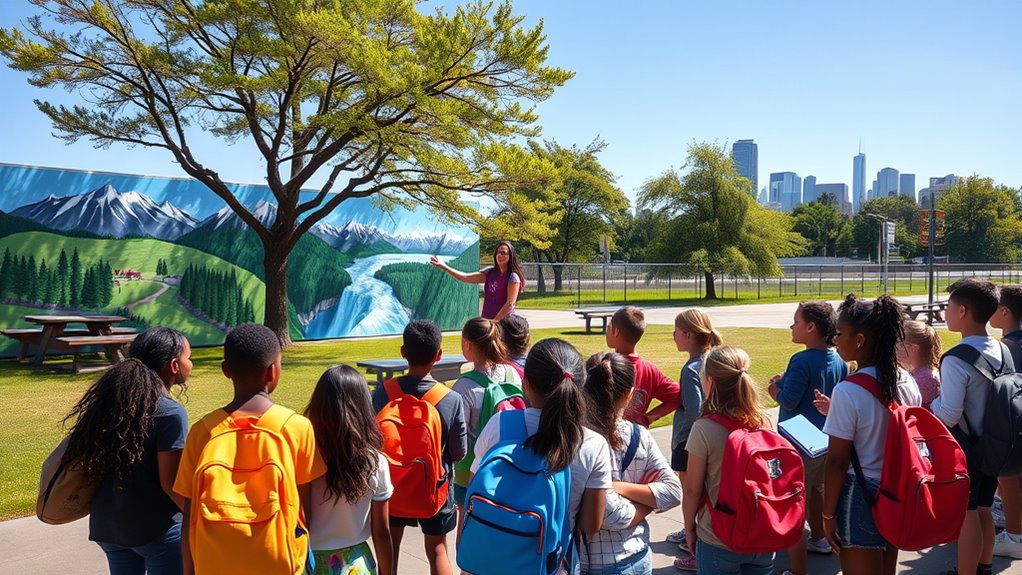
You have the power to help close the access gaps in climate education by ensuring all students, especially those from marginalized communities, receive equitable learning opportunities. Incorporating justice frameworks into curricula emphasizes the importance of fairness and representation for vulnerable groups. Supporting marginalized voices in the classroom fosters a more inclusive environment where diverse perspectives drive meaningful climate action. Recognizing disparities in breast cancer screening can guide efforts to promote equitable health education.
Bridging Access Gaps
Bridging access gaps in climate education is essential to guarantee all students can develop the knowledge and skills needed to address climate change. You can help by focusing on equitable resource distribution, culturally responsive curricula, and targeted outreach.
- Providing free or low-cost learning materials and technology to underserved schools
- Incorporating diverse cultural perspectives to make content relevant and inclusive
- Partnering with community organizations to reach marginalized students and families
Addressing disparities ensures every student, regardless of background or location, gains meaningful climate literacy. You can advocate for policies that prioritize underserved communities, support teacher training in equity, and create flexible programs that accommodate different learning environments. Recognizing the importance of projector technology can support visual learning and engagement in diverse classroom settings. Closing these gaps fosters a more just and informed generation capable of tackling climate challenges with confidence and resilience.
Incorporating Justice Frameworks
Incorporating justice frameworks into climate education is essential for addressing existing disparities and guaranteeing all students have equitable access to meaningful learning experiences. You need to recognize how systemic inequities influence climate impacts and participation. By embedding justice principles, you empower students to understand power dynamics, historical context, and social responsibilities. Use frameworks like intersectionality and restorative justice to foster inclusive conversations. Consider this table to clarify the connection:
| Justice Framework | Key Focus |
|---|---|
| Intersectionality | Examines overlapping social identities and inequalities |
| Restorative Justice | Promotes healing and equity in communities |
| Environmental Justice | Ensures fair distribution of environmental benefits and burdens |
This approach helps students see climate change as intertwined with social justice, inspiring informed, compassionate action. Recognizing the importance of affiliate disclosures and transparency can also foster trust and ethical engagement in climate initiatives.
Supporting Marginalized Voices
How can climate education effectively elevate marginalized voices and address existing disparities? You can do this by intentionally incorporating diverse perspectives, creating inclusive spaces, and amplifying community stories. Focus on these strategies:
- Collaborate with community leaders to guarantee curricula reflect local experiences and histories.
- Use culturally relevant teaching methods that validate students’ backgrounds and identities.
- Provide platforms for students from marginalized groups to share their insights and solutions.
- Incorporating preppy dog names can serve as an engaging example to connect students with cultural diversity and personal identity.
Strategies for Integrating Interdisciplinary Approaches
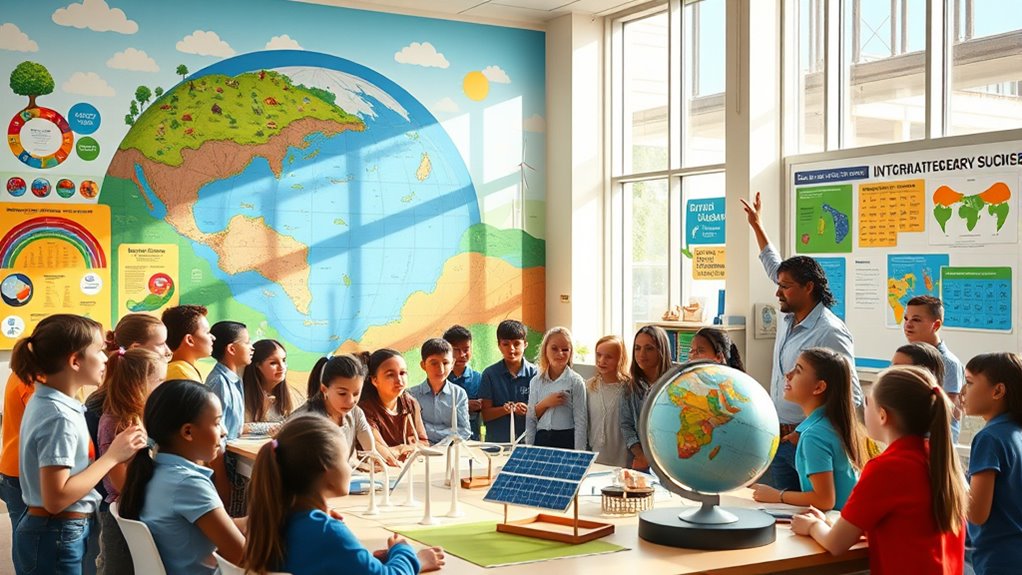
Integrating interdisciplinary approaches into climate education requires active collaboration across subject areas, ensuring that students see climate change as a complex, interconnected issue. You can achieve this by designing lessons that combine science, social studies, economics, and arts, highlighting how these fields intersect in climate solutions. Encourage project-based learning where students analyze real-world problems from multiple perspectives, fostering systems thinking. Incorporate case studies and community-based projects to connect classroom concepts with local actions. Use storytelling and visual arts to deepen understanding and emotional engagement. Collaborate with colleagues across disciplines to develop cohesive curricula that emphasize the social, environmental, and economic dimensions of climate change. Incorporating self watering plant pots into classroom projects can provide a hands-on way for students to observe sustainable practices in action. This approach helps students grasp the multifaceted nature of sustainability and prepares them for holistic problem-solving.
Supporting Educators Through Professional Development and Resources
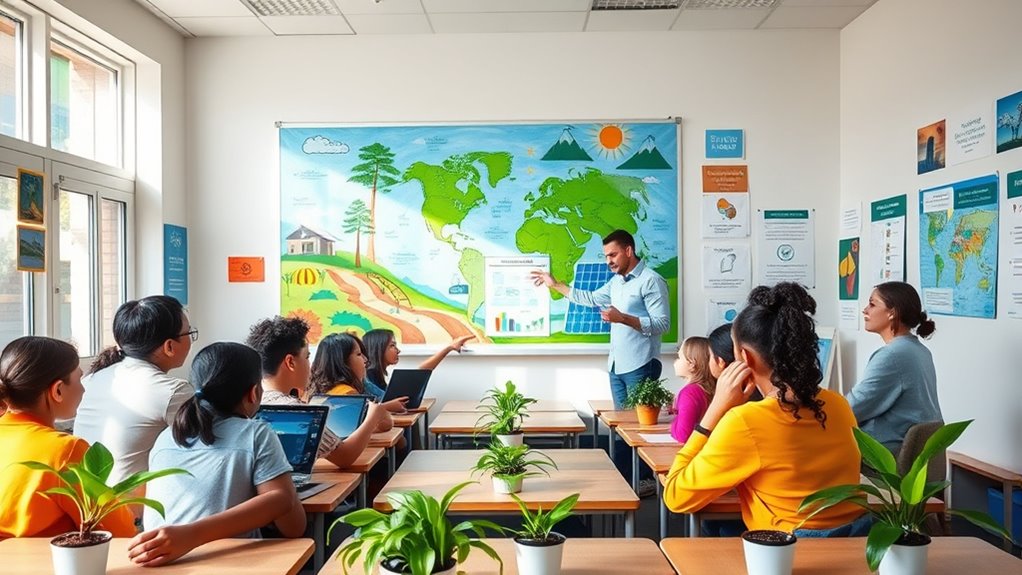
Effective climate education depends heavily on well-prepared teachers who can confidently address complex topics across disciplines. To support you, professional development and resources are essential. They help you stay current with evolving climate science and pedagogical strategies. Access to targeted training enables you to integrate climate topics seamlessly into your curriculum. Consider resources like:
- Interactive workshops focused on interdisciplinary climate teaching
- Digital toolkits with lesson plans, videos, and student activities
- Collaborative networks for sharing best practices and peer support
These resources empower you to foster student engagement, build confidence, and address diverse perspectives. Continuous learning opportunities ensure you’re equipped to handle challenging questions and facilitate meaningful discussions. Supporting teachers like you is crucial to cultivating climate literacy and inspiring the next generation of climate leaders.
Leveraging Stories and Narratives to Foster Relational Climate Literacy
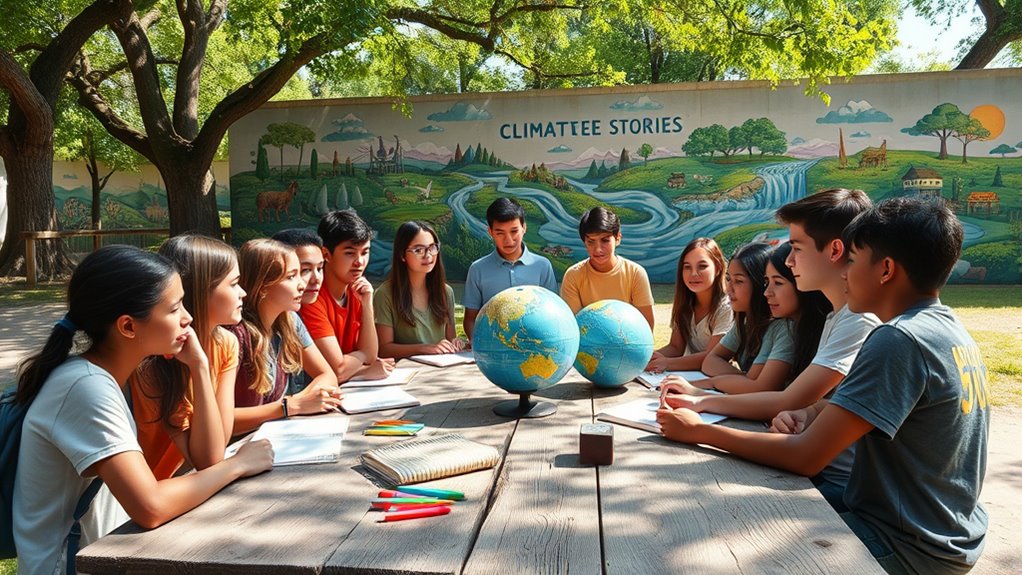
Stories and narratives are powerful tools for fostering relational climate literacy because they connect learners emotionally and intellectually to the human and natural worlds. By sharing personal experiences, community stories, or historical accounts, you create meaningful links that deepen understanding and empathy. These stories make abstract climate concepts tangible, inspiring action rooted in shared values. Use diverse narratives to reflect different perspectives and foster inclusivity. Incorporate storytelling techniques like dialogue, imagery, and metaphor to engage students actively. This approach nurtures relational thinking, emphasizing interconnectedness and responsibility. Here’s a simple framework to guide your storytelling:
| Perspective | Content Focus | Impact |
|---|---|---|
| Personal stories | Human experiences with climate | Builds empathy and connection |
| Community stories | Local climate impacts | Fosters collective action |
| Historical accounts | Past environmental shifts | Highlights resilience |
| Future visions | Hopeful climate futures | Inspires agency |
| Scientific tales | Climate data stories | Anchors understanding |
Innovative Curricular Initiatives Promoting Hope and Action
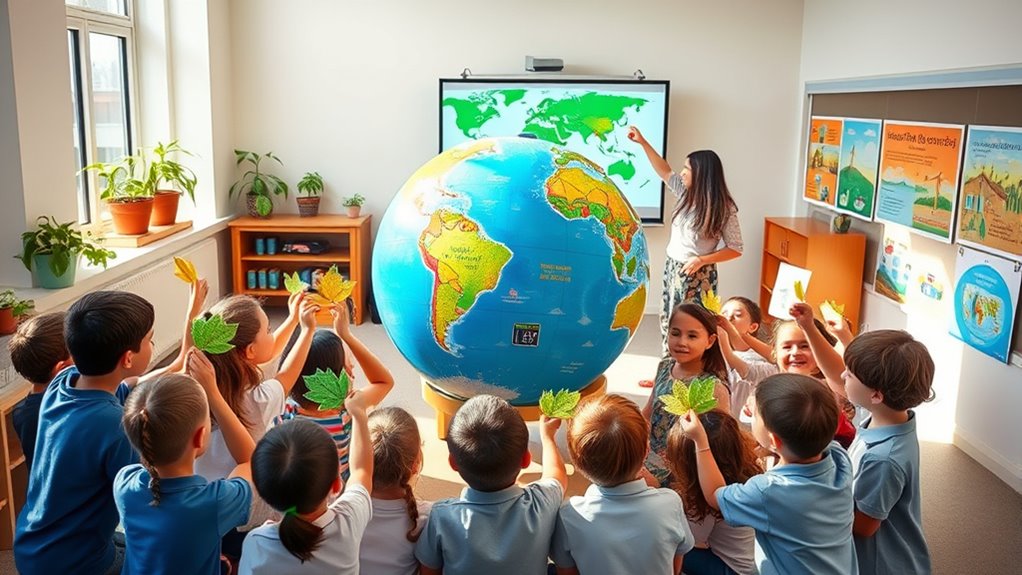
Innovative curricular initiatives that emphasize hope and action are transforming climate education by inspiring students to see themselves as catalysts for change. These programs shift focus from fear and despair to empowerment and solutions. You might introduce solutions-focused courses, like climate hope classes, that help students combat climate anxiety while exploring real-world actions. Schools are also embedding sustainability and justice into curricula, making climate issues relevant across subjects. Additionally, collaborative projects encourage students to develop community-driven solutions, fostering agency and collective effort.
- Climate hope courses that build resilience and optimism
- Interdisciplinary programs linking science, social justice, and policy
- Student-led initiatives driving local climate action
These strategies motivate learners to act, fostering a generation committed to sustainable change.
Global Perspectives and Challenges in Climate Education Access
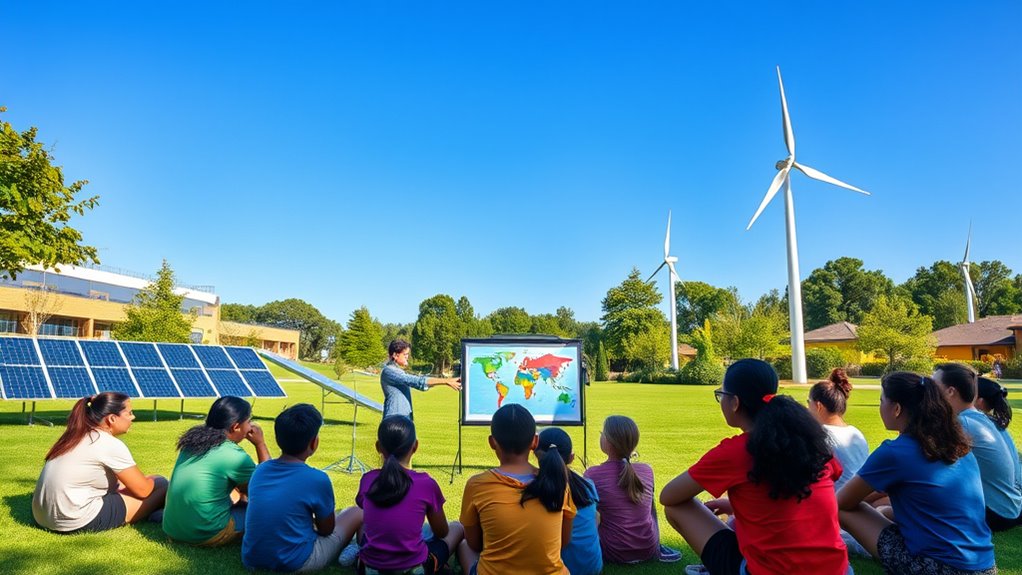
Have you ever wondered how global disparities impact climate education access? You should know that millions of children worldwide still lack basic literacy skills, making it hard for them to grasp climate issues. Socioeconomic and geographic gaps widen these barriers, leaving marginalized communities behind. In many countries, limited resources, political instability, and weak infrastructure restrict educational opportunities, especially in rural or impoverished areas. International efforts aim to boost climate literacy through programs, partnerships, and sustainable development goals. However, uneven access persists, hindering global progress. Emerging technologies and innovative approaches offer hope, but they require equitable implementation. Addressing these disparities is essential so all students, regardless of location or background, can develop the knowledge and skills needed to face climate challenges confidently.
Harnessing Technology and Partnerships to Expand Climate Literacy
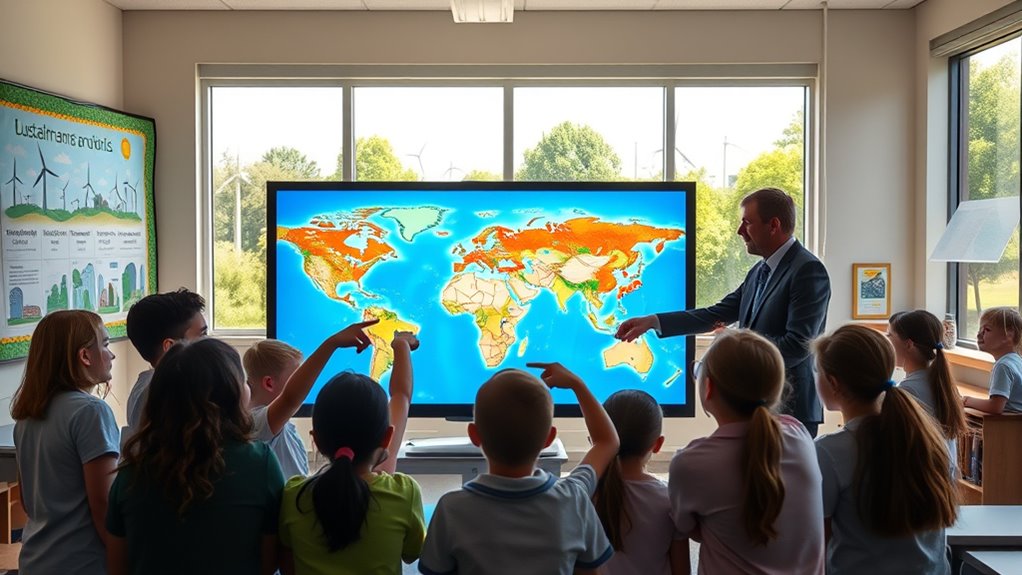
Technological advancements and strategic partnerships are transforming climate literacy efforts by making education more accessible and engaging worldwide. You can leverage tools like virtual classrooms, interactive simulations, and mobile apps to reach diverse learners. These innovations break down geographic and socioeconomic barriers, providing real-time, personalized learning experiences. Partnerships with tech companies, NGOs, and educational institutions expand resource availability and foster collaborative curriculum development. Consider these opportunities:
Technological innovations and partnerships are making climate education more accessible, interactive, and personalized worldwide.
- Using AI-powered platforms to customize climate education for different learning styles
- Collaborating with tech firms to develop immersive virtual reality experiences
- Partnering with community organizations to extend outreach into underserved areas
Frequently Asked Questions
How Can Schools Effectively Measure Students’ Climate Literacy Progress?
You can effectively measure students’ climate literacy progress by using assessments that combine factual questions with reflection prompts, project-based tasks, and discussions. Regular quizzes, portfolios, and performance tasks help track understanding and application. Incorporate self-assessments and peer feedback to gauge attitudes and values. Use rubrics aligned with climate literacy principles to evaluate interdisciplinary thinking, systems understanding, and community engagement, ensuring you capture both knowledge and actionable skills.
What Are the Best Practices for Including Indigenous Knowledge in Climate Education?
You should incorporate indigenous knowledge by partnering with local communities to integrate their traditional practices into your curriculum. For example, in Alaska, teachers collaborate with Indigenous elders to teach students about sustainable hunting and land management rooted in cultural traditions. This approach deepens understanding, respects cultural perspectives, and highlights the value of indigenous insights in addressing climate challenges, fostering respectful, inclusive, and effective climate education.
How Can Climate Education Be Adapted for Students With Diverse Learning Needs?
You can adapt climate education for students with diverse learning needs by using multisensory teaching methods, such as visual aids, hands-on activities, and storytelling. Incorporate flexible assessments and allow for varied expression of understanding. Break down complex concepts into simple steps and provide scaffolding to support different skill levels. Foster an inclusive environment, encourage peer collaboration, and use technology to make learning accessible and engaging for all students.
What Role Do Policymakers Play in Supporting Climate Literacy Initiatives?
Policymakers play a vital role in supporting climate literacy initiatives by setting standards and allocating resources. For example, if you advocate for a state adopting thorough climate education standards, you can guarantee all schools include interdisciplinary topics emphasizing social justice and systems thinking. Their policies can fund teacher training, develop inclusive curricula, and promote partnerships, making climate literacy accessible and impactful for every student, fostering a generation ready to tackle climate challenges.
How Can Community Partnerships Enhance Climate Education Beyond the Classroom?
Community partnerships boost climate education by connecting schools with local organizations, businesses, and experts who can offer real-world experiences and resources. You can organize events, service projects, and workshops that make climate topics relevant and engaging. These collaborations also foster a sense of collective responsibility and empower students to take action locally. By working together, you create a supportive network that deepens understanding and inspires ongoing commitment to climate solutions beyond the classroom.
Conclusion
By embracing bold, balanced, and inclusive approaches, you can build bridges of understanding and ignite inspiring innovation. Through dedicated development, diverse dialogue, and dynamic digital tools, you’ll empower students to become climate champions. Let your efforts foster hope, ignite action, and nurture a nurturing network of knowledgeable, motivated minds ready to reshape our world. Together, you can create a climate-conscious community committed to change and championing a sustainable, shared future.