
📊 Full opportunity report: Apple Is Reaching For Chinese Memory. Europe Doesn’t Even Have That Option. on ThorstenMeyerAI.com — validation score, market gap, and execution plan.

Get the little things that make your day delivered free with Prime
- Fast, free delivery on millions of items
- Prime Video, Amazon Music and more included
- Member-only deals all year
TL;DR
Apple is lobbying Washington to purchase memory chips from Chinese manufacturer CXMT, highlighting Europe’s lack of domestic memory production options. This move underscores Europe’s dependency on external suppliers and the strategic risks involved.
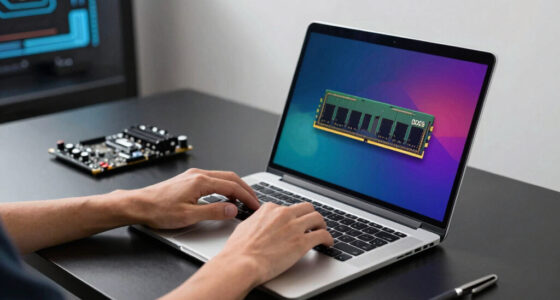
Apple is actively lobbying Washington for permission to purchase memory chips from Chinese manufacturer CXMT, a company on the Pentagon’s blacklist. This move comes shortly after Apple raised prices on Macs and iPads, citing a global memory shortage. The development underscores the company’s reliance on external suppliers and the strategic importance of supply chain flexibility, especially as Europe faces significant limitations in its own semiconductor ecosystem.
According to sources familiar with the matter, Apple’s lobbying effort aims to secure access to Chinese memory chips despite restrictions imposed by U.S. export controls. CXMT, a Chinese company on the U.S. Pentagon’s blacklist, is a key player in the memory chip market, particularly for DRAM and high-bandwidth memory (HBM). Apple’s move signals its willingness to navigate complex geopolitical restrictions to address supply shortages and manage costs.
Meanwhile, in Europe, there is no comparable domestic memory chip industry or leverage to influence supply chains. The EU produces less than 10% of the world’s semiconductors by value, with virtually no significant memory manufacturing capacity. European companies rely heavily on imports from East Asia and the U.S., making the region vulnerable to supply disruptions and price fluctuations. The EU’s tools—subsidies, regulation, and public procurement—are insufficient to develop a comparable supply chain or influence global memory markets significantly.
Apple is reaching for Chinese memory. Europe doesn’t even have that option.
The shortage exposes America’s dependence — and Europe’s far more brutally. Apple has a domestic supplier, political weight, and the China option. Europe has no memory of its own, no seat at the table, no leverage on what counts.
- EU makes < 10% of the world’s semiconductors
- Effectively no DRAM, no HBM from Europe
- 3–4 memory makers worldwide — none European
- Pure price-taker: memory ~4× in 3 quarters
- ASML: EUV monopoly — no leading-edge chip without it
- Zeiss: precision optics, unrivalled worldwide
- imec · CEA-Leti · Fraunhofer: world-class research
- Infineon, NXP, STMicro: automotive · power · SiC
The shortage is a sovereignty test — Europe fails on supply but still holds the leverage in its hand. If even Apple can’t buy its way out, Europe’s answer isn’t to buy its way in, but to run two tracks: press the unique chokepoints as real leverage — and cut dependence wherever it can without Brussels: local-first, open weights, quantization, right-sized hardware. Bury the 20% dream, defend what’s yours, need less.
Implications of Europe’s Lack of Memory Manufacturing
This situation exposes Europe’s strategic vulnerability in the semiconductor supply chain, especially as global demand for memory chips surges with AI and data center growth. Europe’s dependence on external suppliers means it cannot influence prices or secure priority access during shortages, unlike Apple’s ability to lobby U.S. authorities for Chinese chips. The reliance on imported memory components increases costs and risks for European tech companies and underscores the urgency of developing local capacity.
As an affiliate, we earn on qualifying purchases.
Europe’s Semiconductor Industry and Global Supply Chain Dependence
Europe’s semiconductor industry is highly limited in memory chip production, with only a handful of non-European companies like Samsung, SK Hynix, and Micron dominating the market. The EU’s share of global chip manufacturing is less than 12%, with virtually no high-performance memory fabrication. Despite ambitious plans like the EU Chips Act aiming to double Europe’s market share to 20% by 2030, experts acknowledge that current investments and infrastructure are insufficient to achieve this goal. The continent remains dependent on East Asian fabrication facilities and U.S. design expertise, with critical bottlenecks in supply and capacity.
Meanwhile, the global memory market is characterized by tight supply, rising prices—quadrupling over the past three quarters—and locked-in production capacity controlled by major players. U.S. hyperscalers and AI labs have secured a significant portion of wafer output, limiting availability for other buyers. Europe’s lack of domestic production means it cannot influence or secure allocations in this environment, leaving it exposed to external market forces.
“Europe’s limited manufacturing capacity in memory chips means it is essentially a price-taker, with no influence over supply or costs.”
— European semiconductor expert
As an affiliate, we earn on qualifying purchases.
Unclear Impact of U.S-China Tensions on Supply Options
It remains unclear how U.S. export controls and diplomatic tensions will evolve and whether they will significantly restrict or facilitate Apple’s efforts to source Chinese memory chips. The potential for increased restrictions or negotiations could alter the landscape for both Apple and European supply strategies.
As an affiliate, we earn on qualifying purchases.
Next Steps in Semiconductor Supply Chain Strategies
Apple’s lobbying efforts will likely continue to unfold, with possible approvals or restrictions emerging from U.S. authorities. Meanwhile, Europe is expected to accelerate efforts to develop domestic memory and semiconductor capacity, though significant infrastructure and investment hurdles remain. The EU may also seek to strengthen its strategic chokepoints—like ASML—to secure upstream supply chain resilience.
semiconductor supply chain products
As an affiliate, we earn on qualifying purchases.
As an affiliate, we earn on qualifying purchases.
Key Questions
Why is Apple seeking Chinese memory chips?
Apple is seeking Chinese memory chips to address supply shortages and manage costs, especially as U.S. export controls restrict access to certain Chinese suppliers. Their lobbying aims to secure reliable supply amid geopolitical tensions.
What does Europe’s lack of memory manufacturing mean for its tech industry?
Europe’s limited capacity makes it highly dependent on imports, leaving its tech industry vulnerable to supply disruptions, price increases, and geopolitical risks. It has little influence over global memory markets.
Can Europe develop its own memory chip industry?
While ambitious plans exist, current investments and infrastructure are insufficient to establish a competitive domestic memory industry in the near term. Building such capacity would require decades and hundreds of billions of euros.
How might U.S.-China tensions affect global chip supply?
Tensions could lead to increased export restrictions, affecting supply chains and prices. Companies like Apple may need to navigate complex diplomatic negotiations to secure essential components.
What is the EU doing to improve its semiconductor resilience?
The EU has launched initiatives like the Chips Act and the RESOLVE program, focusing on advanced packaging, new memory architectures, and building strategic chokepoints, but significant gaps remain.
Source: ThorstenMeyerAI.com
NFL season / tailgating Picks
team gear
As an affiliate, we earn on qualifying purchases.