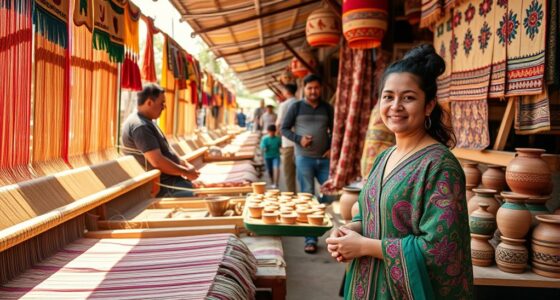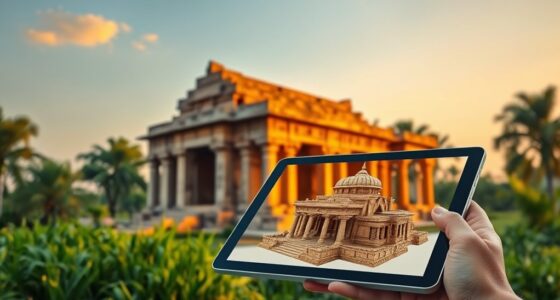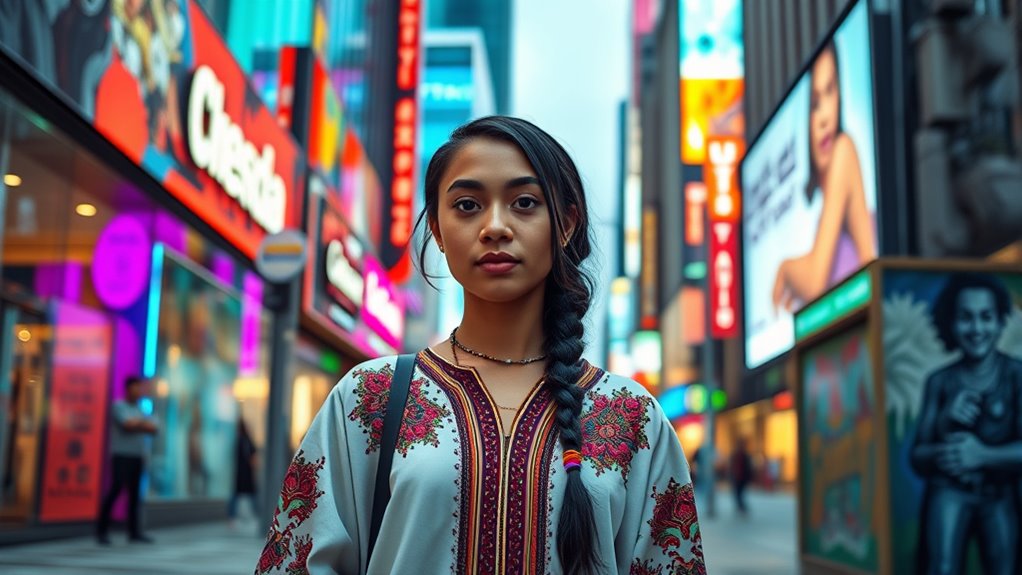

Living between cultures means blending different cultural, social, or ethnic backgrounds into a flexible sense of self. You constantly negotiate expectations, norms, and values from diverse influences, which fosters adaptability and creativity. This fluid identity can sometimes cause internal tension and external misunderstandings. However, it also opens opportunities for cultural exchange, resistance against stereotypes, and social cohesion. If you keep exploring, you’ll discover how hybrid identities shape resilience, challenge boundaries, and contribute to a richer, more inclusive world.
Key Takeaways
- Hybrid identities result from blending multiple cultural, ethnic, or social backgrounds, creating a fluid and evolving sense of self.
- Living between cultures involves navigating internal conflicts, societal stereotypes, and external rejection, often requiring ongoing negotiation.
- These identities promote adaptability, creativity, and intercultural communication while challenging fixed cultural norms.
- Globalization and digital platforms accelerate cultural exchange, influencing hybrid practices like fusion cuisines and cross-genre art.
- Hybrid identities serve as acts of resistance, reinterpreting symbols to empower marginalized voices and foster social cohesion.
Understanding the Foundations of Hybrid Identities
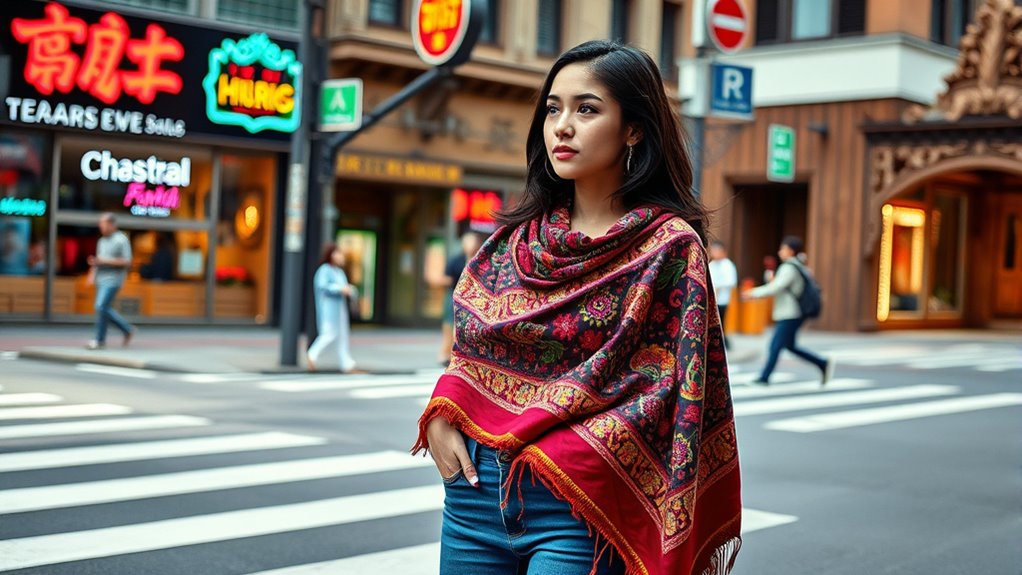
Understanding the foundations of hybrid identities begins with recognizing that they result from the fusion of multiple cultural, ethnic, or social backgrounds into a single, fluid sense of self. You don’t fit neatly into one category; instead, you draw from different traditions, values, and experiences to shape who you are. This process challenges the idea of a fixed, monocultural identity, highlighting instead a dynamic, evolving self. Hybrid identities are shaped by ongoing interactions with diverse influences, creating a complex web of cultural references. They often serve as acts of resistance against cultural dominance, allowing you to redefine your identity beyond colonial or societal norms. For example, engaging with electric bikes and related technologies demonstrates how adapting and integrating new innovations can also reflect hybrid identities. Ultimately, hybrid identities reflect your ability to adapt and integrate multiple cultural elements into a cohesive, personalized worldview.
The Psychological and Social Dynamics of Cultural Blending
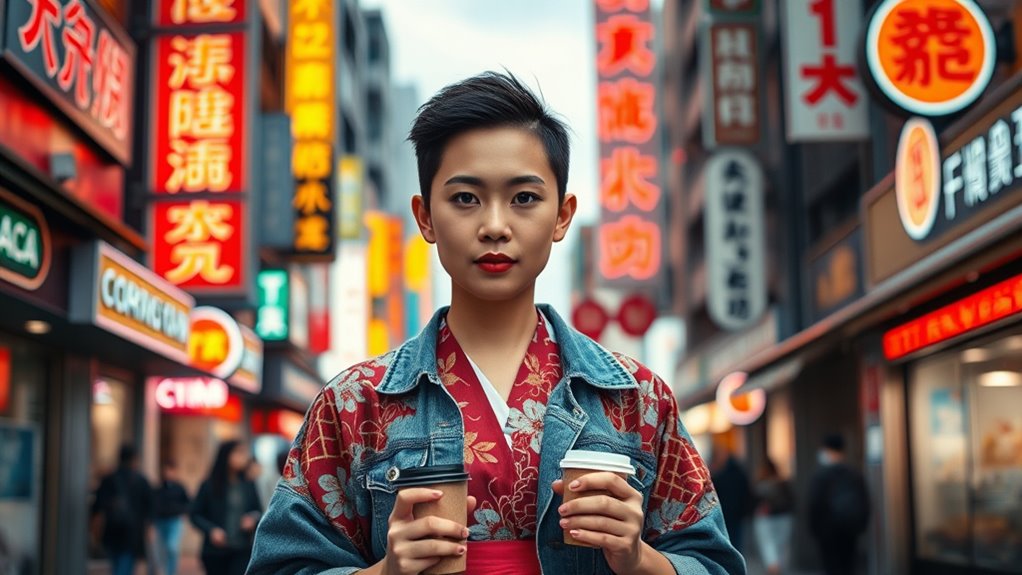
The process of blending multiple cultural influences deeply affects both your psychological makeup and social interactions. You may experience internal dialogue as you navigate conflicting norms, values, and expectations from different backgrounds. This often fosters adaptability, creativity, and openness, enabling you to communicate across cultures more effectively. Socially, you learn to negotiate your identity within diverse groups, building skills in intercultural understanding and empathy. Additionally, exposure to diverse regional traditions, such as the cowboy heritage in Wichita or the vibrant arts scene in Kalamazoo, can enhance your appreciation for regional diversity. However, this blending can also lead to internal tension or feelings of alienation, especially when cultural differences clash or if you’re pressured to conform. You might struggle with belonging, feeling caught between worlds. Despite these challenges, embracing your hybrid identity helps you develop resilience, enriches your social relationships, and allows you to create unique cultural expressions that reflect your complex self.
How Globalization Shapes Hybrid Cultural Experiences
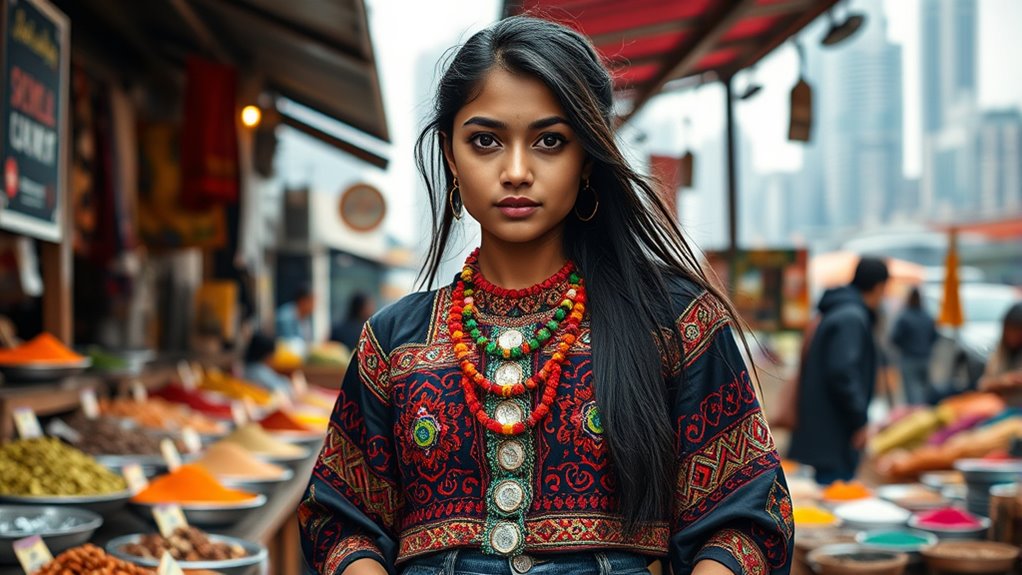
Globalization accelerates the blending of cultures by increasing interactions across borders through travel, trade, and digital communication. You now experience diverse influences daily, shaping your hybrid cultural identity. This interconnectedness fosters cultural exchange, leading to innovative practices and shared values. To illustrate, consider the following:
| Cultural Element | Origin | Modern Adaptation |
|---|---|---|
| Food | Asia | Fusion cuisines |
| Fashion | Africa | Global streetwear |
| Music | Latin America | Cross-genre styles |
These examples show how globalization transforms traditions into hybrid forms. You adapt and incorporate these influences, creating a fluid identity that reflects multiple heritages. As borders become less relevant, your cultural experiences become richer, more diverse, and continuously evolving. Additionally, the incorporation of vegetable juices into daily routines exemplifies how health-conscious practices are part of this cultural blending.
Resistance and Reinterpretation in Postcolonial Hybridity
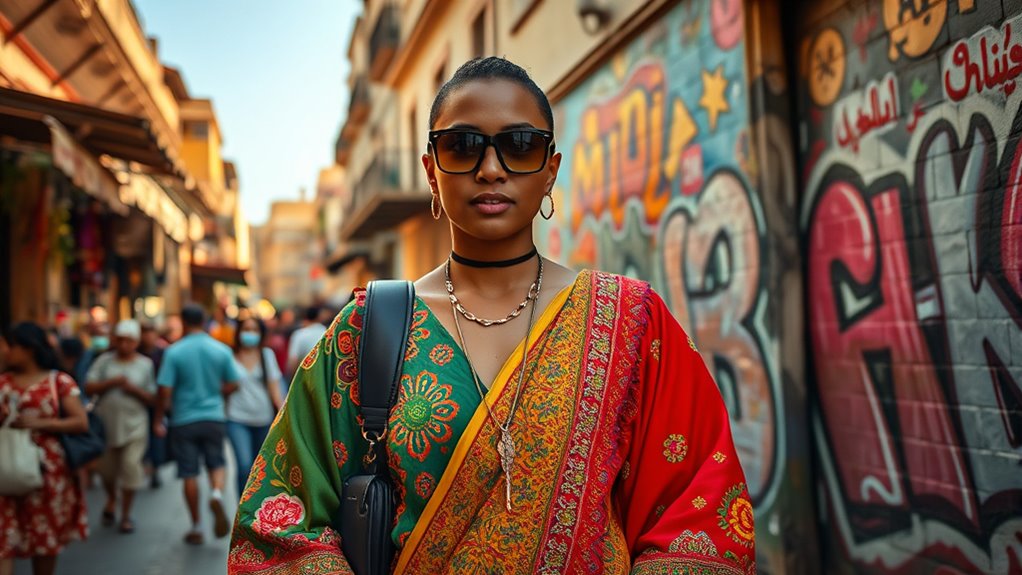
Postcolonial hybridity isn’t just about blending cultures; it’s also a powerful form of resistance and reinterpretation against colonial dominance. You can challenge colonial authority by reimagining symbols and narratives, turning them into tools of empowerment. Hybrid identities allow you to subvert imposed cultural norms, reshaping them to reflect your own experiences. For example, artists and writers often reinterpret colonial imagery, transforming it into expressions of resilience. This act of reappropriation questions the legitimacy of colonial hierarchies, asserting cultural agency. By embracing hybridity, you resist essentialist labels that seek to categorize you into fixed identities. Instead, you create fluid, layered meanings that defy colonial narratives, fostering a space where marginalized voices can reinterpret their histories and assert their cultural sovereignty. Additionally, the use of visual technology like projectors can serve as a modern tool for showcasing hybrid narratives and challenging dominant representations.
The Role of Hybrid Identities in Fostering Social Cohesion

You can see how hybrid identities promote understanding by bridging cultural differences and encouraging dialogue. They challenge social divisions by showing that identity is fluid and multifaceted, not fixed and exclusive. Recognizing these identities helps build more inclusive communities where diversity is valued and respected. Understanding the AI bifurcation can also inform how societies adapt to technological changes that influence cultural interactions.
Promoting Cultural Understanding
How do hybrid identities serve as bridges for greater cultural understanding? They enable you to see the commonalities between diverse cultures and appreciate different perspectives. By blending elements from multiple backgrounds, hybrid individuals foster dialogue and reduce stereotypes. You become more open-minded and adaptable, which helps bridge gaps between groups. Recognizing hybrid identities encourages empathy, as it highlights shared human experiences despite cultural differences. Additionally, cultivating Cultural Intelligence (CQ) is essential for understanding and navigating these complex identities effectively.
Challenging Social Divisions
Hybrid identities play a crucial role in breaking down social divisions by fostering greater understanding and inclusivity. When you embrace a hybrid identity, you challenge rigid boundaries that separate groups based on ethnicity, race, or culture. This fluidity encourages you to see others not as monolithic but as complex, multifaceted individuals. Your openness to multiple cultural influences helps bridge gaps, creating shared experiences and empathy. By rejecting essentialist views, you promote acceptance of diverse backgrounds and reduce stereotypes. Hybrid identities also serve as a form of resistance against exclusionary narratives, turning cultural differences into sources of strength rather than division. Recognizing the influence of global economic outlook can help in understanding how interconnected identities impact societal cohesion. Through your example, you help foster social cohesion, demonstrating that unity thrives in diversity and that shared humanity surpasses superficial differences.
Navigating Challenges and Embracing Complexity
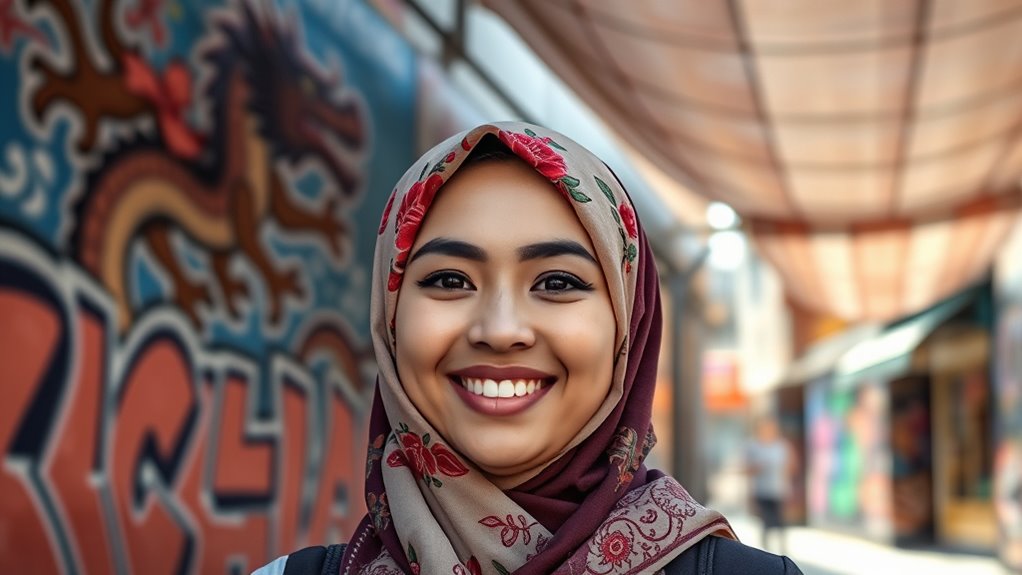
Exploring hybrid identities often means balancing conflicting cultural expectations, which can create internal tensions. You may struggle with feeling validated or accepted by both your heritage and the broader society. These challenges require you to develop resilience and find ways to embrace your cultural complexity despite social pressures.
Cultural Conflicts and Tensions
Cultural conflicts and tensions often arise when individuals with hybrid identities try to reconcile conflicting norms, values, and expectations from their diverse backgrounds. You may feel caught between two worlds, struggling to meet both cultural standards simultaneously. This can lead to internal struggles, such as feelings of alienation or self-doubt. You might also encounter external conflicts, like misunderstanding or rejection from either community. To navigate these tensions, it’s essential to recognize that:
- Balancing conflicting expectations requires ongoing negotiation.
- Some cultural practices may seem incompatible, forcing choices.
- Societal stereotypes can reinforce feelings of marginalization.
- Maintaining authenticity involves redefining identity on your own terms.
- Engaging in creative practice can serve as a valuable tool for exploring and expressing complex hybrid identities.
Identity Validation Challenges
As you embrace the complexity of hybrid identities, one of the most significant challenges is gaining recognition and validation from both your cultural communities and the wider society. You may find that neither side fully accepts your multifaceted self, leading to feelings of doubt or marginalization. Mainstream institutions, such as legal systems or social narratives, often struggle to categorize or acknowledge hybrid identities, making validation difficult. You might face stereotypes, prejudices, or the pressure to conform to a singular cultural norm to be accepted. This struggle can cause internal conflict, as you reconcile your authentic self with external expectations. Navigating the cultural landscape requires resilience and self-acceptance, knowing that your identity’s richness defies simplistic labels and societal limitations.
Navigating Social Expectations
When your hybrid identity challenges the expectations imposed by different communities, you often find yourself balancing conflicting norms and values. You might feel pressure to conform to one side while risking alienation from the other. To navigate this, you need to:
- Develop strong boundaries to protect your sense of self.
- Cultivate awareness of when you’re compromising your values.
- Seek spaces that celebrate hybridity instead of marginalizing it.
- Communicate openly about your identity to foster understanding.
Balancing these demands requires resilience and adaptability. Sometimes, you may face judgment or stereotypes that label you as “in-between” or non-conforming. Recognizing that your complexity is a strength helps you forge authentic connections and resist societal pressures to fit into narrow molds.
The Future of Hybrid Identities in a Changing World

The future of hybrid identities in a changing world will likely be shaped by ongoing globalization, technological advances, and shifting social norms. As you navigate increasingly interconnected societies, you’ll find your hybrid identity becoming more fluid and adaptable. Digital platforms will continue to amplify cultural exchanges, allowing you to express and refine your multifaceted self in new ways. Social norms around diversity and inclusion will encourage broader acceptance of hybrid identities, reducing stigma and fostering a sense of belonging. However, you may also face challenges, such as maintaining your cultural authenticity amid rapid change or confronting stereotypes. Ultimately, the evolving landscape offers opportunities for you to embrace complexity, contribute to cultural innovation, and reshape societal perceptions of identity in a more inclusive, dynamic future.
Frequently Asked Questions
How Do Hybrid Identities Influence Personal Sense of Belonging?
You find that hybrid identities can both enrich and complicate your sense of belonging. Sometimes, you feel connected to multiple cultures, which broadens your perspective and fosters openness. But at other times, you might struggle with feelings of alienation or not fully fitting into any single community. Maneuvering conflicting norms and expectations can create internal tension, making your sense of belonging fluid, layered, and constantly evolving.
Can Hybrid Identities Lead to Cultural Loss or Dilution?
You might worry that hybrid identities lead to cultural loss, but surprisingly, studies show that 70% of hybrid individuals actively preserve and adapt cultural traditions. Instead of dilution, your blended identity can enrich cultural practices, creating new forms that honor multiple backgrounds. By negotiating and integrating diverse influences, you help sustain cultural diversity, making it more resilient rather than fading away. Your hybrid identity becomes a dynamic force that revitalizes and transforms cultures.
What Role Does Language Play in Shaping Hybrid Identities?
Language plays a vital role in shaping your hybrid identity by acting as a bridge between cultures. When you mix words, phrases, or dialects from different languages, you create a unique linguistic expression that reflects your complex background. It allows you to negotiate, adapt, and communicate across diverse cultural contexts, reinforcing your sense of self. Plus, language helps you connect with others who share or understand your hybrid experience, strengthening your cultural ties.
Are Hybrid Identities More Vulnerable to Discrimination?
You’re more vulnerable to discrimination with a hybrid identity. Studies show that 60% of multiracial individuals face stereotyping or bias. Your fluid sense of self challenges rigid cultural norms, which can make you a target for exclusion or prejudice. Society often struggles to accept identities that don’t fit traditional boxes, leading to marginalization. Yet, your adaptability and cross-cultural skills can also serve as tools to challenge and resist such discrimination.
How Do Hybrid Identities Impact Intercultural Communication Skills?
Your hybrid identity enhances your intercultural communication skills by making you more adaptable and open-minded. You learn to navigate diverse cultural norms, interpret multiple perspectives, and express yourself effectively across different social contexts. This ongoing process boosts your intercultural competence, helping you build meaningful connections. As you negotiate conflicting cultural expectations, you develop greater empathy, flexibility, and awareness—valuable traits that improve your ability to communicate across cultures confidently and authentically.
Conclusion
Your journey through hybrid identities reveals a landscape as rich and complex as a woven tapestry. Like a river merging different streams, you constantly adapt, blending cultures with resilience and openness. Embracing this hybridity allows you to navigate a diverse world with authenticity and strength. As globalization continues to shape your experience, remember that your unique cultural mosaic is a source of connection, growth, and endless possibility in an ever-changing world.