

Cross-cultural design with AI helps you localize creative content effectively, making sure your message resonates authentically with diverse audiences. AI accelerates translation, analyzes cultural nuances, and adapts visuals and messaging in real-time. To succeed, you need to balance AI capabilities with human oversight, ensuring cultural sensitivity, emotional engagement, and ethical standards. If you explore further, you’ll discover how combining AI and human insights creates more impactful, culturally relevant content that strengthens global connections.
Key Takeaways
- AI analyzes cultural symbols, colors, and social norms to create visuals that resonate authentically across diverse markets.
- Human oversight ensures AI-generated content aligns with local values, preventing cultural missteps and enhancing relevance.
- Adaptive AI-driven strategies enable real-time customization of creative content to reflect regional festivals, trends, and social cues.
- Visual localization involves researching and testing imagery, motifs, and layout preferences specific to each cultural context.
- Ethical considerations include maintaining transparency, protecting data, and avoiding biases to ensure respectful, culturally sensitive content.
Top picks for "cros cultural design"
Open Amazon search results for this keyword.
As an affiliate, we earn on qualifying purchases.
The Importance of Cultural Sensitivity in Creative Localization

Cultural sensitivity is essential in creative localization because it guarantees your content resonates authentically with diverse audiences. When you understand local customs, values, and social norms, your message feels genuine rather than generic. This awareness helps you craft slogans, visuals, and narratives that align with cultural expectations, avoiding misunderstandings or offenses. By respecting cultural nuances, you build trust and credibility with your target market. It’s not just about language; it’s about capturing the emotional and social context that shapes how people perceive your brand. Incorporating local customs into your content ensures a deeper connection with audiences. When you prioritize cultural sensitivity, your content becomes more relevant, engaging, and effective at connecting with local consumers. This approach increases the likelihood of positive brand perception and long-term loyalty in emerging and established markets alike.
How AI Transforms Multilingual Content Creation
Advancements in AI are revolutionizing how multilingual content is created, making it faster and more accurate than ever before. You can now generate high-quality translations at a scale that was previously impossible, reducing turnaround times considerably. Modern AI tools leverage machine learning and contextual understanding to handle nuances, emotional tones, and cultural references, resulting in more authentic content. These systems can process vast amounts of data, enabling consistent and scalable localization efforts across multiple languages. As a result, you can deliver personalized, culturally relevant messages that resonate with diverse audiences. AI also offers real-time capabilities, allowing you to adapt content on the fly for different markets. This transformation helps streamline workflows, improve quality, and expand your global reach efficiently. Incorporating well-being tips into content localization can also foster better audience engagement by addressing cultural sensitivities and needs.
Balancing Machine Efficiency With Human Cultural Expertise

You need to recognize that while AI boosts efficiency, it still falls short in capturing deep cultural nuances. Human oversight remains essential to guarantee translations resonate authentically and align with local customs. Balancing these elements allows you to optimize your localization strategies for better engagement and success. Incorporating cultural acceptance into your approach ensures that content is both accurate and relatable across different markets.
AI’s Cultural Limitations
While AI has made significant strides in automating translation and localization tasks, it still struggles to fully grasp the subtleties of human culture. You might see AI correctly translate words but miss underlying meanings, customs, or emotional cues. Imagine:
- A cheerful campaign slogan that’s culturally awkward.
- Imagery that unintentionally offends a local audience.
- Idioms or humor lost in translation, causing confusion.
- Cultural symbols misused, damaging brand trust.
These gaps highlight AI’s limitations in understanding context, symbolism, and social nuances. Without human insight, missteps can lead to miscommunication, reduced engagement, or even backlash. To succeed, you need a balance—leveraging AI’s efficiency while relying on human expertise to refine and adapt content for true cultural resonance. Additionally, understanding local cultural nuances is essential to create content that genuinely connects with diverse audiences.
Human Oversight Importance
Although AI streamlines the localization process and enhances efficiency, human oversight remains essential to guarantee content resonates culturally. You need human expertise to interpret subtle nuances, idioms, and cultural references that AI may overlook or misrepresent. This oversight ensures that slogans, imagery, and messaging align with local values and sensitivities, preventing cultural missteps. By combining AI’s speed with human judgment, you can refine translations and adapt creative elements to fit the target audience authentically. Skipping human review risks alienating consumers, damaging brand reputation, and losing sales. Your role involves guiding AI outputs, validating cultural relevance, and making strategic adjustments. Additionally, understanding entertainment and parks schedules and hours helps tailor content to local leisure patterns, making your localization efforts more effective. Ultimately, balancing machine efficiency with human insight creates content that feels genuine, culturally appropriate, and more likely to succeed in diverse markets.
Optimizing Localization Strategies
To optimize localization strategies effectively, organizations must strike a balance between leveraging AI’s speed and scalability and harnessing human cultural expertise. You can do this by focusing on key actions:
- Automate routine translations, freeing up time for complex cultural nuances.
- Incorporate human review, ensuring slogans and imagery resonate locally.
- Use data analytics to identify cultural preferences and tailor content accordingly.
- Maintain ongoing training, empowering your team to manage AI tools and interpret cultural signals.
Picture a workflow where AI swiftly handles large volumes, while your experts fine-tune messaging, visuals, and branding to connect authentically with diverse audiences. This synergy maximizes efficiency without sacrificing cultural relevance and engagement.
Enhancing Emotional Resonance Through AI-Driven Adaptation
You can leverage AI-driven adaptation to better recognize emotional contexts and integrate cultural nuances into your content. By tailoring messages to resonate emotionally with diverse audiences, you create a stronger connection and boost engagement. Implementing adaptive strategies guarantees your content feels authentic and meaningful across different cultural landscapes. Incorporating privacy policy practices ensures you respect user data and build trust with your audience.
Emotional Context Recognition
Harnessing emotional context recognition empowers AI to create more authentic and culturally resonant content. You can imagine AI that senses subtle cues like a smile, tone, or hesitation, then adjusts messaging accordingly. For example:
- Detecting genuine excitement in a customer’s voice to tailor enthusiastic responses.
- Recognizing hesitation in a language snippet, prompting clarification prompts.
- Interpreting cultural expressions of humor or sadness to adapt humor or empathetic tones.
- Sensing emotional shifts in visual cues, such as facial expressions, to refine content delivery.
- Implementing mindful decluttering strategies to ensure the content remains clear and organized, enhancing user understanding.
This allows your content to resonate on a deeper level, aligning with audience feelings and cultural norms. By understanding emotional nuances, AI helps craft content that feels genuine, engaging, and culturally sensitive—building trust and connection across diverse markets.
Cultural Nuance Integration
Integrating cultural nuances into AI-driven content adaptation enhances emotional resonance by ensuring messages align with local values, expressions, and social cues. When AI captures these subtleties, your content feels more authentic and relatable, fostering trust and engagement. To do this effectively, you need to understand regional customs, idioms, and humor, which AI models can learn and adapt to over time. Here’s a quick look at some cultural elements to contemplate: | Cultural Element | Example | Impact on Content | |——————-|———|——————-| | Language idioms | “Break a leg” (English) | Adds local flavor | | Social cues | Formal vs. informal speech | Builds rapport | | Values | Community vs. individual | Enhances relevance | | Humor | Puns, jokes | Boosts emotional connection | Additionally, understanding concepts like gear shifting in cycling can help tailor sports content to resonate with local enthusiasts.
Adaptive Content Strategies
Adaptive content strategies leverage AI-driven techniques to craft messages that resonate deeply with diverse audiences. You can tailor content in real-time, ensuring it aligns with cultural nuances and emotional triggers. Imagine:
- A website dynamically changing colors and imagery to reflect local festivals.
- Personalized messages that evoke specific feelings, like trust or excitement.
- Video content automatically adjusting tone and language to suit regional preferences.
- Product recommendations evolving based on user behavior and cultural context.
- The integration of localization techniques ensures that content remains relevant and engaging across different cultural landscapes.
Strategies for Localizing Visual and Design Elements

To effectively localize visual and design elements, you must prioritize understanding the cultural context behind imagery, colors, and layout preferences. Start by researching symbols and visuals that resonate positively within your target market, avoiding imagery that could be misinterpreted or offensive. Colors carry different meanings across cultures; for example, red signifies luck in China but can symbolize danger elsewhere. Adjust layouts and design hierarchies to align with local aesthetic sensibilities, such as reading direction and visual flow. Use culturally relevant motifs and styles to enhance authenticity. Incorporate local idioms or cultural symbols subtly to foster connection without overloading the design. Consistently test and gather feedback to refine your visuals, ensuring they resonate and engage effectively within each cultural context.
Leveraging AI for Dynamic and Personalized Content Delivery
AI is transforming content delivery by enabling brands to serve highly personalized experiences in real time. You can imagine:
- A website dynamically adjusting its language, images, and offers based on your location and browsing habits.
- Personalized product recommendations appearing instantly, matching your cultural preferences and past behavior.
- Video ads that adapt messaging, tone, and visuals to resonate with your cultural values.
- Real-time chatbots providing tailored support, understanding local nuances and idioms.
- Incorporating glamping insights can help create immersive content that appeals to diverse audiences seeking unique travel experiences.
With AI, you don’t just deliver content; you craft an experience that feels uniquely yours. This approach increases engagement, boosts conversion rates, and deepens trust. You create relevance, making consumers feel understood and valued every step of the way.
Ensuring Cultural Relevance in Multimedia Localization
As multimedia content becomes central to global marketing strategies, guaranteeing cultural relevance in localization efforts is more important than ever. You must adapt visuals, language, and tone to resonate with local audiences. AI tools assist in identifying cultural nuances, but human oversight guarantees authenticity. Consider how different regions interpret imagery, humor, and gestures to avoid missteps. To deepen your understanding, review this table:
| Aspect | Cultural Consideration | AI Role |
|---|---|---|
| Visuals | Symbols, colors, and gestures vary | Analyzes cultural appropriateness |
| Language Tone | Formal vs. informal preferences | Adjusts tone based on context |
| Humor & Idioms | Local humor may not translate well | Detects and suggests culturally relevant equivalents |
| Cultural Norms | Respect for traditions and taboos | Flag potential issues for review |
Balancing AI insights with human expertise guarantees content that feels authentic and relevant to each audience.
Addressing Ethical and Privacy Concerns in AI-Powered Localization
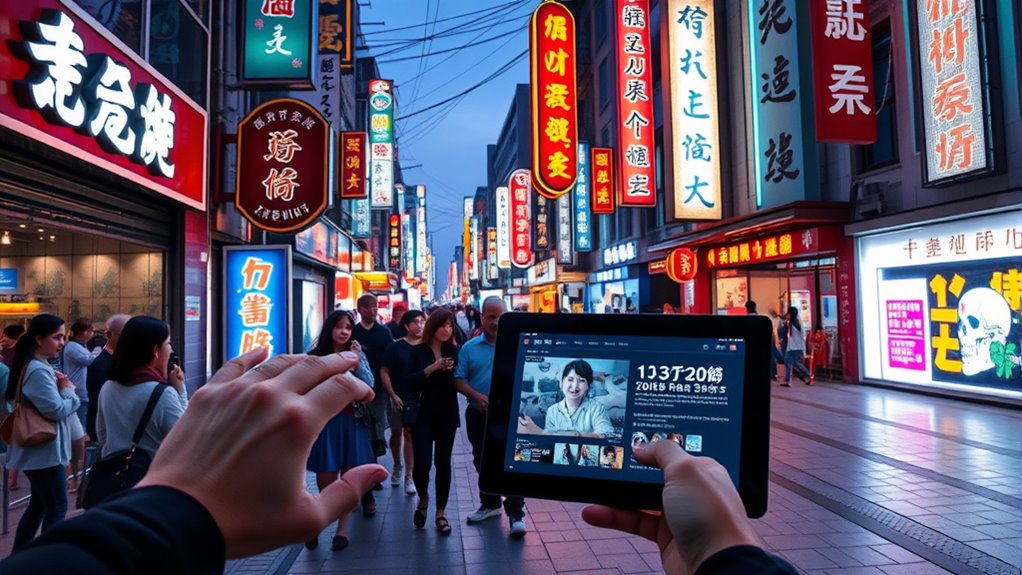
Implementing AI-powered localization brings significant ethical and privacy challenges that you can’t afford to overlook. You must guarantee data protection, transparency, and fairness throughout your processes. Visualize these steps:
Prioritize data protection, transparency, and fairness to ethically implement AI-powered localization effectively.
- Imagine securing sensitive customer data like a vault, preventing breaches and unauthorized access.
- Think of transparency as a clear window, showing users how their data is collected and used.
- Picture fairness as a balanced scale, ensuring algorithms don’t reinforce biases.
- Envision ongoing audits as a health check, maintaining compliance with evolving privacy laws.
Building Skills for a Collaborative AI and Human Creative Workflow

To effectively harness the power of AI in localization, your team needs to develop new skills that foster seamless collaboration between human creativity and machine efficiency. You must learn to operate AI tools, interpret data insights, and provide cultural context for better content adaptation. Upskilling enables you to manage AI as a creative partner, not a replacement. Focus on strategic thinking, cultural consulting, and automation management to optimize workflows. Consider this skill set:
| Skill Area | Key Competency | Benefit |
|---|---|---|
| AI Tool Proficiency | Mastering and configuring AI systems | Accelerates project timelines |
| Data Analytics | Interpreting localization data | Enhances accuracy and cultural fit |
| Cultural Consulting | Providing local insights | Ensures cultural resonance |
| Project Automation | Streamlining repetitive tasks | Boosts efficiency and consistency |
| Creative Oversight | Maintaining brand voice and tone | Preserves authenticity in localization |
Future Trends in Cross-Cultural Design and AI Innovation

You’ll see AI-driven cultural insights increasingly shape how designs resonate across diverse audiences, enabling more precise localization. Adaptive visual strategies will become essential, allowing brands to tailor imagery and branding elements dynamically based on cultural context. As AI continues to evolve, your ability to leverage these innovations will determine how effectively you connect with global consumers.
AI-Driven Cultural Insights
As AI continues to evolve, it’s revealing new possibilities for gaining deeper cultural insights that drive more authentic cross-cultural design. You can now harness AI to analyze vast data sources, such as social media, consumer feedback, and local trends, to understand cultural nuances better. Imagine:
- Detecting regional humor, idioms, and preferences from millions of conversations.
- Identifying shifts in cultural values before they become mainstream.
- Mapping cultural symbols and meanings to ensure relevance.
- Predicting future trends by analyzing consumer behavior patterns across regions.
These insights empower you to create content that resonates authentically with local audiences. By leveraging AI-driven cultural intelligence, you ensure your designs aren’t just translated—they’re culturally aligned, meaningful, and impactful.
Adaptive Visual Strategies
Advancements in AI are transforming how brands approach visual communication across cultures, enabling more dynamic and personalized imagery. You can now leverage AI to automatically adapt visuals to cultural preferences, ensuring images resonate locally. AI analyzes regional color schemes, symbols, and styles, allowing you to tailor visuals for each audience without manual redesigns. Real-time adjustments enable your campaigns to stay culturally relevant, boosting engagement. For example, AI can modify product imagery to reflect local seasons or festivals, making content more appealing. Additionally, adaptive visual strategies help optimize layout, typography, and imagery based on user behavior and cultural cues. This technology empowers you to create culturally sensitive, compelling visuals at scale, enhancing brand relevance and fostering stronger connections with diverse audiences.
Frequently Asked Questions
How Does AI Handle Cultural Nuances That Vary Across Different Regions?
AI handles cultural nuances by leveraging advanced machine learning models trained on diverse regional data, allowing it to recognize context, emotions, and cultural references. It processes large volumes quickly, adapting content to local customs and language subtleties. However, to guarantee accuracy and cultural resonance, you should combine AI’s capabilities with human oversight, guiding the AI to capture the authentic nuances that truly resonate with each target audience.
What Are Best Practices for Integrating Human Insights With Ai-Generated Content?
Think of AI as a skilled musician, but it needs a human conductor to truly hit the right notes. You should blend AI-generated content with human insights by reviewing and tweaking for cultural resonance, ensuring slogans and visuals align with local customs. Engage local experts, gather feedback, and fine-tune content iteratively. This harmony between machine precision and human nuance creates authentic, compelling content that truly speaks to your audience.
How Can Companies Ensure AI Localization Aligns With Local Legal and Ethical Standards?
You can guarantee AI localization aligns with local legal and ethical standards by staying informed about regional regulations, like data privacy laws, and implementing strict compliance protocols. Regularly audit AI outputs for cultural and legal accuracy, involve local experts for oversight, and prioritize transparency about AI use. Training your team on regional norms and ethical considerations also helps prevent violations, building trust and safeguarding your brand’s reputation across diverse markets.
What Skills Should Creative Teams Develop for Effective Ai-Assisted Localization?
You should develop skills in AI tool proficiency, data analytics, and cultural consulting to thrive in AI-assisted localization. Notably, companies leveraging localized personalization see up to 15% higher conversion rates, highlighting its importance. By mastering these skills, you can better manage AI tools, ensure cultural resonance, and optimize creative content for diverse markets. This combination boosts engagement, improves accuracy, and keeps your team ahead in the evolving landscape of global content localization.
How Will Evolving AI Technologies Influence Future Cross-Cultural Design Strategies?
Evolving AI technologies will transform your cross-cultural design strategies by enabling more personalized, culturally resonant content at scale. You’ll leverage AI to adapt visuals, language, and messaging dynamically, ensuring relevance in diverse markets. While AI handles routine localization tasks, your role shifts toward strategic oversight, cultural insights, and creative innovation. Staying updated on AI advancements and developing interdisciplinary skills will be vital for creating authentic, impactful designs that resonate globally.
Conclusion
So, as you immerse yourself in AI-powered localization, remember: while machines can translate and adapt, they’ll never truly grasp every cultural nuance — or avoid the occasional faux pas. Embrace the irony that your most human skill is knowing when to step back and trust your instincts. Ultimately, blending tech with cultural sensitivity isn’t just smart — it’s the secret sauce for authentic global connection, even if AI sometimes forgets to read the room.