
🔍 Read the full analysis: AI-Driven Strategies For Plumbing & HVAC Coordination Without Surprises on ThorstenMeyerAI.com

Get the little things that make your day delivered free with Prime
- Fast, free delivery on millions of items
- Prime Video, Amazon Music and more included
- Member-only deals all year
TL;DR
AI-powered platforms now enable precise coordination of plumbing and HVAC installations, minimizing surprises and costly errors. This development is transforming building project workflows, with confirmed benefits in efficiency and accuracy, as detailed in the original analysis.
Construction firms are increasingly deploying AI-driven tools to coordinate plumbing and HVAC work more effectively, reducing errors and unplanned surprises on site. These advancements, confirmed by recent case studies, are transforming traditional workflows and improving project margins.
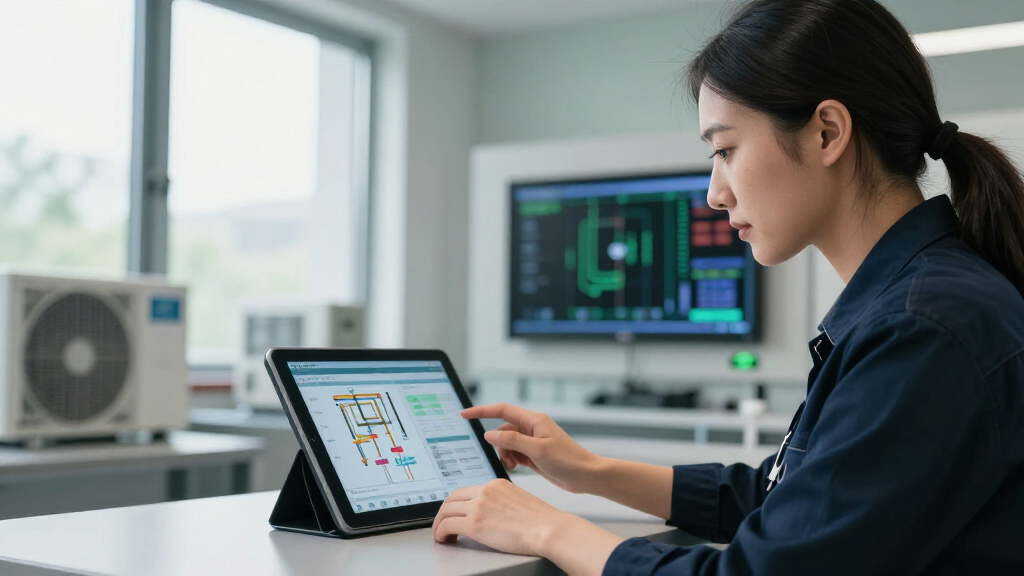
Recent developments demonstrate that AI platforms, such as Gewerkton, are enabling building services companies to automate and optimize the planning and execution of plumbing and HVAC installations. By integrating digital documentation, real-time coordination, and predictive analytics, firms are now able to identify potential conflicts before construction begins.
One key feature is the use of AI-assisted modeling that aligns shafts and routing paths vertically across floors, ensuring that breakthroughs and pipe routes match precisely with the building’s structural elements. This has led to a reduction in uncoordinated breakthroughs from over 40 per project to fewer than five, according to internal reports from companies adopting the technology.
Furthermore, the platform’s photographic documentation system allows for a comprehensive image archive of installed components, enabling leak detection and repairs to be conducted within minutes rather than days. This capability has significantly shortened leak localization times, improving maintenance and operational efficiency post-handover.
Experts highlight that the integration of AI into construction workflows not only reduces errors but also enhances communication among trades, project managers, and clients. The structured data generated during the process supports ongoing maintenance, warranty management, and compliance with regional standards such as GAEB and REB. For more insights, see the detailed report.
Impact of AI on Construction Workflow Efficiency
The adoption of AI for plumbing and HVAC coordination marks a substantial shift in construction project management. It directly addresses longstanding issues related to miscommunication, unplanned breakthroughs, and costly rework. As a result, firms can improve margins, reduce project timelines, and enhance quality control. This technology also supports better data management for maintenance and warranty services, contributing to longer-term operational savings.
For clients and operators, these improvements translate into more predictable project outcomes and reduced disruption during and after construction. Industry analysts suggest that widespread adoption of AI-driven coordination could set new standards for building services management globally, especially in complex or high-rise developments.
AI-powered plumbing and HVAC coordination software
As an affiliate, we earn on qualifying purchases.
As an affiliate, we earn on qualifying purchases.
Background of AI in Construction Coordination
Traditional coordination of plumbing and HVAC systems relies heavily on manual planning, paper drawings, and on-site adjustments, which often lead to conflicts, delays, and increased costs. Over recent years, digital tools and Building Information Modeling (BIM) have improved planning accuracy, but challenges persisted in real-time execution and change management.
The recent integration of AI platforms, such as Gewerkton, represents a significant evolution, enabling dynamic, data-driven decision-making. These tools leverage machine learning algorithms to analyze plans, detect clashes, and suggest optimal routing before physical work begins. Early adopters report notable improvements in project efficiency and error reduction, although full industry-wide impact remains in progress.
While these developments are promising, questions about scalability, integration with existing systems, and long-term ROI are still being explored by industry stakeholders.
building information modeling (BIM) tools for construction
As an affiliate, we earn on qualifying purchases.
As an affiliate, we earn on qualifying purchases.
Unresolved Questions About Widespread Adoption
While initial results are promising, it remains unclear how quickly and broadly AI-driven coordination will be adopted across the global construction industry. Concerns about integration costs, training requirements, and compatibility with existing workflows are still being addressed. Additionally, long-term data on ROI and operational benefits are limited, and some industry players remain cautious about relying solely on AI for critical decision-making.
leak detection camera for plumbing
As an affiliate, we earn on qualifying purchases.
As an affiliate, we earn on qualifying purchases.
Next Steps for AI in Construction Coordination
Industry stakeholders plan to expand pilot projects and conduct longitudinal studies to evaluate the long-term benefits of AI-based coordination. Developers of platforms like Gewerkton are working on integrating more advanced predictive analytics and broader standard compliance tools. As adoption increases, further research will clarify the full impact on project timelines, costs, and quality assurance. Regulatory and training frameworks are also expected to evolve to support wider implementation.
construction project management software
As an affiliate, we earn on qualifying purchases.
As an affiliate, we earn on qualifying purchases.
Key Questions
How does AI improve plumbing and HVAC coordination?
AI analyzes plans, detects clashes, and suggests optimal routing, reducing errors and unplanned breakthroughs before construction begins.
What are the main benefits of AI-driven coordination?
Key benefits include fewer on-site errors, shorter project timelines, faster leak detection, and better data management for maintenance and warranties.
Are there any risks or limitations to using AI in construction?
Potential challenges include integration costs, training needs, and reliance on data quality. Long-term ROI is still being studied.
Will AI replace traditional planning methods?
AI is expected to complement existing workflows, enhancing accuracy and efficiency rather than replacing human oversight entirely.
When might AI become standard in building services projects?
Broader adoption depends on ongoing pilot successes, industry acceptance, and regulatory developments, with wider use anticipated within the next few years.
Source: ThorstenMeyerAI.com
Halloween Picks
halloween
As an affiliate, we earn on qualifying purchases.