
📊 Full opportunity report: Corvus ISR's AI Achieves 42% Fewer Tracker ID Switches In Testing Phase on ThorstenMeyerAI.com — validation score, market gap, and execution plan.
TL;DR
Corvus ISR’s new AI tracking model achieved a 42% reduction in tracker ID switches during testing on synthetic scenes. The development enhances real-time multi-object tracking accuracy, with results publicly reproducible.
Corvus ISR’s latest AI tracking model has achieved a 42% reduction in tracker ID switches during a controlled synthetic benchmark, marking a significant improvement over previous versions. This development is confirmed by published benchmark results, and it underscores progress in multi-object tracking technology, which is vital for defense, surveillance, and autonomous systems.
The benchmark, conducted using a synthetic scene with perfect ground truth, compared the performance of two models: the baseline ‘greedy nearest-neighbour’ and the new confirmed-track auction model. In a dense scenario with 150 movers at 2 frames per second, ID switches per minute dropped from 2,042 to 1,183, representing a 42.1% reduction. Similarly, in a more crowded scene with 400 movers, switches decreased from 14,032 to 8,040, a 42.7% drop.
These results were confirmed across multiple stress tests, including lower frame rates, occlusion scenarios, and degraded contrast conditions, with reductions ranging from 16.6% to 18.6%. The benchmark used a stricter metric than standard MOT challenge measures, counting every change in track identity, including re-acquisitions and fragmentations. The tracker maintains real-time performance, averaging about 1.2 milliseconds per sensor tick, with a maximum of 5 milliseconds, well within typical operational thresholds.
Thorsten Meyer, who oversees the benchmark, emphasized that these results are publicly reproducible and that the published data is intended for measurement rather than marketing. The new model was independently reviewed and built against a formal acceptance contract, ensuring transparency and accountability.
Impact of Reduced ID Switches on Tracking Accuracy
The 42% reduction in identity switches signifies a substantial step forward in multi-object tracking technology, particularly in synthetic environments designed for benchmarking. Fewer ID switches improve the reliability of tracking systems in real-world applications such as surveillance, autonomous navigation, and defense operations, where maintaining consistent object identities is critical. The ability to achieve these improvements in real-time, with performance well within operational thresholds, suggests that this AI model could soon be integrated into practical systems, enhancing their accuracy and robustness.

Crienten Auto Face Tracking Tripod, 360° AI Face Tracking Phone Holder with Remote, No App,Smart Phone Stand for iPhone & Android, Rechargeable Tripod for Video Recording, Live Streaming, TikTok, Vlog
【360°Real-time Smart Face Tracking Shooting】This face tracking phone holder uses a real-time AI computing system that can automatically…
As an affiliate, we earn on qualifying purchases.
As an affiliate, we earn on qualifying purchases.
Advancements in Synthetic Benchmarking and Tracking Models
Corvus ISR’s benchmarking approach involves synthetic scenes generated with perfect ground truth, allowing precise measurement of tracking performance. The current benchmark compares a simple baseline model with the new AI-enhanced model, demonstrating significant improvements. The ‘confirmed-track auction’ model incorporates advanced features such as track confirmation, multi-tier association, velocity gating, and confidence decay, which collectively contribute to the reduction in identity switches. These results build on prior research in multi-object tracking, where synthetic data provides a controlled environment for testing and validation.
The benchmark is publicly accessible, allowing anyone to reproduce the results by running the ‘Run benchmark’ function. This transparency aims to foster industry-wide progress and accountability, setting a new standard for how tracking performance is measured and reported.
“The 42% reduction in identity switches is a notable improvement, especially considering the strictness of our benchmarking metric.”
— an anonymous researcher
![[300°Pan 90°Tilt+Human Tracking] Hiseeu 4K PoE PTZ Camera System,NVR Security Camera System w/6Pcs 5MP Wired Security Camera Outdoor&Indoor,2-Way Audio,Waterproof,7/24 Record for Home Surveillance](https://m.media-amazon.com/images/I/41tu7EQqkVL._SL500_.jpg)
[300°Pan 90°Tilt+Human Tracking] Hiseeu 4K PoE PTZ Camera System,NVR Security Camera System w/6Pcs 5MP Wired Security Camera Outdoor&Indoor,2-Way Audio,Waterproof,7/24 Record for Home Surveillance
【300 Degree Pan /90 Degree Tilt & Auto Human Tracking】 Panl 300 Degree Tilt 90 Degree Captures every…
As an affiliate, we earn on qualifying purchases.
As an affiliate, we earn on qualifying purchases.
Remaining Questions About Real-World Application
While the benchmark results are promising, it is not yet clear how the AI model will perform in real-world scenarios where data is noisier, and ground truth is unavailable. The synthetic environment provides perfect ground truth, which simplifies the measurement of identity switches. The transition from synthetic to operational environments remains untested, and further validation is needed to confirm real-world robustness.

Ring Sensors: Car Alarm – Easy installation, vehicle location tracking, on Amazon Sidewalk, no monthly subscription
Real-time alerts — Receive notifications for impacts, door openings, and other disturbance alerts so you can act fast.
As an affiliate, we earn on qualifying purchases.
As an affiliate, we earn on qualifying purchases.
Next Steps for Validation and Deployment
Corvus ISR plans to release further testing data, including real-world datasets, to evaluate the model’s robustness outside synthetic environments. Additionally, developers aim to refine the AI to handle more complex scenarios involving clutter, occlusion, and sensor noise. Industry partners and defense agencies are expected to monitor these developments closely, with potential integration into operational systems pending successful validation.
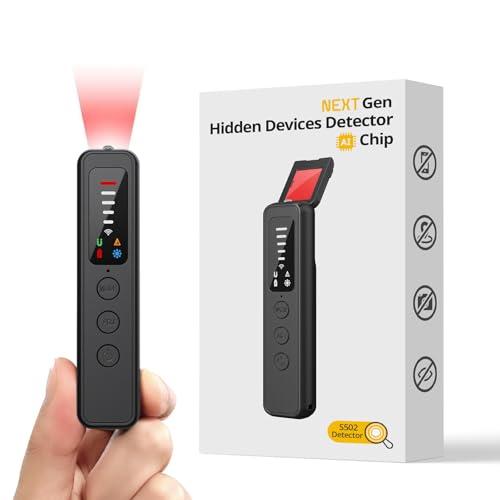
AI Hidden Camera Detector, Spy Camera Detectors – for Hotels, Travel, Home & Office: Portable RF Signal Scanner with 5-Level Sensitivity, AI-Powered Anti-Spy Device, GPS Tracker & Bug Detector
One-Touch Simplicity, Real-Time Alerts: Activate with a single press, sweep the space, and receive instant audible alerts plus…
As an affiliate, we earn on qualifying purchases.
As an affiliate, we earn on qualifying purchases.
Key Questions
What does a 42% reduction in ID switches mean for tracking systems?
A 42% reduction indicates that the AI model is significantly better at maintaining consistent identities of objects across frames, which improves tracking reliability and accuracy.
Are these results applicable to real-world systems?
The results are from synthetic benchmarks with perfect ground truth. Real-world performance remains to be validated, but the improvements suggest promising potential.
What features does the new AI model include?
The ‘confirmed-track auction’ model incorporates track confirmation, multi-tier association, velocity gating, noise-scaled reservation, and confidence decay to enhance tracking stability.
When will this AI model be available for operational use?
There is no official timeline yet. Further testing on real-world data is planned before considering deployment in operational systems.
How can I verify these benchmark results myself?
Corvus ISR provides a public demo where users can run the ‘Run benchmark’ function to reproduce the results using the same synthetic scene and parameters.
Source: ThorstenMeyerAI.com