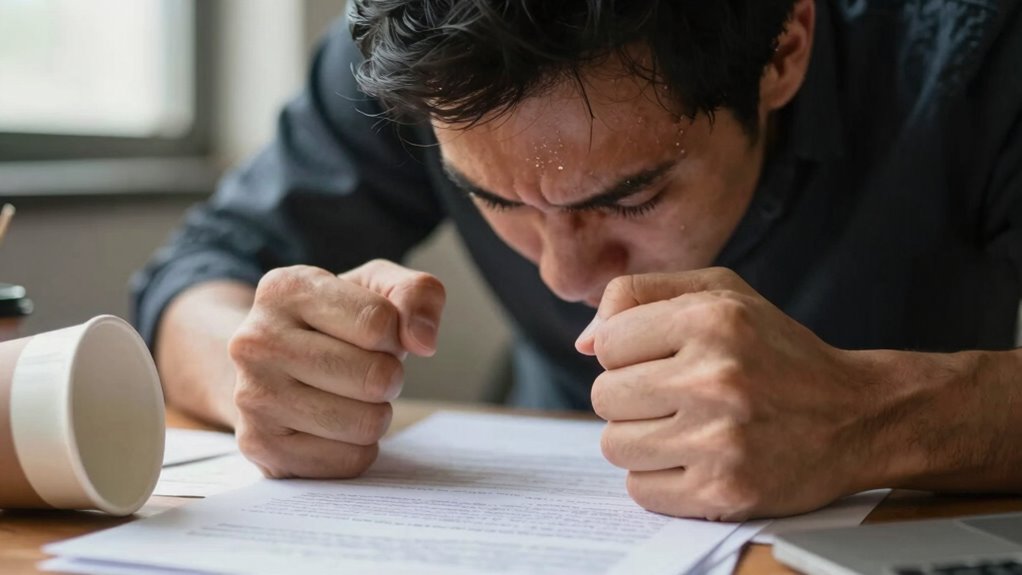

To notice stress early, pay attention to physical signs like shallow or rapid breathing, muscle tension, or a faster heartbeat. Practice mindfulness through deep breathing, grounding exercises, and body awareness to catch these cues before they escalate. Tune into sensations like headaches, stomach discomfort, or jitteriness to identify stress signals promptly. Being mindful of your environment also helps you recognize overloads that can trigger stress. Keep exploring these techniques to master managing stress before it takes over.
Key Takeaways
- Pay attention to early physical signs like shallow breathing, muscle tension, or increased heart rate.
- Practice regular body awareness exercises to recognize subtle tension or discomfort.
- Use mindfulness techniques such as deep breathing and grounding to detect stress signals early.
- Notice changes in mood or physical sensations like jitters or stomach discomfort for early warning.
- Minimize environmental stressors and create awareness of external factors influencing your stress levels.
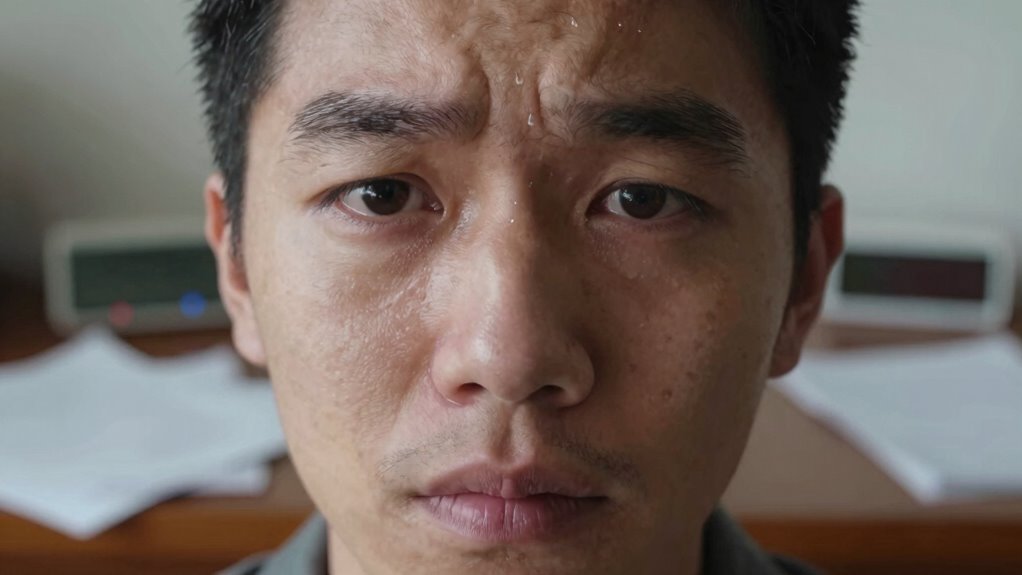
Stress often sneaks up on you before you even realize it’s taking hold. One moment, things feel manageable, and the next, you’re overwhelmed. That’s why catching it early is so important. To do that, you need to become more aware of your body and mind—especially the physical warning signs that signal stress is building. When you tune into these signs, you can act before stress takes over your day.
Start by paying attention to your breathing. Shallow or rapid breaths are common physical warning signs of stress creeping in. If you notice yourself holding your breath or breathing irregularly, it’s a good cue to pause and implement some mindfulness techniques. These might include deep breathing exercises, where you slowly inhale through your nose, hold for a few seconds, and then exhale through your mouth. Doing this repeatedly helps calm your nervous system and makes you more aware of your emotional state. Mindfulness techniques are powerful tools for recognizing early stress signals because they anchor you to the present moment and foster awareness of your body’s responses.
Next, observe your muscle tension. Tension headaches, clenched fists, or tight shoulders can all be signs that you’re experiencing increased stress. If you catch yourself tensing up, it’s a signal to slow down and consciously relax those muscles. Stretching or gentle movement can help release this built-up tension and bring your awareness back to your body. Incorporating body awareness exercises into your routine can enhance your ability to detect these signs sooner. Being mindful of your physical state can also help you identify early stress indicators more quickly. Recognizing these physical cues early can make a significant difference in preventing the escalation of stress, especially considering that physical signs often precede emotional overwhelm.
Your heart rate can also be an early indicator. If you notice your heartbeat feels faster or irregular, it might be a physical warning sign that stress is mounting. While you can’t always control your heart’s rhythm, you can use mindfulness techniques like focused breathing or grounding exercises to help regulate it. For example, grounding yourself by feeling the texture of an object or listening carefully to surrounding sounds can bring your focus away from stress triggers and back into the present.
Pay attention to other physical signs as well, like stomach discomfort, headaches, or feeling jittery. These subtle cues often appear before your emotional state becomes overwhelming. Becoming familiar with these signs allows you to implement calming strategies early, such as taking a short walk, practicing deep breathing, or engaging in a quick mindfulness meditation. Additionally, understanding the importance of contrast ratio in visual clarity can help you pick environments that reduce sensory overload, supporting your overall stress management.
In essence, recognizing stress early depends on your awareness. By tuning into your physical warning signs and practicing mindfulness techniques regularly, you can catch stress before it escalates. It’s about creating habits of awareness so that you’re quicker to respond and better equipped to manage stress in real-time. The more attentive you are to these signals, the more control you’ll have over your emotional and physical well-being. Being aware of microplastics in dust and other environmental factors can also impact your overall health, making it easier to stay calm and resilient in everyday life.

Breathing Exercise Device for Lungs, Lung Exerciser Device – 5000ml Volumetric Deep Breathing Trainer with Flow Rate Indicator for Respiratory Health & Recovery
- Large Capacity: 5000ml for deep breathing training
- Flow Rate Indicator: Guides controlled inhalation
- Progress Tracking: Clear markings for monitoring
As an affiliate, we earn on qualifying purchases.
As an affiliate, we earn on qualifying purchases.
Frequently Asked Questions
Can Stress Symptoms Vary Between Individuals?
Yes, stress symptoms can vary between individuals because personality traits influence how you experience and show stress, like anxiety or irritability. Cultural differences also play a role, shaping how you express stress through behaviors or emotions. You might notice physical signs, such as headaches, or emotional signs, like mood swings, but these responses differ from person to person, making it essential to recognize your unique stress signals early.
How Early Can Physical Signs of Stress Appear?
Physical signs of stress can appear surprisingly early, sometimes within minutes of feeling overwhelmed. You might notice rapid heartbeat, tense muscles, or headaches. To catch these signs early, practice mindfulness techniques like deep breathing or body scans regularly. Incorporating lifestyle adjustments such as regular exercise, balanced diet, and adequate sleep helps you stay alert to stress cues before they escalate, enabling prompt action and reducing long-term health impacts.
Are There Specific Times When Stress Is More Noticeable?
Stress is more noticeable during high-pressure situations or when you’re juggling multiple demands. You’ll likely see stress indicators like tense muscles, rapid heartbeat, or shallow breathing, along with emotional cues such as irritability, anxiety, or mood swings. Pay attention to these signs especially during deadlines, conflicts, or overwhelming days, because they often reveal underlying stress before it fully escalates. Recognizing these moments helps you address stress early.
Can Stress Affect Mental Health Before Physical Symptoms Show?
Yes, stress can affect your mental health before physical symptoms appear. When you practice mindfulness techniques and develop emotional awareness, you become more attuned to early signs of stress, such as irritability or difficulty concentrating. These mental cues often signal underlying stress that hasn’t yet manifested physically. By recognizing these subtle changes early, you can address stress proactively, preventing it from escalating and impacting your overall mental well-being.
What Role Does Sleep Play in Stress Detection?
Sleep quality plays a vital role in stress detection because poor sleep can signal rising stress levels. When you monitor your sleep, you become more aware of changes like difficulty falling asleep or waking up feeling unrefreshed, which are signs of stress. By paying attention to your sleep patterns, you can catch early stress indicators and address them before they escalate, helping you maintain better mental health and overall well-being.

Excedrin Tension Headache Relief Caplets, 100 Count
- Package Quantity: 100 caplets
- Aspirin-Free: Aids tension headache relief
- Pain Relief: Targets head, neck, shoulder pain
As an affiliate, we earn on qualifying purchases.
As an affiliate, we earn on qualifying purchases.
Conclusion
If you ignore those tiny signs of stress, you might end up turning into a stress monster, growling at everyone and forgetting how to breathe! By catching the early warning signals—like tight shoulders or racing thoughts—you hold the power to stop stress in its tracks before it takes over your life completely. Think of yourself as a stress superhero, ready to zap those tiny sparks before they flare into a wild, uncontrollable wildfire. Stay alert, stay unstoppable!

Zeacool Fitness Tracker with 24/7 Heart Rate, Blood Oxygen Blood Pressure Sleep Monitor, Activity Trackers 5 ATM Waterproof,Step Calorie Counter Pedometer Health Smart Watch for Women Men (Black)
- Heart Rate Monitoring: 24/7 real-time heart rate tracking
- Blood Oxygen & Pressure: Monitor blood oxygen and blood pressure
- Sleep & Temperature Tracking: Track sleep patterns and body temperature
As an affiliate, we earn on qualifying purchases.
As an affiliate, we earn on qualifying purchases.

Retrospec Sedona Meditation Cushion, Buckwheat Pillow, Meditation Pillow
- Natural Buckwheat Hull Filling: Supports spine and hips during meditation
- Adjustable Firmness: Unzip to add or remove hulls
- Eco-Friendly Cotton Cover: Machine washable and durable
As an affiliate, we earn on qualifying purchases.
As an affiliate, we earn on qualifying purchases.