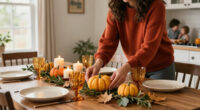
Set a Thanksgiving table that feels festive, leaves room for dinner, and works for the people who will use it. This beginner-friendly guide walks you through choosing a simple color palette, arranging a safe centerpiece, and setting each place. Allow 1-2 hours, including time to gather materials and make adjustments before guests arrive.

Get the little things that make your day delivered free with Prime
- Fast, free delivery on millions of items
- Prime Video, Amazon Music and more included
- Member-only deals all year

BAVIFY 13-Inch Round Woven Water Hyacinth Placemats, Set of 10
- ✔ Quantity: 10 placemats
- ✔ Shape: Round
- ✔ Diameter: 13 inches

Terracotta Cotton Cheesecloth Table Runner, 35 x 120 Inches
- ✔ Brand: Keketoarrange
- ✔ Material: Cotton
- ✔ Color: Terracotta

30-Piece Artificial Fall Pumpkins and Harvest Decorations Set
- ✔ Brand: Keeplush
- ✔ Model: XY-LHNG-30
- ✔ Pieces: 30
Difficulty: Beginner | Time: 1-2 hours
What You’ll Need
Tools & Materials:
- Measuring tape or ruler
- Scissors
- Tablecloth, runner, or placemats
- Plates, bowls, flatware, glasses, and napkins for each guest
- A low centerpiece, such as seasonal produce, flowers, or greenery
- Optional candles in stable holders
Knowledge:
- Basic table setting
- No special decorating experience required
Count guests before setting the table, and check which dishes will be served family-style. Use clean, food-safe items. If children, pets, or a crowded table make open flames impractical, choose battery-operated candles or skip candles.
BAVIFY 13-Inch Round Woven Water Hyacinth Placemats, Set of 10
When we want Thanksgiving decor to feel organized around each guest, the BAVIFY set of ten is the most complete starting point in this lineup. Each 13-inch round mat creates a distinct natural-texture zone beneath a plate, so the table gets a repeated visual rhythm instead of relying on one centerpiece to carry the seasonal look. Compared with the Keketoarrange runner, these placemats distribute texture across the table rather than creating one long focal line. They can also serve as chargers, hot pads, or decorative accents, giving them more roles than the Keeplush foam pieces, which are best used as display details. The tradeoff is care: these are hand-wash-only, while the cotton runner can go in a machine. Their natural water hyacinth look also makes them less suited to shoppers seeking a vivid Thanksgiving color statement.
Pros:
- Ten matching mats make it easier to repeat a consistent look across the table.
- Natural water hyacinth adds woven texture beneath individual settings.
- 13-inch round shape is specified to fit most plates.
- Can also be used as chargers, hot pads, or decorative accents.
Cons:
- Hand washing takes more care than cleaning the machine-washable runner.
- Natural woven material does not provide the vivid seasonal color of the terracotta runner or harvest assortment.
Best for: Hosts who want a cohesive natural base for up to ten place settings and may reuse the mats as chargers or decorative accents.
Not ideal for: Anyone who wants low-effort machine-washable table linens or colorful harvest motifs built into the main table layer.
Bottom line: Choose the BAVIFY set when consistent, natural-looking place settings matter more than easy machine washing or bold autumn color.
“Choose the BAVIFY set when consistent, natural-looking place settings matter more than easy machine washing or bold autumn color.”
Terracotta Cotton Cheesecloth Table Runner, 35 x 120 Inches
The Keketoarrange terracotta runner gives us a single, flowing feature that can tie a Thanksgiving centerpiece together without placing small decorations at every setting. Its cotton cheesecloth texture brings a softer, more relaxed look than the structured woven circles of the BAVIFY placemats, and the terracotta shade adds color where those neutral mats stay natural. At 35 by 120 inches, it can cover a generous table area or be styled over a chair or decorative arch, making it the most adaptable fabric option here. The included jute rope supports a rustic presentation. We would skip this as the only table layer if each guest needs a defined place-setting surface, and its length may need careful arrangement on a smaller table. Color can also vary slightly from what a screen suggests. Unlike the hand-wash-only placemats, the runner is listed as machine washable or hand washable.
Pros:
- Soft cotton cheesecloth adds drape and visible texture along the table.
- Terracotta supplies a warm seasonal accent absent from the natural placemats.
- Stitched edges help prevent fraying.
- Machine washable or hand washable, with a 40-inch natural jute rope included.
Cons:
- The 120-inch length may require extra styling on smaller tables.
- Color may vary slightly depending on screen settings.
- A runner does not provide the individual place-setting structure of ten placemats.
Best for: Decorators who want a warm, continuous terracotta accent and like cotton gauze that can be styled on tables, chairs, or arches.
Not ideal for: Shoppers who need individual place-setting mats, want a precise color match, or have a table too short to accommodate a long runner gracefully.
Bottom line: Choose this runner when a washable, warm-toned textile should unify the table more than define each guest’s setting.
“Choose this runner when a washable, warm-toned textile should unify the table more than define each guest’s setting.”
30-Piece Artificial Fall Pumpkins and Harvest Decorations Set
If we already have a table surface and want it to read unmistakably as Thanksgiving, the Keeplush 30-piece set contributes the most recognizable harvest details. Twelve assorted foam pumpkins are joined by acorns, pine cones, berry clusters, and maple leaves in burgundy, cream, yellow, green, and red. That variety can help build a centerpiece or extend the same theme into wreaths and garlands. Compared with the runner, which provides a calm fabric backdrop, these pieces add individual shapes and stronger seasonal color. Compared with the BAVIFY placemats, they do little to organize plates or protect each setting; they are accents, not a functional table layer. Lightweight EPS foam avoids the rotting or shriveling associated with fresh produce, but it is less substantial than solid materials and should be kept to indoor or sheltered outdoor displays. Choose it for a decorative focal point, and skip it if you want natural materials or a ready-made textile setting.
Pros:
- Thirty pieces offer several kinds of harvest accents in one assortment.
- Pumpkins, acorns, pine cones, berries, and leaves support varied arrangements.
- Lightweight pieces are reusable and avoid rotting or shriveling.
- Suitable for tabletop displays and DIY wreaths, garlands, and ornaments.
Cons:
- EPS foam may be less durable than solid decorative materials.
- Outdoor use is limited to sheltered spaces.
- Does not provide a functional surface for place settings like the placemats or runner.
Best for: Crafters and hosts who want a varied collection of reusable harvest motifs for a centerpiece, wreath, garland, or other seasonal display.
Not ideal for: Anyone seeking placemats or a runner, solid natural materials, or decor intended to sit in exposed outdoor conditions.
Bottom line: Choose the Keeplush set when seasonal centerpiece variety is the priority and lightweight foam fits your decorating plans.
“Choose the Keeplush set when seasonal centerpiece variety is the priority and lightweight foam fits your decorating plans.”
As an Amazon Associate we earn from qualifying purchases.
Before You Start
Clear the table and decide where serving dishes will go. Keep the centerpiece low enough for guests to see across the table, and leave a clear path to every seat. Avoid placing decor near hot cookware, open flames, or the edge of the table where it could be knocked down.
Step-by-Step Instructions
Step 1: Measure the table and plan the layout
Measure the table’s length and width, then count the seats you need. Mark out space for each guest and reserve the middle or one end for serving dishes, depending on how dinner will be served. Leave room for plates, glasses, and elbows; a crowded arrangement is harder to use once food arrives.
Tip: If you are serving family-style, plan for serving bowls before choosing the size of the centerpiece.
Check: There is a clear place for every guest and a workable location for the food.
Step 2: Choose a small color palette
Pick two or three colors that work with your dishes and room. Warm neutrals with rust, gold, or deep green suit a traditional autumn look; white with greenery feels simpler. Repeat the same colors in the table covering, napkins, and centerpiece so the table looks coordinated without requiring matching sets.
Tip: Use dishes and linens you already own as the starting point, then add one seasonal accent color.
Check: Your planned colors appear in a few places rather than competing across every item.
Step 3: Cover and protect the table
Lay down a clean tablecloth, runner, or placemats. Center the cloth so its edges hang evenly, or align a runner with the table’s length. Use a heat-resistant trivet where hot serving dishes will sit. Smooth wrinkles and remove anything that could catch on chair arms or get pulled by a guest.
Tip: A runner can define the center of the table while leaving the wood visible and reducing laundry.
Check: The covering sits flat, does not block seats, and leaves planned spots for hot dishes.
Step 4: Build a low centerpiece
Arrange seasonal produce, flowers, or greenery in the center. Keep the display low and compact; place taller stems at the ends or use short containers so guests can see each other. Leave gaps for serving bowls and avoid loose leaves or berries where they could fall into food.
Tip: Try pumpkins, pears, apples, or sturdy greenery for a centerpiece that does not need a tall vase.
Check: Guests can see across the table, and the centerpiece does not take up the serving area.
Step 5: Add candles safely, if using them
Set candles in stable holders on a level surface, away from greenery, napkins, sleeves, and serving dishes. Check that each flame will sit below eye level and can be reached without leaning across food. Light them only after the table is set and keep them attended throughout dinner.
Tip: Use battery-operated candles when the table is busy, children or pets are present, or open flames are not allowed.
Check: Candles stand securely with clear space around them, or you have chosen a flameless option.
Step 6: Set each place
Center a dinner plate at each seat, with the fork on the left and the knife on the right, blade facing the plate. Place a spoon to the right of the knife if needed. Set the water glass above the knife, and put the napkin beside the plate or on top. Add a bread plate or bowl only if the meal calls for it.
Tip: Use the same arrangement at every seat; simple, consistent settings look orderly even with mixed dishes.
Check: Each guest has a plate, the needed flatware, a glass, and a napkin within easy reach.
Step 7: Place serving pieces and check the table
Put trivets, serving spoons, and any planned shared dishes in their reserved locations. Sit in each chair briefly to check sightlines and reach. Move decor that blocks conversation or makes a glass, plate, or serving dish awkward to reach. Wipe the table and set out any final items, such as salt and pepper.
Tip: Do this check before guests arrive, while there is still time to shift the centerpiece or add another side table.
Check: Every seat is comfortable to use, and serving pieces fit without covering place settings.
Common Mistakes to Avoid
- Choosing a centerpiece that is too tall or wide. — Keep it low and compact, then test sightlines from seated positions before finishing the arrangement.
- Filling the center with decor before allowing for food. — Reserve serving space during the layout step and use a sideboard or counter for extra dishes.
- Using candles too close to fabric or greenery. — Use stable holders, clear nearby materials, and switch to flameless candles when the table is crowded.
- Setting out more dishes and accessories than the meal needs. — Set only the plates, glasses, and flatware guests will use; add extra pieces if the menu requires them.
Troubleshooting
Problem: There is not enough room for the serving dishes.
Solution: Move the centerpiece to a sideboard, shorten it, or use a separate buffet surface. Keep a clear path for guests carrying hot food.
Problem: Guests cannot see one another across the table.
Solution: Remove tall containers or divide the arrangement into low clusters at the table ends.
Problem: The table covering slips or hangs in the way.
Solution: Recenter it, tuck excess fabric safely, or switch to placemats or a shorter runner.
Problem: A candle feels unstable or too close to decorations.
Solution: Move it to a level, clear spot in a suitable holder, or replace it with a battery-operated candle.
What Success Looks Like
The finished table has a consistent seasonal palette, a low centerpiece, and a complete setting for every guest. People can see and talk across the table, reach their place settings, and serve the meal without moving decor out of the way. Candles, if used, stand securely with clear space around them.
Next Steps
Before guests sit down, bring out any final serving pieces and do one last check for spills, loose greenery, and obstructed seats. After dinner, remove food and candles, then store reusable decor in a labeled container. Replace fresh flowers or greenery before they wilt if you plan to keep the table set for another meal.
Frequently Asked Questions
How far ahead can I decorate the Thanksgiving table?
You can set out clean dishes, linens, and durable decorations a day ahead. Add fresh flowers, produce that may spoil, and lit candles closer to mealtime.
What can I use for a centerpiece without buying decorations?
Arrange fruit, seasonal squash, sturdy greenery, or flowers you already have in a low bowl or vase. Keep the arrangement compact and away from food.
How do I decorate a small Thanksgiving table?
Use a narrow runner or placemats, one low centerpiece, and only the dishes each guest needs. Move extra serving bowls to a nearby counter or sideboard.
Do Thanksgiving place settings need to match?
No. Repeat a shared color or shape to make mixed dishes feel intentional, and keep each setting arranged consistently.