📊 Full opportunity report: Ozempic To Mounjaro: Compare GLP-1 Pharmacy Availability on IdeaNavigator AI — validation score, market gap, and execution plan.

Get the little things that make your day delivered free — and shop member deals
- Fast, free delivery on millions of items
- Access to Prime Big Deal Days deals on October 6–7
- Prime Video, Amazon Music and more included
TL;DR
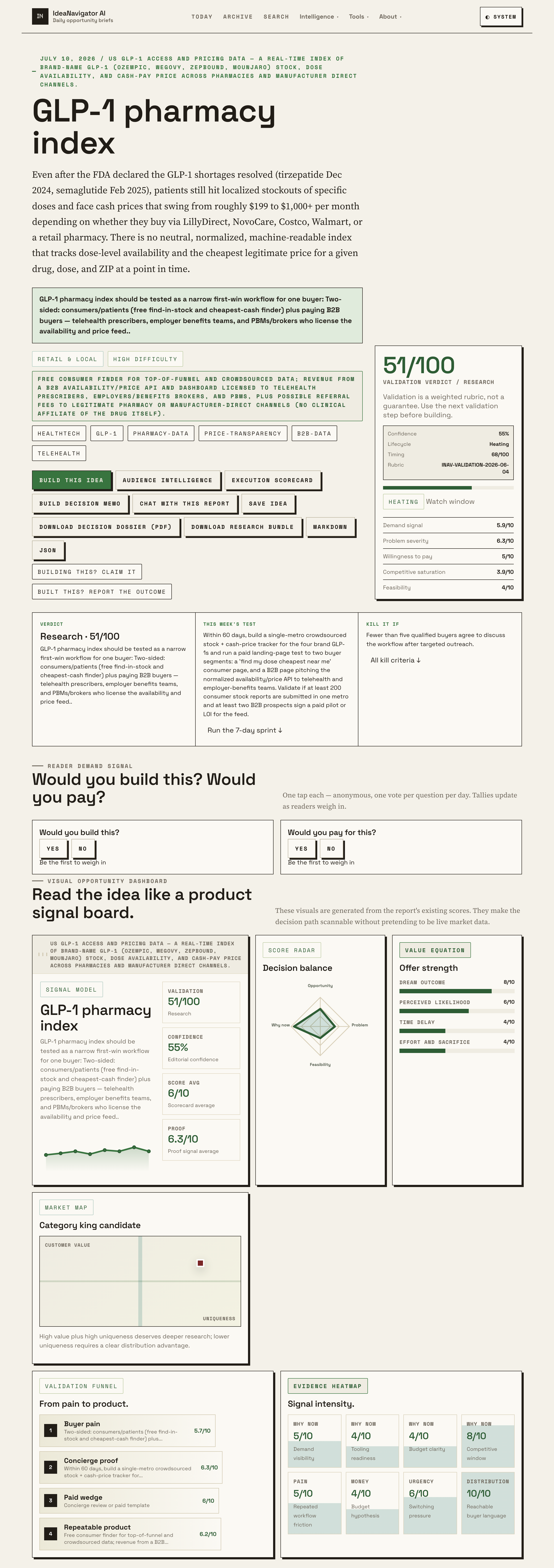
IdeaNavigator AI has outlined a proposed pharmacy index for Ozempic, Wegovy, Mounjaro and Zepbound that would track dose availability and cash prices by ZIP code. The proposal describes a consumer search tool and a paid data feed for health care buyers; it does not report that the service has launched or secured customers.
IdeaNavigator AI has proposed a pharmacy index that would help people locate brand-name GLP-1 medicines by dose and ZIP code while comparing cash prices. The concept also targets telehealth prescribers, employers and pharmacy-benefit intermediaries that could license the underlying availability and price data, but there is no confirmation that a tool or paid feed has launched.
The proposed index would cover Ozempic, Wegovy, Mounjaro and Zepbound. A free consumer website would let users search for a particular medicine and dose, check reported local availability and compare cash prices. IdeaNavigator AI says prices can range from about $199 to more than $1,000 per month across manufacturer-direct programs and retail channels. The proposal does not provide a date, location, drug-specific breakdown or methodology for that range.
For initial pricing data, the concept names LillyDirect and NovoCare, along with Costco, Walmart and a GoodRx-style price layer. It suggests combining normalized public price information with crowdsourced reports of whether a specific dose is in stock. Users could also receive alerts about availability. The proposal does not specify how reports would be checked, how frequently prices would be refreshed or how pharmacies would confirm inventory.
A second product would make the normalized data available through a business API or dashboard. Possible customers named in the proposal include telehealth providers, employer benefits teams, pharmacy benefit managers and brokers. IdeaNavigator AI suggests seeking one or two design partners, but reports no signed agreement, paid pilot, letter of intent or revenue. The document frames a 60-day test: build a tracker for one metro area, collect at least 200 consumer stock reports and seek a paid pilot or letter of intent from at least two business prospects.
A Search Tool for Dose-Level Gaps
The idea addresses a practical access problem: knowing that a medicine is available somewhere does not tell a patient whether a specific dose is in stock nearby or what a legitimate cash purchase would cost. A dose-specific index could reduce the time spent checking separate pharmacy and manufacturer-direct channels, if its data were current and reliable.
For health care buyers, a shared feed could make local availability and price differences easier to monitor. The proposal says employers report GLP-1 medicines account for roughly 20% of pharmacy spending, but gives no survey, date or employer sample for that figure. If accurate for a particular buyer, better price information could inform coverage and purchasing decisions. The document does not establish that the proposed index would lower costs or improve access.
The commercial case depends on serving two groups with different needs. Consumers would need a useful free finder, while business buyers would need dependable, timely data worth paying to license. Crowdsourced reports might help surface local gaps, but inaccurate or stale submissions could mislead users. The test would need to show both that people contribute usable reports and that organizations will pay for the resulting feed.
Top picks for "ozempic mounjaro pharmacy"
As an affiliate, we earn on qualifying purchases.
From Shortages to Fragmented Pricing
The proposal places the idea after federal shortage determinations for two widely used ingredients. It says the FDA declared shortages of tirzepatide resolved in December 2024 and semaglutide in February 2025. It argues that the end of a broad shortage designation did not remove local problems with particular doses or make cash prices consistent across sellers. Those statements are the proposal’s framing; it supplies no current inventory survey to measure how common such gaps are.
The suggested market includes manufacturer-direct programs, retail pharmacies and other cash-pay channels. IdeaNavigator AI also points to changes involving compounders after the shortage determinations and to the TrumpRx portal, which it dates to February 2026. The proposal does not explain which products or prices the portal lists, or document the effects of compounding deadlines. Those details would need verification before a live index presented them as current facts.
The concept is therefore a business proposal, not a report of a newly operating national service. Its central premise is that information is scattered across channels and lacks a common format for comparing drug, dose, location and price. The material does not identify an existing index audit or a market study showing that no comparable service exists.
Inventory and Prices Need Verification
No launch announcement, working product, pharmacy participation list or independently checked price dataset is provided. It is unclear whether reported prices include eligibility conditions, fees, insurance requirements or other restrictions, and whether comparisons would cover the same quantity and treatment period. The cited $199-to-$1,000-plus monthly range lacks channel-by-channel examples and a stated collection date.
Local stock can change quickly, but the proposal does not say how long a report would remain visible or how the index would distinguish confirmed inventory from a user-submitted claim. It also does not describe privacy protections for location and alert data, or how users would be directed to legitimate pharmacies. No buyer has been identified as committed to a pilot, and the document does not show that the proposed 20% spending estimate applies broadly.
A 60-Day Pilot Would Test Demand
The next step described is a single-metro pilot covering the four named brand medicines, with a consumer finder and a business-facing pitch for the data feed. The proposal sets two targets for a 60-day validation effort: at least 200 consumer stock reports in the metro and at least two business prospects signing a paid pilot or letter of intent. These are proposed milestones, not completed results.
A credible assessment would also need to show when each price and stock report was collected, how often entries are updated, and whether inventory claims are verified. Until a launch, pilot results or customer agreements are documented, the index remains a proposed response to fragmented GLP-1 availability and cash pricing.
Source: IdeaNavigator AI
Key Questions
Has the GLP-1 pharmacy index launched?
No launch is confirmed in the proposal. It describes a possible consumer finder and business data feed, plus a suggested pilot.
Which medicines would the proposed index cover?
The proposal names Ozempic, Wegovy, Mounjaro and Zepbound, with searches organized by medicine, dose and ZIP code.
What prices would it compare?
It proposes comparing cash prices from manufacturer-direct and retail channels. The cited range of about $199 to more than $1,000 per month has no date or detailed comparison in the supplied material.
Who might pay for the data?
Potential business customers include telehealth prescribers, employers, benefits brokers and pharmacy benefit managers. No paying customer or signed pilot is reported.
Source: IdeaNavigator AI
NFL season / tailgating Picks
team gear
As an affiliate, we earn on qualifying purchases.