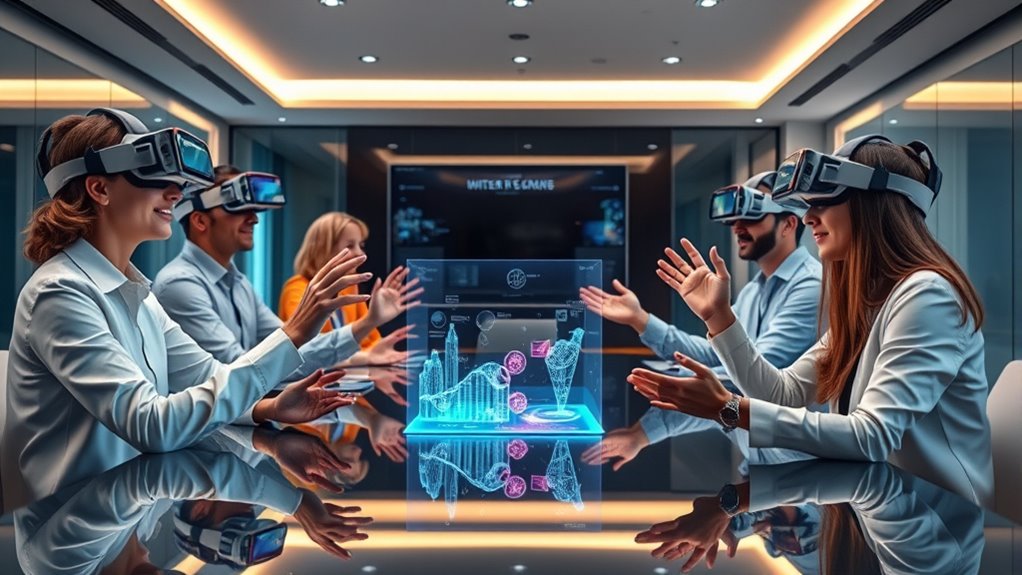

Collaborating in VR and AR is reshaping the way you connect, work, and innovate by creating immersive environments that feel real even when you’re apart. These technologies enhance engagement through customizable virtual spaces, spatial audio, and real-time interactions, making meetings more dynamic and productive. As advancements in device comfort and AI integration grow, expect more accessible, personalized experiences across industries. If you continue exploring, you’ll discover how these innovations are setting the stage for the future of remote collaboration.
Key Takeaways
- VR and AR create immersive, interactive environments that enhance remote collaboration, engagement, and spontaneous idea sharing.
- Integration of AI personalizes virtual experiences, improving meeting effectiveness and participant satisfaction.
- Advanced AR/VR tools enable real-time data overlays, gesture controls, and seamless physical-digital workflows.
- Industry-specific applications, such as healthcare, retail, and architecture, demonstrate the potential for innovative collaboration.
- Device improvements and broader adoption will make immersive meetings more accessible, practical, and transformative.
The Rise of Virtual Reality in Meeting Spaces
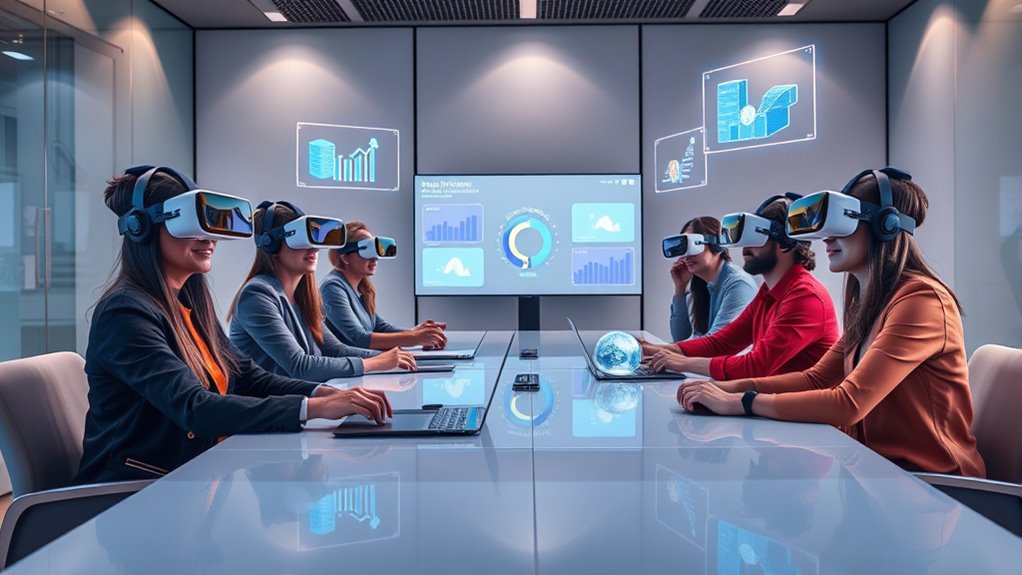
The rise of virtual reality in meeting spaces is transforming how organizations collaborate and communicate. You can now step into immersive environments that feel real, even when you’re miles apart. VR creates a sense of presence, making interactions more engaging and effective. Platforms like Spatial and Gather let you customize virtual rooms, encouraging spontaneous discussion and teamwork. With advanced tools and AI integration, these meetings adapt to your needs, personalizing the experience and boosting productivity. Studies show that VR meetings increase employee satisfaction by 25% and enhance productivity by 15%. As a result, more companies are adopting VR for remote collaboration, recognizing its potential to bridge distances and foster stronger team dynamics. Additionally, understanding the potential for manipulation and deception in virtual environments highlights the importance of awareness of dark psychology tactics during remote interactions. Virtual reality is reshaping the future of work, making meetings more interactive and impactful.
Augmented Reality’s Role in Enhancing Collaboration
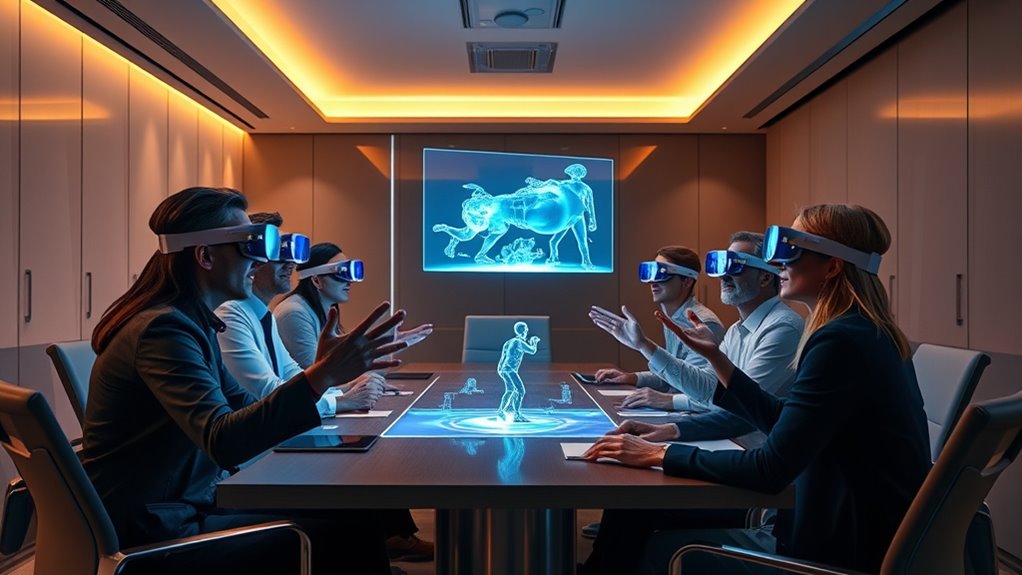
Augmented Reality (AR) is transforming collaboration by enabling hands-free interaction and intuitive gesture-based controls. You can effortlessly manipulate virtual objects or access information without interrupting physical tasks, making meetings more dynamic and efficient. AR overlays virtual data onto real-world environments, allowing you to visualize complex concepts, diagrams, or models in situ. This enhances understanding and reduces miscommunication among team members. With AR, you can collaborate in real-time, sharing virtual annotations and insights directly on physical surfaces or objects. It also facilitates seamless integration between physical and digital workflows, improving productivity and engagement. As AR adoption grows, you’ll find it increasingly useful for brainstorming sessions, project reviews, and remote teamwork, making collaboration more immersive, interactive, and effective. Developing Cultural Intelligence will become essential for teams to navigate diverse cultural contexts effectively in these virtual environments.
The Metaverse as a Platform for Virtual Interactions
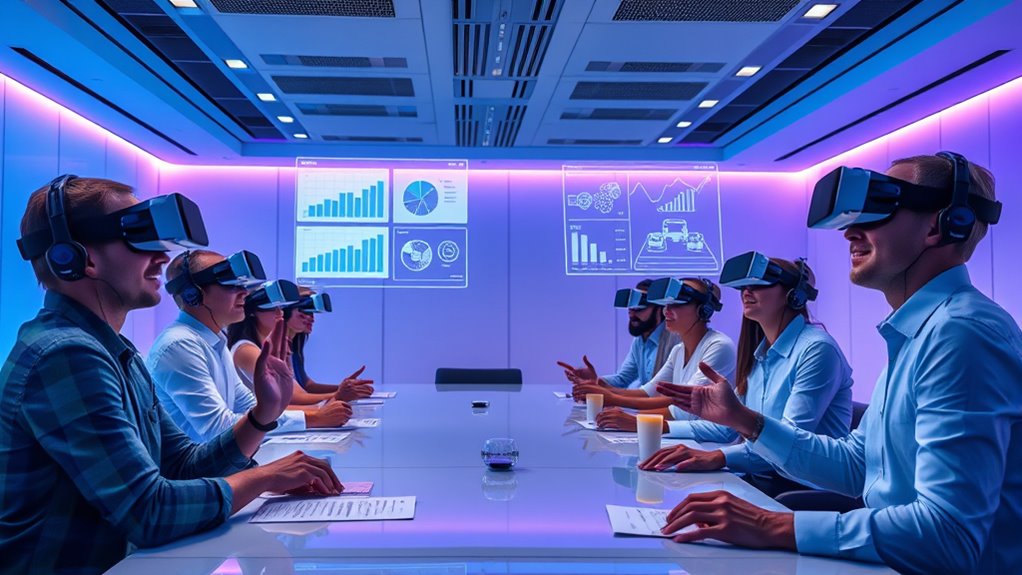
The metaverse creates immersive collaboration environments that make virtual interactions feel more real and engaging. It seamlessly integrates VR and AR tools, allowing you to work across different platforms without interruption. This connectivity transforms how teams communicate, making remote collaboration more natural and effective. Additionally, high-quality projectors can enhance these virtual experiences by providing sharper and more vibrant visuals.
Immersive Collaboration Environments
As the metaverse evolves into an all-encompassing platform for virtual interactions, it transforms how teams collaborate across distances. You can work together in immersive collaboration environments that feel as real as physical spaces, but with greater flexibility. These environments integrate rich visuals, spatial audio, and real-time interaction tools, making meetings more engaging and dynamic. You can manipulate 3D objects, brainstorm on shared virtual whiteboards, or simulate complex scenarios with ease. The technology adapts to your needs, offering customizable spaces that foster creativity and productivity. By removing geographical barriers, immersive environments enable seamless teamwork, encouraging spontaneous interactions and immediate feedback. Additionally, cost and budgeting considerations are essential when adopting these advanced platforms to ensure sustainable implementation. As a result, your collaborations become more effective, innovative, and aligned with real-world dynamics, all within a highly interactive digital space.
Seamless Virtual Integration
Seamless virtual integration in the metaverse transforms how you interact in digital spaces by creating fluid, immersive experiences that blend reality and technology. You can move effortlessly between virtual environments, participating in meetings that feel natural and engaging. With advanced avatar customization and real-time spatial audio, your interactions become more intuitive and personal. The metaverse integrates VR and AR tools, allowing you to share virtual objects, annotate, or collaborate on complex tasks without switching platforms. These smooth transitions reduce friction, making virtual meetings feel less like a chore and more like a natural extension of your workday. As technology advances, you’ll notice even smoother experiences, enabling you to focus on collaboration rather than technical hurdles. Recognizing emotional distance and addressing it can further enhance virtual teamwork, fostering stronger connections among participants. This integration is shaping the future of effortless, immersive teamwork.
Technological Advancements Driving Immersive Meetings
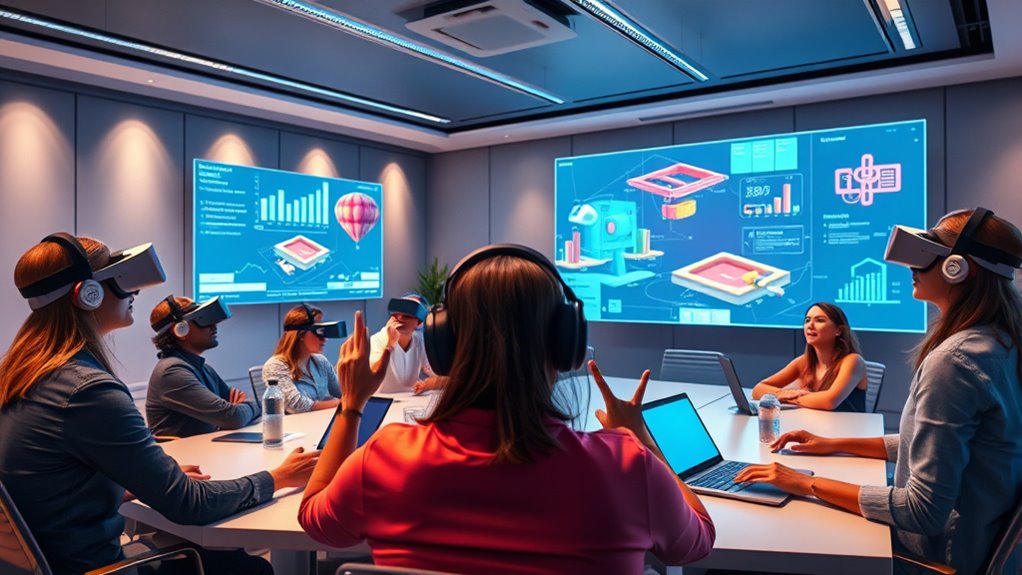
Advancements in technology are rapidly transforming immersive meetings, making them more natural and engaging. Lighter VR headsets with longer battery life and higher resolutions improve comfort and image quality, while advanced sensors enable more precise tracking of your movements. AI integration personalizes your experience and enhances responsiveness, creating seamless interactions. Gesture-based controls and voice commands simplify navigation, allowing you to focus on collaboration. AR glasses offer hands-free interaction, overlaying virtual data onto real-world spaces. These innovations collectively boost immersion and usability, bringing virtual meetings closer to real-life interactions. Additionally, electric bikes and related technologies are evolving, demonstrating how practical and versatile these advancements can be across various fields.
Industry-Specific Implementations of VR and AR
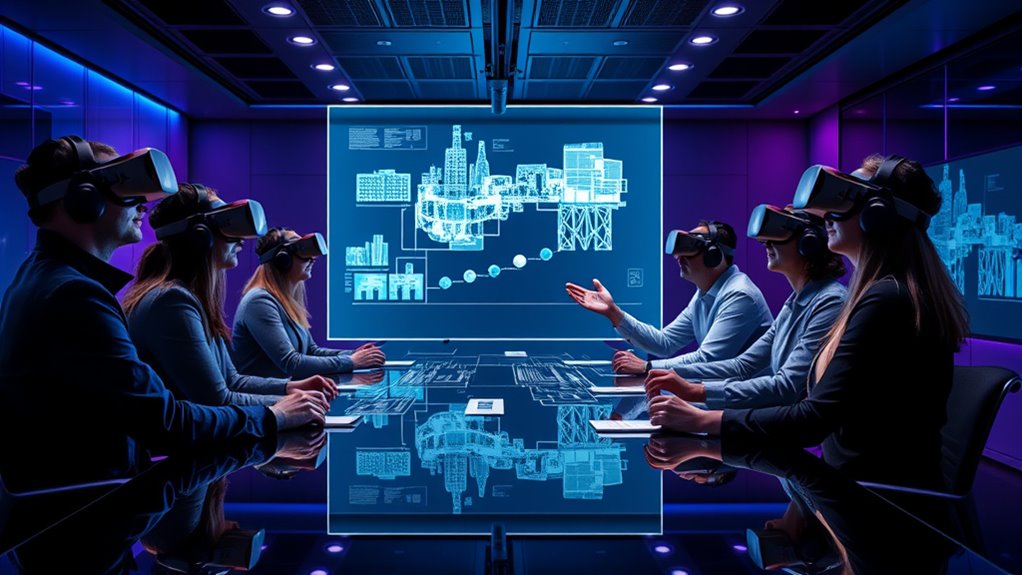
Industries are increasingly adopting VR and AR to transform their workflows and enhance user engagement. In healthcare, VR enables surgeons to simulate procedures for training, reducing errors and improving patient outcomes. Retailers use AR for virtual try-ons, allowing customers to see products in real-time without visiting stores. Education benefits from VR by offering immersive classrooms and interactive training modules that improve retention. Manufacturing companies utilize AR for real-time assembly guidance, minimizing errors and speeding up production. Architecture firms employ VR to create virtual walkthroughs of building designs, helping clients visualize projects before construction begins. These tailored applications demonstrate how industry-specific implementations harness VR and AR to boost efficiency, improve experiences, and drive innovation across sectors. Transparency about cookie usage and data handling further supports user trust and engagement with these technologies.
Future Market Trends and Growth Projections
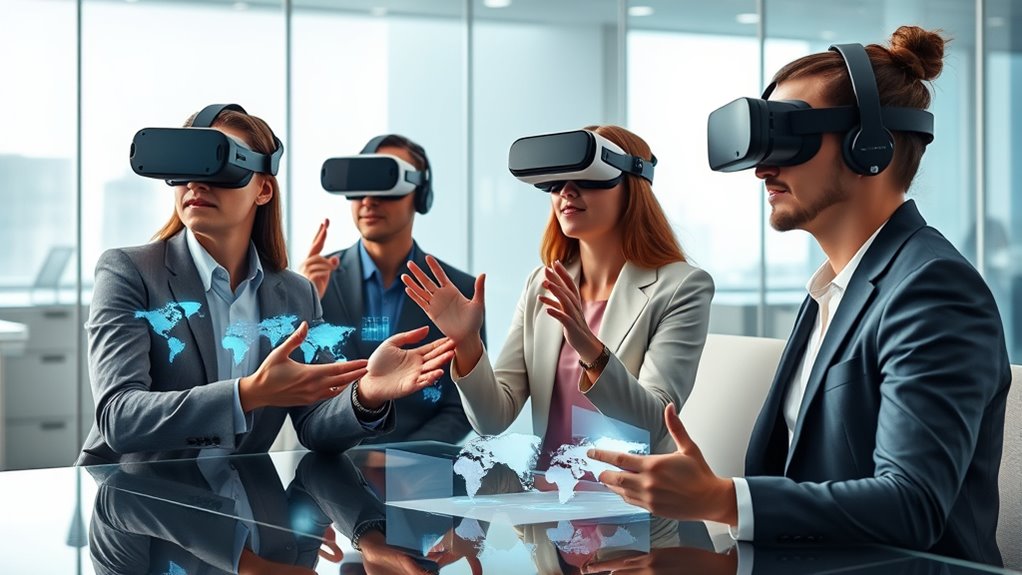
The future of the VR and AR markets looks promising, with rapid growth driven by technological innovation and increasing adoption across sectors. You can expect these technologies to become more integrated into everyday workflows, boosting collaboration and productivity. Market projections indicate a compound annual growth rate of over 23% from 2025 to 2030, with the combined economic impact reaching up to $13 trillion. Devices will continue to improve—lighter, more comfortable, with longer battery life and advanced tracking—making immersive experiences more accessible. As adoption expands across industries like education, healthcare, retail, and enterprise, you’ll see new opportunities for engaging meetings. Overall, VR and AR are poised to revolutionize how teams connect, work, and innovate in the coming years. Additionally, advancements in nanotechnology could further enhance device capabilities and enable new forms of immersive interaction.
Challenges in Adopting Immersive Meeting Technologies
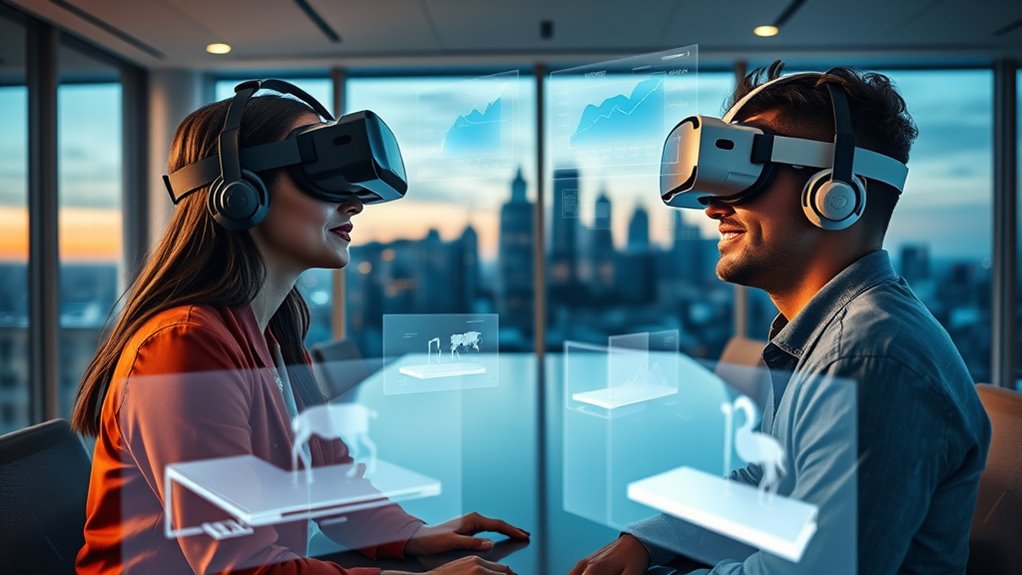
Despite the promising potential of immersive meeting technologies, several challenges hinder widespread adoption. First, technical barriers such as high costs and complex setup can deter organizations from investing. Second, many users face a steep learning curve, making adoption slow. Third, inconsistent device compatibility and limited internet bandwidth cause connectivity issues. Fourth, security and privacy concerns arise as sensitive data is shared in virtual environments. These obstacles make it difficult for companies to integrate VR and AR into daily workflows smoothly. Additionally, resistance to change and skepticism about the technology’s effectiveness can slow acceptance. Overcoming these challenges requires addressing infrastructure needs, user training, and building trust in the technology’s benefits for collaboration. Moreover, understanding the importance of proper storage can help maintain hardware longevity and ensure smooth operation.
Opportunities for Innovation and Enhanced Engagement
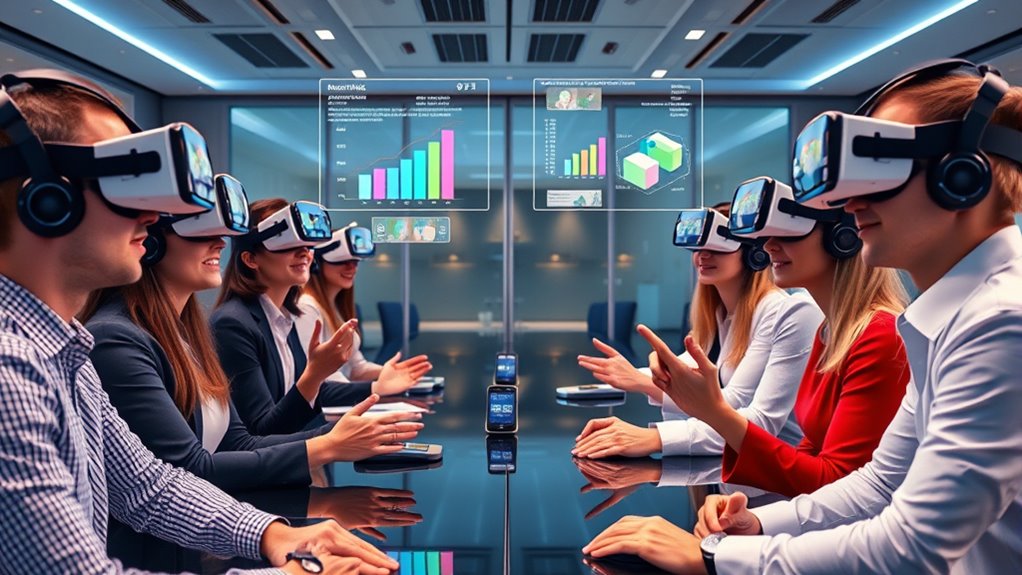
Opportunities for innovation and enhanced engagement in VR and AR meetings are expanding rapidly as technology advances. You can now create immersive environments that boost collaboration by making meetings more interactive and dynamic. Platforms like Spatial and Gather let you customize virtual spaces, encouraging spontaneous ideas and real-time feedback. AI integration personalizes your experience and helps optimize performance during sessions. Gesture controls and hands-free navigation make interactions more natural, keeping participants engaged without distractions. Incorporating self-awareness into these experiences can further improve communication and understanding among team members. With these innovations, meetings become more than just discussions—they turn into rich, shared experiences. This increased engagement can lead to higher satisfaction, better idea generation, and stronger team cohesion. As VR and AR tools evolve, your organization has unprecedented opportunities to rethink how meetings inspire creativity and drive results.
Frequently Asked Questions
How Secure ARe VR and AR Meeting Platforms Against Cyber Threats?
VR and AR meeting platforms are becoming more secure, but you still need to stay vigilant. They use encryption, multi-factor authentication, and regular security updates to protect your data. However, cyber threats like hacking, data breaches, and device vulnerabilities can still pose risks. To keep your meetings safe, you should use strong passwords, keep software up-to-date, and follow best security practices.
What Are the Hardware Requirements for Effective Immersive Meetings?
To have effective immersive meetings, you need a VR headset with high-resolution displays, comfortable fit, and precise tracking. A powerful computer or compatible device is essential for smooth graphics and performance. You should also have a stable high-speed internet connection to prevent lag. Additional accessories like hand controllers or AR glasses enhance interaction. Confirm your device is updated regularly for security and compatibility, creating a seamless, engaging experience.
How Accessible ARe VR and AR Technologies for Small Businesses?
VR and AR technologies are becoming increasingly accessible for small businesses, thanks to lighter, more affordable devices and cloud-based platforms. You can now find cost-effective VR headsets and AR tools that fit within modest budgets. Many solutions offer easy setup and user-friendly interfaces, making it possible for small teams to adopt immersive meeting tech without extensive technical expertise or hefty investments. This growing accessibility helps small businesses stay competitive and innovative.
What Training Is Needed for Users to Adapt to Immersive Meeting Tools?
You need to learn how to navigate the virtual environment, operate controllers or gestures, and manage virtual tools effectively. Training should cover device setup, safety protocols, and troubleshooting common issues. Practice helps you build confidence and familiarity with immersive features. Many platforms offer tutorials or onboarding sessions. Embrace hands-on experience, ask questions, and stay updated on new features to adapt smoothly to immersive meeting tools.
How Do VR and AR Solutions Comply With Data Privacy Regulations?
You might think VR and AR solutions are exempt from data privacy rules, but investigations show they must comply with regulations like GDPR and CCPA. You’re responsible for ensuring data collection, storage, and sharing are transparent and secure. Implement encryption, anonymize user data, and obtain explicit consent. Regular audits and privacy policies tailored to immersive tech help protect user information and maintain compliance, building trust in your virtual environments.
Conclusion
So, it’s clear that VR and AR are revolutionizing meetings—no more dull PowerPoints or endless email chains. Soon, you’ll be attending virtual boardrooms in your pajamas, shaking hands with avatars, and pretending to understand the metaverse’s latest updates. Sure, there might be some hiccups and tech glitches, but hey, who needs real face-to-face when you can have a fully immersive, slightly pixelated experience that’s “almost” as good? Welcome to the future—where reality is optional.