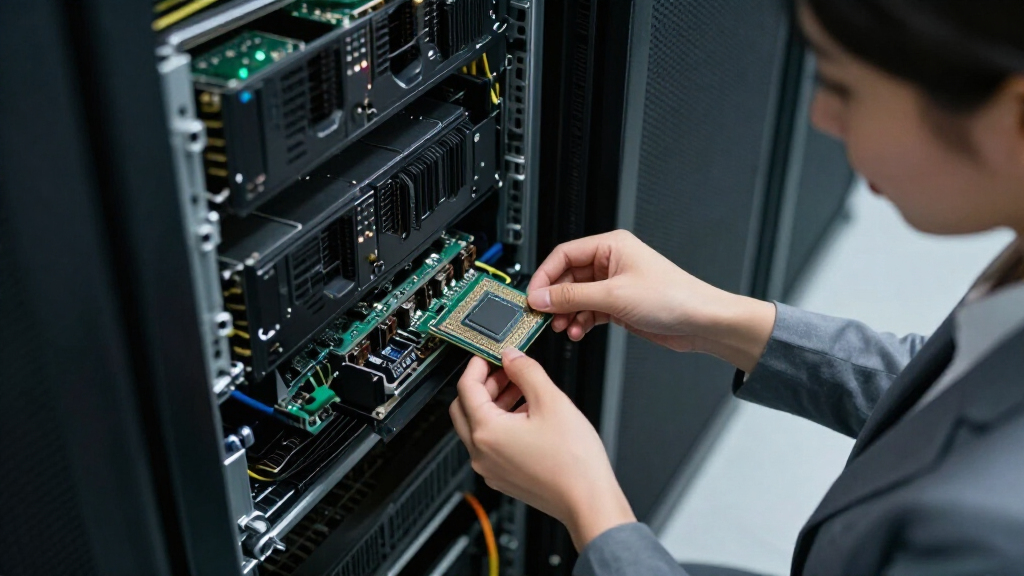

🔍 Read the full analysis: Why AI Needs More Chip Suppliers: Google Adds Two New Chips on ThorstenMeyerAI.com

Get the little things that make your day delivered free with Prime
- Fast, free delivery on millions of items
- Prime Video, Amazon Music and more included
- Member-only deals all year
TL;DR
Google announced two additions to its eighth-generation TPU lineup on November 9: TPU 8tx, designed for confidential computing, and TPU 8i Max, built for workloads with very long inputs. Google says both will be available in 2027, but has not announced prices or published independent performance tests.
Google announced two new systems for its eighth-generation tensor processing unit (TPU) lineup on November 9: TPU 8tx for confidential computing and TPU 8i Max for workloads involving very long inputs. The additions give Google Cloud customers more specialized alternatives to Nvidia-based AI computing, but both systems are still listed as coming soon, with availability expected in 2027.
Google’s November announcement builds on the TPU 8t and TPU 8i systems it introduced at its Cloud Next conference on April 22. The four systems target different jobs: TPU 8t is designed for training AI models, TPU 8i for inference, or generating responses from trained models, while the new 8tx and 8i Max versions address confidential inference and large context windows.
Google says TPU 8tx is intended for regulated businesses and government workloads where data must remain protected while being processed. The company says it uses the same silicon as TPU 8t, combined with security features and fifth-generation AMD EPYC processors. Google claims it can provide up to two times lower latency than TPU 8t with a near-zero performance penalty. That is a vendor claim; the company has not published independent tests.
TPU 8i Max combines two TPU 8i chips in one package. Google says the design doubles the system’s compute, on-chip SRAM and high-bandwidth memory bandwidth compared with TPU 8i, while fitting within the existing rack footprint. It is aimed at tasks such as processing large codebases or long video inputs. Google has not released absolute specifications for either new system, and its TPU product page lists all four eighth-generation systems as coming soon.
Google expands its TPU lineup with two specialized chips
TPU 8tx targets confidential computing, while TPU 8i Max is built for very long inputs. Both are expected in 2027, but key buying details and independent tests are still missing.
Four systems, different jobs
Google adds specialized options to the training and inference systems introduced in April.
TPU 8t
Designed to train AI models; TPU 8tx uses the same silicon with security features.
TPU 8i
Generates responses from trained models and is the base for TPU 8i Max.
TPU 8tx
Aims to protect data during processing for regulated and government workloads.
TPU 8i Max
Combines two TPU 8i chips for tasks such as large codebases and long video inputs.
A possible alternative to Nvidia
More suppliers could give cloud customers another source of AI computing capacity.
Google says nearly 100 customers use TPUs, and Oracle plans to offer them in its cloud in 2027.
Google points to PyTorch, Hugging Face, vLLM and SGLang as tools that can help customers adopt TPUs.
Teams still need to assess performance, cost and the engineering work for their own applications.
What remains unknown
The announcement describes intended capabilities, but buyers lack details to compare or plan deployments.
- Both new systems are expected in 2027.
- TPU 8tx can deliver up to two times lower latency than TPU 8t, with a near-zero performance penalty.
- TPU 8i Max doubles compute, on-chip SRAM and memory bandwidth versus TPU 8i.
- Prices, exact release dates and launch regions.
- Absolute specifications for the new variants.
- Independent benchmarks and customer production results.
More Options Beyond Nvidia GPUs
The announcement matters because major AI developers and cloud customers have faced constrained access to advanced computing hardware. Google’s chips offer another potential source of capacity, and Google says nearly 100 customers use TPUs. Alphabet has also described the market as supply-constrained. Oracle plans to offer Google TPUs through its cloud starting in calendar year 2027, extending access beyond Google Cloud.
A second supplier could give cloud customers more choice and negotiating leverage, but an alternative chip does not automatically replace Nvidia hardware. Customers may need to adapt software, systems and staff workflows to a different platform. Google is promoting support for tools including PyTorch, Hugging Face models, vLLM and SGLang as part of its effort to make that change easier. Whether those tools and the new systems meet customers’ performance and cost needs remains to be tested.
The specialized designs also show how Google is responding to varied AI workloads. Long-input applications can be limited by memory capacity and data movement, rather than raw computing power alone. Confidential inference addresses a different concern: protecting information and model weights while they are in use. The new versions let Google target both needs without presenting them as entirely new chip designs.
Products Worth Considering

LEVOIT Vital 200S-P Smart Air Purifier for Large Rooms up to 1875 ft², Quiet 27 dB Operation, AHAM VERIFIDE Certified, Air Quality Monitor,

Blueair Blue Pure 211i Max Air Purifier for Large Rooms

Hyperice Normatec Elite Wireless Compression Boots
As an affiliate, we earn on qualifying purchases.
From Two TPU Systems to Four
Google introduced its eighth TPU generation in April 2026 with separate training and inference systems. Its published specifications say TPU 8t has 216 gigabytes of high-bandwidth memory and peak FP4 compute of 12.6 petaflops. TPU 8i has 288 gigabytes of high-bandwidth memory and peak FP4 compute of 10.1 petaflops, with more on-chip SRAM and memory bandwidth than the training-focused system. These figures come from Google and have not been independently verified for the new variants.
Google says it previously released a new AI processor about every two years, while the current generation has produced four systems in a single year. The company says the new systems reuse existing silicon and adjust packaging, memory, networking or security for particular tasks. Google’s AI and infrastructure chief, Amin Vahdat, told Bloomberg the variants are not completely new silicon designs, but configurations shaped by customer requests.
Software is another part of the effort. Google points to TorchTPU, which it says enables PyTorch code and Hugging Face models to run natively on TPUs, along with support for the open-source inference engines vLLM and SGLang. Google has also made Cloud Pathways, a runtime used by Google DeepMind behind Gemini, generally available on Google Kubernetes Engine. These developments may ease adoption, but they do not establish how the new hardware will perform in customers’ production systems.
“This is the first time we have introduced four TPU systems in a single year.”
— Google, in a November 9 announcement
Prices, Benchmarks and Rollout Details
Google has not announced prices, launch regions or specific release dates for TPU 8tx or TPU 8i Max. It has said the two systems are expected in 2027, and its product page currently marks the eighth-generation lineup as coming soon.
Performance claims also remain unverified outside Google. The company has not published absolute specifications for the new variants, and no independent benchmarks are available. Its claims about lower latency for TPU 8tx and doubled resources for TPU 8i Max should not be treated as independently confirmed results. The source material also does not establish how the systems will compare with current Nvidia products on cost, availability or performance for particular workloads.
It is not yet clear how widely the systems will be offered or how easily customers can move existing applications to them. Google has described software support efforts, but the practical engineering effort and results will depend on customer workloads and deployment choices.
Availability and Customer Testing
The next milestone is the expected 2027 availability of TPU 8tx and TPU 8i Max. Google has not supplied a more precise schedule. Oracle has separately said it plans to offer Google TPUs in its cloud during calendar year 2027; details about which TPU systems will be offered and when remain unavailable.
More information will be needed to assess the announcement’s commercial impact: pricing, regional availability, independent benchmarks and customer experience with production workloads. Those details will help determine whether the systems provide a practical alternative for buyers facing limited access to AI computing, rather than simply expanding Google’s product range.
Key Questions
What did Google announce?
Google announced TPU 8tx, aimed at confidential inference, and TPU 8i Max, designed for workloads with very long inputs. They join the TPU 8t training system and TPU 8i inference system introduced in April 2026.
When will the new Google TPU systems be available?
Google’s Amin Vahdat told Bloomberg the two additions are expected in 2027. Google has not provided exact release dates, prices or regions, and its TPU page lists the systems as coming soon.
Are the new systems entirely new chip designs?
No. Google says TPU 8tx uses the same silicon as TPU 8t, and Vahdat described the additions to Bloomberg as not completely new silicon designs. TPU 8i Max combines two TPU 8i chips in one package.
Have Google’s performance claims been independently tested?
The source material provides no independent benchmarks for the new systems. Google’s claims about TPU 8tx latency and TPU 8i Max’s doubled compute, SRAM and memory bandwidth remain vendor claims.
Why add more AI chip suppliers?
Additional suppliers may give AI developers more capacity and bargaining options in a market Google and Alphabet describe as supply-constrained. Switching hardware can require engineering work, and the new systems’ cost and performance have not yet been independently established.
Source: ThorstenMeyerAI.com