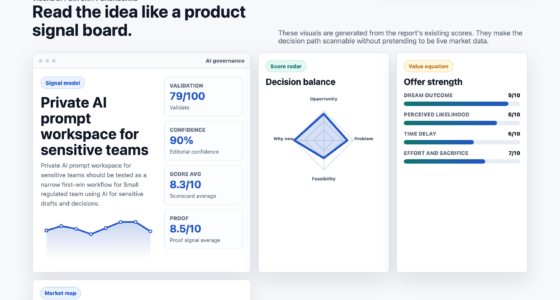

📊 Full opportunity report: Stenvrik: News as Geography on ThorstenMeyerAI.com — validation score, market gap, and execution plan.

Get the little things that make your day delivered free with Prime
- Fast, free delivery on millions of items
- Prime Video, Amazon Music and more included
- Member-only deals all year
TL;DR
Stenvrik launches a news platform that displays live stories pinned to 49 city hubs on a rotating 3D globe, offering a new geographic approach to news consumption. It combines innovative visualization with autonomous trend detection, all at minimal cost.
Stenvrik has launched a new news visualization platform that displays over 1,700 live stories pinned to 49 city hubs on a rotating 3D globe, emphasizing geographic context over traditional list feeds. This development aims to change how audiences understand and interact with news by focusing on location and trends.
The platform organizes news stories by geographic location, with stories pinned to 49 global city hubs. It features an autonomous trend engine that continuously surfacing, clustering, and pinning stories without human input, maintaining real-time updates across the globe.
The system runs on client-side rendering for visualization, keeping operational costs near zero by leveraging the visitor’s browser and owned compute resources for trend detection. This approach allows the product to be cost-effective and scalable, especially important given its current closed beta status.
Beyond consumer visualization, the underlying trend engine provides valuable market intelligence, signaling emerging regional topics and patterns that can inform broader content strategies. This dual function makes the platform both a viewer tool and a strategic asset for publishers.
Stenvrik — news as geography
Not what is the news — where is it happening. ~1,700 live stories pinned to 49 city hubs on a rotating globe, with an autonomous trend engine that also feeds the network.
Spin the world; the news sorts itself.
A 60fps 3D globe where every story is pinned to the city it belongs to. Clusters, gaps, regions heating up — context a vertical feed throws away.
Independent commentary, produced with AI assistance under human editorial oversight. The views are the author’s own and may change. Stenvrik is in closed beta; features, availability, and behavior may change and it is provided without guarantee of uptime or fitness for a particular purpose. The autonomous trend engine clusters and places stories programmatically and may contain errors, mis-placements, or omissions — verify independently before relying on any of it. Product and company names are trademarks of their respective owners; mention does not imply endorsement.
Implications of Geographic News Visualization
This development could significantly alter news consumption by emphasizing location-based context, helping audiences better understand regional developments and their global impact. For publishers and content creators, the trend engine offers a low-cost way to gain early insights into emerging stories, potentially shaping coverage and market strategies.
Moreover, the near-zero operational cost model demonstrates a sustainable approach to innovative news products, potentially disrupting traditional monetization and infrastructure reliance in digital journalism. It exemplifies how AI-driven automation can create scalable, cost-effective news tools.
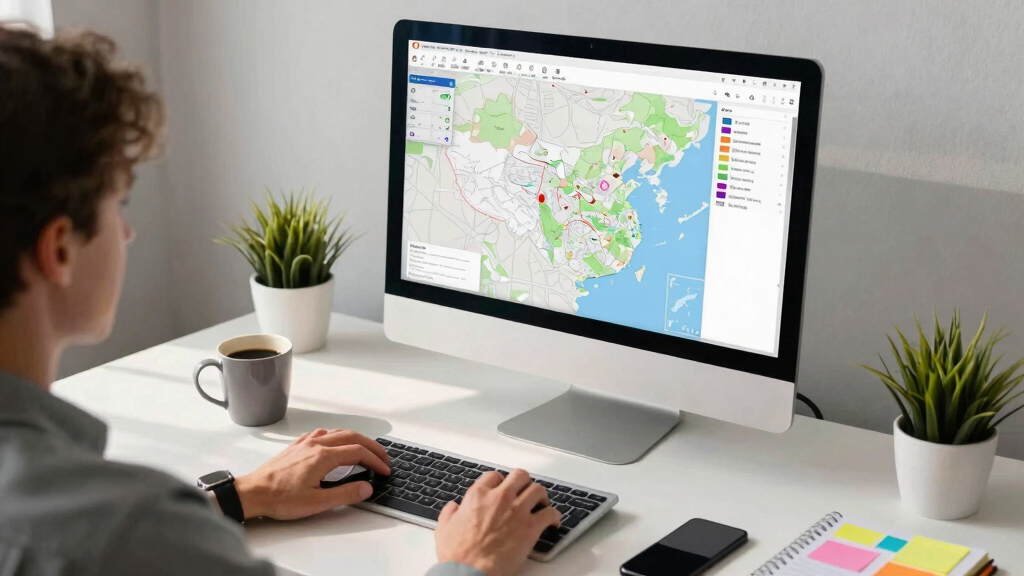
3D globe news visualization device
As an affiliate, we earn on qualifying purchases.
As an affiliate, we earn on qualifying purchases.
Background and Origins of the Stenvrik Project
Stenvrik originated as a Claude Design ‘News Globe Demo,’ a prototype intended to visualize news geographically. What began as a simple visualization tool evolved into a full-fledged platform after recognizing its potential to organize and detect trends efficiently. Its development was driven by the need for a different approach in a market saturated with list-based feeds.
The platform’s architecture emphasizes autonomous trend detection and geographic clustering, setting it apart from traditional news aggregators. Its low-cost, prototype-to-production journey underscores the potential for innovative, AI-enabled news tools to emerge without heavy infrastructure investments.
“The core idea is to organize news by geography, not just time, providing a new way to understand what’s happening around the world.”
— Thorsten Meyer, creator of the platform
As an affiliate, we earn on qualifying purchases.
Unresolved Questions About Adoption and Impact
It is not yet clear how widely the platform will be adopted once in open circulation, or how users will respond to a map-based news interface compared to traditional feeds. The long-term effectiveness of the autonomous trend engine in accurately predicting and clustering stories remains to be validated outside the beta environment. Additionally, how publishers and other stakeholders will leverage the underlying signals is still uncertain.
As an affiliate, we earn on qualifying purchases.
Next Steps for Development and Adoption
The platform is currently in closed beta, with plans to expand access and gather user feedback. Developers aim to refine the interface, improve trend detection accuracy, and explore integration with existing newsrooms and content strategies. Monitoring how early users engage with the geographic visualization will inform future enhancements and potential commercialization pathways.
As an affiliate, we earn on qualifying purchases.
Key Questions
How does the geographic news visualization differ from traditional feeds?
Instead of listing stories chronologically, it displays them pinned to a 3D globe based on location, providing spatial context and highlighting regional trends.
What is the main benefit of the trend engine behind Stenvrik?
It continuously detects and clusters emerging stories geographically, offering early signals that can inform news coverage and strategic decisions.
Is the platform available to the public now?
No, it is currently in closed beta with limited access. Broader availability is expected after further testing and refinement.
How does the platform keep operational costs low?
The visualization rendering happens client-side, and the trend detection runs on owned compute resources, minimizing infrastructure expenses.
Could this approach change how news organizations operate?
Yes, by providing real-time geographic insights and trend signals, it could influence coverage priorities and strategic planning, especially in regional reporting.
Source: ThorstenMeyerAI.com
Halloween Picks
halloween
As an affiliate, we earn on qualifying purchases.