
📊 Full opportunity report: How to Reduce Heat and Noise in a High-Power AI Workstation on ThorstenMeyerAI.com — validation score, market gap, and execution plan.

Get the little things that make your day delivered free with Prime
- Fast, free delivery on millions of items
- Prime Video, Amazon Music and more included
- Member-only deals all year
TL;DR
High-power AI workstations generate significant heat and noise due to sustained GPU loads. Key solutions include undervolting GPUs, improving airflow, and optimizing component placement. This helps maintain performance while reducing discomfort and equipment wear.
High-power AI workstations produce considerable heat and noise during sustained workloads, with GPU heat being the primary source. Experts recommend targeted cooling strategies, undervolting, and airflow improvements to mitigate these issues, making the systems quieter and more efficient.
AI workstations operating under continuous load generate more heat and noise than gaming PCs because of their sustained high GPU utilization. Unlike gaming systems that handle bursty loads, AI inference tasks keep GPUs at or near maximum capacity for hours, preventing cooling breaks and causing thermal buildup. This leads to throttling, slower inference, and louder fans. The main sources of heat and noise are the GPU, CPU, power supply, VRMs, and case airflow. The GPU accounts for over 70% of thermal output and is typically the loudest component. Effective measures include undervolting GPUs to reduce power draw, optimizing airflow within the case, and managing power supply and VRMs to prevent excess heat. Fans, coil whine, pump noise, and vibrations also contribute to overall noise levels, each requiring specific fixes. Implementing these strategies can significantly lower operating temperatures and noise, improving system longevity and user comfort.An AI workstation isn’t a gaming PC —
and that’s why it runs hot.
Local inference is a sustained load: the GPU sits near full power for hours with no loading screens, so the heat never dissipates and the fans never get a break. Here’s where the heat comes from — and the five levers that reduce it.
Why Managing Heat and Noise Matters for AI Workstations
Reducing heat and noise in high-power AI workstations is crucial for maintaining optimal performance, prolonging hardware lifespan, and ensuring a comfortable working environment. Excessive heat can cause thermal throttling, reducing inference speed, while loud fans and vibrations can be disruptive. Effective cooling and power management enable more efficient, quieter operation, which is especially important in home or office settings where noise levels impact productivity and well-being.GPU undervolting tool for high-performance workstations
As an affiliate, we earn on qualifying purchases.
As an affiliate, we earn on qualifying purchases.
Background on AI Workstation Cooling Challenges
Unlike gaming PCs, AI workstations operate under continuous, high-load conditions, often running GPUs at or near full capacity for hours. This sustained workload generates more heat and noise, necessitating specialized cooling strategies. Common issues include throttling due to thermal buildup, loud fan noise, and heat recirculation within cases. Recent guides and expert advice emphasize targeted cooling, undervolting, and airflow improvements as key solutions. The trend toward more powerful multi-GPU setups further amplifies these challenges, making effective heat and noise management essential for reliable operation.“The biggest difference between gaming PCs and AI workstations is the sustained load; understanding this is key to effective cooling.”
— Thorsten Meyer, AI hardware expert
As an affiliate, we earn on qualifying purchases.
Remaining Questions on Long-Term Effectiveness
While undervolting and airflow improvements are proven effective, the long-term impact on hardware longevity and performance under various workloads remains to be fully studied. Additionally, the optimal configurations for different GPU models and case designs are still evolving, and user-specific factors can influence results. More empirical data is needed to establish standardized best practices for all setups.
quiet power supply for AI workstation
As an affiliate, we earn on qualifying purchases.
As an affiliate, we earn on qualifying purchases.
Next Steps for Optimizing AI Workstation Cooling
Users should implement the recommended cooling and power management techniques and monitor their systems to evaluate improvements. Ongoing research and case studies will refine these strategies, and new cooling technologies or hardware modifications may emerge. Hardware manufacturers might also release firmware updates to facilitate better thermal management. Future guidance will likely focus on integrating these solutions into streamlined, user-friendly configurations.
As an affiliate, we earn on qualifying purchases.
Key Questions
What is the most cost-effective way to reduce heat in my AI workstation?
The most cost-effective method is undervolting your GPU to lower power consumption and heat output, which can be done with software tools at no additional hardware cost.
Can I improve cooling without replacing my case or fans?
Yes, optimizing case airflow by rearranging cables, cleaning dust filters, and adjusting fan curves can significantly improve cooling without hardware replacements.
Will undervolting reduce my AI inference performance?
In most memory-bound inference workloads, undervolting reduces heat and noise without impacting performance significantly. However, for compute-bound tasks, some performance trade-offs might occur.
Are liquid coolers worth it for AI workstations?
Liquid cooling can provide more effective and quieter cooling for high thermal loads, but the decision depends on budget, case compatibility, and noise preferences.
How do I identify the main source of noise in my system?
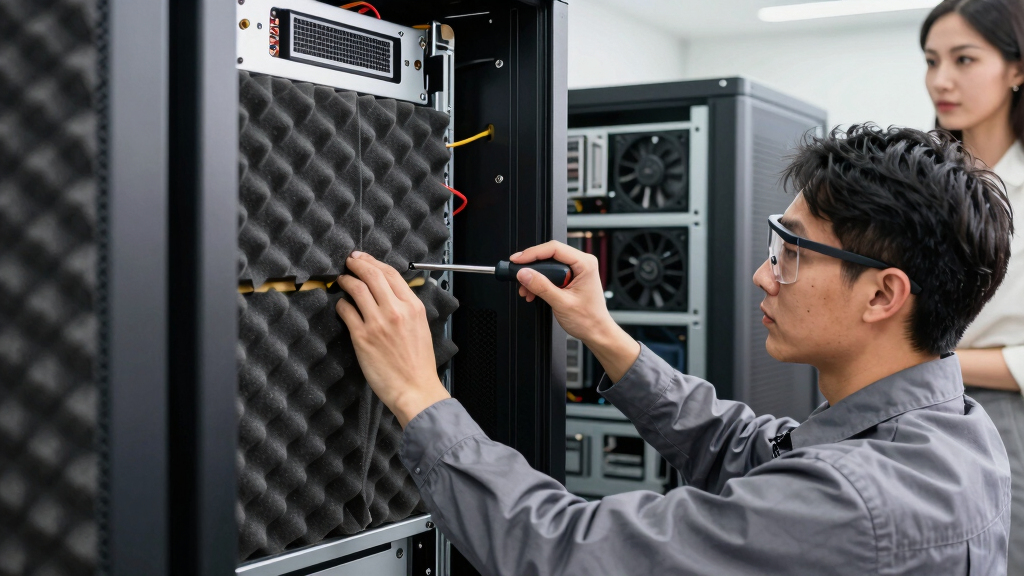
Use a sound level meter or software to monitor fan speeds and vibrations, and visually inspect components to determine whether fans, coil whine, or vibrations are the primary noise sources.
Source: ThorstenMeyerAI.com
NFL season / tailgating Picks
team gear
As an affiliate, we earn on qualifying purchases.