
📊 Full opportunity report: Best Thermal Paste and Pads for High-TDP GPUs on ThorstenMeyerAI.com — validation score, market gap, and execution plan.

Get the little things that make your day delivered free with Prime
- Fast, free delivery on millions of items
- Prime Video, Amazon Music and more included
- Member-only deals all year
TL;DR
This article reviews the best thermal interface materials for high-TDP GPUs used in continuous workloads. It highlights phase-change materials, traditional pastes, and reusable pads suited for long-term stability and performance.
Honeywell PTM7950, a phase-change material, is identified as the best thermal interface material for high-TDP GPUs running continuously, due to its resistance to pump-out and long-term stability, according to expert testing and user reports.
Traditional thermal pastes like Kryonaut and MX-6 are effective for general use but tend to dry out or pump out under sustained high temperatures, leading to degraded thermal performance over time. Honeywell PTM7950, a phase-change material, remains stable during prolonged operation, making it ideal for 24/7 AI workloads. It is supplied as a thin sheet that requires careful application but offers superior longevity, rated to withstand years of continuous heat cycling.
For those preferring traditional pastes, Arctic MX-6 offers a reliable, easy-to-apply, non-conductive option with an expected lifespan of 8–10 years, suitable for users who may need to reapply periodically. Noctua NT-H2 is recommended as a premium traditional paste, known for its consistent performance and durability. Additionally, Thermal Grizzly Kryosheet, a graphene-based reusable pad, provides a long-lasting alternative but requires precise handling due to its electrical conductivity.
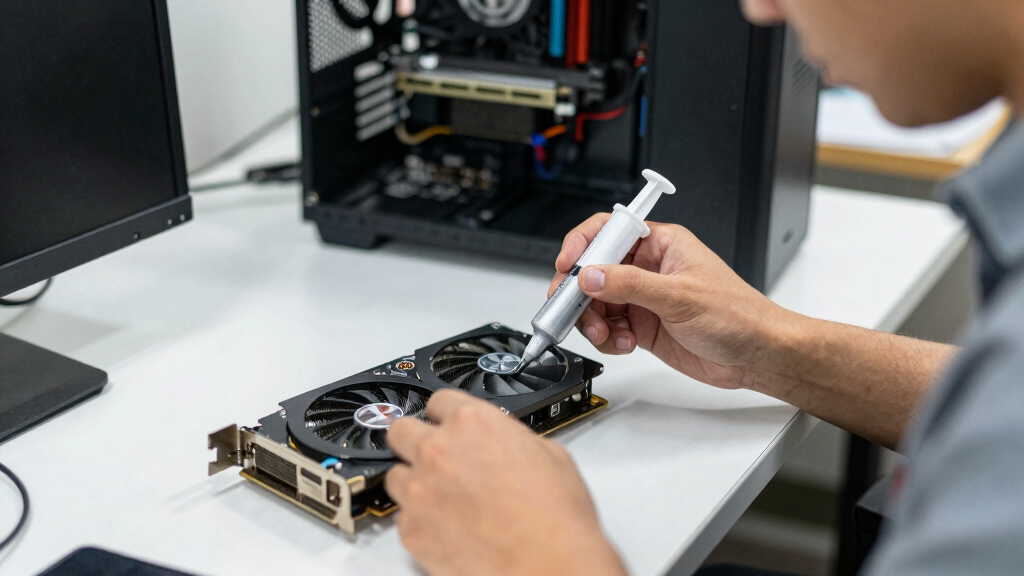
Best thermal paste
for a high-TDP GPU.
The standard “coldest on day one” advice is wrong for a 24/7 rig. Continuous heat slowly squeezes traditional paste out — a failure called pump-out — so the real question is what stays cold for years.
Why Long-Term Thermal Stability Matters for AI GPUs
For high-TDP GPUs running continuously, such as those used in AI inference tasks, maintaining low and stable temperatures is critical to prevent thermal throttling, extend hardware lifespan, and ensure reliable operation. Using materials resistant to pump-out reduces the need for frequent reapplications, saving time and reducing risk of damage. The selection of appropriate thermal interface materials directly impacts the efficiency and longevity of high-performance GPU setups, especially in demanding, long-duration workloads.
As an affiliate, we earn on qualifying purchases.
Thermal Interface Material Choices for High-Power GPUs
Most consumer GPU thermal guides focus on gaming, prioritizing initial low temperatures. However, AI inference GPUs operate under sustained loads, often at high temperatures for hours or days. Traditional pastes like Kryonaut excel initially but can dry out faster under constant heat, leading to increased temperatures over time. Phase-change materials like Honeywell PTM7950 were developed to address this issue, offering stable thermal performance over years. Reusable graphene pads such as Kryosheet are newer options gaining attention for their durability but require careful handling due to electrical conductivity. The choice of material depends heavily on workload duration and maintenance preferences.
"For continuous high-TDP workloads, the key is long-term stability. Honeywell PTM7950’s resistance to pump-out makes it the best choice for inference GPUs that run 24/7."
— Thorsten Meyer, AI hardware expert
phase-change thermal interface material for GPU
As an affiliate, we earn on qualifying purchases.
As an affiliate, we earn on qualifying purchases.
Long-Term Performance Data for Phase-Change Materials
While Honeywell PTM7950 is highly rated for durability, comprehensive long-term user data under real-world AI workloads over multiple years is limited. Most assessments are based on testing and early user reports, and ongoing performance under different environmental conditions remains to be fully confirmed.
As an affiliate, we earn on qualifying purchases.
Monitoring and Reassessing Thermal Material Performance
As high-TDP GPU workloads become more prevalent, further long-term testing and real-world performance data will emerge. Manufacturers may introduce new materials or improvements, and users should stay informed about updates. Re-evaluating thermal interface choices periodically will ensure optimal performance and hardware longevity.
As an affiliate, we earn on qualifying purchases.
Key Questions
Is phase-change material suitable for all high-TDP GPUs?
Phase-change materials like Honeywell PTM7950 are ideal for continuous, high-temperature workloads but require careful application. They are especially suited for dedicated inference GPUs running 24/7.
Can I switch between traditional paste and phase-change materials?
Yes, but it involves reapplication and proper cleaning of the GPU surface. Transitioning should be done carefully to avoid damage and ensure optimal thermal contact.
How often should I reapply thermal paste or pads in a high-load environment?
Traditional pastes like MX-6 typically last 8–10 years under normal conditions, but high-load environments may require more frequent reapplications, especially if temperature increases are observed. Reusable pads like Kryosheet can last indefinitely with proper handling.
Does using better thermal interface materials void my GPU warranty?
Reapplying thermal paste or pads can void warranty if it involves opening the GPU or damages the hardware. Consult your manufacturer’s warranty policy before proceeding.
Source: ThorstenMeyerAI.com
Fall Picks
fall essentials
As an affiliate, we earn on qualifying purchases.