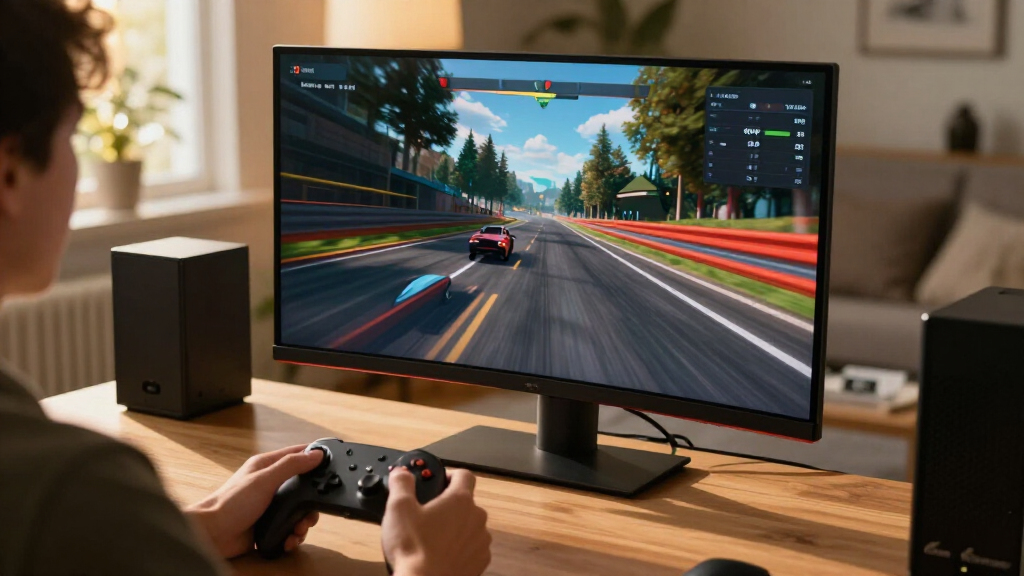

🔍 Read the full analysis: A Guide To 8 Best OLED Gaming Monitors For 2027 on ThorstenMeyerAI.com

Get the little things that make your day delivered free with Prime
- Fast, free delivery on millions of items
- Prime Video, Amazon Music and more included
- Member-only deals all year
TL;DR
ThorstenMeyerAI.com’s buyer’s guide ranks eight OLED gaming monitors for different needs, led by the ASUS ROG Strix XG27ACDNG for its stated 360Hz QHD QD-OLED specification. The guide also includes a curved Alienware ultrawide and several 240Hz QHD options; it does not provide prices, independent performance testing or full specifications.
As detailed in the original guide to OLED gaming monitors, ThorstenMeyerAI.com has published a guide to eight OLED gaming monitors, ranking the ASUS ROG Strix XG27ACDNG first for competitive play based on its stated QHD QD-OLED panel and 360Hz refresh rate. The guide also includes a 34.2-inch curved Alienware ultrawide and several 240Hz QHD models, presenting options with different screen formats and refresh rates rather than one fit for every setup.
ThorstenMeyerAI.com’s guide positions the ASUS ROG Strix XG27ACDNG as its best overall pick. The guide identifies its 360Hz specification as the highest stated refresh rate in the lineup, while cautioning that a monitor’s refresh ceiling does not mean a PC will render every game at that rate; see more high-refresh gaming monitor picks. It says the model is most relevant to competitive players with hardware capable of producing high frame rates at QHD resolution.
For a wider gaming view, the guide names the Alienware AW3425DW, a 34.2-inch curved ultrawide; compare it with other OLED gaming monitors for immersive play. It frames the screen as an immersion-focused alternative to standard QHD monitors, while noting that ultrawide game support varies and the format uses more desk space. The guide lists the LG 27GX704A-B as a 240Hz option with HDMI 2.1, DisplayPort and adaptive-sync support; it advises buyers to verify port capabilities for their particular devices.
The other five models identified in the guide are the Acer, AOC and ASUS 240Hz QHD OLED monitors, the listed Samsung G6, and the Samsung G5. The source does not give full model names for the Acer, AOC or ASUS entries, or detailed specifications for every pick. It describes the Samsung G5 as a simpler OLED option without the high-refresh emphasis assigned to the 240Hz and 360Hz models.
The 8 picks
- 1
 Alienware AW3425DW 34.2-inch Curved QD-OLED Gaming MonitorView on Amazon →
- 2
 ASUS ROG Strix XG27ACDNG 26.5-Inch QHD QD-OLED Gaming Monitor, 360HzView on Amazon →
- 3
 ASUS ROG Strix XG27AQDMGR 27-Inch QHD 240Hz OLED Gaming MonitorView on Amazon →
- 4
 Samsung 27-inch Odyssey OLED G6 QD-OLED QHD Gaming Monitor (G61SH)View on Amazon →
- 5
 AOC Q27GAZDV 27-Inch QHD 240Hz QD-OLED Gaming MonitorView on Amazon →
- 6
 LG 27GX704A-B 27-inch Ultragear QHD (2650×1440) OLED Gaming Monitor 240Hz, 0….View on Amazon →
- 7
 Samsung 27-Inch Odyssey OLED G5 QHD Gaming Monitor (G50SF)View on Amazon →
- 8
 Acer Predator 26.5-inch QHD 2560×1440 QD-OLED Gaming Monitor X27U W1View on Amazon →
Match the Monitor to Your Setup
ThorstenMeyerAI.com’s guide emphasizes that refresh rate, screen shape and connectivity can matter as much as the OLED label. It suggests competitive players may value a higher refresh ceiling, while players of cinematic games or people who use a monitor for work may prefer a wider display or a more straightforward QHD setup. The guide also notes that paying for a higher refresh rate may not help if a computer cannot produce the corresponding frame rates in the games being played.
On OLED care, the guide advises users to be mindful of static desktop elements and long work sessions, and to use available display-care features. It does not provide a durability comparison or measured results for burn-in; buyers should consult each manufacturer’s guidance rather than assume all panels are identical.
Products Worth Considering

Oral-B iO5 Rechargeable Electric Toothbrush with 5 Cleaning Modes and Travel Case, White
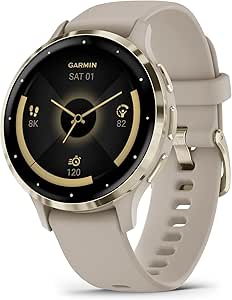
Garmin Venu 3S GPS Fitness Smartwatch, 41 mm, French Gray

Withings ScanWatch Light Hybrid Smartwatch, Black
As an affiliate, we earn on qualifying purchases.
How the Eight Picks Differ
According to ThorstenMeyerAI.com, the guide ranks the displays by how their stated features serve different needs: competitive speed, general-purpose QHD play, ultrawide immersion and a simpler entry point. It says it considered refresh rate, resolution, screen size and shape, adaptive-sync support, connections and intended buyer. The guide says models with overlapping 240Hz QHD specifications were distinguished by their feature sets and buyer fit, rather than by unsupported claims about image quality or durability.
The guide describes most of the lineup as conventional QHD OLED or QD-OLED, with the Alienware as the ultrawide exception. It says both OLED and QD-OLED can provide per-pixel lighting and deep contrast, but cautions that a panel label alone does not establish how a specific monitor handles reflections, brightness or color. Those qualities require model-specific specifications or independent testing.
Specifications Still Need Checking
ThorstenMeyerAI.com’s guide does not state prices, availability, publication date or independent test results. It also omits full model names for several entries and detailed port counts or capabilities for every monitor. The ranking is the guide’s assessment, not a reported laboratory comparison.
The source does not establish whether all eight models will be available in 2027 or whether their specifications will change. Buyers should confirm current manufacturer listings, supported resolution and refresh rates over their chosen connection, and compatibility with their games and consoles. The guide does not establish that one panel type is universally better for bright rooms or mixed work and gaming.
Verify Models Before Buying
The guide’s practical next step for readers is to compare the exact model numbers and current specifications against their PC, console, desk space and games. Competitive players should consider whether their system can take advantage of 360Hz at QHD; ultrawide shoppers should check game support and available desk width. Console and multi-device users should confirm the monitor’s input capabilities and supported output modes.
Because ThorstenMeyerAI.com’s guide does not include prices or measurements, a purchase decision also calls for checking current retailer listings, manufacturer documentation and independent reviews. Those sources can clarify actual performance, room suitability, connectivity and OLED-care features before a buyer commits.
Key Questions
Which monitor does the guide rank first?
ThorstenMeyerAI.com’s guide ranks the ASUS ROG Strix XG27ACDNG best overall, citing its stated QHD QD-OLED panel and 360Hz refresh rate.
Which pick is aimed at ultrawide gaming?
The Alienware AW3425DW is the guide’s 34.2-inch curved ultrawide option. ThorstenMeyerAI.com says buyers should check whether their games support ultrawide formats and whether their desk can accommodate the wider screen.
Does a 360Hz monitor guarantee 360 frames per second?
No. The guide describes refresh rate as a monitor specification, not a guarantee that a PC will render every game at that frame rate. Results depend on the game and computer hardware.
What should buyers check before choosing an OLED monitor?
ThorstenMeyerAI.com advises buyers to check the exact model’s ports, supported resolution and refresh rate, game or console compatibility, screen dimensions and manufacturer guidance on OLED care. The guide does not provide complete specifications or prices for all eight picks.
Source: ThorstenMeyerAI.com