
🔍 Read the full analysis: 10 Top Graphics Cards For AI, Gaming, And Everyday Use In 2026 on ThorstenMeyerAI.com
TL;DR
A newly published 2026 graphics-card roundup from ThorstenMeyerAI.com ranks 10 cards by intended job, led by the GIGABYTE Radeon RX 9070 XT Gaming OC 16G for most gaming builds. The list spans modern 16GB GPUs (RX 9070 XT, RTX 5080, RTX 5070) down to legacy GT 730, GT 740, and RX 580 boards for display and older-system needs.
A new 2026 graphics-card roundup from ThorstenMeyerAI.com names the GIGABYTE Radeon RX 9070 XT Gaming OC 16G as the recommended starting point for most gaming PCs, leading a ten-card list that stretches from current-generation 16GB GPUs down to legacy boards sold mainly for extra display outputs. The ranking organizes the market into three practical tiers: high-performance gaming cards, a restrained current-generation option, and older GPUs that serve narrower upgrade needs rather than modern gaming.
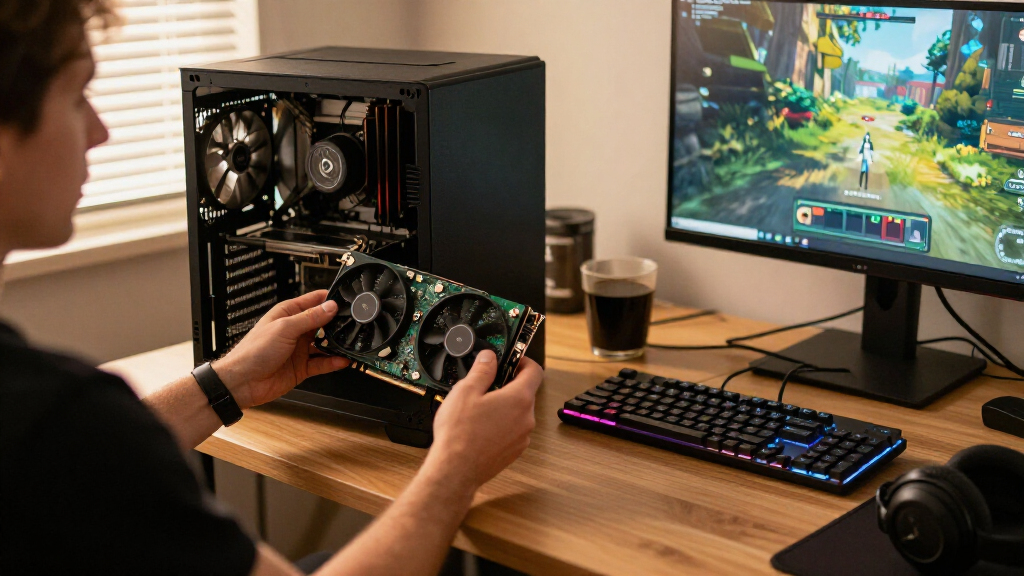
The roundup’s high-performance group consists of the RX 9070 XT and RTX 5080 cards, which carry 16GB of graphics memory — hardware that also appears in rankings of the best graphics cards for gaming, AI, and creative work. The ASUS Prime GeForce RTX 5070 is positioned one step below in memory capacity and market placement, described by the author as a “more measured option.” Below that sit the RX 580 with 8GB of memory and the GT 730 and GT 740, which the site says should not be treated as current gaming alternatives.
According to the site’s methodology, cards were ranked by the likely job implied by the purchase: current gaming, upgrading an older PC, or adding display support — an approach similar to guides covering top-rated graphics cards for AI and machine learning. The author gave more weight to GPU generation, memory capacity, and the card’s place in its product family, while also considering cooler and form-factor fit. The stated tradeoffs across the list are gaming capability, memory, card size, power needs, and whether the buyer needs modern gaming hardware or simply extra display outputs.
The site emphasizes that boards sharing a GPU are not interchangeable. The ASUS Prime RX 9070 XT and GIGABYTE Gaming OC RX 9070 XT differ in cooler design, dimensions, and system fit, and the three RTX 5080 variants are compared primarily on cooler performance and physical fit, with the ROG Astral White singled out for its distinctive build appearance rather than extra speed.
The 10 picks
- 1
 ASUS ROG Astral GeForce RTX 5080 16GB GDDR7 White OC Edition Graphics CardView on Amazon →
 - 2
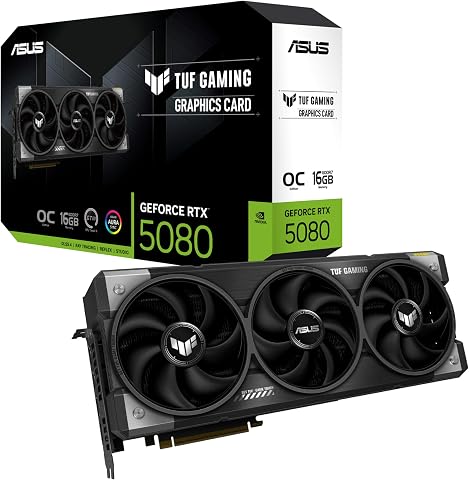 ASUS TUF Gaming GeForce RTX 5080 16GB GDDR7 OC Edition Graphics CardView on Amazon →
 - 3
 GIGABYTE GeForce RTX 5080 Gaming OC 16G Graphics CardView on Amazon →
 - 4
 ASUS Prime NVIDIA GeForce RTX 5070 OC Edition Graphics CardView on Amazon →
 - 5
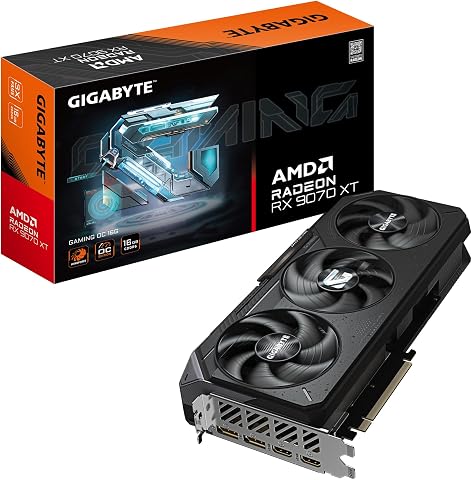 GIGABYTE Radeon RX 9070 XT Gaming OC 16G Graphics CardView on Amazon →
 - 6
 ASUS Prime Radeon RX 9070 XT 16GB GDDR6 OC Edition Gaming Graphics CardView on Amazon →
 - 7
 ASRock Radeon RX 9070 Challenger 16GB OC Graphics Card, RDNA 4, 2520MHz Boost…View on Amazon →
 - 8
 Kelinx AISURIX RX 580 8GB GDDR5 Graphics Card with Dual HDMI and DisplayPortView on Amazon →
 - 9
 GT 730 Graphics Card 4GB DDR3 64-bit with HDMI, DisplayPort, VGAView on Amazon →
 - 10
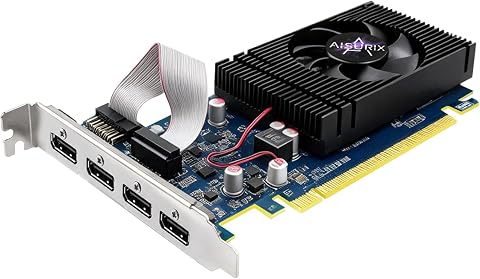 AISURIX GT 740 4GB GDDR5 Low-Profile Graphics Card with 4 HDMI PortsView on Amazon →
Why This Buyer’s Ranking Matters in 2026
Graphics-card buyers in 2026 face a market where model names alone don’t determine fit. Two cards built on the same GPU can differ in length, thickness, slot coverage, and power requirements — differences the roundup argues matter more than branding. For readers, the practical value is a framework that starts with the system and the job, not the spec sheet.
The ranking also addresses a common purchasing mistake the site identifies: comparing model names without checking performance tests for the specific games and resolutions a buyer actually uses. A fast card can be underused with lighter games or a modest monitor, while an older GPU with ample memory is not automatically fast.
The Ten Picks and Their Assigned Roles
1. GIGABYTE Radeon RX 9070 XT Gaming OC 16G — Top Overall Pick
The site’s default recommendation for most gaming PCs, pairing a current-generation GPU with 16GB of memory.
2. ASUS Prime RX 9070 XT — Same GPU, Different Board
Shares the RX 9070 XT GPU class with the GIGABYTE card; buyers should compare cooler design and case fit rather than treating the two as identical.
3. ASUS Prime GeForce RTX 5070 — The Measured Option
A step down in memory capacity and positioning, positioned as a restrained current-generation route for less demanding builds.
4. RTX 5080 (Premium Variant One)
Part of the high-performance tier targeting buyers building for higher frame rates and premium features.
5. RTX 5080 (Premium Variant Two)
Another board in the 5080 family; the site says physical fit and cooling, not GPU differences, separate these variants.
6. ROG Astral RTX 5080 White — The Style-Focused Build Card
The third 5080 option, emphasized for a distinctive build appearance alongside the same 16GB GPU platform.
7. Radeon RX 580 — The Legacy Middle Ground
Its 8GB of memory may suit an older budget system, but the site warns that its age makes platform condition and game expectations the deciding factors.
8. GeForce GT 740 — The Low-Profile Fit
Its low-profile format addresses small-case constraints that full-size gaming cards cannot, but it is not a current gaming alternative.
9. GeForce GT 730 — The Display-Output Card
Serves buyers who need multiple monitor connections rather than gaming capability, according to the roundup.
10. Legacy Upgrade Cards as a Group
The site treats the GT 730, GT 740, and RX 580 collectively as targeted upgrades for older PCs — not substitutes for the newer GPUs on the list.
“For most gaming PCs, I’d start with the GIGABYTE Radeon RX 9070 XT Gaming OC 16G, which pairs a current-generation GPU with 16GB of memory.”
— ThorstenMeyerAI.com roundup author
What the Roundup Leaves Open
The source material does not include independent benchmark data, pricing, or availability for any of the ten cards, so the ranking reflects the site’s editorial judgment rather than published test results. The exact identity of two of the three RTX 5080 variants is not specified beyond the ROG Astral White. The article also does not address AI workload performance in depth despite the roundup’s framing, and it is not clear how the picks account for stock fluctuations or price shifts through 2026.
Before You Buy Any of These Cards
Buyers should verify four things, per the site’s guidance: check case fit by measuring clearance from the rear expansion slots; confirm the power supply rating, connectors, and headroom for the rest of the system; match the GPU to the games, resolution, and settings they actually use; and choose memory capacity based on workload, not the largest number. For creative and AI applications, the site recommends consulting the software’s own hardware guidance. Prices and availability for the RTX 50-series and RX 9000-series cards should be rechecked at purchase time, as the roundup does not lock in current market figures.
Key Questions
Which graphics card does the roundup recommend for most gaming PCs?
The GIGABYTE Radeon RX 9070 XT Gaming OC 16G, which combines a current-generation GPU with 16GB of memory, according to ThorstenMeyerAI.com.
Are the GT 730 and GT 740 viable for gaming in 2026?
No. The site states these cards serve display and compact-PC needs and are not current gaming alternatives, despite features like multiple outputs or a low-profile design.
What is the difference between the ASUS Prime and GIGABYTE RX 9070 XT cards?
They share the same GPU class, so the meaningful differences are in cooler design, card dimensions, and system fit, not the underlying chip, the site says.
Does more graphics memory mean better performance?
Not by itself. The roundup notes that more memory alone does not make an older GPU fast, and capacity should be matched to resolution, texture detail, and workload size.
Do I need to upgrade my power supply with a new card?
Possibly. The site advises checking the manufacturer’s recommended supply, available connectors, and leaving headroom — especially for the RTX 5080 and RX 9070 XT class of cards.
Source: ThorstenMeyerAI.com