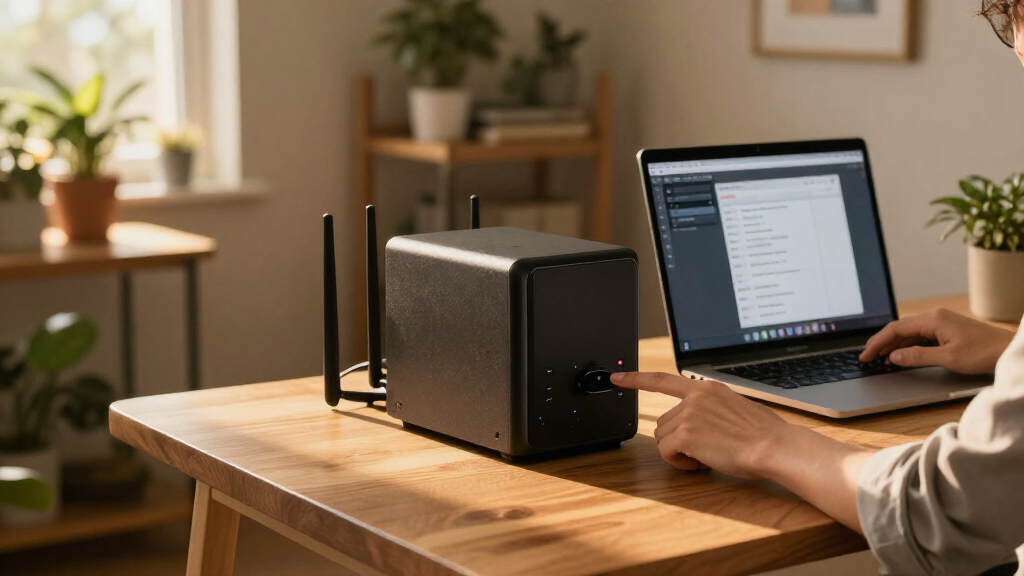
🔍 Read the full analysis: 10 NAS Devices To Explore For Your Home Or Business In 2027 on ThorstenMeyerAI.com

Get the little things that make your day delivered free with Prime
- Fast, free delivery on millions of items
- Prime Video, Amazon Music and more included
- Member-only deals all year
TL;DR
A buying guide from ThorstenMeyerAI.com compares 10 NAS devices for home and business use, ranking the Synology DS225+ as its best overall balance. The lineup ranges from simple one-bay units to rackmount systems; the guide says the right choice depends on storage needs, drive redundancy, software, and setup.
ThorstenMeyerAI.com has published a 10-device NAS buying guide for home and business users, naming the Synology DS225+ its best overall balance. The list spans basic single-drive storage, two-bay personal systems and larger rackmount devices, highlighting how capacity, redundancy, software and installation needs can change which model fits a buyer.
The guide places the DS225+ first for buyers seeking a flexible, manageable two-bay system, a category also covered in these NAS picks for home and small business. It also points to the UGREEN NASync DXP2800 for personal storage and the QNAP TS-864eU-8G-US for rack-based installations with a larger capacity plan. Those rankings are the source’s assessment, not an independent test result presented in the material.
The 10 models covered are the Synology DS225+, UGREEN NASync DXP2800, QNAP TS-864eU-8G-US, BUFFALO TeraStation 5420RN, BUFFALO LinkStation 210, Synology DS124, Synology DS223j, UGREEN DH2300, and two LinkStation 210 configurations. The source names ten picks but describes only nine distinct model names in its supplied text; it does not identify a tenth distinct device.
Drive arrangements vary. The guide identifies the DS225+, DS223j and DXP2800 as diskless options, meaning buyers must purchase and install drives separately. It also discusses drive-bundled models in general, but does not specify which listed configurations include drives or give prices, capacities, or compatibility details.
The 10 picks
- 1
 QNAP TS-864eU-8G-US 8-Bay Short-Depth Rackmount NAS, DisklessView on Amazon →
- 2
 UGREEN NAS DXP4800 Pro 4-Bay Desktop NAS with Intel Core i3-1315U, 8GB DDR5,…View on Amazon →
- 3
 UGREEN NAS DXP2800 2-Bay for Advanced Home Users, Remote Workers & CreatorsView on Amazon →
- 4
 Synology DS225+ 2-Bay Diskless NASView on Amazon →
- 5
 UGREEN NAS DH2300 2-Bay Desktop NASync, Support Capacity 64TB (Diskless), Rem…View on Amazon →
- 6
 BUFFALO TeraStation 5420RN 4-Bay Rackmount NAS, 32 TB with Four 8 TB DrivesView on Amazon →
- 7
 Synology DiskStation DS223j 2-Bay NAS Enclosure (Diskless)View on Amazon →
- 8
 BUFFALO LinkStation 210 4TB 1-Bay Network Attached StorageView on Amazon →
- 9
 Synology DS124 1-Bay Diskless NAS for Backup, File Sharing, and Home Surveill…View on Amazon →
- 10BUFFALO LinkStation 210 2TB 1-Bay NAS Network Attached StorageView on Amazon →
How Bay Count Changes the Tradeoffs
The list matters because NAS enclosures are not interchangeable: a system intended for a household photo library may be unnecessarily complex for a basic backup, while a one-bay unit may fall short where continued access after a drive failure matters. The guide’s central distinction is between simplicity and room to grow, with larger systems bringing more capacity options and management demands.
It also cautions that drive mirroring is not a complete backup. Mirroring can preserve availability after a single drive failure, but it does not protect against accidental deletion, malware, theft or damage to the whole device. Buyers should plan a separate copy of important files and consider how they would restore them.
Products Worth Considering

Levoit Vital 100S-P Air Purifier for Home and Pets

Philips Sonicare 7300 Rechargeable Electric Toothbrush with 3 Brush Heads, Black

Oral-B iO3 Rechargeable Electric Toothbrush with 3 Cleaning Modes, Pressure Sensor, 2 Brush Heads and Travel Case, White
As an affiliate, we earn on qualifying purchases.
What the Guide Compares
The source says it ranked devices by their fit for shared files, computer and phone backups, media libraries and business storage. Its method gives weight to bay count, flexibility, setup effort and drive inclusion, rather than treating the largest system as automatically best. That approach puts a two-bay unit ahead of rackmount hardware for typical household use, while reserving larger systems for organizations with suitable infrastructure.
One-bay models such as the Synology DS124 and BUFFALO LinkStation 210 are described as straightforward options for basic file sharing. The source warns that one drive cannot provide internal drive redundancy. Two-bay devices allow more storage arrangements, including mirroring, while four- and eight-bay systems are framed as choices for larger plans and rack environments.
Software and maintenance are also part of the comparison. The source characterizes Synology models as emphasizing a familiar NAS ecosystem, while the UGREEN DXP2800 and DH2300 target personal storage and phone backup with different levels of capability and complexity. It does not provide a detailed, model-by-model feature table in the supplied material.
“The DS225+ is the strongest all-rounder in this lineup.”
— ThorstenMeyerAI.com buying guide
What the Source Leaves Unspecified
The supplied source material does not give a publication date, prices, detailed specifications, measured performance results or a complete drive-inclusion breakdown. It also does not identify a tenth distinct model, despite describing the article as a list of 10 devices and naming ten picks. The two LinkStation 210 configurations may account for the count, but the source does not explain whether they are separate packages or distinct products.
Although the title refers to 2027, the material does not confirm that each model will remain available or current in that year. Its rankings should be read as the source’s recommendations, not as a guarantee that a device suits every network, workload or budget.
Checks Before You Buy
Buyers should verify current availability, total cost including drives, supported drive compatibility and the model’s software features before choosing. They should estimate storage growth, check that the network and installation location suit the device, and decide whether they need user permissions or scheduled backups.
For important files, the next step is to plan a separate backup destination and test restoring data. The source gives no future product announcements or update schedule, so any changes to model availability or the recommendations remain unreported.
Key Questions
Which NAS does the guide rank first?
The guide names the Synology DS225+ its best overall balance, particularly for buyers seeking a flexible two-bay system that remains manageable for home use.
Why might a one-bay NAS be a poor choice for important files?
A one-bay system has no second internal drive for redundancy. If its drive fails, stored files may become unavailable, so the guide advises keeping another copy elsewhere.
Does mirroring replace a backup?
No. Mirroring may help maintain access after a drive failure, but it does not protect against events such as accidental deletion, malware, theft or damage to the entire NAS.
What does diskless mean for a buyer?
A diskless NAS is sold without storage drives. Buyers choose and purchase compatible drives separately and should include their cost and installation in the overall plan.
Does the source name 10 distinct NAS models?
No. The supplied material names nine distinct model names and refers to two LinkStation 210 units or configurations. It does not clarify whether those are separate configurations or identify another distinct model.
Source: ThorstenMeyerAI.com