

Planning is your roadmap for setting goals, strategies, and allocating resources, focusing on the big picture and future scenarios. Forecasting, on the other hand, uses current and past data to predict specific outcomes like sales or revenue. While planning guides your overall direction, forecasting provides the numbers to support your decisions. Together, they help you adapt to change and manage risks more effectively. Stick around to explore how these processes work hand-in-hand to strengthen your strategy.

Get the little things that make your day delivered free with Prime
- Fast, free delivery on millions of items
- Prime Video, Amazon Music and more included
- Member-only deals all year
Key Takeaways
- Planning sets strategic goals and outlines actions, while forecasting predicts future outcomes based on data.
- Planning involves detailed steps, resource allocation, and scenario analysis; forecasting analyzes historical data and trends.
- Planning is proactive and focuses on long-term strategies; forecasting is reactive and provides short-term projections.
- Planning considers potential future scenarios and risk mitigation; forecasting adjusts plans based on new data.
- Both are interconnected, with forecasting providing the numerical foundation for effective planning.
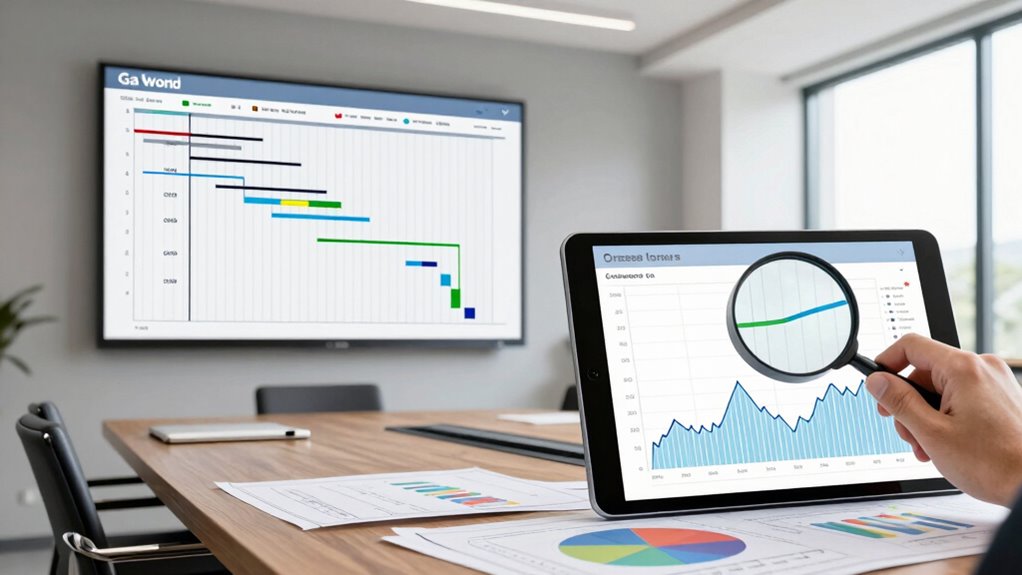
Have you ever wondered how businesses stay ahead of the curve? It all comes down to effective planning and forecasting. While they’re often used interchangeably, these two concepts serve different purposes and play distinct roles in a company’s strategy. Understanding the difference helps you make smarter decisions and better prepare for the future.
Planning is your roadmap—it’s about setting goals, defining strategies, and establishing a clear course of action. When you plan, you’re looking at the bigger picture and deciding where you want your business to go. It involves detailed steps, resource allocations, and timelines to achieve your objectives. Planning also incorporates scenario analysis, allowing you to anticipate different future conditions. For example, you might evaluate how market changes or new regulations could impact your operations. This process is vital for risk management because it helps you identify potential threats early. By understanding possible scenarios, you can develop contingency plans to mitigate risks, guaranteeing your business remains resilient no matter what happens. Additionally, effective planning often involves risk assessment to identify vulnerabilities before they materialize. Understanding market trends can further enhance your ability to adapt your strategies proactively. Incorporating requirements traceability can also ensure that your plans align with compliance standards and project goals.
Forecasting, on the other hand, is about predicting future outcomes based on current data and trends. It’s a more data-driven approach where you analyze historical performance, market patterns, and other relevant information to estimate where your business is headed. Forecasts provide actionable insights, such as projected sales figures, revenue, or expenses, enabling you to allocate resources effectively. While planning sets the strategic direction, forecasting offers the numbers to support those plans. For instance, if your forecast predicts a dip in sales, you might adjust marketing efforts or cut costs to stay on track. Forecasting is dynamic; as new data emerges, your forecasts can change, prompting you to revisit your plans accordingly. Using accurate data from projectors and other technology can improve the precision of your forecasts.
The key difference lies in their purpose: planning is about setting goals and preparing for various futures, while forecasting is about estimating what will likely happen. Both are interconnected and essential for robust risk management. Planning ensures you have strategies ready for different scenarios, and forecasting provides the data needed to refine those strategies. When used together, they help you navigate uncertainty with confidence, making your business more adaptable and better prepared for whatever lies ahead. So, by mastering the distinction and effectively integrating both, you position your business to thrive in an ever-changing environment.
As an affiliate, we earn on qualifying purchases.
Frequently Asked Questions
How Do Planning and Forecasting Impact Organizational Decision-Making?
You influence organizational decision-making by using planning and forecasting to guarantee strategic alignment and effective resource allocation. Planning helps you set clear goals and define actions, guiding your team’s efforts. Forecasting provides data-driven insights, enabling you to adjust strategies proactively. Together, they help you make informed decisions, prioritize initiatives, and allocate resources wisely, ultimately driving your organization toward long-term success and resilience.
Can Planning and Forecasting Be Integrated Into a Single Process?
Yes, you can integrate planning and forecasting into a single process, which enhances strategic alignment and resource allocation. Research shows companies with integrated processes see a 20% improvement in decision accuracy. By combining these activities, you guarantee forecasts inform your plans and vice versa, making your organization more agile. This unified approach helps you adapt quickly to market changes, optimize resources, and set clearer, more achievable goals.
What Are Common Tools Used for Planning and Forecasting?
You typically use tools like spreadsheets for scenario analysis and trend projection in planning and forecasting. Scenario analysis helps you explore different future possibilities, while trend projection relies on historical data to predict future outcomes. You might also use specialized software like ERP systems or forecasting platforms that integrate these tools, making it easier to develop accurate plans and forecasts. These tools help you make informed decisions amidst uncertainty.
How Do Uncertainties Affect Planning Versus Forecasting?
Ever wonder how uncertainties shake up your plans and forecasts? You realize that uncertainties make planning more flexible, relying on uncertainty modeling and risk assessment to adapt strategies as conditions change. Forecasting, however, becomes less reliable because it depends on past data, which might not predict sudden shifts. So, you must account for risk and uncertainty to stay resilient, adjusting your approach as new information emerges.
What Skills Are Essential for Effective Planning and Forecasting?
You need strong analytical skills to identify key variables and perform scenario analysis effectively. Critical thinking helps you anticipate potential risks and adapt your plans accordingly. Communication skills are essential for coordinating with teams and stakeholders. Additionally, understanding risk management enables you to mitigate uncertainties. Combining these skills ensures your planning is resilient and your forecasting remains accurate, even amid unpredictable circumstances.
As an affiliate, we earn on qualifying purchases.
Conclusion
Now, picture yourself steering a ship through calm and stormy waters alike. Planning is your steady compass, setting a course based on what you know, while forecasting is the weather report, predicting storms ahead. Both guide your journey, but only combined can you navigate confidently through the unpredictable seas of business. Embrace both tools, and you’ll sail with purpose, ready to face whatever the horizon reveals.
As an affiliate, we earn on qualifying purchases.
business risk management software
As an affiliate, we earn on qualifying purchases.
As an affiliate, we earn on qualifying purchases.
Halloween Picks
halloween
As an affiliate, we earn on qualifying purchases.