To design a minimalist home with space and serenity, focus on simplicity by choosing furniture and decor with clean lines, and prioritize open floor plans that reduce clutter. Use calming neutral colors and natural light to create a peaceful atmosphere. Opt for multi-use furniture and hidden storage to maximize space. Incorporate sustainable materials and adaptable elements for a personalized touch. Keep exploring to discover how these principles can transform your living environment into a tranquil retreat.
Key Takeaways
- Prioritize open floor plans and uncluttered layouts to enhance spaciousness and promote a sense of calm.
- Use a neutral, earthy color palette with light tones to reflect natural light and evoke serenity.
- Select simple, multi-purpose furniture with clean lines to maximize functionality without visual clutter.
- Incorporate hidden storage solutions and modular furniture to maintain an organized, airy space.
- Choose eco-friendly materials and energy-efficient solutions to support sustainable living and promote well-being.

AMADA 66"Convertible Futon Sofa Bed, Corduroy Folding Futon Set with Adjustable Backrest &Armrests, Recliner Lounge for Living Room, Apartment or Office, Solid Wood Frame, Loveseat Sofa – Beige White
Sturdy Futon Sofa Bed: Built with strong wood legs and frame, ths futon couch can support up to…
As an affiliate, we earn on qualifying purchases.
As an affiliate, we earn on qualifying purchases.
Embracing Simplicity: Core Principles of Minimalist Design
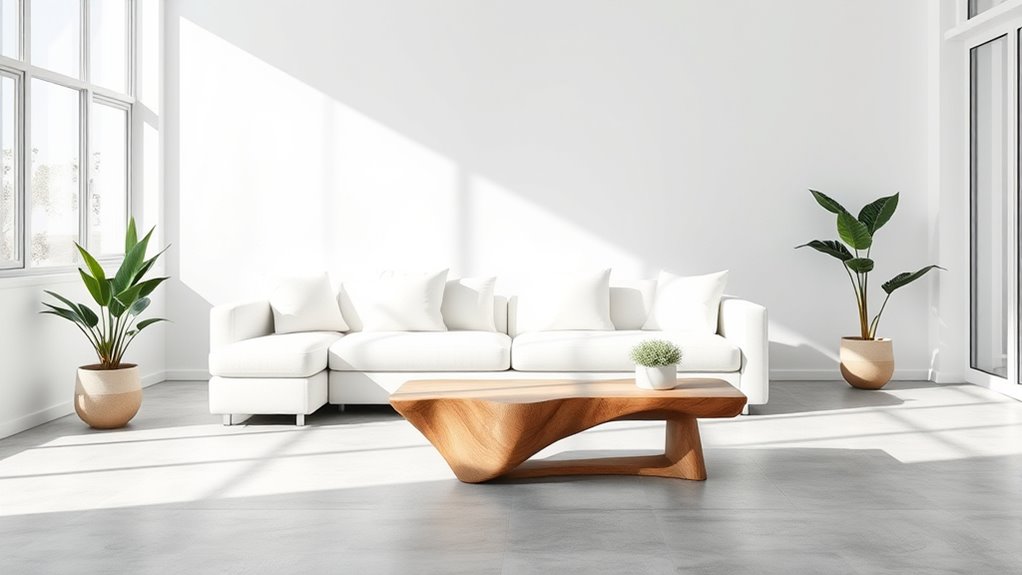
At the heart of minimalist design lies a commitment to simplicity, where every element serves a clear purpose. You focus on removing excess, highlighting only what truly matters. The “less is more” principle guides your choices, favoring quality over quantity. Clean lines, open spaces, and unobtrusive forms create a sense of calm and order. You prioritize harmony through thoughtful placement and natural light, ensuring each piece contributes to the overall serenity. Functionality is key; furniture is sleek and multi-purpose, reducing clutter. Neutral or earthy colors set a tranquil tone, supporting a soothing environment. By eliminating unnecessary decoration, you foster clarity and mindfulness. Incorporating energy-efficient solutions can further enhance your minimalist home by reducing environmental impact and promoting sustainability. Minimalist design isn’t just about aesthetics—it’s a lifestyle that promotes well-being, mental clarity, and a sense of spaciousness.
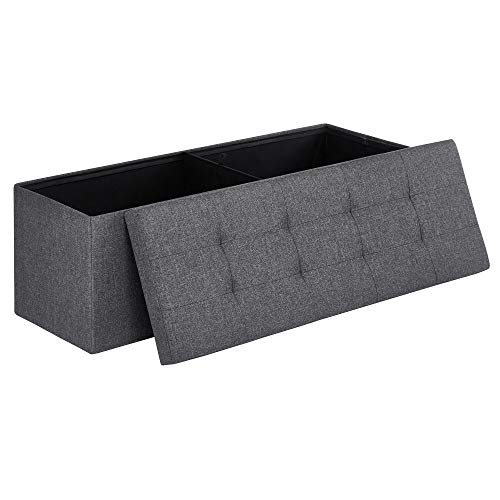
SONGMICS MAZIE Collection – 43 Inches Folding Storage Ottoman Bench, Ottoman Foot Rest, End of Bed Bench, Storage Chest, Load 660 lb, for Living Room, Bedroom, Entryway, Dark Gray ULSF77K
【QUICK ASSEMBLY, EASY FOLDAWAY】This storage ottoman from the SONGMICS MAZIE Collection has a foldable design that allows quick…
As an affiliate, we earn on qualifying purchases.
As an affiliate, we earn on qualifying purchases.
Choosing a Calming Color Palette for Serenity
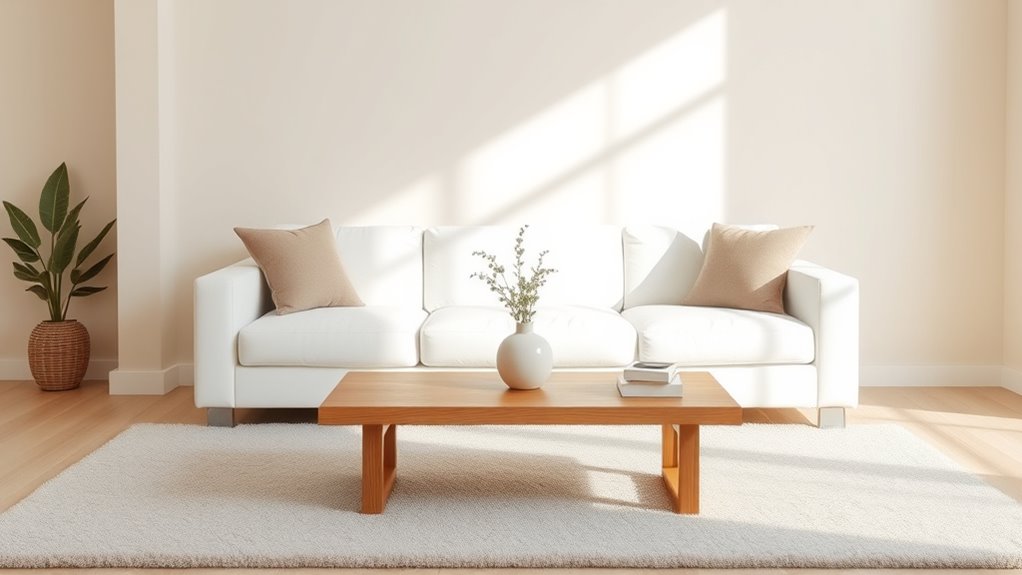
Choosing the right color palette plays a vital role in creating a calming, serene environment within your minimalist home. Stick to neutral tones like soft beiges, gentle grays, and warm whites, which promote tranquility and visual harmony. Earthy shades such as muted greens or warm taupes add warmth without overwhelming the senses. Keep your palette simple by limiting yourself to two or three main colors, allowing space for subtle variations and textures. Light colors reflect natural light, enhancing openness and airiness in your space. Avoid bright or bold hues that can disrupt the sense of calm. Instead, focus on colors that evoke relaxation and clarity, making your home a sanctuary where you feel peaceful and centered. High color accuracy in your decor and furnishings further supports a cohesive, soothing atmosphere.
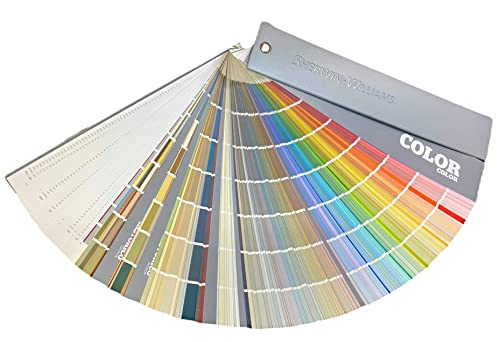
Sherwin Williams Colors collection Deck Complete Paint Colors
As an affiliate, we earn on qualifying purchases.
As an affiliate, we earn on qualifying purchases.
Selecting Functional and Sleek Furniture

Opting for functional and sleek furniture is essential to achieving a minimalist home that feels open and uncluttered. Choose pieces that serve multiple purposes, like a sofa bed or storage ottoman, to maximize utility without adding bulk. Focus on clean lines and simple designs that blend seamlessly into your space. Avoid ornate details or excessive decoration, keeping furniture visually calm. To help you understand the balance, consider this table:
| Functionality | Style | Space Impact |
|---|---|---|
| Multi-use | Sleek | Opens rooms |
| Storage | Neutral | Reduces clutter |
| Comfort | Minimal | Promotes calm |
This approach ensures your home remains serene and practical, emphasizing clarity and purpose in every piece. Incorporating affordable furniture options can also make maintaining a minimalist aesthetic more achievable and budget-friendly.
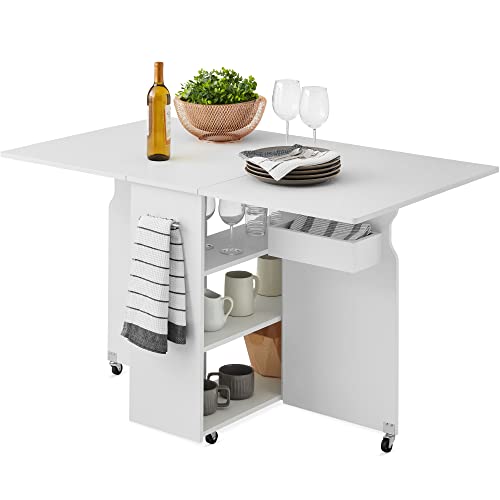
Best Choice Products Folding Dining Table, Multipurpose Space Saving Collapsible Drop Leaf Extension Desk w/Wheels, 3 Storage Shelves – White
MULTIPURPOSE TABLE: This versatile furniture piece can serve as a dining table, office desk, side or entry table,…
As an affiliate, we earn on qualifying purchases.
As an affiliate, we earn on qualifying purchases.
Optimizing Space With Open Plans and Hidden Storage
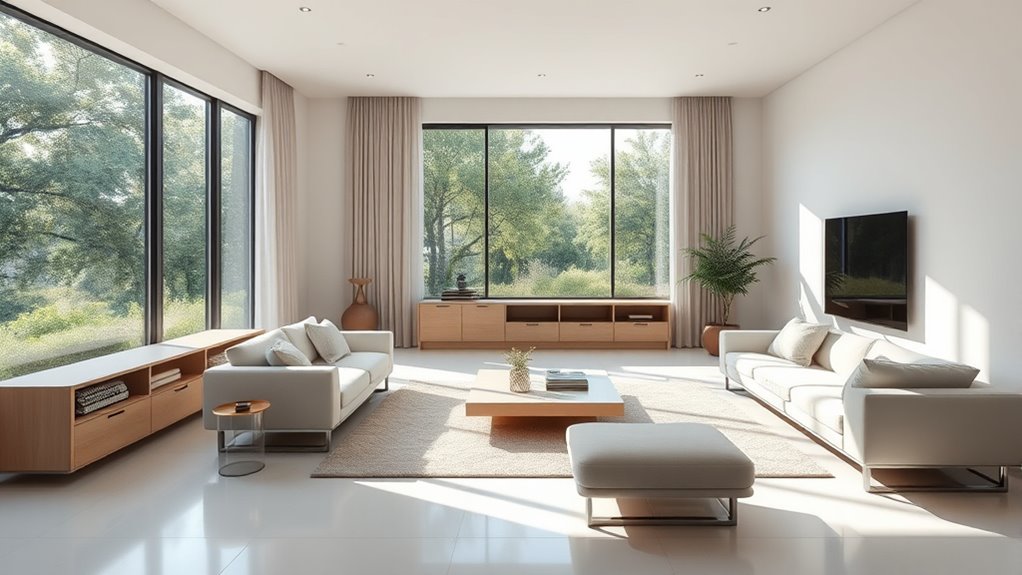
Open floor plans and hidden storage solutions are key strategies for enhancing space efficiency in a minimalist home. An open layout creates a sense of flow and spaciousness, making your rooms feel larger and more inviting. To maximize this effect, keep furniture minimal and well-placed, avoiding cluttered arrangements. Hidden storage is essential; choose furniture with built-in compartments, under-bed drawers, or wall-mounted cabinets that conceal belongings. Use dual-purpose pieces like ottomans or fold-out tables to reduce surface clutter. Incorporate clever niches or recessed shelving into walls for books or accessories, maintaining visual calm. These techniques help you keep essentials out of sight, preserving the serenity and order you seek in a minimalist space. Thoughtful design and sustainable living principles can further enhance your home’s functionality and eco-friendliness. Efficient storage and open plans work together to foster tranquility and functional living.
Incorporating Sustainable and Customizable Elements
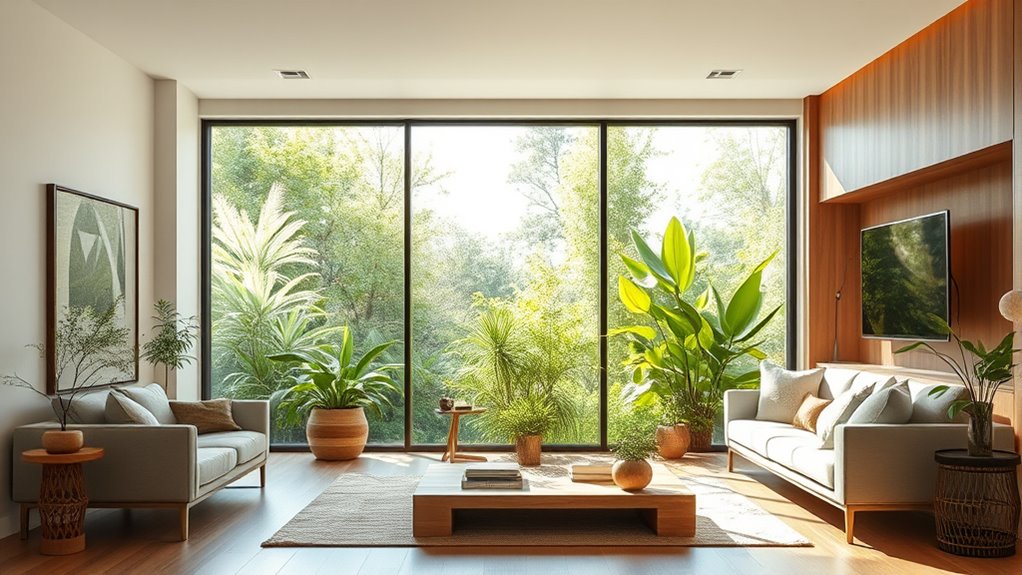
Integrating sustainable and customizable elements into a minimalist home allows you to tailor your space while reducing environmental impact. You can choose eco-friendly materials like reclaimed wood, bamboo, or recycled metal to build durable, long-lasting furniture and finishes. Opt for neutral or earthy color palettes that promote calm and flexibility, making it easy to update decor without wholesale changes. Customizable features, such as modular furniture or adaptable storage solutions, let you adjust your space as your needs evolve. Focus on quality over quantity to minimize waste and support sustainable practices. This approach not only enhances your home’s functionality but also aligns with your values, creating a peaceful environment that reflects your personality while caring for the planet. Incorporating emotional intelligence into your design choices can further enhance your space’s harmony and your overall well-being.
Frequently Asked Questions
How Can I Personalize a Minimalist Home Without Cluttering Spaces?
You can personalize your minimalist home by choosing meaningful accessories like art or textiles that reflect your style, but keep them simple. Opt for a few carefully selected pieces rather than cluttering surfaces. Use subtle pops of color through cushions or throws, and incorporate plants for a personal touch. Focus on quality over quantity, ensuring each item adds value without overwhelming the space, maintaining serenity and order.
What Are the Best Materials for Eco-Friendly Minimalist Furnishings?
Opting for sustainable materials elevates your minimalist space. Consider bamboo for its rapid renewability, reclaimed wood for character and eco-friendliness, and organic cotton or linen for textiles that breathe naturally. Using recycled metals and glass also adds a sleek touch while reducing environmental impact. These choices blend seamlessly into your clean, simple aesthetic, promoting both serenity and sustainability. Your mindful material selection creates a refined environment that’s as thoughtful as it is beautiful.
How Do Minimalist Designs Adapt to Changing Family Needs?
You adapt minimalist designs to changing family needs by choosing versatile, multi-purpose furniture that can serve different functions over time. You also opt for flexible layouts that can easily be reconfigured, and incorporate storage solutions that hide belongings, keeping spaces uncluttered. By selecting neutral palettes and simple forms, you create an adaptable environment that evolves with your family, maintaining serenity and functionality without sacrificing the minimalist aesthetic.
Can Minimalist Homes Incorporate Smart Technology Seamlessly?
Yes, minimalist homes can incorporate smart technology seamlessly. You can choose sleek, integrated devices that blend with your clean lines and neutral palettes. Wireless charging stations, smart lighting, and hidden speakers help maintain the uncluttered look while enhancing functionality. Opt for multi-purpose, tech-enabled furniture to keep your space organized and serene. These integrations boost convenience without sacrificing the simplicity and calmness that define minimalist living.
What Are Common Challenges When Transitioning to Minimalist Living?
You might find it challenging to let go of sentimental or bulky items, but embracing intentionality helps. Maintaining the minimalist aesthetic can feel restrictive initially, yet focusing on quality over quantity ensures comfort and style. Managing storage is another hurdle, but discreet solutions keep clutter out of sight. By prioritizing your well-being and simplifying your environment, you create a serene space that promotes clarity and reduces stress.
Conclusion
By embracing simplicity, choosing calming colors, and prioritizing functionality, you create a serene, minimalist home that feels spacious and peaceful. With thoughtful storage solutions and sustainable touches, you make your space truly your own. Are you ready to transform your home into a sanctuary of calm and clarity? Remember, less truly is more—so embrace the beauty of simplicity and enjoy the tranquility it brings every day.