
TL;DR

Get the little things that make your day delivered free with Prime
- Fast, free delivery on millions of items
- Prime Video, Amazon Music and more included
- Member-only deals all year
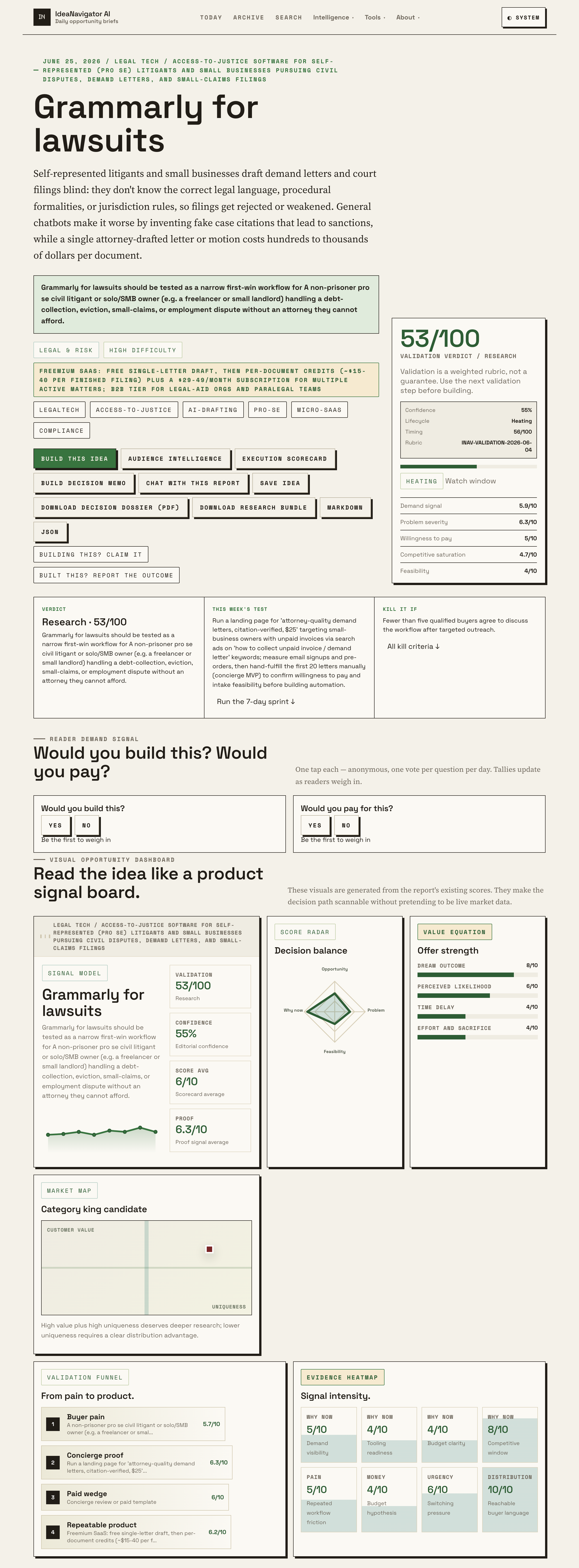
Grammarly is developing an AI-based tool designed to assist non-lawyer litigants in drafting court filings. The tool verifies citations and ensures proper formatting, addressing a critical gap for self-represented parties. Its effectiveness and availability are still being tested.
Grammarly is developing an AI-powered tool specifically designed to assist self-represented litigants in drafting court filings, demand letters, and small-claims documents. This initiative aims to address the widespread challenges faced by non-lawyer parties who often lack the legal expertise to produce correctly formatted and legally accurate documents, which can lead to rejections or sanctions. The tool’s primary feature is a citation verification system that cross-checks references against real legal databases, reducing the risk of hallucinated or incorrect citations that have become a common problem in AI-generated legal drafts. This development is significant for increasing access to justice for millions of Americans who handle civil disputes without legal representation.
The proposed Grammarly tool is designed as a web application that guides users through structured intake questions about the parties involved, the amount in dispute, relevant facts, and jurisdiction. Based on this input, it generates a properly formatted demand letter or court filing. The core innovation is a ‘lawsuit Grammarly’ pass that flags weak or missing elements, verifies statutory citations, and ensures compliance with court formatting standards. According to sources familiar with the project, this system aims to prevent the proliferation of hallucinated citations—erroneous legal references that have increasingly plagued AI-generated legal documents, especially in the context of pro se litigation.
Legal tech experts highlight that roughly 60% of civil cases in the U.S. now involve at least one self-represented party, with 27% of federal civil cases from 2000-2019 featuring pro se litigants. However, generic language models often produce citations that are fabricated or inaccurate, leading to sanctions or case dismissals. The Grammarly tool aims to fill a critical gap by providing verification-first drafting assistance that is court-formatting aware and legally reliable. The initial MVP (minimum viable product) will focus on demand collection letters for small landlords or small-business owners pursuing unpaid invoices or debt collection, with plans to expand to other civil filings.
Pricing models include a freemium SaaS approach: a free draft for a single letter, with additional documents costing approximately $15-40 each, and a monthly subscription of $29-49 for multiple active matters. B2B options for legal aid organizations and paralegal teams are also under consideration. The goal is to validate demand through a landing page targeting small-business owners using search ads for keywords like ‘how to collect unpaid invoice’ or ‘demand letter.’ The first 20 manually fulfilled letters will serve as a proof of concept before automating the process.
Why Verified Legal Drafting Matters for Access to Justice
This development could significantly improve access to justice by empowering self-represented litigants to produce legally sound documents, reducing errors that often lead to case dismissals or sanctions. It addresses a critical gap where AI tools have previously failed due to hallucinated citations, which can undermine the credibility of filings and increase court workload. By integrating citation verification and court formatting into an easy-to-use platform, Grammarly’s tool has the potential to democratize legal document preparation, especially for small-business owners and individuals who cannot afford attorneys. If successful, it could also set a new standard for AI-assisted legal drafting, emphasizing verification and compliance over raw generation.
legal citation verification software
As an affiliate, we earn on qualifying purchases.
As an affiliate, we earn on qualifying purchases.
Growing Need for Court-Ready, Citation-Verified AI Tools
Over 60% of civil cases in the U.S. involve self-represented litigants, with a significant portion of federal civil cases featuring pro se parties. Despite this, many such litigants lack access to affordable legal assistance and rely on generic AI chatbots that often produce hallucinated or incorrect citations. These errors have led to hundreds of documented cases of citation errors and sanctions, raising concerns about the reliability of AI-generated legal documents. The rise of AI tools in legal tech has outpaced the development of verification systems, creating an urgent need for solutions that can produce court-compliant, citation-verified filings. The Grammarly project aims to address this gap by combining drafting assistance with real-time verification against authoritative legal databases.
“The key challenge is ensuring that AI tools do not just generate text, but produce legally accurate, court-ready documents that can withstand scrutiny in a courtroom.”
— an anonymous researcher
As an affiliate, we earn on qualifying purchases.
Unclear Aspects of the Grammarly Legal Drafting Tool
It remains uncertain how effectively the tool will prevent hallucinated citations in practice, especially as it scales to more complex filings beyond initial prototypes. The timeline for full deployment, user adoption, and integration with existing court systems is also still developing. Additionally, whether the verification system will be able to keep pace with rapidly evolving legal databases and jurisdiction-specific requirements has yet to be confirmed. The extent to which the tool will be adopted by pro se litigants and small businesses remains an open question, as does its long-term impact on court efficiency and case outcomes.
As an affiliate, we earn on qualifying purchases.
Next Steps for Testing and Adoption of the Tool
The project is currently in initial testing phases, with plans to launch a pilot program targeting small-business owners and self-represented litigants. The first batch of manually reviewed demand letters will provide data on accuracy, usability, and willingness to pay. If the pilot demonstrates demand and reliability, the developers intend to expand the platform’s capabilities, automate more document types, and explore partnerships with legal aid organizations. Further, they will seek feedback from court officials and legal practitioners to refine verification processes and ensure compliance with jurisdictional standards. The ultimate goal is to establish a scalable, court-ready AI drafting solution that can be integrated into broader legal tech ecosystems.
demand letter template with citation check
As an affiliate, we earn on qualifying purchases.
As an affiliate, we earn on qualifying purchases.
Key Questions
How does the Grammarly legal drafting tool verify citations?
The tool cross-checks references against a real legal database, flagging any citations that are incorrect, fabricated, or outdated, to ensure accuracy before finalizing the document.
Will this tool be available for all types of civil filings?
Initially, the focus is on demand letters and small-claims filings, but there are plans to expand to other civil documents as the platform matures and proves reliable.
Can self-represented litigants rely solely on this AI for legal accuracy?
While the tool aims to improve accuracy, users should still review documents carefully and consider consulting legal resources or professionals for complex cases.
When will the tool be publicly available?
A full public release has not yet been announced; the current phase involves testing and pilot programs, with broader availability expected after validation.
Will the tool integrate with court filing systems?
Integration plans are under development, aiming to enable direct submission of filings from the platform once verified and compliant with court standards.
Source: IdeaNavigator AI
NFL season / tailgating Picks
team gear
As an affiliate, we earn on qualifying purchases.