
📊 Full opportunity report: AI And Aging In Place: A New Way To Check In on IdeaNavigator AI — validation score, market gap, and execution plan.

Get the little things that make your day delivered free with Prime
- Fast, free delivery on millions of items
- Prime Video, Amazon Music and more included
- Member-only deals all year
TL;DR
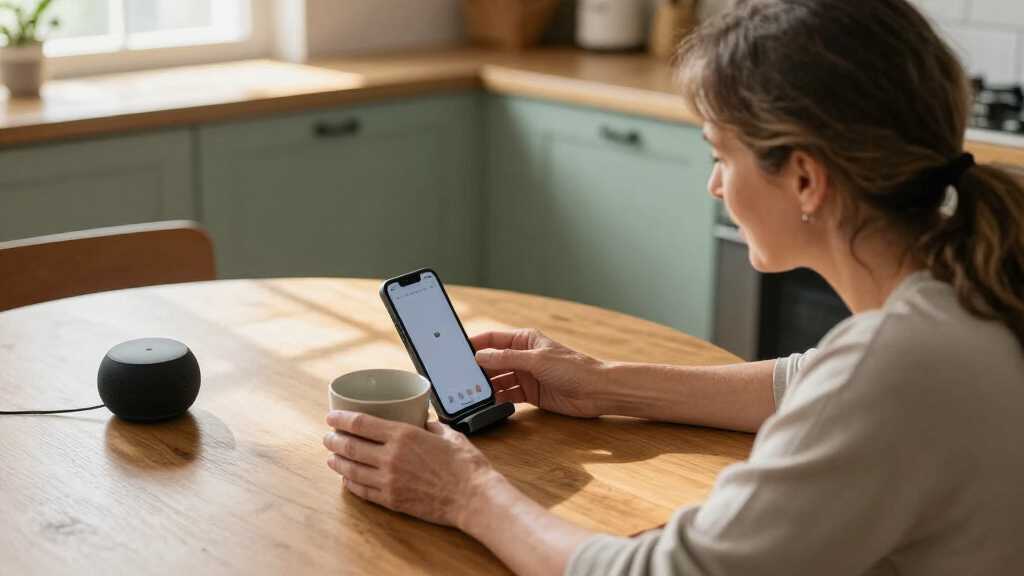
IdeaNavigator AI has proposed testing scheduled AI phone calls that ask seniors living alone a few wellness questions and text a family member an all-clear or flag a missed or concerning call. The suggested trial would involve 15 senior-and-adult-child pairs for three weeks; no pilot results or operating service are reported.
IdeaNavigator AI has proposed a three-week test of daily AI phone calls to seniors living alone, with a text to an adult child if a call is missed or raises concern. The proposal outlines a potential service, not a launched program: it suggests testing the calls with 15 senior-and-family pairs and measuring whether people answer and families value the alerts.
The proposed service would make a scheduled daily call to an older adult’s landline or mobile phone. During a short conversation, the AI would ask a few wellness questions. It would then send the adult child a simple all-clear message or flag a missed or concerning call, according to the IdeaNavigator AI proposal.
The intended customer is an adult child living in another city whose independent parent lives alone. The proposal identifies a familiar gap: relatives may worry about a parent but cannot speak with them every day, leaving a fall or difficult day potentially unnoticed until someone checks in. The proposed product is meant to add a routine check, not to replace family contact or emergency response.
To test demand, IdeaNavigator AI recommends arranging calls for 15 senior-and-adult-child pairs over three weeks. The suggested measures are call answer rates and whether families consider the all-clear alerts valuable enough to pay for. The proposed revenue model is a monthly subscription billed to the adult child for each parent enrolled.
A Routine Check, Not Emergency Care
The idea targets a practical concern for families: a relative may want regular confirmation that an older parent is doing well but cannot call daily. A scheduled call and a message about a missed response could provide another signal that a family member should follow up. Whether that signal helps in practice is one of the questions the proposed pilot is designed to test.
The distinction between a wellness check and emergency monitoring matters. The proposal describes a brief call and a text alert; it does not set out a system that detects falls, contacts emergency services, or guarantees that a person is safe. A missed call could have many explanations, while an answered call may not reveal every health or safety problem. Families would need clear information about what alerts mean and what action is expected of them.
The pilot also addresses whether the service is useful enough to support a subscription. A call that feels friendly and easy to answer could become a modest routine, but the proposal offers no evidence yet about acceptance, reliability, or willingness to pay. Those questions affect both the service’s potential value and the burden it could place on seniors and relatives.
Products Worth Considering

Levoit Core 400S-P Smart Air Purifier for Large Rooms

LEVOIT Vital 200S-P Smart Air Purifier for Large Rooms

Oura Ring 5 Smart Ring, Silver, Size 10
As an affiliate, we earn on qualifying purchases.
How the Proposed Pilot Works
IdeaNavigator AI frames daily calls as a narrow initial use for voice AI: a short, recurring conversation over an existing phone rather than a broader care platform. The proposal says natural-sounding voice AI can now conduct these calls affordably at scale, but it supplies no cost figures or test results to support that claim.
The recommended trial is limited in size and duration: 15 pairs for three weeks. That could offer early feedback on whether seniors answer and whether family members find alerts useful. It would not, by itself, establish how the service performs across a larger or more varied population, or whether it reliably identifies urgent situations.
Safety, Privacy and Pilot Results
No pilot results are provided. It is not clear whether a service has been built, when a trial might begin, or which seniors and families would take part. The proposed call-answer and willingness-to-pay measures are recommendations, not reported outcomes.
Details about safeguards are also absent. The proposal does not explain how the system would handle a confusing answer, a report of distress, a failed call, or a technical outage. It also does not specify how calls and responses would be stored, who could access them, how consent would work, or how the service would distinguish a routine missed call from a possible emergency. The accuracy of any AI assessment is not established.
There is no confirmed price, service provider, or evidence that families would subscribe. The claim that voice AI could make check-ins affordable at scale remains a proposition in the plan; no cost comparison or independent evaluation is given.
Testing Before Wider Use
The next step described is a three-week pilot with 15 pairs, tracking whether seniors answer calls and whether family members see value in the resulting messages. No timetable is stated, and it is not clear whether the test has been organized.
If a pilot proceeds, its results could indicate whether the basic routine is acceptable and whether families would consider paying for it. Any broader rollout would also require clear procedures for missed or concerning calls, privacy protections, consent, and limitations on what an automated check-in can establish. Until those details and test results are available, the proposal should be understood as an idea to evaluate rather than a demonstrated care service.
Source: IdeaNavigator AI
Key Questions
Is the AI check-in service already available?
The proposal describes a possible service and recommends a pilot. It does not say that a product is operating or available to families.
How would the proposed calls work?
An AI would make a scheduled daily call to a senior’s landline or mobile phone, ask a few wellness questions, and send the adult child an all-clear or a flag for a missed or concerning call.
What would the suggested pilot measure?
IdeaNavigator AI proposes testing 15 senior-and-adult-child pairs for three weeks, measuring call answer rates and whether families find the alerts worth paying for.
Would a missed call mean there is an emergency?
Not necessarily. The proposal does not define a missed call as an emergency or describe emergency-response procedures. A missed call could have several explanations, and the plan does not establish that the system can assess safety reliably.
How would the service make money?
The proposed business model is a monthly subscription charged to the adult child for each parent enrolled. No subscription price or evidence of customer demand is provided.
Source: IdeaNavigator AI