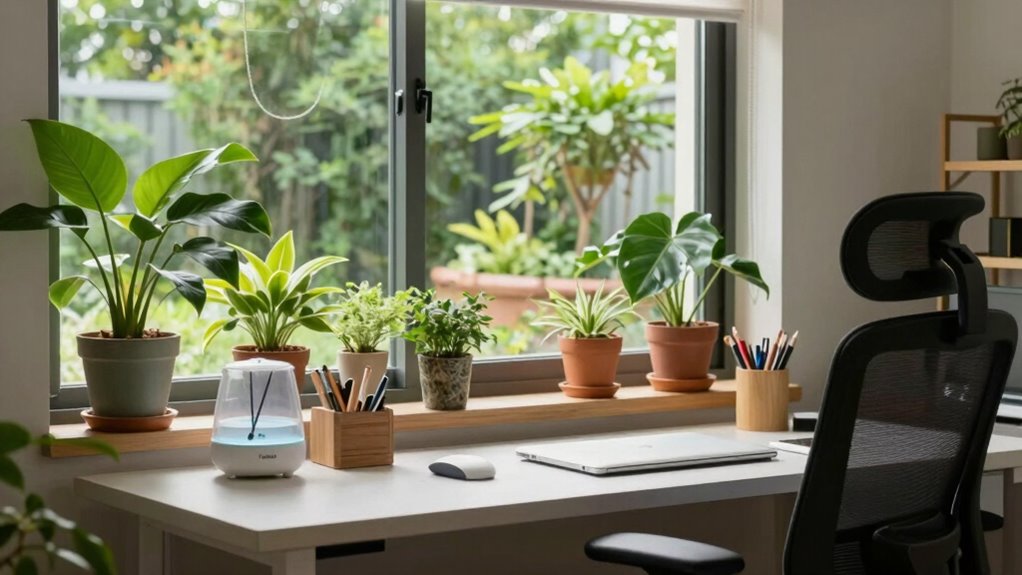

Tweaking your environment is more effective than relying solely on willpower because it automatically influences your behavior without needing constant effort. When you remove temptations and make healthy options more accessible, cues trigger positive habits naturally. Small changes in your surroundings reduce decision fatigue and help you act in line with your goals effortlessly. If you keep exploring, you’ll uncover how these simple adjustments can create lasting change with less stress.

Get the little things that make your day delivered free with Prime
- Fast, free delivery on millions of items
- Prime Video, Amazon Music and more included
- Member-only deals all year
Key Takeaways
- Environment modifications reduce reliance on mental effort by making healthy choices easier and more automatic.
- Small environmental changes can disrupt old unhealthy habits and promote new, beneficial behaviors effortlessly.
- Cues in the environment trigger automatic responses, decreasing the need for conscious willpower to resist temptations.
- Supportive surroundings reinforce positive behaviors, aligning actions with goals without constant self-control.
- Habit stacking and environment tweaks accelerate behavior change, making long-term habits sustainable through automatic processes.

Have you ever wondered why it’s so hard to stick to healthy habits despite your best intentions? The answer often lies not just in your motivation but in how your environment influences your behavior. When you focus solely on willpower, you’re fighting against a complex web of habits, cognitive biases, and environmental cues that shape your actions. This is where environment tweaks come into play—they can make the difference between success and failure.
Habit formation is a powerful force. It’s the process by which behaviors become automatic through repetition and consistent cues. When your surroundings are set up to support your goals, you don’t need to rely solely on mental effort. For instance, if you want to eat healthier, keeping fresh fruit visible on your kitchen counter makes it easier to choose a snack that aligns with your goal. Conversely, if unhealthy snacks are within arm’s reach, they’ll likely tempt you, regardless of how strong your willpower is. Small changes in your environment can break the cycle of old habits and pave the way for new, healthier ones.
Cognitive biases also play a significant role. Your mind is prone to shortcuts and errors in judgment, often leading you astray. For example, the availability bias makes you overestimate the likelihood of choosing unhealthy foods because they’re more accessible or familiar. The present bias makes short-term gratification—like indulging in junk food—more appealing than long-term health benefits. These biases are subconscious and can undermine your best intentions, especially when your environment reinforces them. Understanding cognitive biases can help you design better strategies to counteract their effects.
By tweaking your environment, you can counteract these biases. Out of sight, out of mind—if you hide unhealthy options and make nutritious choices more accessible, you’re reducing the mental effort needed to resist temptation. Instead of relying solely on willpower to fight cravings, you’re changing the cues that trigger those cravings in the first place. When your environment is aligned with your goals, your brain doesn’t have to work as hard to make the right decision. It’s a subtle yet powerful shift that takes advantage of automatic processes, reducing reliance on fleeting motivation or self-control. Recognizing the power of environmental cues is essential for creating sustainable habits. Additionally, creating supportive environments can reinforce positive behaviors and make healthy choices the default.
Furthermore, employing habit stacking techniques, where new habits are linked to existing routines, can accelerate this process by leveraging already established cues. Additionally, understanding that habit formation is a gradual process helps you be patient and consistent with your environment tweaks. When your environment is aligned with your goals, your brain doesn’t have to work as hard to make the right decision. It’s a subtle yet powerful shift that takes advantage of automatic processes, reducing reliance on fleeting motivation or self-control.
kitchen fruit bowl for healthy snacks
As an affiliate, we earn on qualifying purchases.
As an affiliate, we earn on qualifying purchases.
Frequently Asked Questions
How Quickly Can Environment Changes Influence Behavior?
Environment changes can influence your behavior almost instantly once you notice the new cues. By adjusting your surroundings, you create new behavioral cues that support habit formation, making it easier to stick to positive habits. These tweaks remove temptations and trigger automatic responses, so your actions align more quickly with your goals. Fundamentally, your environment can prompt behavior changes in just a matter of moments, accelerating the habit formation process.
Are Environment Tweaks Sustainable Long-Term Solutions?
Did you know that environment tweaks lead to a 66% increase in sustainable habit formation? Yes, they can be long-term solutions because they create consistent cues, reducing reliance on motivation strategies. When your surroundings support your goals, you naturally develop habits over time. By continuously optimizing your environment, you foster lasting change, making it easier to stick with positive behaviors without constantly battling willpower.
Can Environment Modifications Replace Willpower Entirely?
Environment modifications can’t replace willpower entirely, but they profoundly support habit formation by leveraging environmental cues. When your surroundings are optimized, they make healthier choices more automatic, reducing reliance on sheer willpower. You’re more likely to stick with positive habits because the environment consistently nudges you in the right direction. Over time, these cues help cement habits, making behaviors more sustainable without constant conscious effort.
What Are Common Mistakes When Adjusting Environments for Better Habits?
A common mistake in adjusting environments for better habits is underestimating the power of small changes. Studies show that 80% of habit formation relies on environmental cues, not willpower. In environmental psychology, people often overlook how easily clutter or distractions can derail progress. You might think big changes are necessary, but subtle tweaks—like placing healthy snacks at eye level—are more effective for consistent habit formation.
How Do Individual Differences Affect Environment-Based Behavior Change?
Your personal motivation and social influence profoundly impact how environment changes work for you. If you’re highly motivated, tweaking your surroundings boosts your habits. Conversely, if social influence is strong, your environment must align with your social circles to be effective. Recognizing these differences helps you tailor environment tweaks better, making behavior change smoother. You’ll find that understanding what drives you personally, and who influences you socially, makes environment-based strategies more successful.
refrigerator door storage for healthy foods
As an affiliate, we earn on qualifying purchases.
As an affiliate, we earn on qualifying purchases.
Conclusion
By making simple tweaks to your environment, you set yourself up for success without relying solely on brute willpower. Sure, some might argue that willpower is enough, but relying only on your self-control can lead to burnout. Small changes—like keeping healthy snacks handy or reducing distractions—create a supportive space that naturally guides your choices. Ultimately, environment tweaks make healthy habits easier and more sustainable, proving they’re a smarter strategy than constant willpower battles.
habit stacking tools for behavior change
As an affiliate, we earn on qualifying purchases.
As an affiliate, we earn on qualifying purchases.
As an affiliate, we earn on qualifying purchases.
NFL season / tailgating Picks
team gear
As an affiliate, we earn on qualifying purchases.