

To manage your screen time and social media, start by setting daily limits using app timers and creating device-free zones. Balance online activities with offline hobbies like exercise or spending time outdoors. Watch for signs of overload, such as headaches or irritability, and take regular breaks. Establish routines that prioritize offline connections and activities. Staying mindful of your habits can improve your well-being—keep exploring to discover more effective strategies.
Key Takeaways
- Set specific time limits for social media and screen use using app timers or device settings.
- Schedule regular offline activities like outdoor walks, hobbies, or family time to reduce digital dependence.
- Create device-free zones such as bedrooms or dining areas to promote mindful usage.
- Recognize physical and emotional signs of overload, like headaches or irritability, and take breaks accordingly.
- Practice digital detoxes periodically to reset habits and foster healthier offline routines.
Top picks for "digital habit manag"
Open Amazon search results for this keyword.
As an affiliate, we earn on qualifying purchases.
Understanding Global Screen Time Trends

Understanding global screen time trends reveals how our digital habits have evolved over recent years. Today, the average person spends about 6 hours and 40 minutes daily on screens, a substantial increase from previous years. Since 2013, global screen time has grown by roughly 30 to 50 minutes per day, driven by the rise of smartphones, streaming, and social media. During the COVID-19 pandemic, this trend accelerated, with many spending over 13 hours daily, especially remote workers. Different age groups and regions show varied patterns; teens in the U.S. average over 7 hours daily, while South Africans reach nearly 9.5 hours. This steady increase highlights how digital engagement has become an integral part of daily life, shaping habits and influencing well-being. Screen time habits have also been linked to changes in social interactions and mental health.
Impact of Excessive Digital Engagement

Excessive digital engagement can profoundly affect your mental and physical health. Spending too much time on screens increases your risk of anxiety, depression, and sleep disturbances. It also leads to physical issues like eye strain, neck pain, and reduced physical activity. When you’re glued to devices, your productivity and social skills can suffer. Consider these impacts:
Overusing screens harms mental, physical health, and social skills—find balance to protect your well-being.
- Higher likelihood of anxiety and depression
- Poor sleep quality and fatigue
- Physical discomfort and sedentary lifestyle
- Decline in focus and interpersonal skills
The more you engage digitally, the greater these risks become. Recognizing this connection helps you prioritize healthier habits. Limiting screen time, taking regular breaks, and engaging offline can protect your mental and physical well-being. Balance is key to maintaining a sustainable digital routine and nurturing your overall well-being Dad – Amazing Life Together.
Popular Content and Usage Patterns
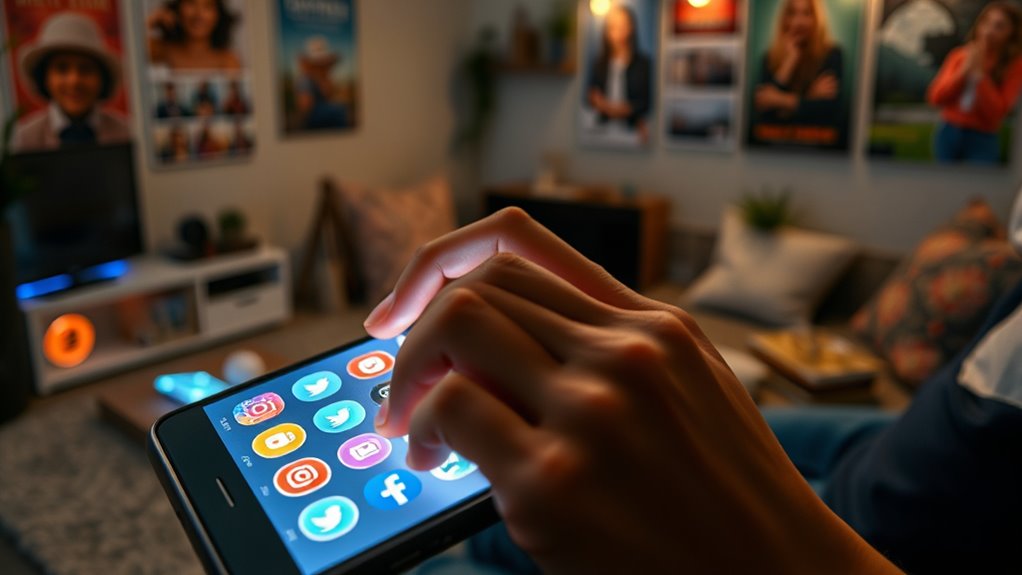
Online videos dominate your digital consumption, accounting for over half of the content you view daily. Platforms like YouTube, TikTok, and streaming services keep you hooked with short clips and full-length shows. You spend a significant portion of your screen time watching videos, which often shapes your interests and current trends. Social media apps contribute about 13% of your daily screen time, with platforms encouraging quick, engaging content that’s easy to scroll through. Gaming also plays a role, making up nearly 10% of your digital activity, offering interactive entertainment. Streaming services have replaced traditional TV, giving you on-demand access to movies and series. These content patterns reflect your desire for instant gratification, social connection, and entertainment, influencing how you spend your time online. Holistic approaches to health and wellness also impact how you choose to engage with digital content, emphasizing mindful consumption habits.
Recognizing Signs of Digital Overload

You might start noticing mood swings or increased irritability after long screen sessions. Physical discomforts like headaches, eye strain, or neck pain are common signs of overuse. Pay attention to these signals—they’re your body’s way of indicating it’s time to take a break. Additionally, being aware of digital overload can help you implement healthier screen habits.
Noticeable Mood Changes
Have you noticed your mood fluctuating after long hours on screens? Digital overload can cause noticeable mood changes, making you feel irritable, anxious, or disconnected. Recognizing these signs helps you address screen time habits early. Here are some common indicators:
- Sudden irritability or mood swings after prolonged device use.
- Feelings of fatigue or emotional numbness during or after screens.
- Increased frustration or impatience in daily interactions.
- Difficulty focusing or feeling overwhelmed without screens.
– Incorporating well-being tips such as taking regular breaks, practicing mindfulness, and engaging in offline activities can help mitigate these effects and support emotional balance.
Physical Discomfort Signs
Prolonged digital device use often leads to physical discomfort that signals your body is overloaded. You might notice your eyes feeling dry, itchy, or tired, a sign of digital eye strain. Headaches and blurred vision are common indicators that your eyes need a break. Neck and shoulder pain can develop from poor posture or extended screen time, causing stiffness and soreness. You may also experience wrist or hand discomfort from repetitive movements or improper ergonomics. Fatigue and muscle tension often accompany these symptoms, signaling your body’s need for rest. Recognizing these signs early helps you take action—like adjusting your screen position, taking breaks, or stretching—to prevent long-term issues and maintain comfort during your digital routines. Additionally, understanding the importance of contrast ratio can help optimize your viewing experience and reduce eye strain during extended screen use.
Strategies for Balancing Digital and Offline Life

Balancing digital and offline life requires intentional strategies to prevent technology from overwhelming daily routines. To achieve this, set clear boundaries for screen use and prioritize real-world interactions.
Here are some effective strategies:
- Schedule offline time each day, such as family meals or outdoor walks.
- Designate device-free zones like bedrooms or dining areas to reduce temptation.
- Use app timers to limit recreational screen time and avoid overuse.
- Engage in offline hobbies like reading, exercising, or pursuing creative projects to foster balance.
Implementing these habits helps you regain control, reduces stress, and promotes healthier digital habits while enriching your offline experiences.
Tips for Cultivating Healthy Digital Habits

Developing healthy digital habits begins with mindful awareness of your screen use and intentional adjustments to your daily routine. Start by tracking how much time you spend on devices and identify patterns or triggers that lead to excessive use. Set clear limits for recreational screen time, such as aiming for no more than two hours daily, and use timers or app blockers to enforce these boundaries. Incorporate regular breaks—every 20 to 30 minutes—to rest your eyes and reset your focus. Prioritize offline activities like exercise, hobbies, or face-to-face interactions to balance your digital life. Create device-free zones or times, such as during meals or before bed. Being aware of your screen time expiration helps you make more mindful choices about your digital consumption. By consciously shaping your habits, you’ll foster a healthier relationship with technology and improve overall well-being.
Frequently Asked Questions
How Does Excessive Screen Time Affect Children’s Brain Development?
Excessive screen time can negatively impact your child’s brain development by hindering attention span and reducing social skills. When they spend too much time on screens, their brains may struggle to process information effectively and develop healthy emotional regulation. It can also interfere with sleep, which is essential for cognitive growth. To support healthy development, you should set limits on screen use and encourage offline activities that promote learning and social interaction.
What Are Effective Tools to Monitor and Limit Personal Screen Time?
You can use built-in device features like Screen Time on iOS or Digital Wellbeing on Android to monitor your usage. Set daily limits for apps or categories, enable app timers, and schedule device-free times. Additionally, third-party apps like Freedom or Offtime help block distracting sites and apps. These tools help you stay aware of your habits and encourage healthier screen time boundaries, promoting better balance and well-being.
How Can Workplaces Promote Healthier Digital Habits Among Employees?
A stitch in time saves nine, so workplaces should foster healthier digital habits early. Encourage regular breaks, set clear boundaries for work hours, and promote offline activities. Provide resources like wellness programs and digital detox challenges. Lead by example, showing that balancing screen use boosts productivity and well-being. When employees manage their digital habits, they reduce stress, improve focus, and contribute to a more positive, healthier work environment.
What Role Do Social Media Algorithms Play in Increasing Screen Time?
Social media algorithms play a significant role in increasing your screen time by personalizing content to keep you engaged longer. They analyze your behavior, preferences, and interactions, then serve up addictive videos, posts, or notifications designed to capture your attention repeatedly. This creates a cycle where you spend more time scrolling, watching, and engaging, often without realizing how much time you’re losing to these tailored, compelling feeds.
Are There Specific Activities That Can Replace Screen Time for Better Well-Being?
Like Pandora opening her box, you can replace screen time with activities that nurture your well-being. Try outdoor walks to reconnect with nature, meditation to clear your mind, or reading to stimulate your imagination. Engaging in hobbies like painting, gardening, or cooking helps you unwind and boosts your mood. These activities foster mindfulness, creativity, and physical health, giving you a balanced life beyond the digital domain.
Conclusion
As you gently steer your digital journey, remember that a little less screen time can open up more space for life’s quiet joys. Embrace mindful habits to avoid the subtle fatigue of constant connectivity. By finding a harmonious balance, you’ll discover richer moments offline, where genuine connections flourish. So, take small steps today—your well-being will thank you for the gentle shift toward a more balanced, fulfilling digital life.